
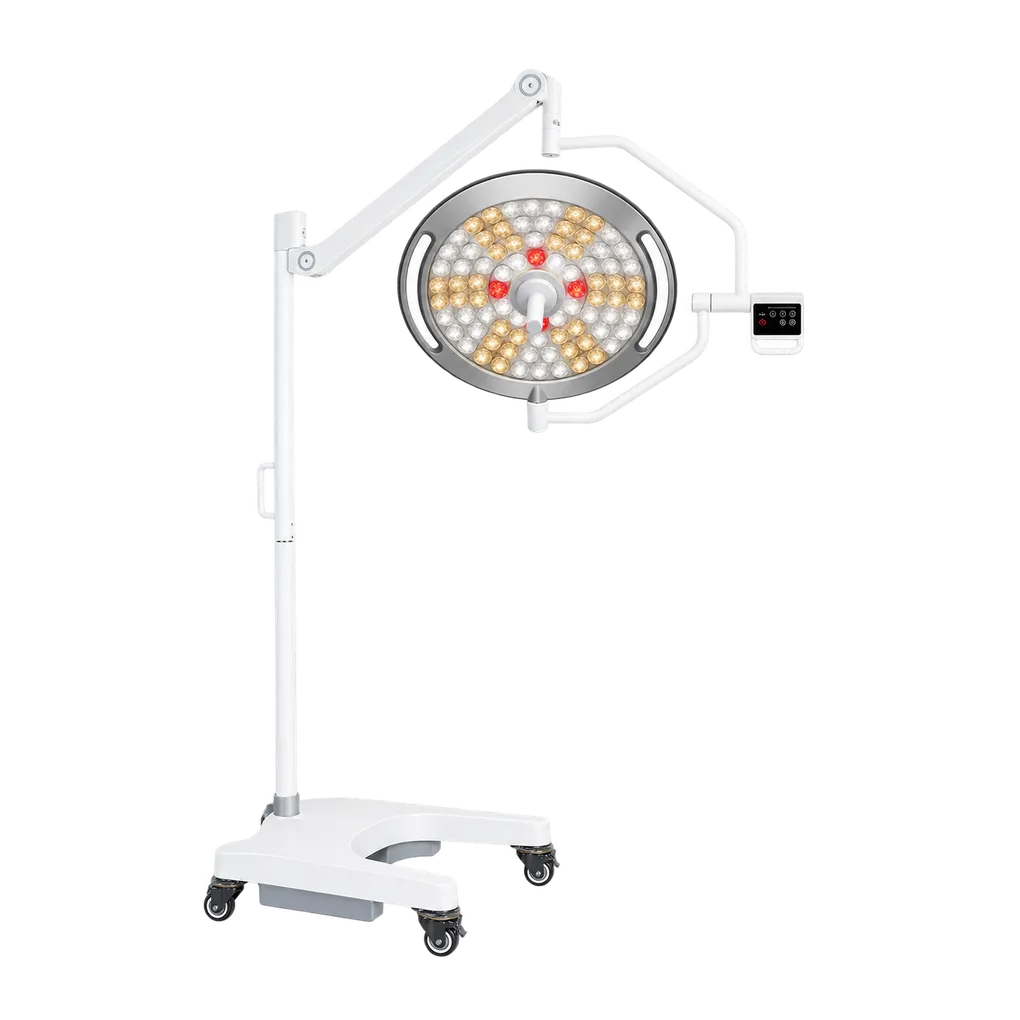
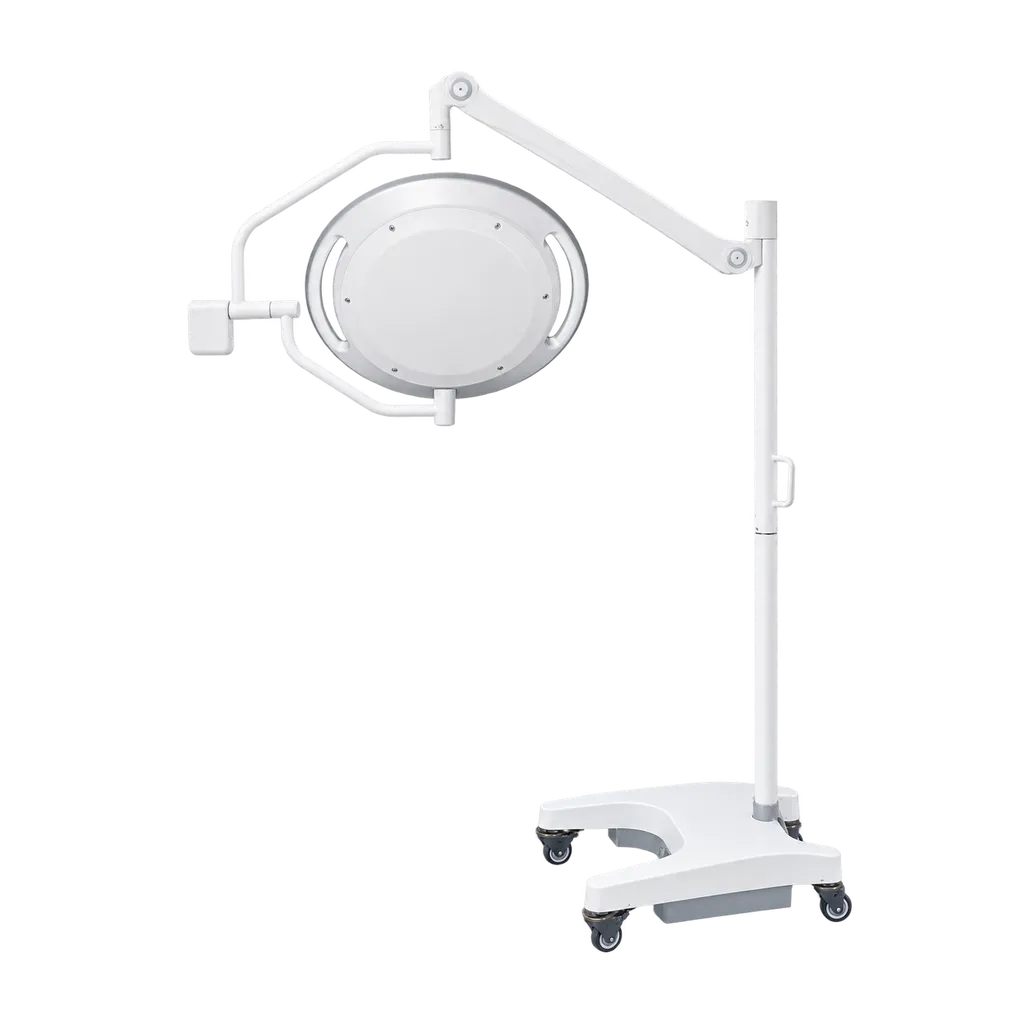
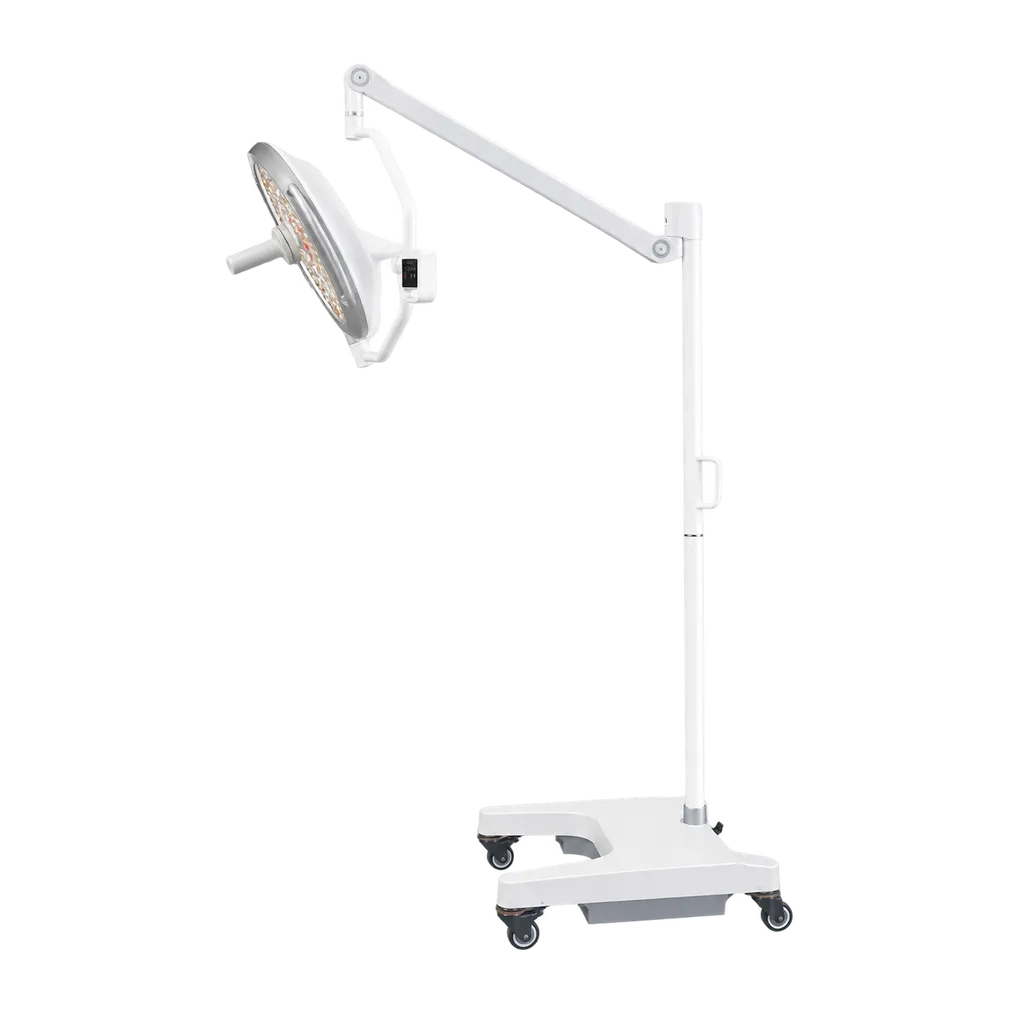
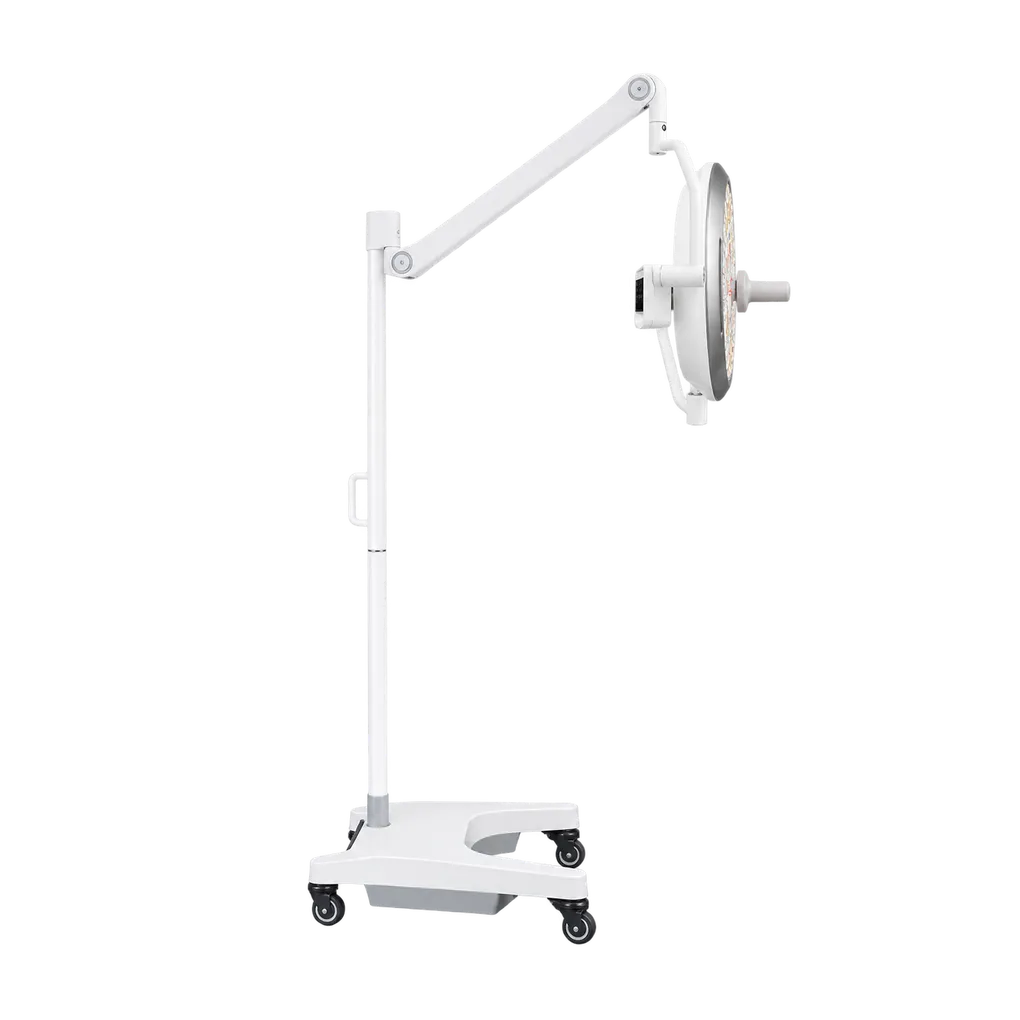
The KL-LED·MD78D suits emergency theatres, procedure rooms, clinics and field hospitals that want a mobile surgical light and may want one that runs away from a socket. Its case is absence honesty. The sheet shows a picture and a family table, and this page separates what the buyer still needs to ask.
In the series figures, the lamp belongs in demanding rooms. A head rated at 160,000 lux with a 150 cm depth of illumination lights open surgery. R9 at 97 or above helps a surgeon read red tissue, and an endo mode at 15,000 lux suits work from a monitor. Colour temperature between 3000 and 6700 K gives a choice of tone. Those are family ratings, and a data sheet naming this variant should repeat them.
The power question matters clinically. If the D marks a battery, the lamp could serve during a mains failure, in a tent or beside a bed with no free socket. Each of those uses depends on running time, charge time and a low-charge warning. If the D marks something else, those uses fall away. A department should decide which it needs before it reads the answer.
Either way, handling is the same as for any tall mobile lamp. It moves by the pole grip with the arm folded, stands with its brakes on and is wiped down between rooms. The first user check on delivery is that the label, the paperwork and the unit agree.
Clinical engineers, NHS procurement routes and tender panels overseas will ask for a data sheet naming the variant, the IEC 60601-2-41 report and a declaration of conformity. The manufacturer issues the conformity documentation these procurement routes require, and the enquiry team shares it.