
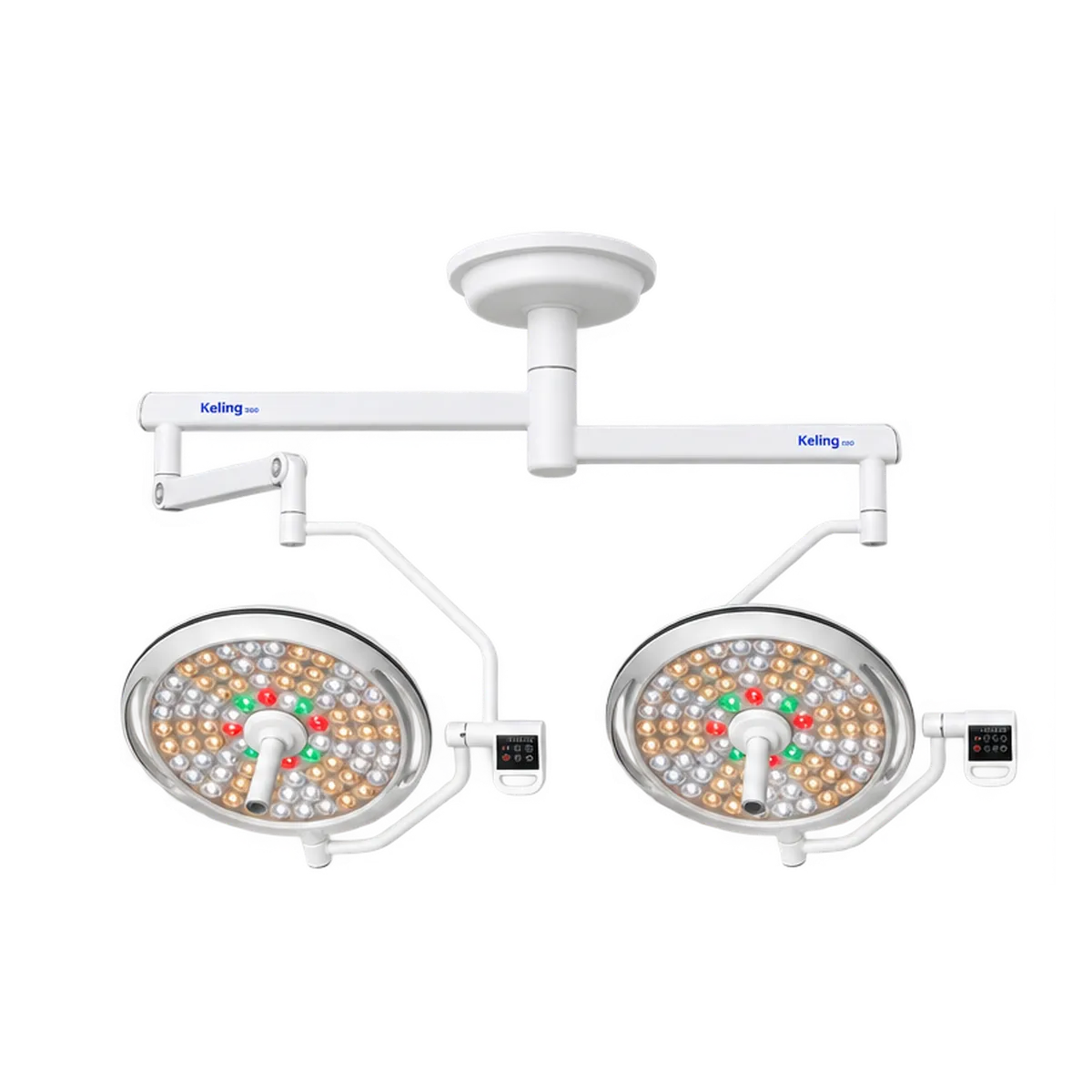
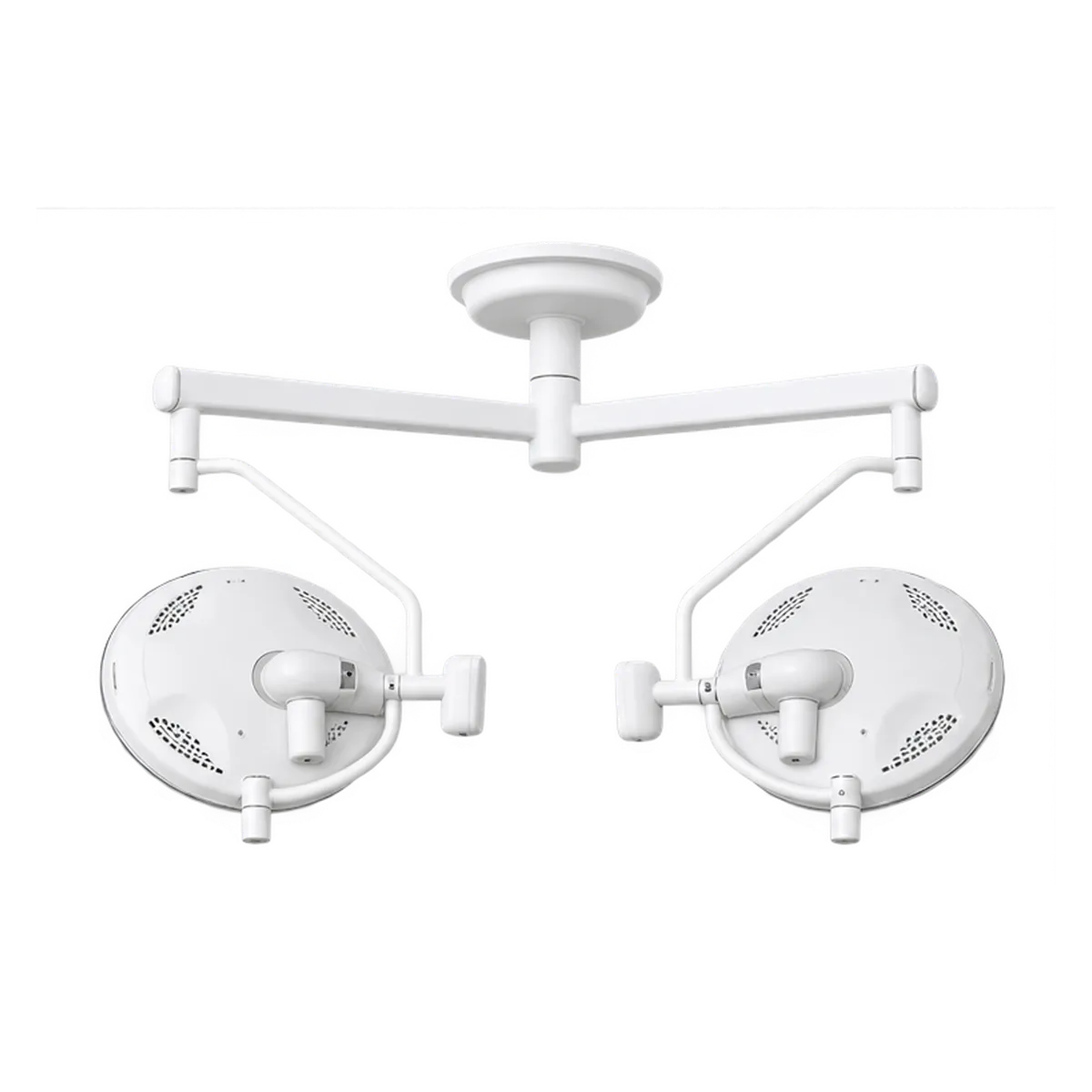
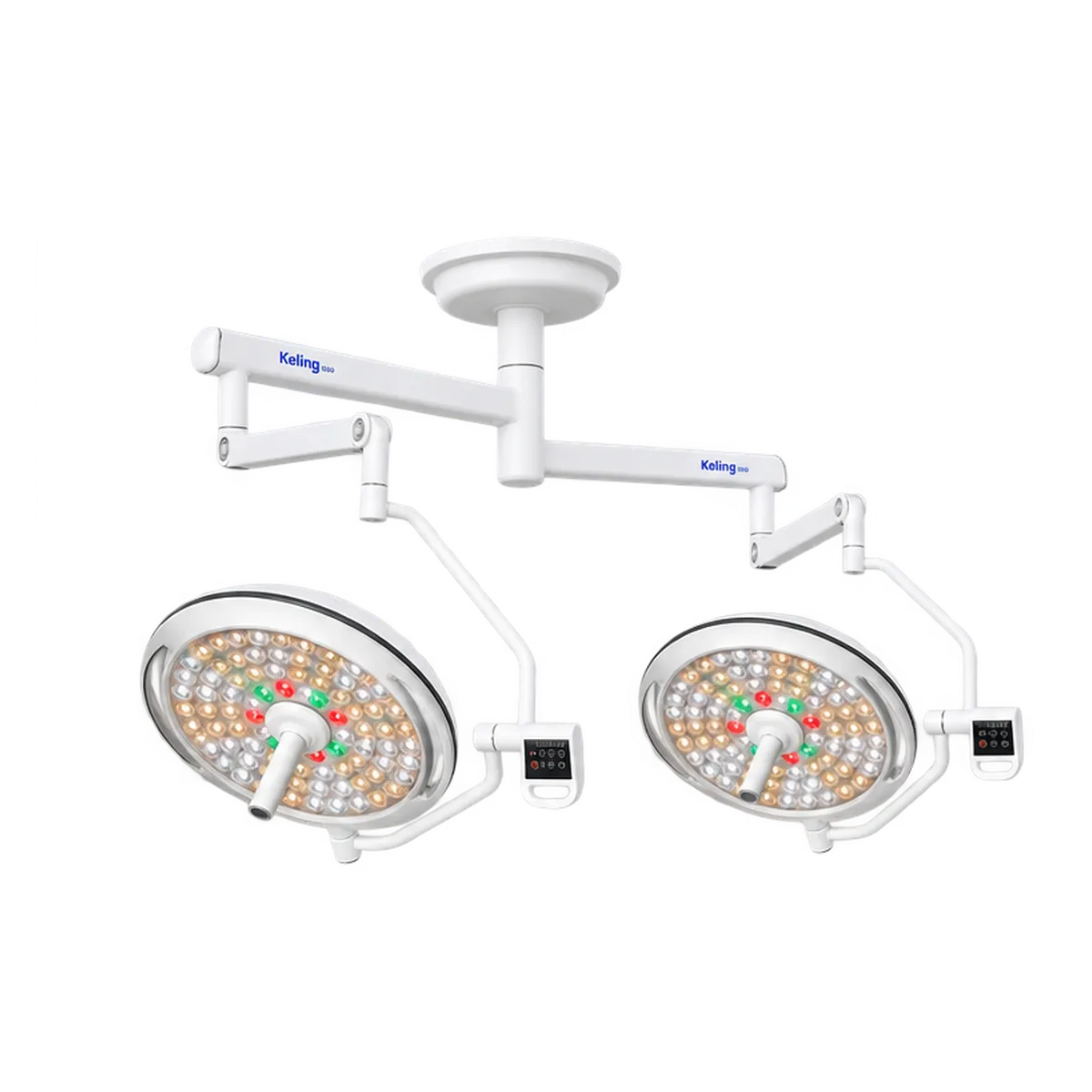
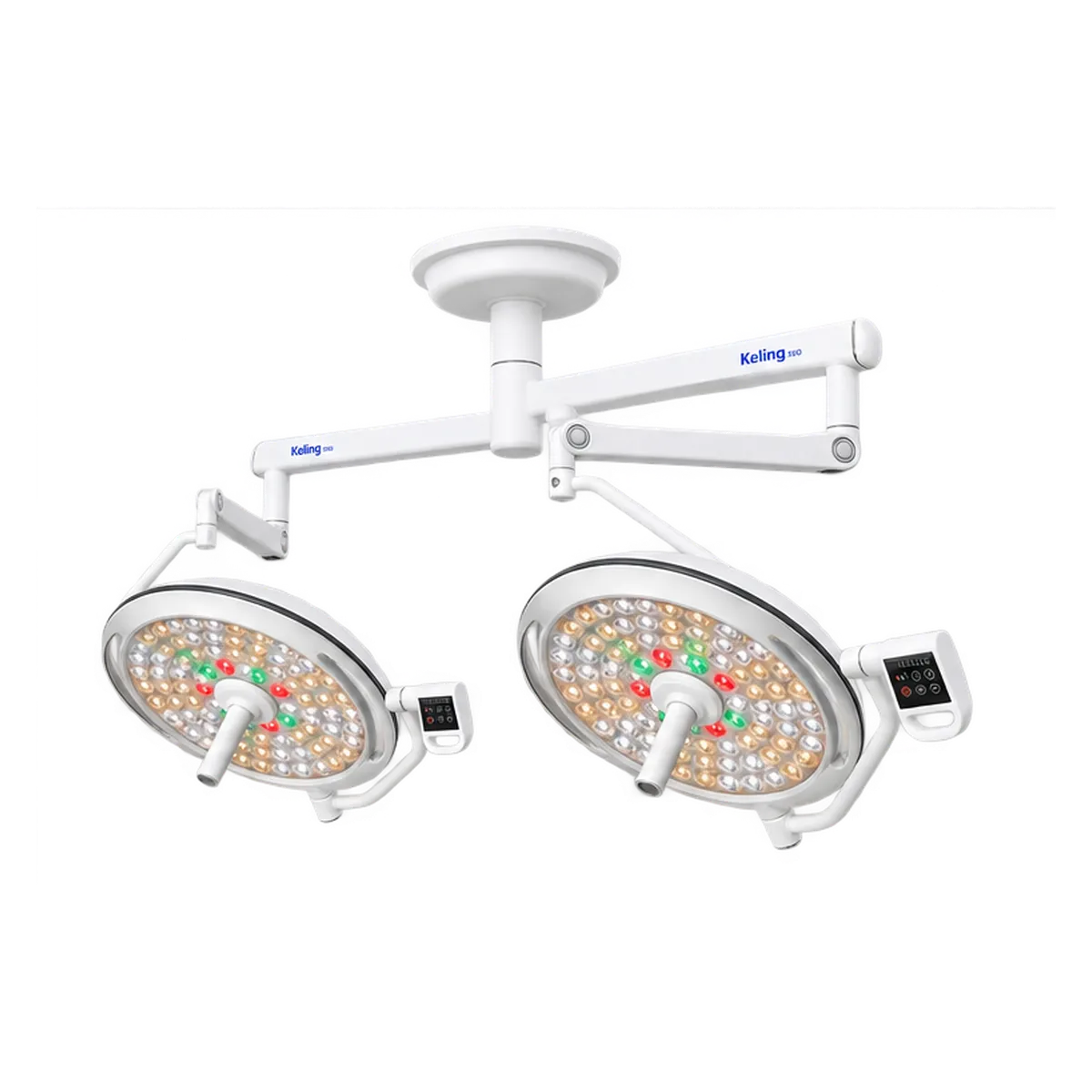
The KL-LED·DTR78/DTR78 suits general, orthopaedic, trauma, gynaecological and plastic surgery theatres where two lights work over one table. Its case is workflow. Controls divided between the handle and a yoke panel shape how the surgical team shares the job of managing the light.
In practice, the surgeon or assistant positions a head by its handle and presses the handle buttons to set the focus size, tightening the beam for a small incision and widening it as the field opens. The circulating nurse uses the panel for power and the remaining settings, reading the level from the ten indicators. With two heads, one can stay on the main wound while the other follows the assistant’s side or lights a second site. Agreeing those roles at the briefing saves requests across the table during the case.
The workflow has conditions. The handle must be sterile for the surgeon to touch it, so the cover or sterilisation method needs to be settled with the sterile services team. Staff need to learn the panel before the first list, since symbol buttons are slow to read under pressure. Each head is listed at 160,000 lux with a heat-to-light ratio of 3.2 mW/m²·lx or less, so two beams overlapped at full output add their heat at the wound, and one should be turned down. IEC 60601-2-41 expects light back within 5 seconds of a supply failure, so ask about the backup arrangement. Arms that drift undo careful positioning, so check that each head holds where it is left at commissioning.
Theatre managers, NHS procurement routes and overseas health ministries will ask for the device class, the IEC 60601-2-41 test report and a declaration of conformity. The manufacturer issues the conformity documentation required by those procurement routes, and the enquiry team shares it.