
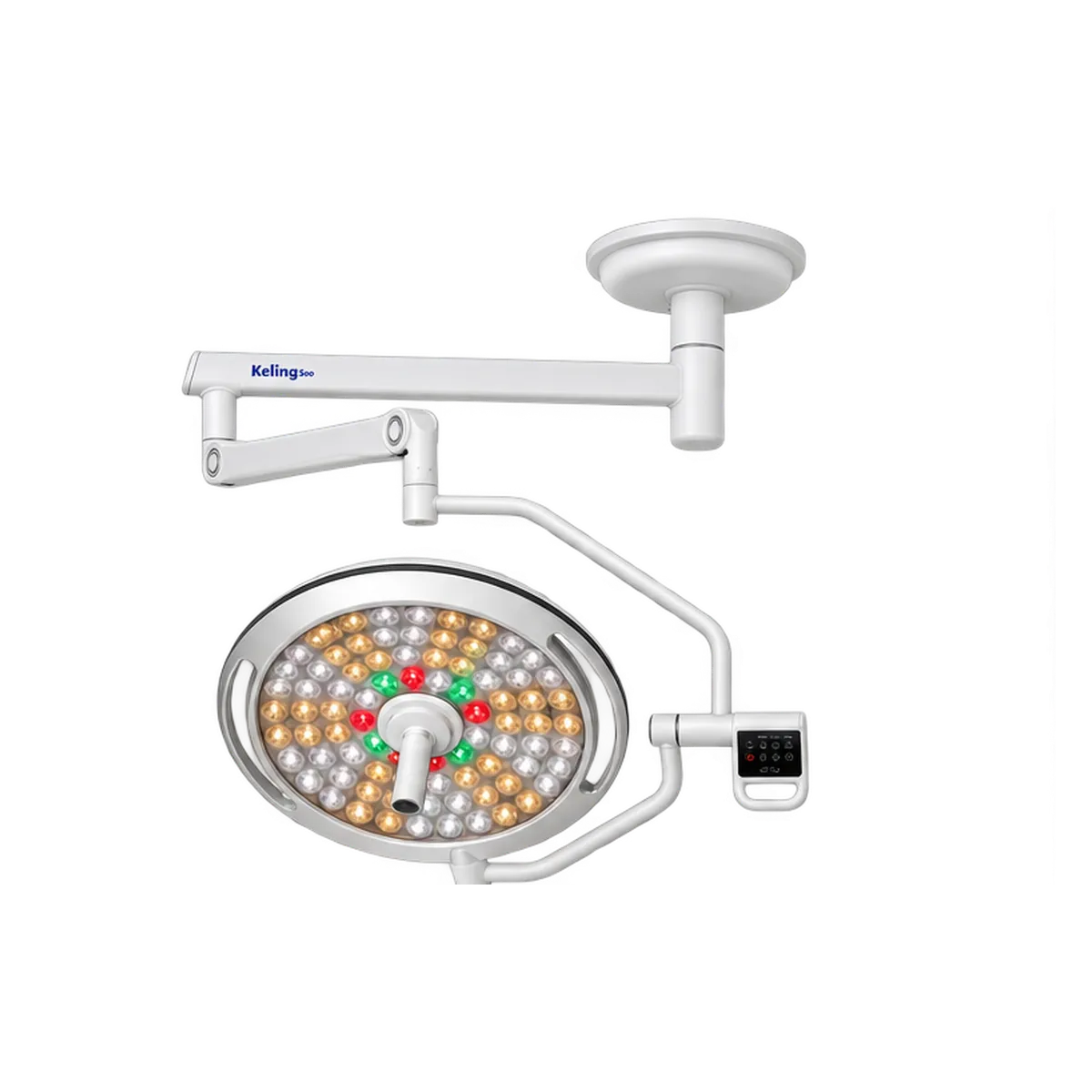
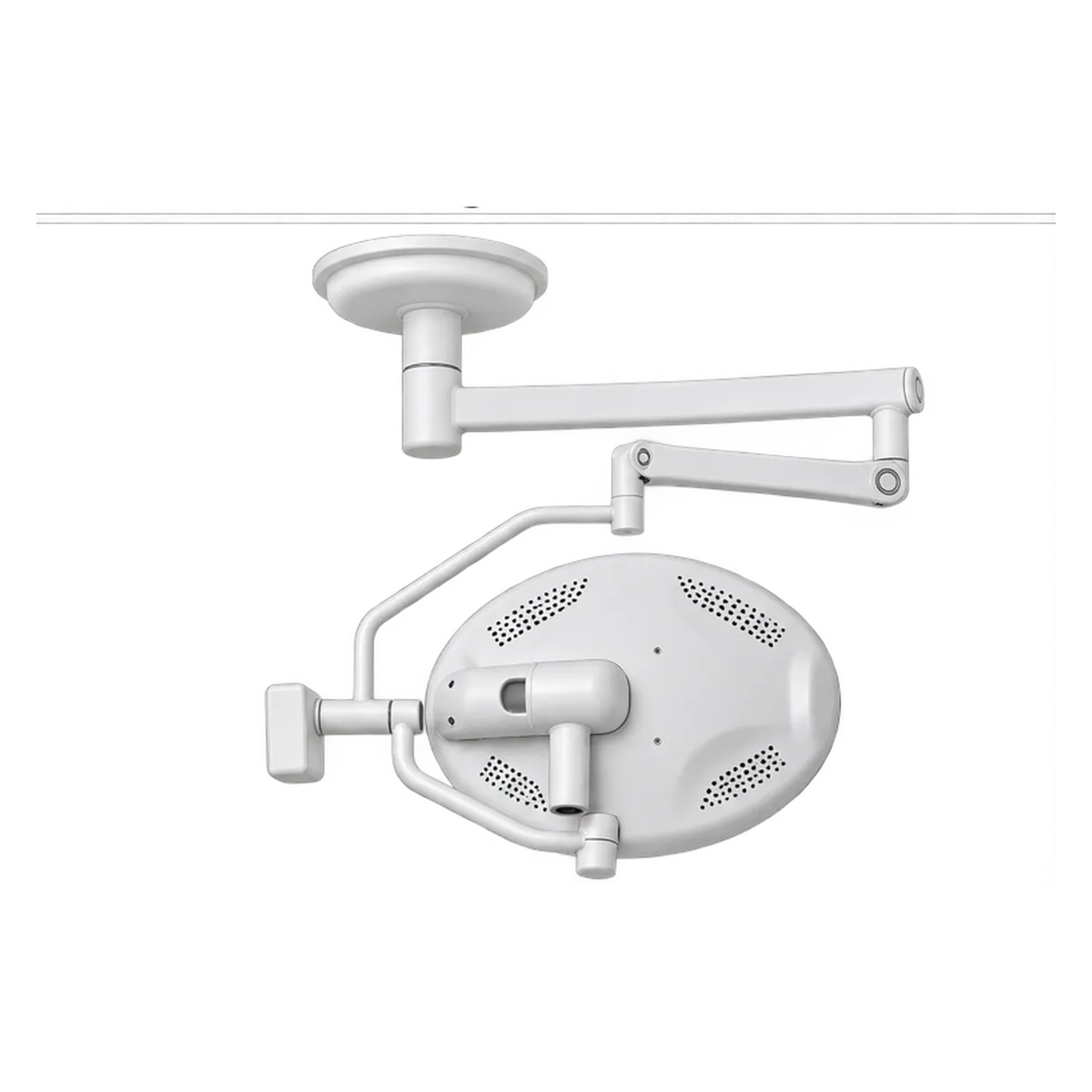
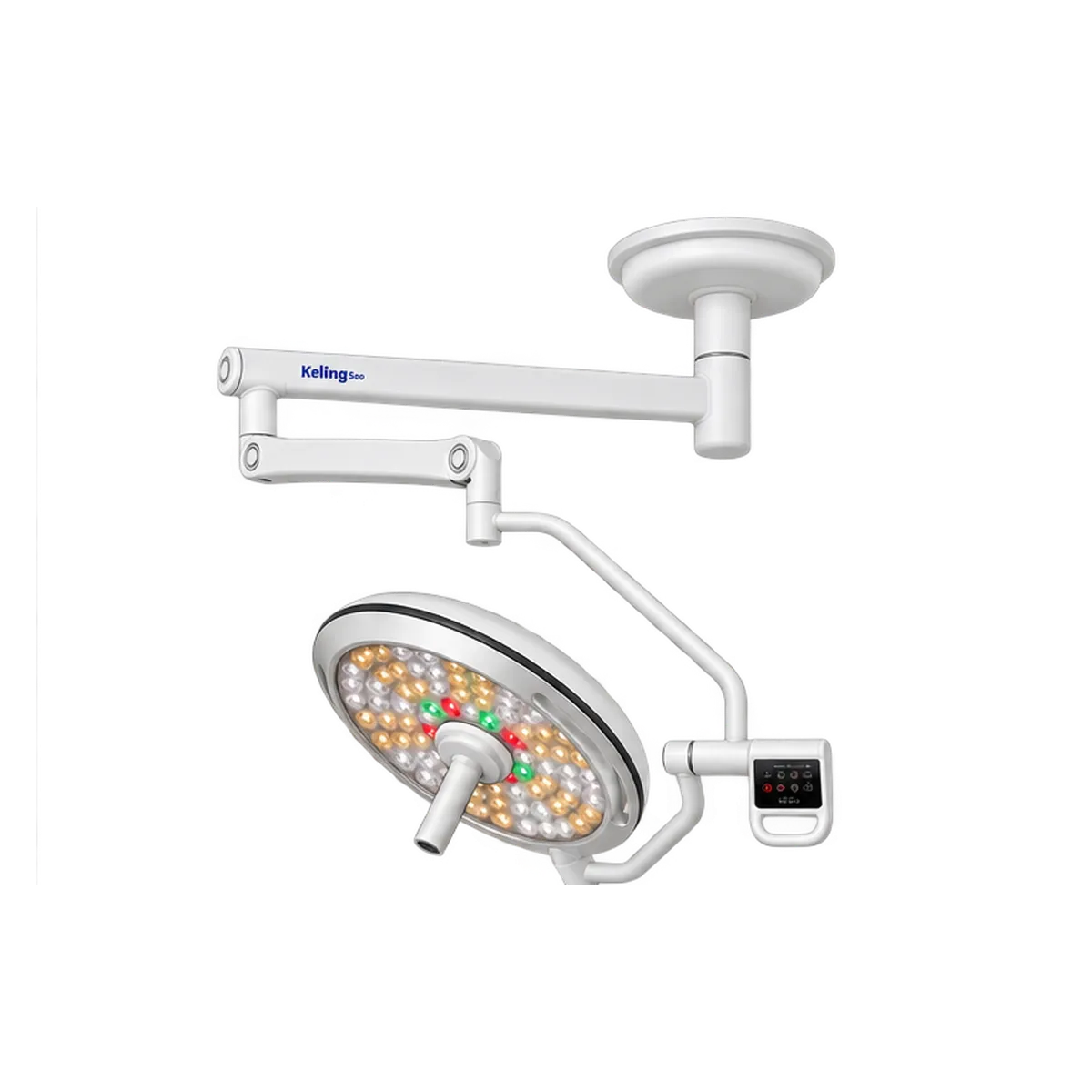
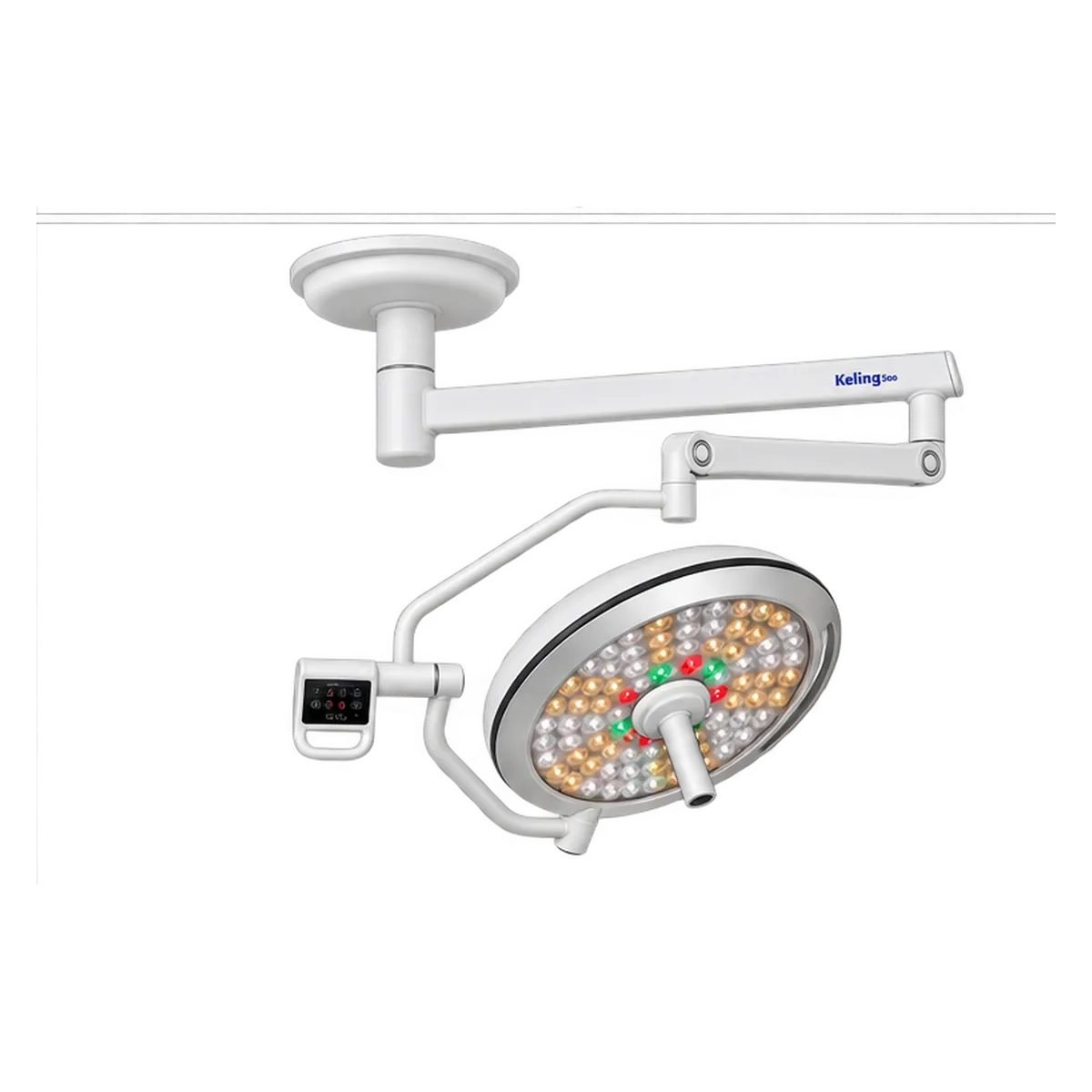
The KL-LED·DTR78 suits day-surgery theatres, minor operations rooms, obstetric and emergency theatres, procedure rooms and district hospitals fitting out one table. Its case is whole-life cost. The purchase price is a one-time payment, and Keling’s table provides the figures for most of what follows.
Electricity is the steady cost. At 150 W, a lamp used for 2,000 hours a year draws about 300 kWh, which a finance team can price at the local tariff. Light sources are the cost that disappears. With an average LED life of 50,000 hours, there is no bulb budget, no spare bulbs in the theatre store and no list stopped for a failed lamp. Clinically, the head still does a full job, with 160,000 lux, a 10 to 30 cm field, a 150 cm depth of illumination and colour temperature from 3000 to 6700 K. Endo mode at 15,000 lux covers screen-based procedures.
The hidden costs need asking about. Drivers, power supplies, arm brakes, and handles can fail before the LEDs do, so the spare parts list, warranty, and service support determine how long the lamp earns its keep. IEC 62353 testing and planned arm-balance checks belong in the maintenance schedule. One head light from one direction, so a room that later takes on major open surgery may need a second source. Backup power also has to be settled, because IEC 60601-2-41 expects light to return within 5 seconds of a supply failure.
Finance leads, NHS procurement routes and overseas tender boards will ask for the device class, the IEC 60601-2-41 test report and a declaration of conformity. The manufacturer issues the conformity documentation those procurement routes require, and the enquiry team shares it.