
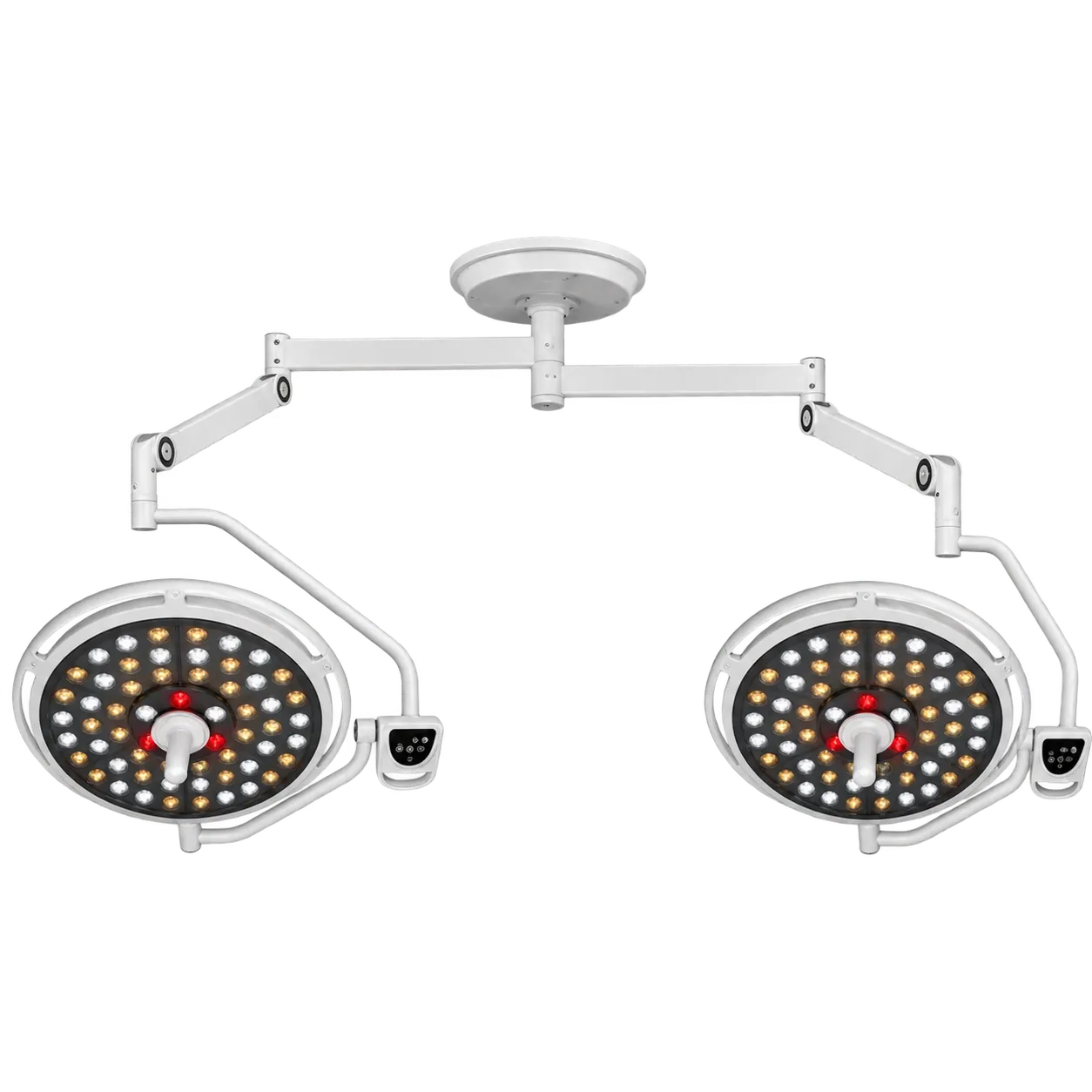
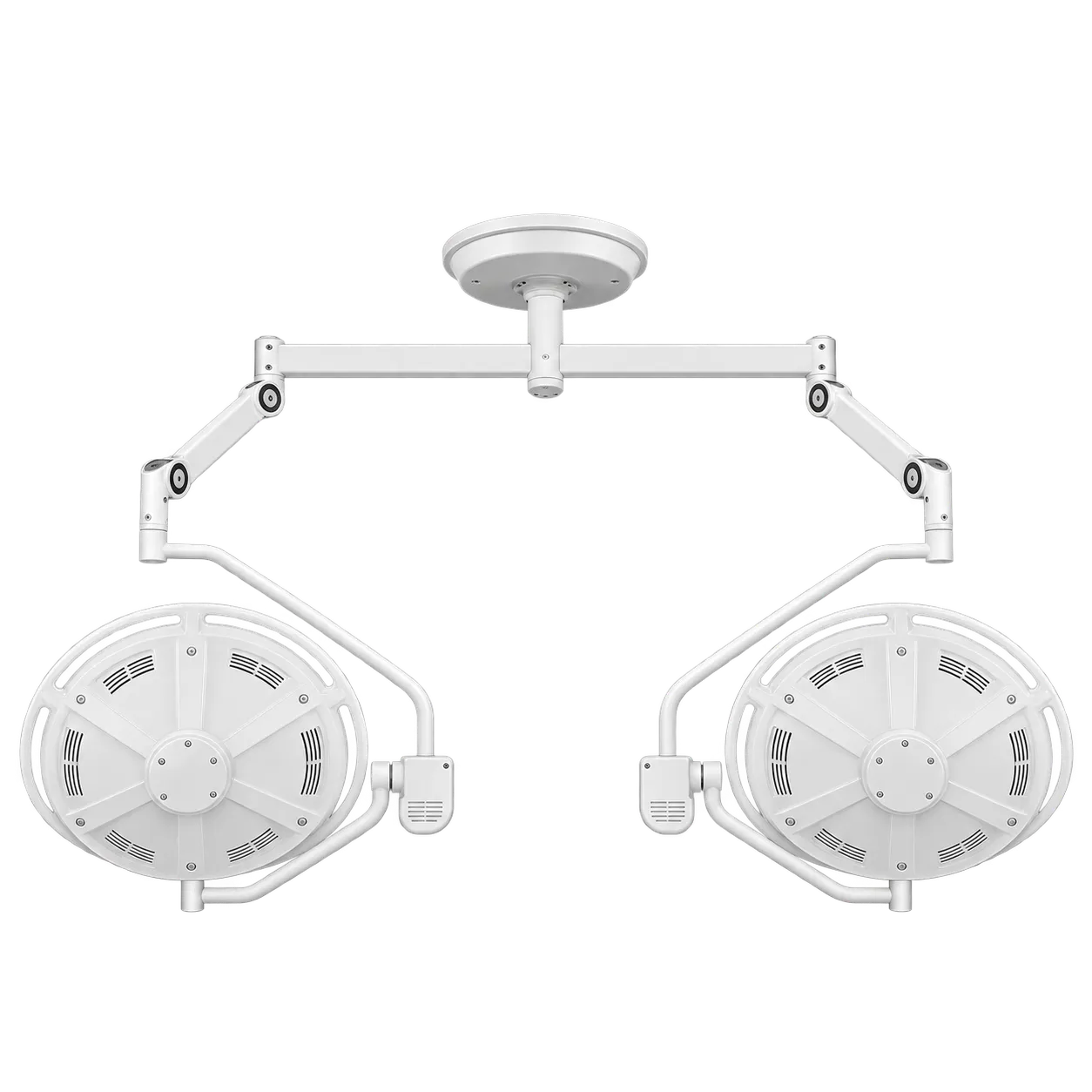
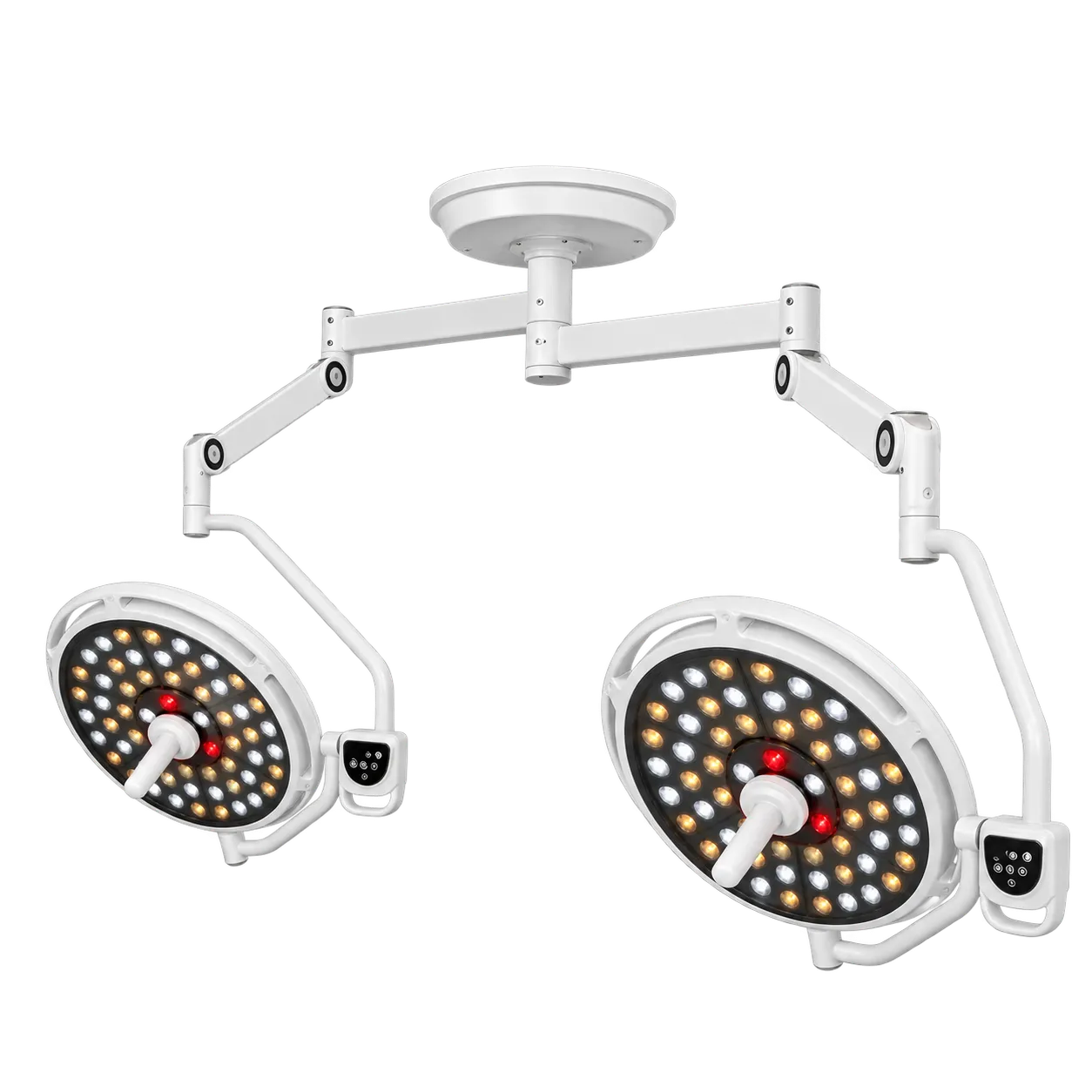
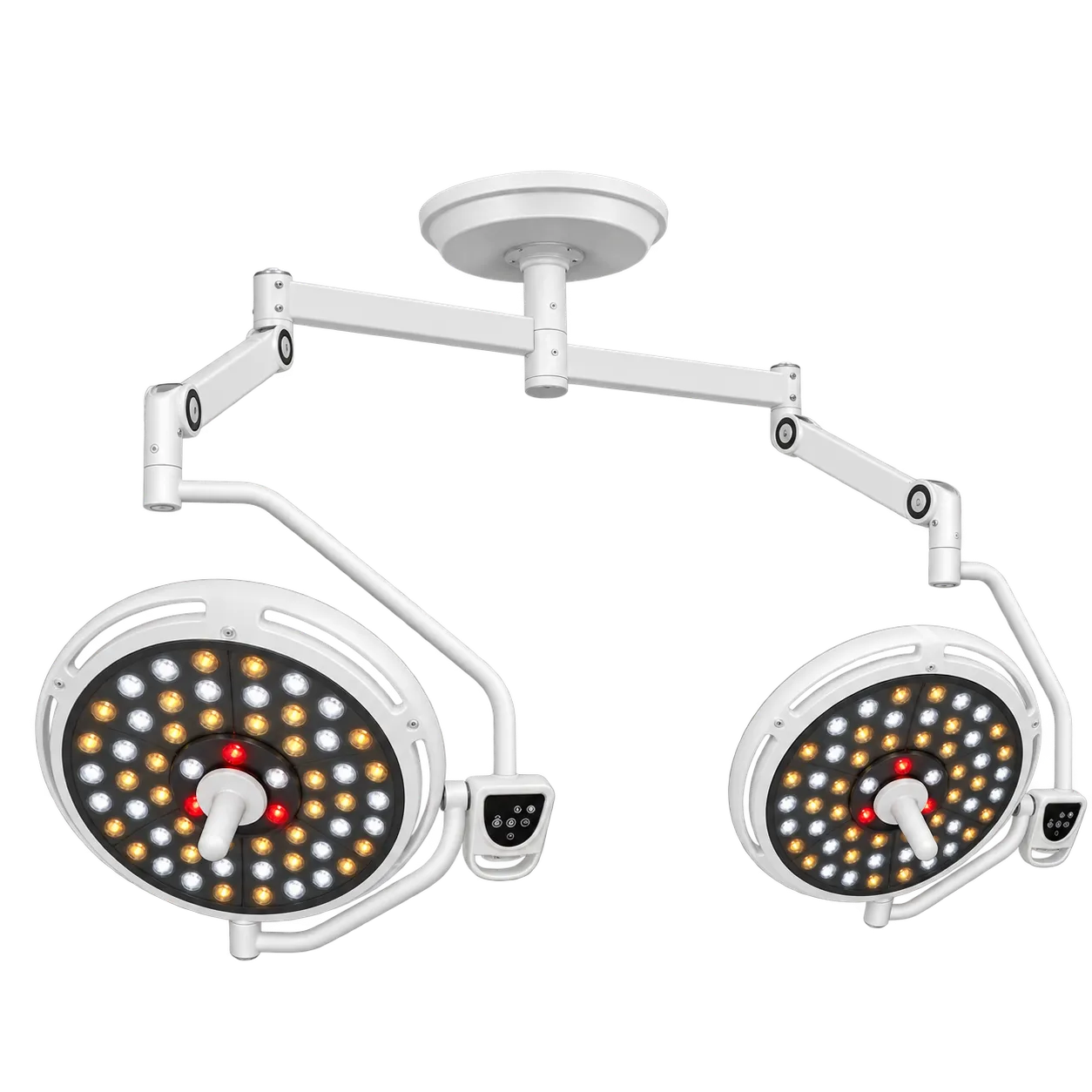
The KL-LED·DT61/DT61 suits general, orthopaedic, cardiothoracic, obstetric and trauma theatres where a main and a second light work over one table. Its case is safety and risk transfer. A second head reduces the risk of working in shadow, but it adds a heat risk the team must manage instead.
Shadow is the first hazard. When a single beam is blocked by a head or a hand, the surgeon loses sight of the field at the moment it matters, and a second head aimed from the opposite side keeps it lit. Each head is rated at 160,000 lux with 150 cm of illumination depth, so deep cavities stay visible as the table moves. Colour temperature from 3000 to 6700 K and an R9 of at least 97 help distinguish tissues, and endo mode at 15,000 lux covers laparoscopic stages.
Heat replaces it as the hazard. From Keling’s heat-to-light ratio, one head at full output delivers up to about 512 W/m² and two overlapped up to about 1,024 W/m². Thin, poorly perfused or long-exposed tissue is most at risk of drying and burns. Sensible controls are simple: use the lowest setting that shows the field, avoid stacking both beams at full output, keep exposed tissue moist and note the settings in long cases. IEC 60601-2-41 also requires light to return within 5 seconds of a supply failure, so confirm the backup supply at commissioning.
Theatre managers, NHS procurement routes and overseas tender boards will ask for the device class, the IEC 60601-2-41 test report and a declaration of conformity. The manufacturer issues the conformity documentation these procurement routes require, and the enquiry team shares it.