
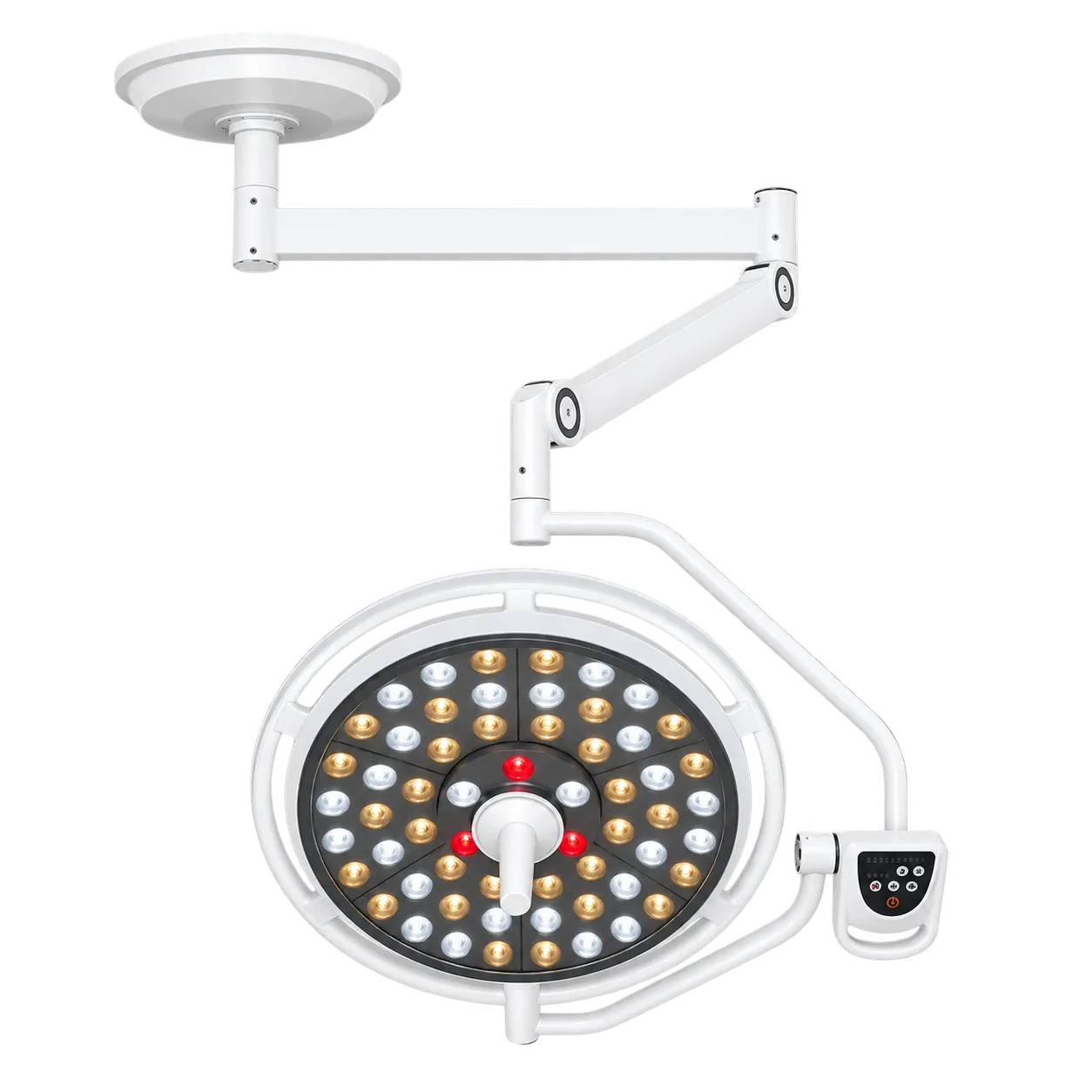
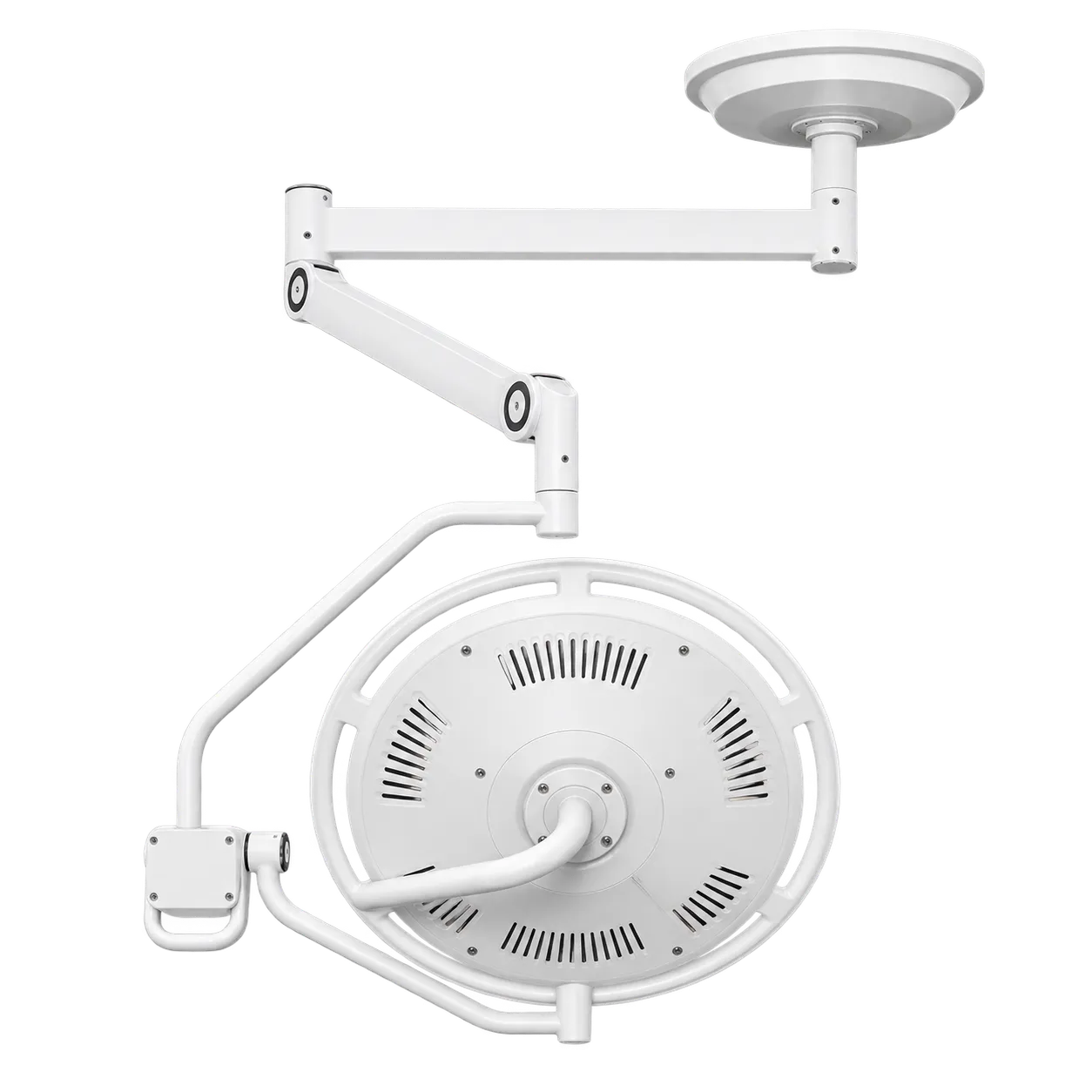
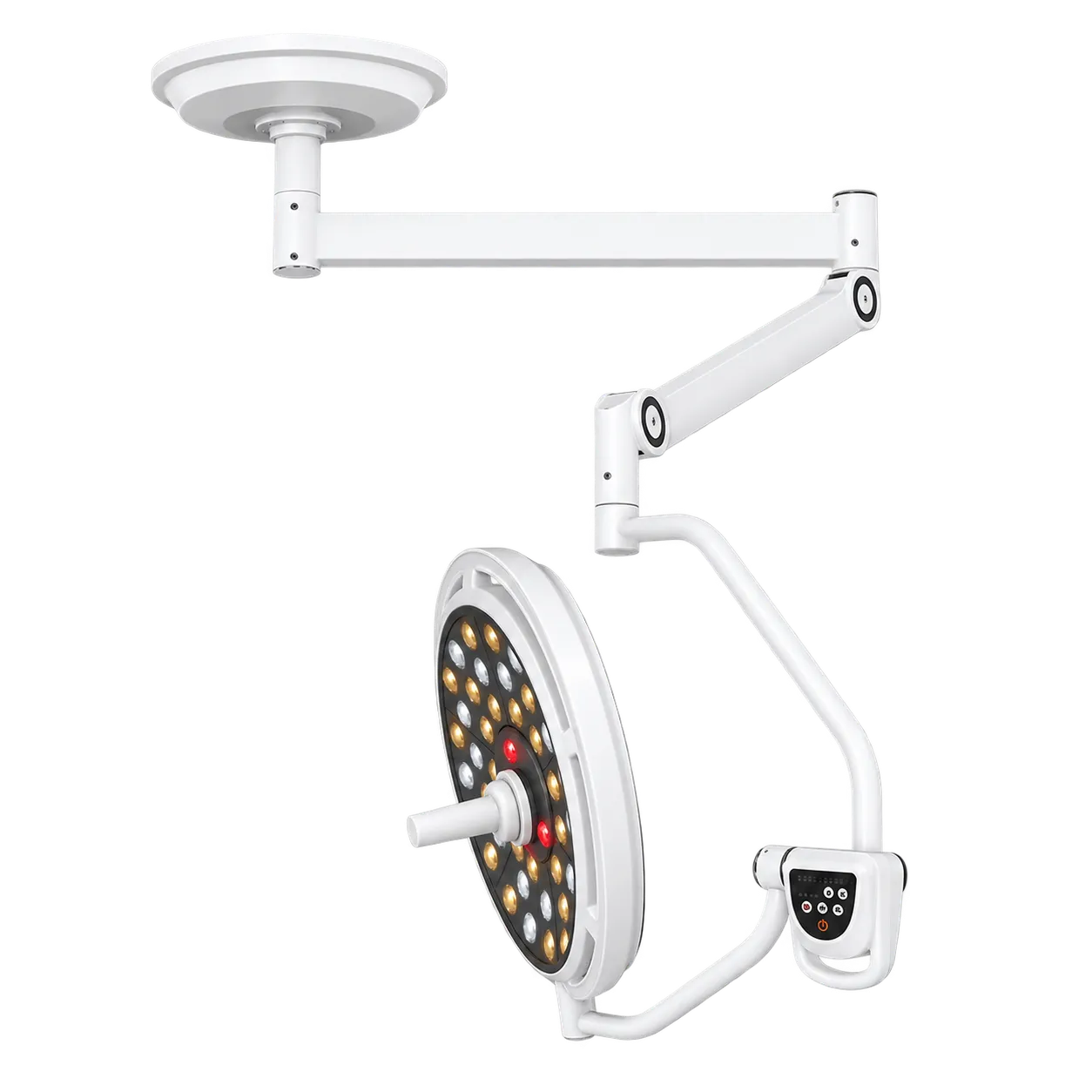
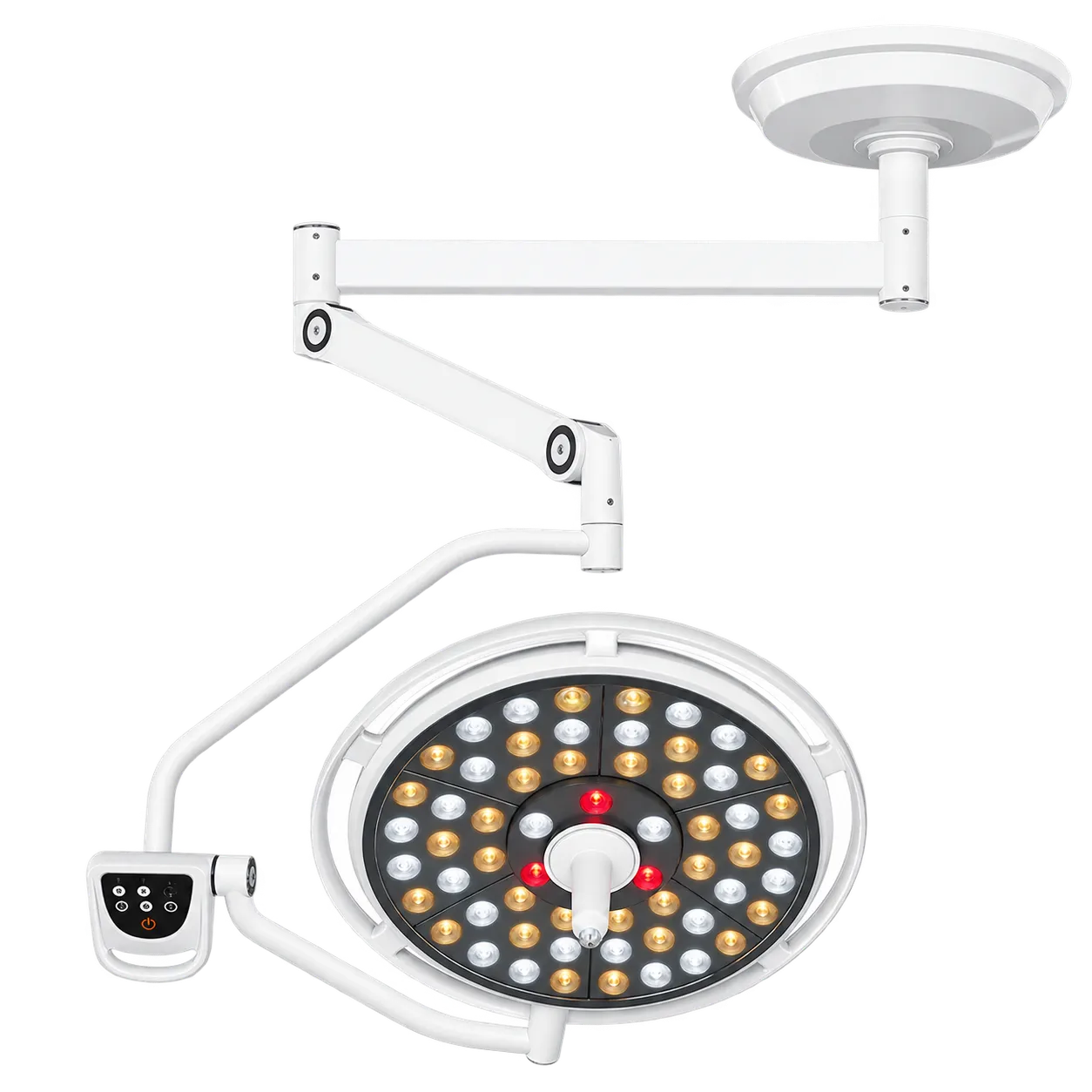
The KL-LED·DT61 suits procedure rooms, minor operations rooms, endoscopy suites, emergency departments, outpatient theatres and district hospitals with one table. Its case is absence honesty. The listed figures are strong, and the unlisted items determine whether the lamp suits a given room.
What is listed covers the core of a surgical light. At 160,000 lux the head reaches the top of the range in IEC 60601-2-41, and a 150 cm depth of illumination keeps a wound lit as the table or the head moves. R9 of 97 or above helps staff judge blood and tissue colour, colour temperature adjusts from 3000 to 6700 K, and endo mode at 15,000 lux suits work from a monitor. A 150 W head with a 50,000-hour average LED life keeps power draw and lamp changes modest.
What is absent needs checking case by case. One head lights from one direction, so the 60 LEDs dilute the shadow from the surgeon’s head and hands rather than removing it. No memory function is listed, so settings may need to be set afresh for each case. The table also lists no battery, and IEC 60601-2-41 expects light back within 5 seconds of a supply failure, so the backup supply matters. An R11 figure, a camera, and an adjustment method are also missing. Teams that need any of these should ask before ordering, and theatres doing major open surgery should plan for a second lamp.
Clinic owners, NHS procurement routes and district health offices abroad will ask for the device class, the IEC 60601-2-41 test report and a declaration of conformity. The manufacturer issues the conformity documentation these procurement routes require, and the enquiry team shares it.