
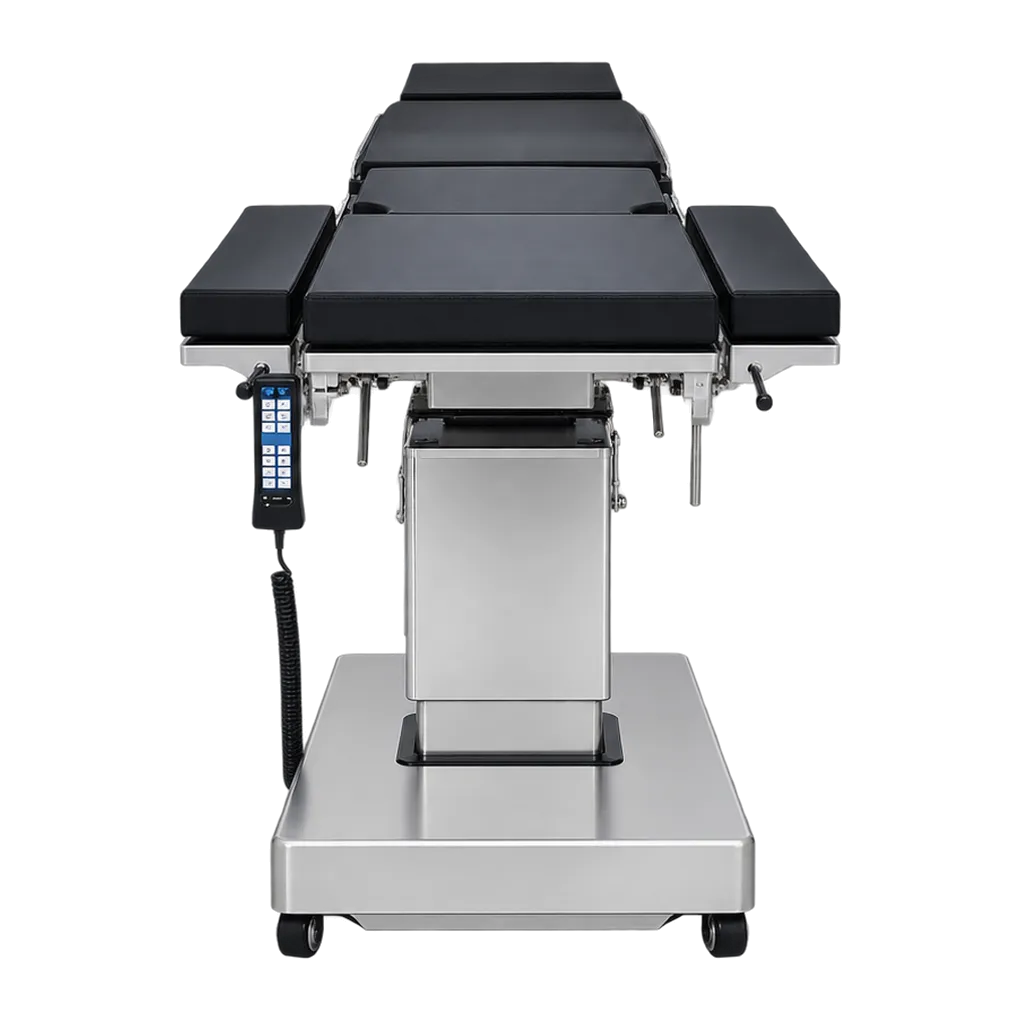
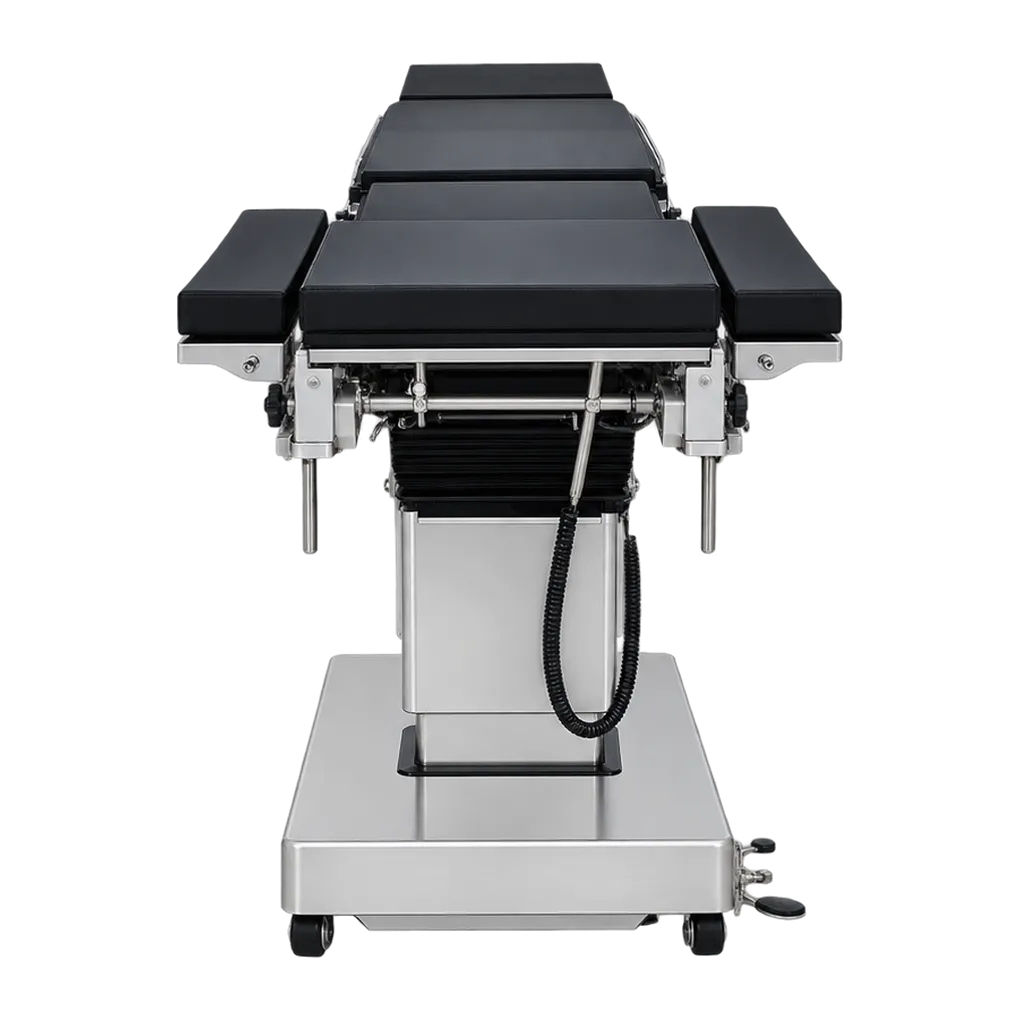


The KL-DL.C-I is an electric operating table for orthopaedic and trauma services, and for general hospitals whose lists regularly include fracture and joint surgery. Orthopaedic surgeons, radiographers, anaesthetists and theatre nurses work around it, often with a C-arm in the room for much of the day.
Fracture fixation is its central use. During forearm plating, tibial nailing, or ankle fixation, the surgeon checks reduction with the C-arm several times. The imported carbon plastic plate suits X-ray examination, and sliding the top 300 mm along its length brings the injured area clear of the column so the image intensifier can reach it.
Spinal and pelvic procedures use the equal 20° tilts. Lateral tilt rolls the patient to align the spine with the beam, and Trendelenburg or reverse Trendelenburg brings the pelvis level for imaging. The lumbar corners and 100 mm waist board lift open the space between the ribs and pelvis for flank approaches, while the shoulder support frames hold the patient on the side.
Lower limb surgery uses the leg boards, which lower to 90° and swing outwards through 180°, and the leg support frames hold the limb during knee and hip work. Arm resting frames support the arm for hand, wrist, and elbow procedures, and the screen frame separates the anaesthetist from the sterile field.
Busy trauma units gain most, because cases arrive at short notice and turnaround is quick. The stainless rails, base and column and the polyurethane mattress clean and sterilise easily between cases, and the foot treadle brake lets staff move the table for the next patient.