
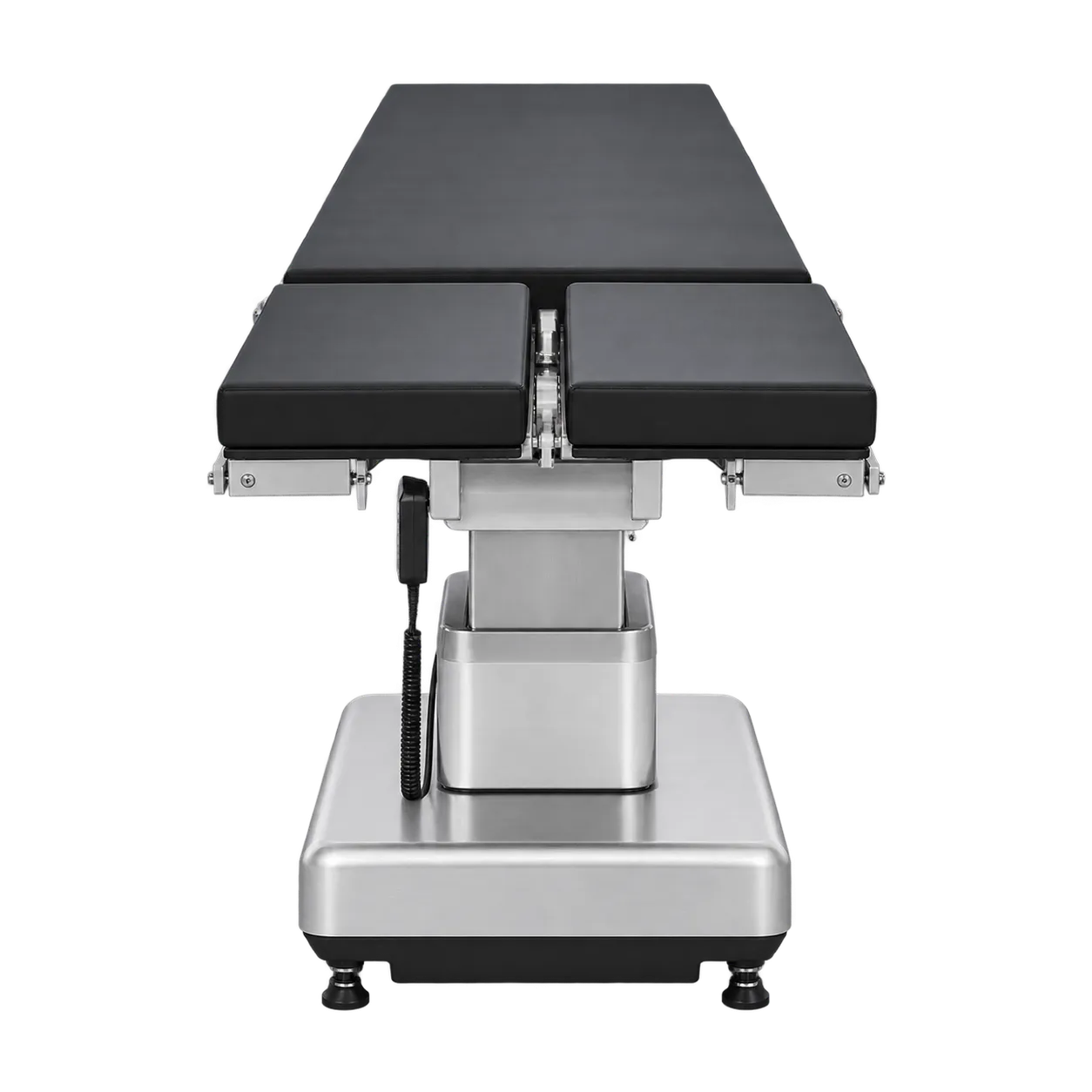
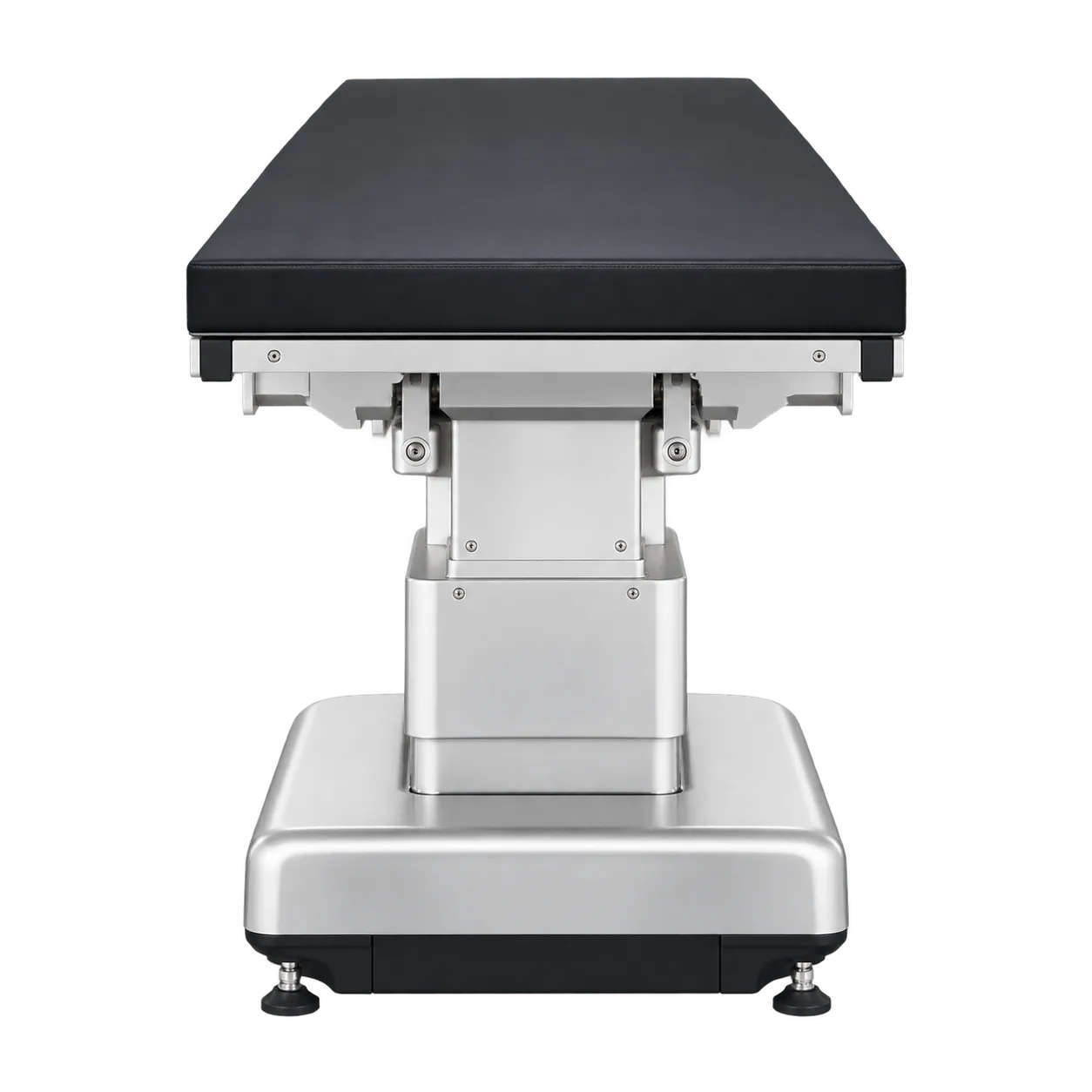
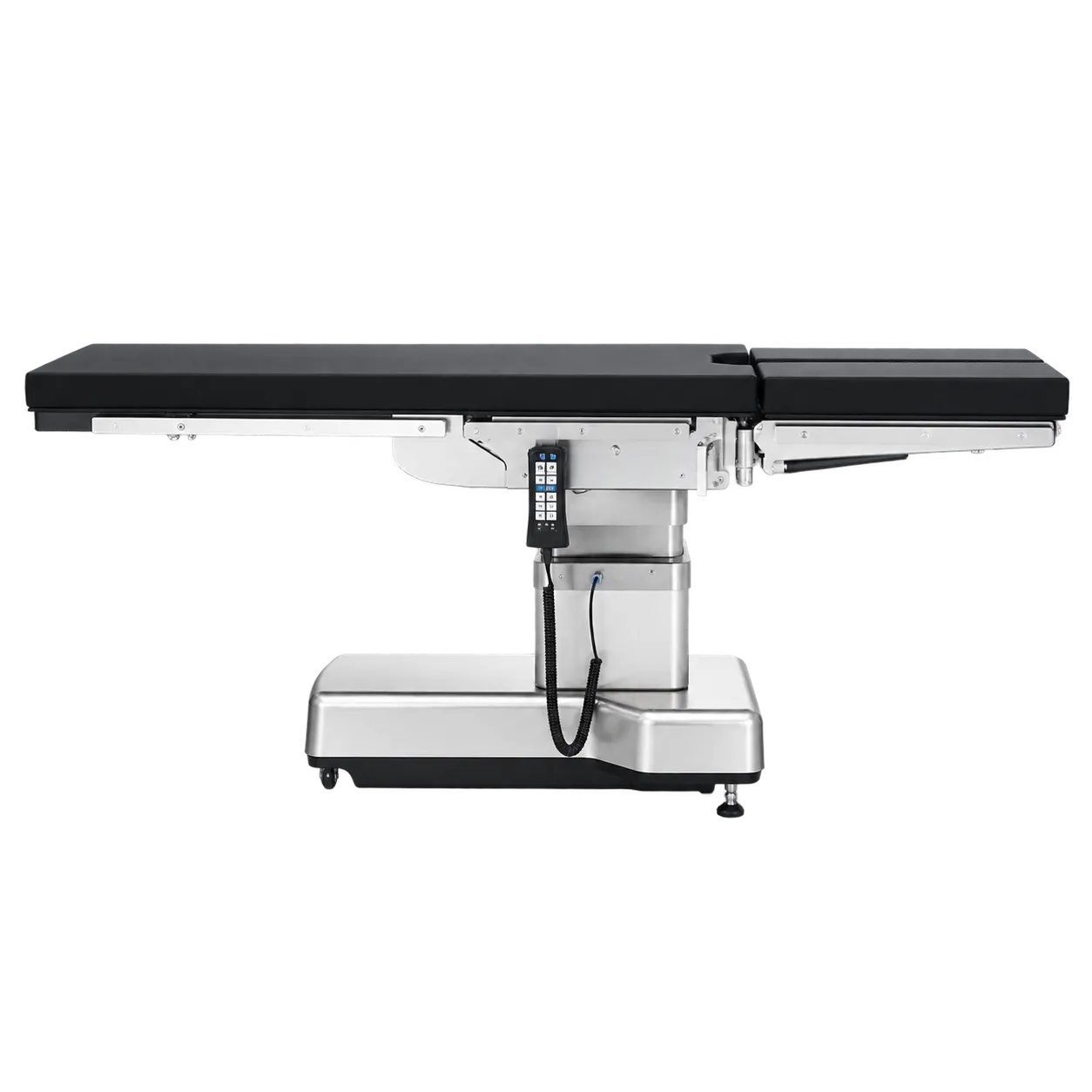
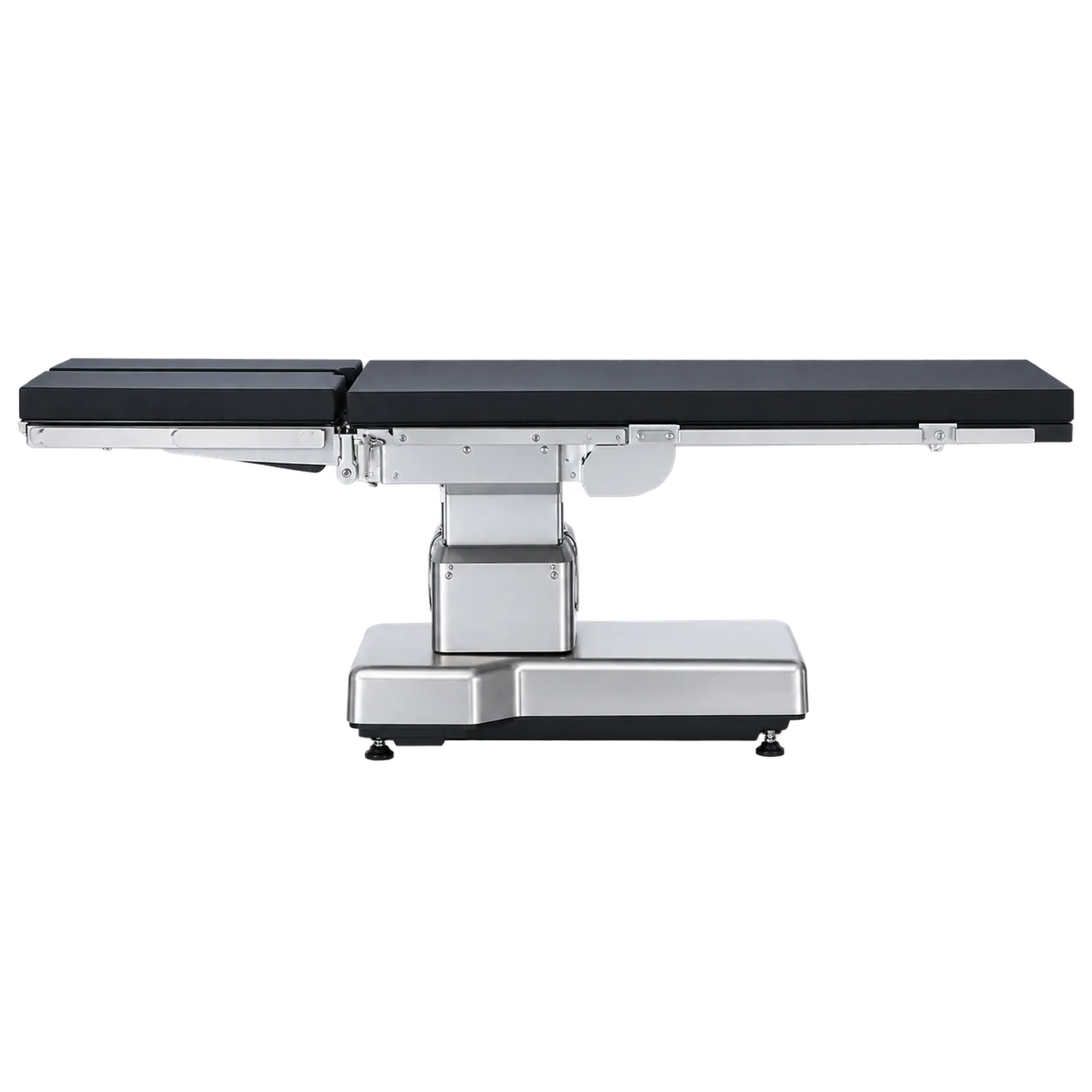
The KL-D III-III is an operating table for hospitals where surgery and imaging happen together. Surgeons, anaesthetists, theatre nurses, operating department practitioners, and radiographers all work around it, and its design gives each of them what they need for their part of the procedure.
Orthopaedic and trauma theatres are its clearest fit. Hip and femoral fractures, tibial nailing, pelvic and acetabular fixation and joint replacement all rely on fluoroscopy during the operation. The carbon fibre backboard keeps the frame out of the image, the 350 mm longitudinal shift moves the area of interest clear of the column, and the C-arm passes round the patient freely. With navigation systems, the same clearance allows 3D imaging through 360°.
Spinal surgery uses the lumbar break, with an upper corner of up to 150° and a lower corner of up to 110°, together with the 100 mm waist board lift, to open the intervertebral spaces. Urology and gynaecology use the leg plates, which lower to 90° and detach, for lithotomy and pelvic access, and the supplied leg supports hold the limbs securely. ENT, head and neck, and neurosurgical teams use the headboard, which lowers to 90° and rises to 45°, to position the head precisely.
General, vascular, and thoracic surgery benefit from the wide tilt range: Trendelenburg to 20° for pelvic access, reverse Trendelenburg to 25° for upper abdominal work, and a 15° lateral tilt to let organs fall away from the field. The high-level arm support positions the arm for breast and shoulder procedures.
Hybrid theatres, day-surgery units, and district hospitals all use it as a general-purpose table, ready for imaging whenever a case needs it. Built-in castors and an electric brake let it move between theatres and then lock firmly in place.