
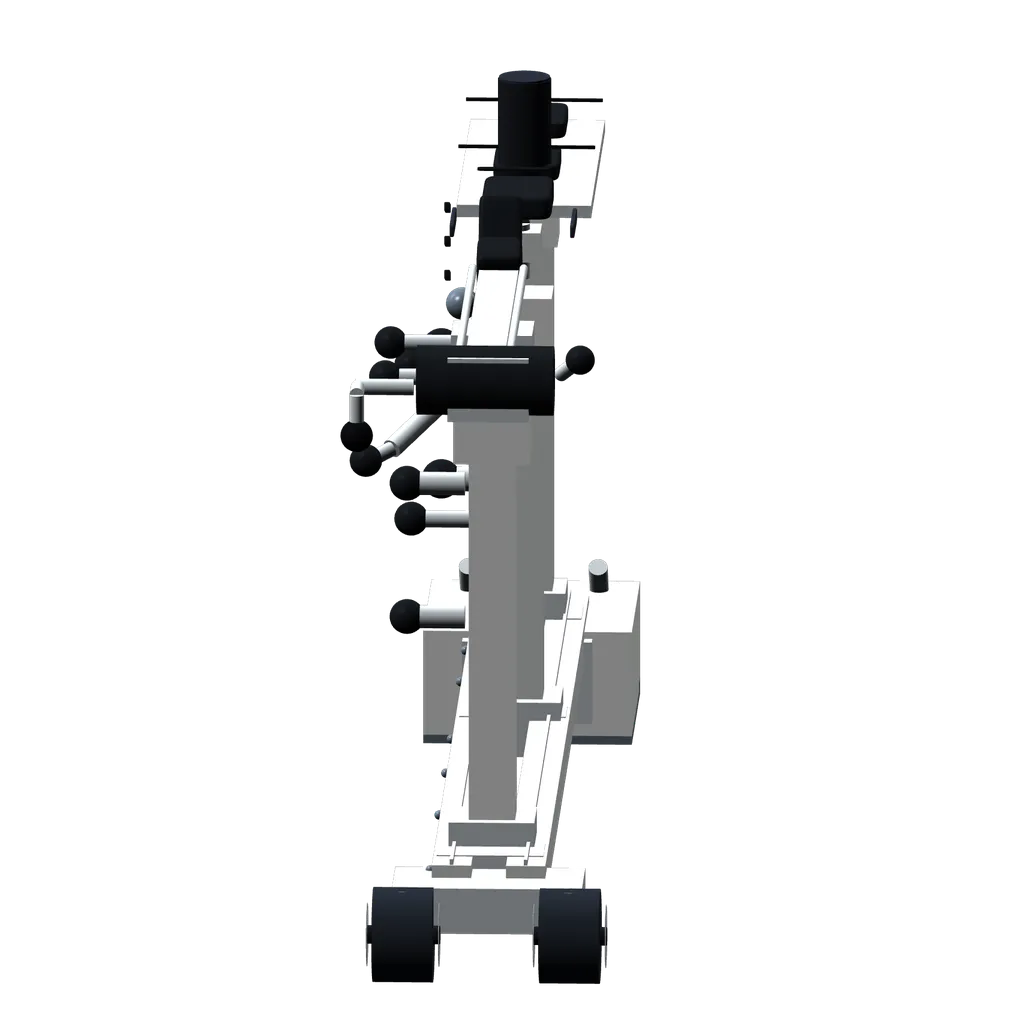
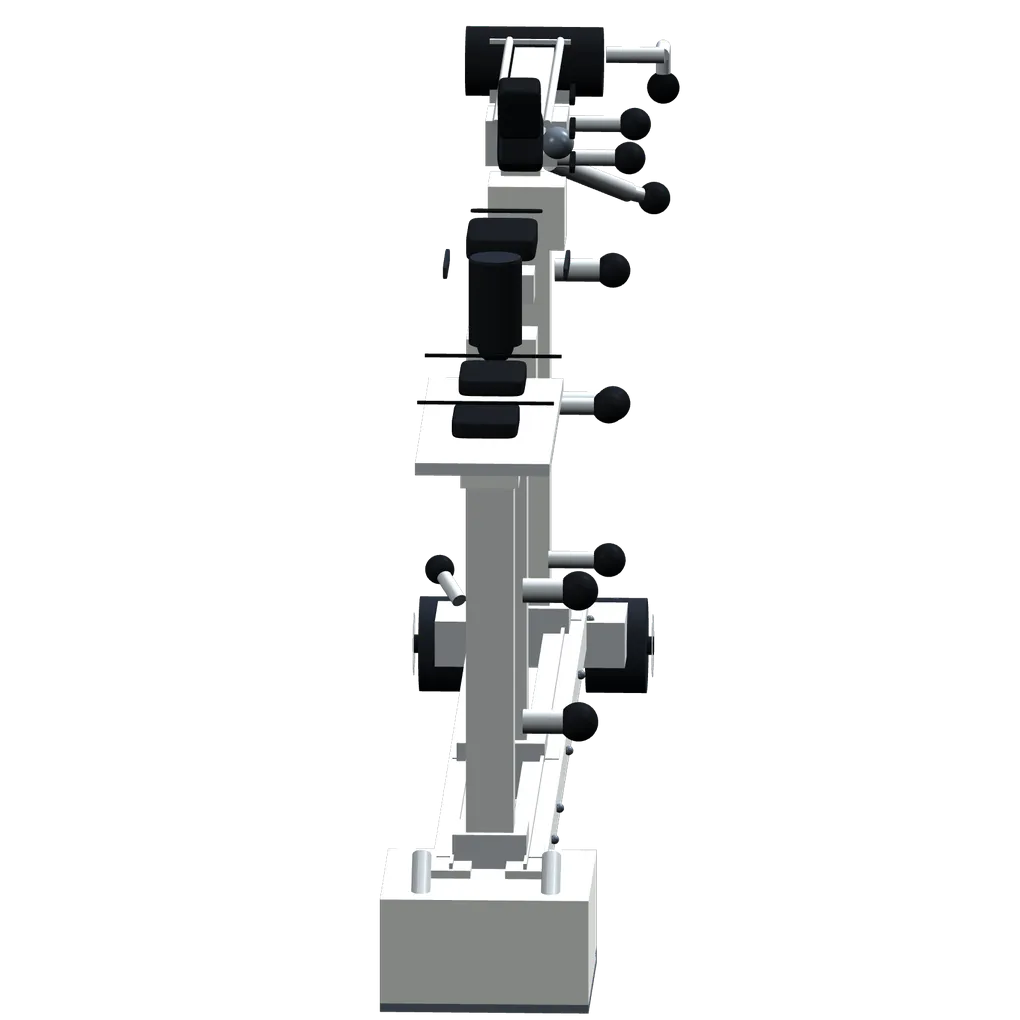
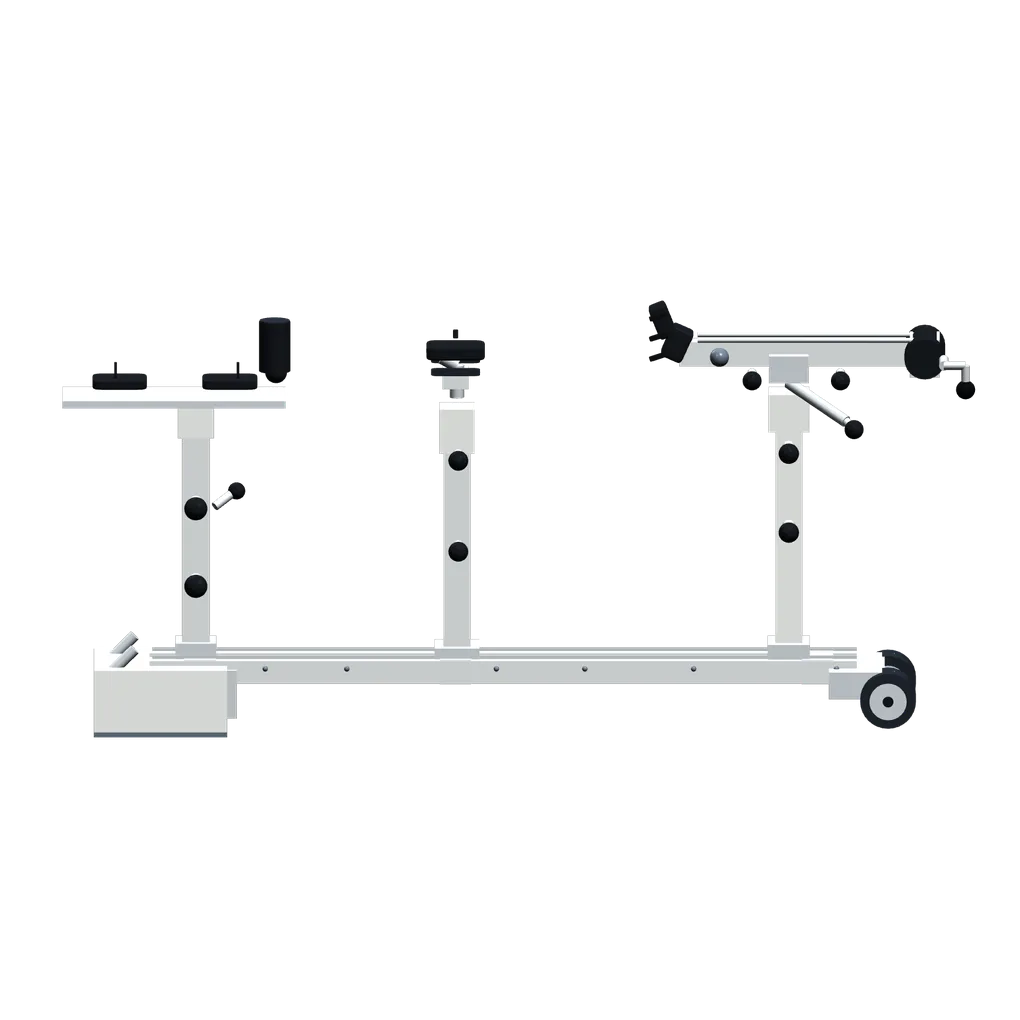
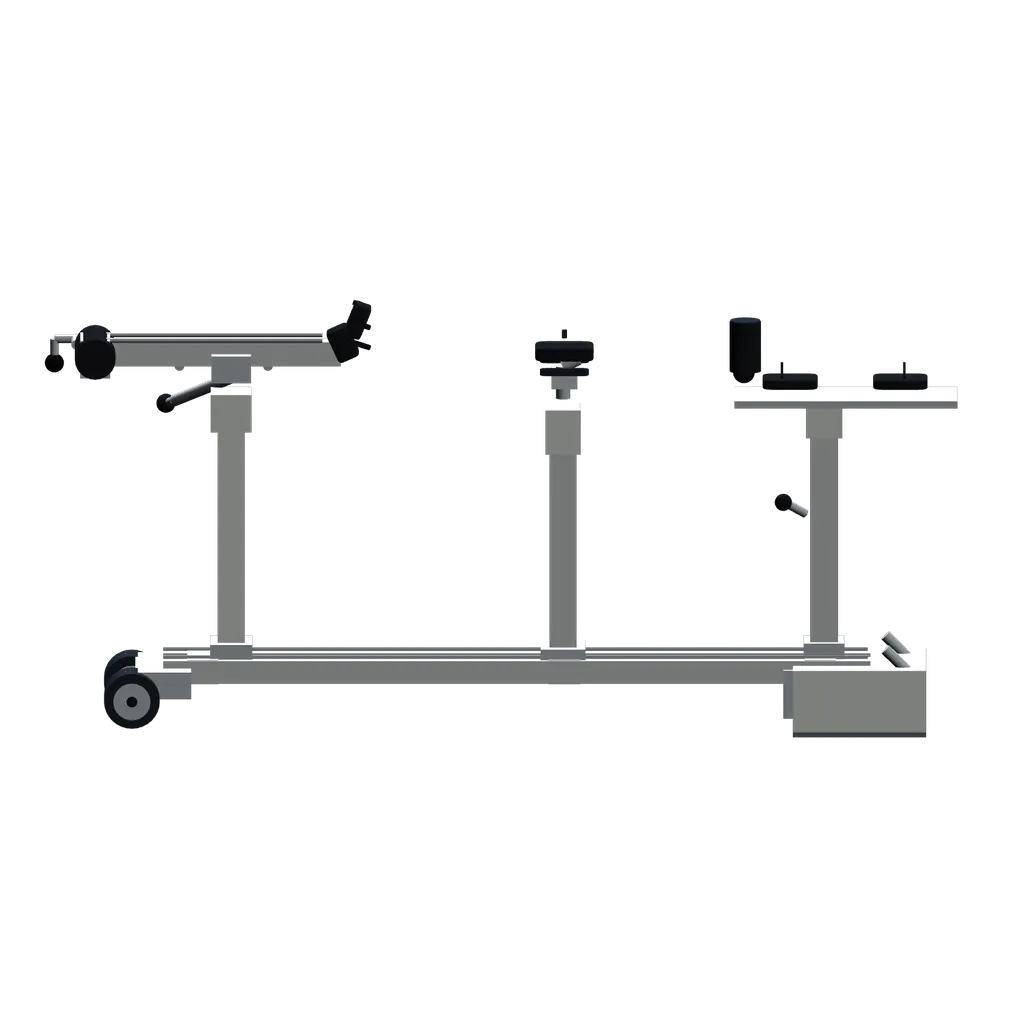
The KL-6D is an orthopaedic traction frame for hospitals that treat lower-limb fractures and dislocations in theatres with limited floor space. Orthopaedic and trauma surgeons, radiographers, theatre nurses and anaesthetists work around it during reduction and fixation.
Hip fractures are a common use. For femoral neck and intertrochanteric fractures, the surgeon draws the limb out to length with up to 140 mm of traction, swings the device to set abduction or adduction, and raises it to control hip flexion. The surgeon then checks the reduction on the image intensifier before inserting a nail, screws, or a plate. Because the frame is only 450 mm wide, the C-arm can be brought in close on the operative side.
Tibial and femoral shaft fractures treated with intramedullary nails need the leg held at length and correctly rotated while the nail is passed. The traction device holds that position steadily, and the narrow frame leaves the surgeon room to work on the limb.
Theatre also manages hip and knee dislocations that need reduction under anaesthesia, using measured traction and imaging to confirm the joint is back in place.
Older hospital buildings, district hospitals and field or mobile surgical units gain most. In compact theatres, a narrow traction frame on wheels can be brought to the foot of the operating table only when a case needs it and stored in a small space afterwards. Because it works with various operating tables, including the KL-D III, a department can add traction without replacing its existing tables.