
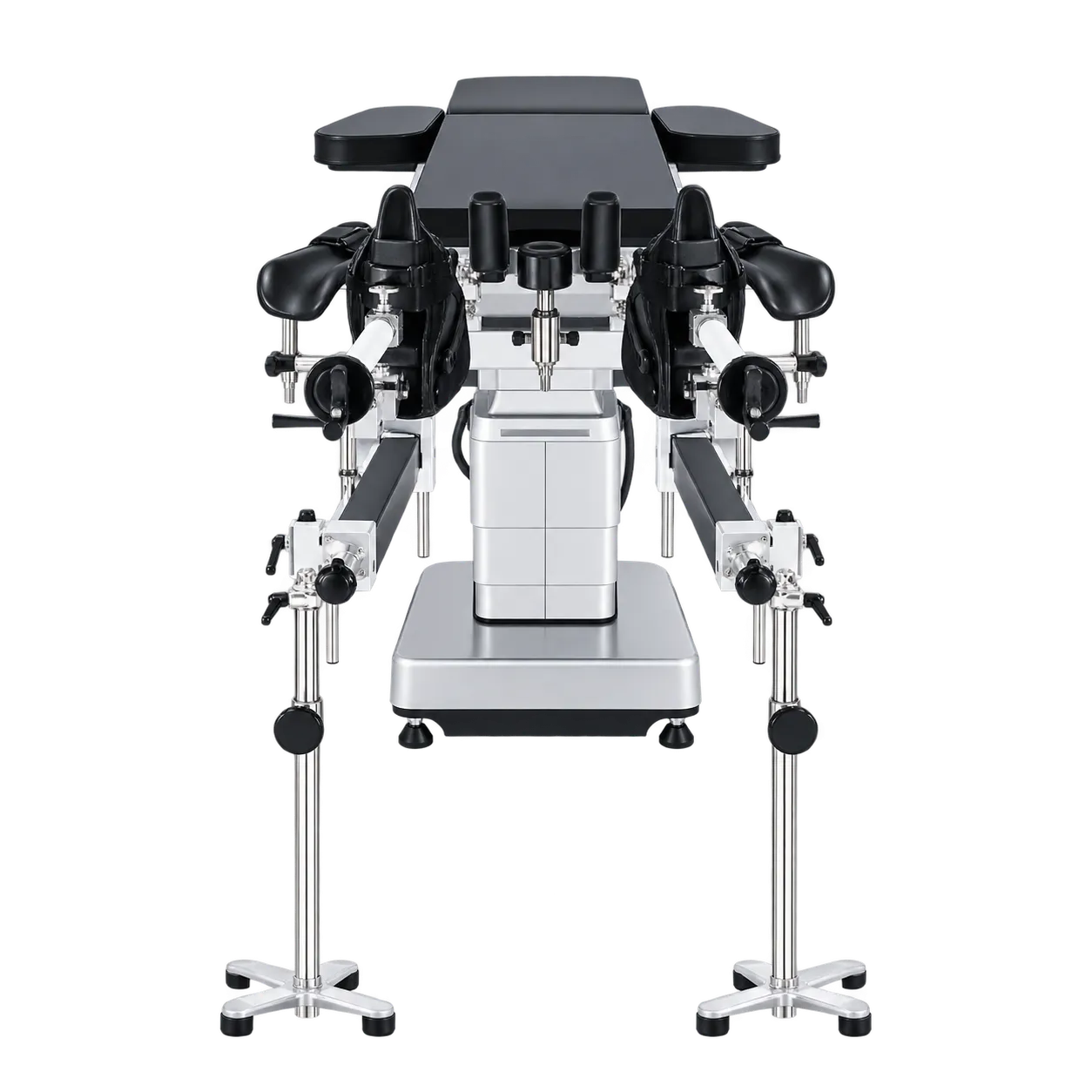
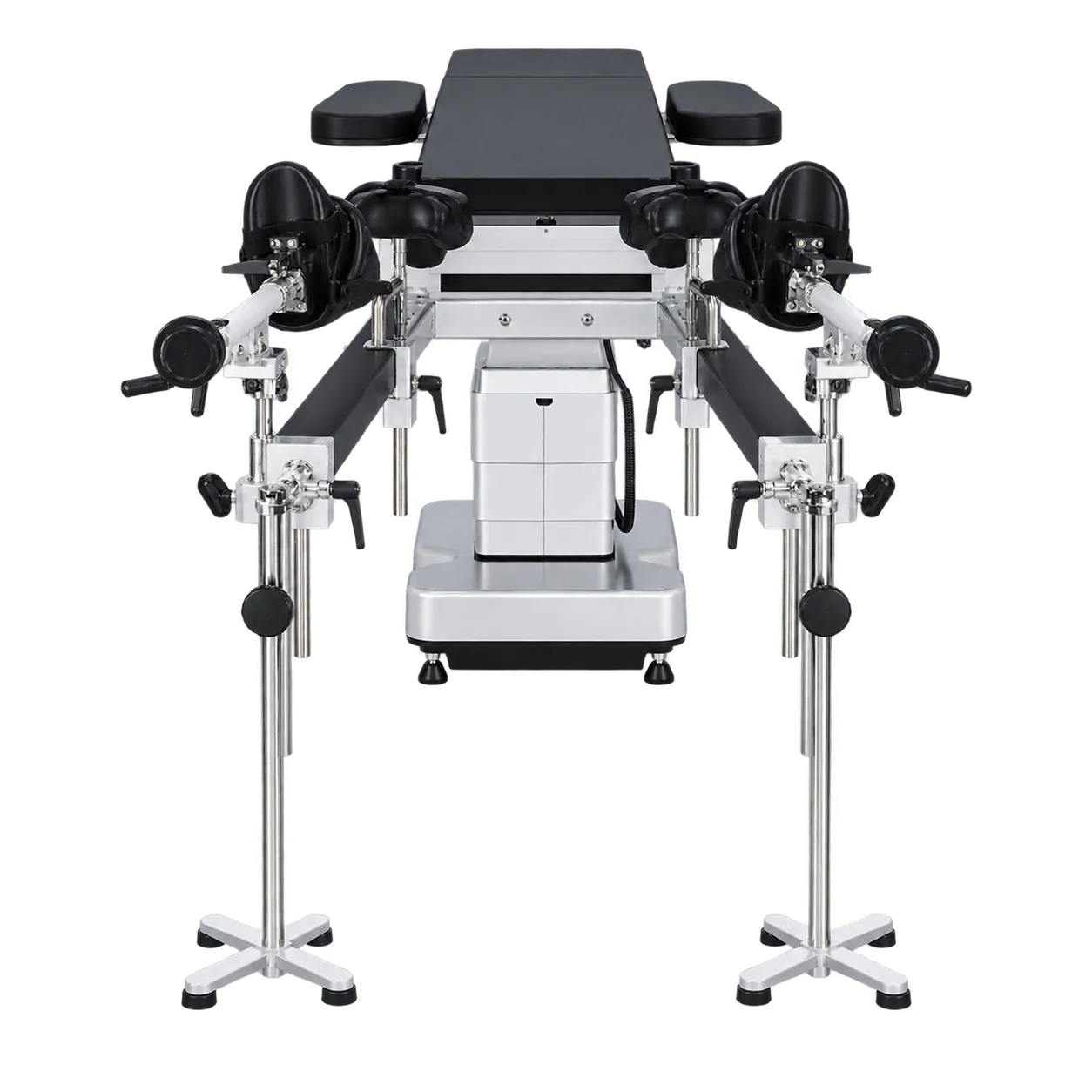
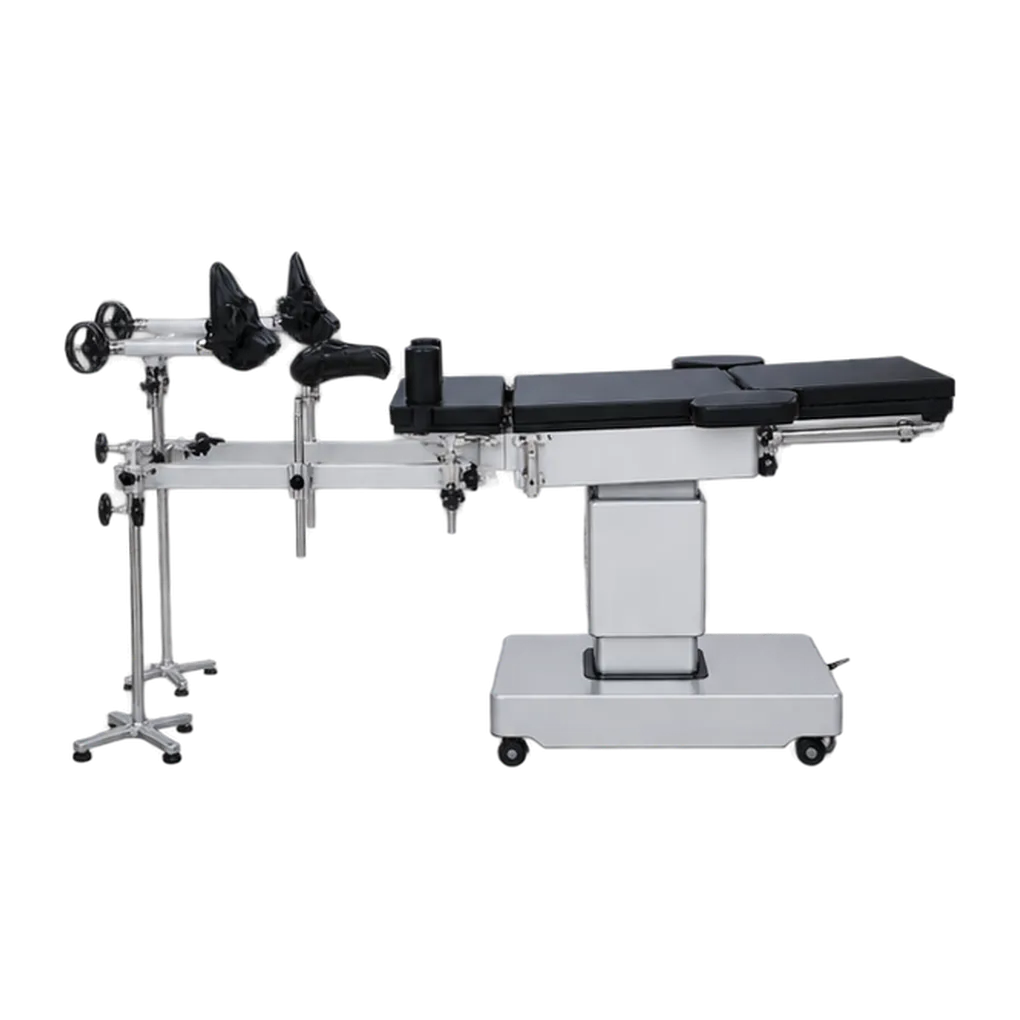
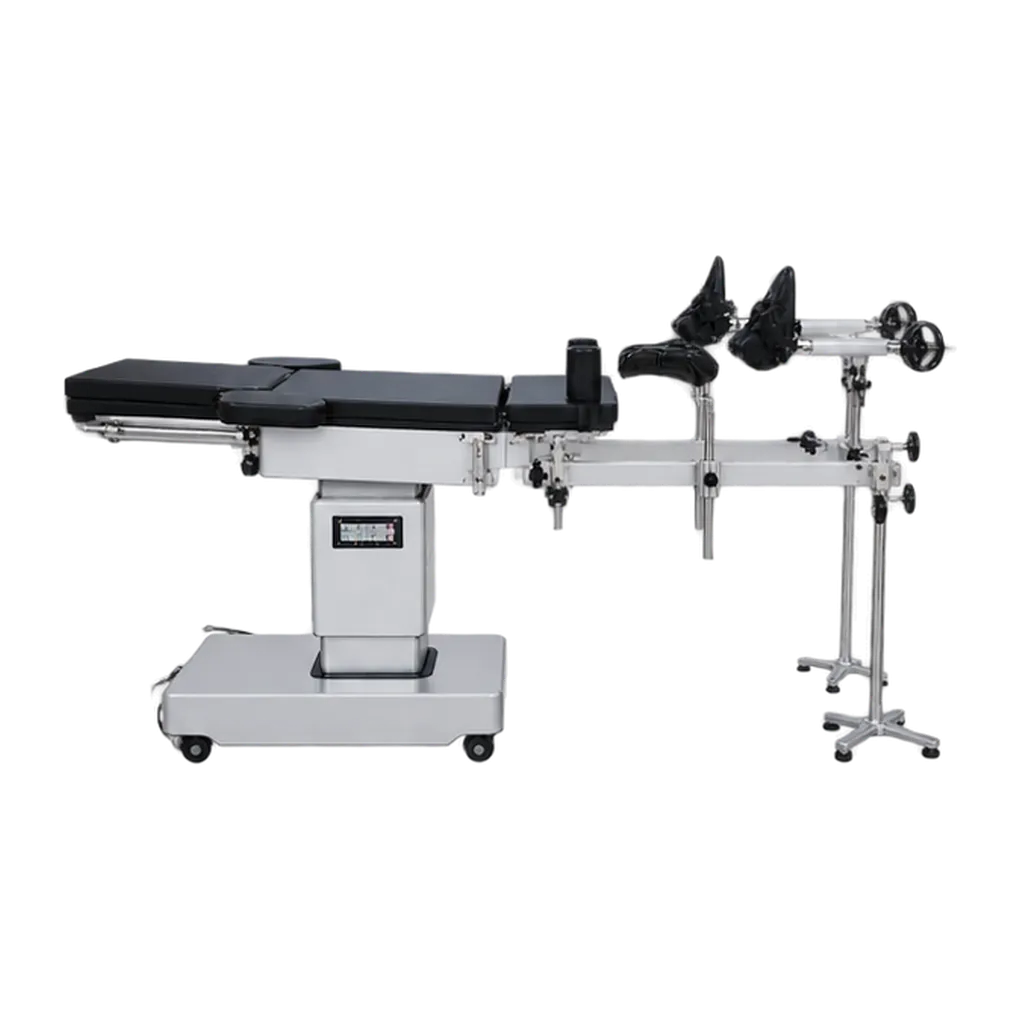
The KL-6C is an orthopaedic traction frame for hospitals that treat lower-limb and pelvic fractures and dislocations under image intensifier control. Orthopaedic and trauma surgeons, radiographers, anaesthetists, and theatre nurses use it, usually alongside a C-arm.
Proximal femoral fractures are a core use. For intertrochanteric and femoral neck fractures treated with nails, screws or plates, the surgeon applies traction to restore length, adjusts rotation and alignment, and checks the reduction on anteroposterior and lateral views before fixation. A carbon fibre frame stays clear on those images, so the surgeon assesses the bone and implant position without moving the frame aside.
Femoral shaft and tibial fractures treated with intramedullary nails need steady traction while the fracture is reduced and the nail passed. A traction distance of up to 200 mm, horizontal rotation through 180° and at least 400 mm of height adjustment let the team set the line of pull to suit the limb and the patient’s size.
The frame also manages hip and other dislocations requiring reduction under anaesthesia, and fractures needing controlled traction during closed reduction, in theatre, where imaging confirms the result.
Trauma units with busy lists gain most. The plug-in design quickly connects the frame to the operating table, including Keling’s KL-D III-III, so a standard table becomes a traction set-up when the case requires it. Between cases, the frame travels on its accessory trolley, saving storage space and keeping the theatre floor clear for the next patient.