
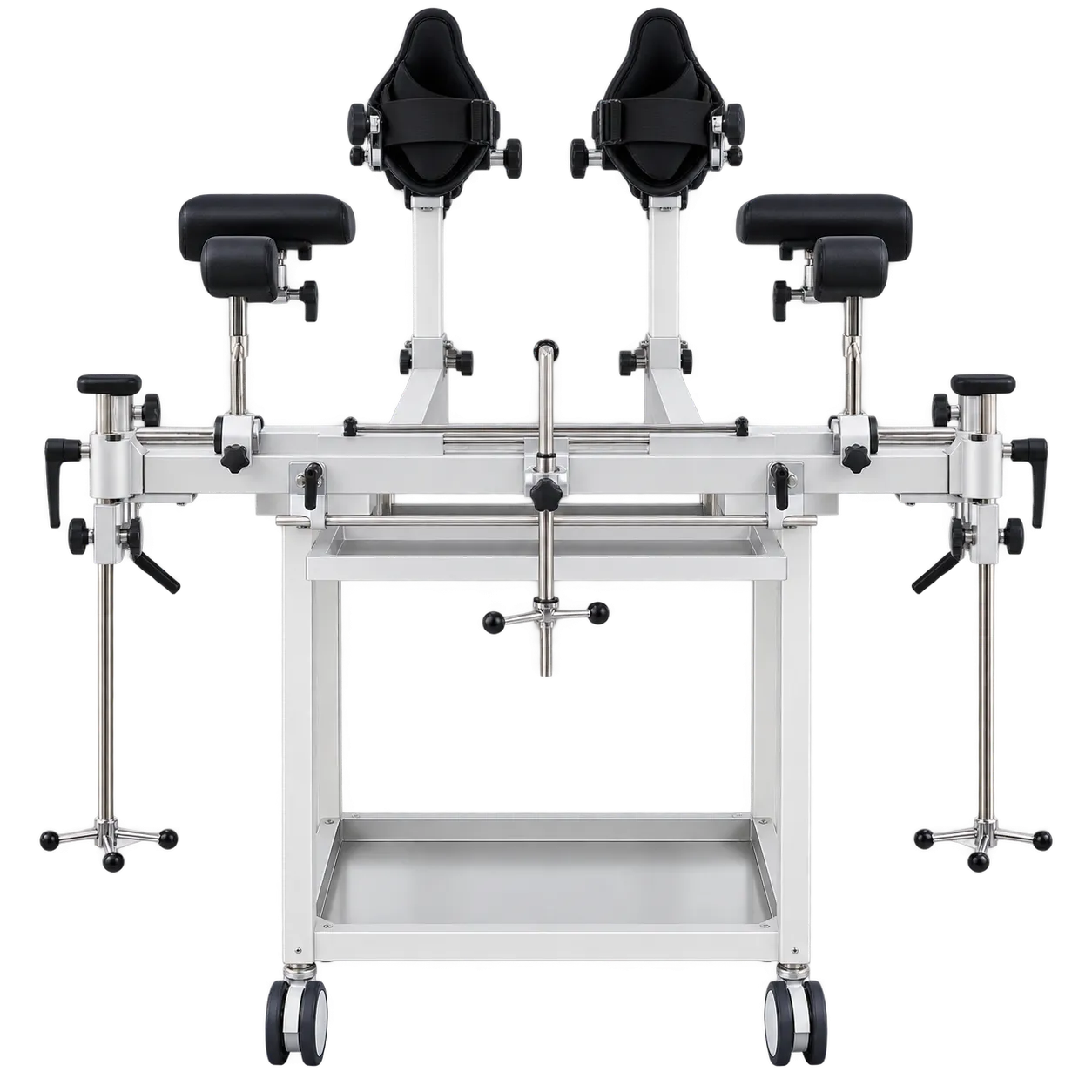
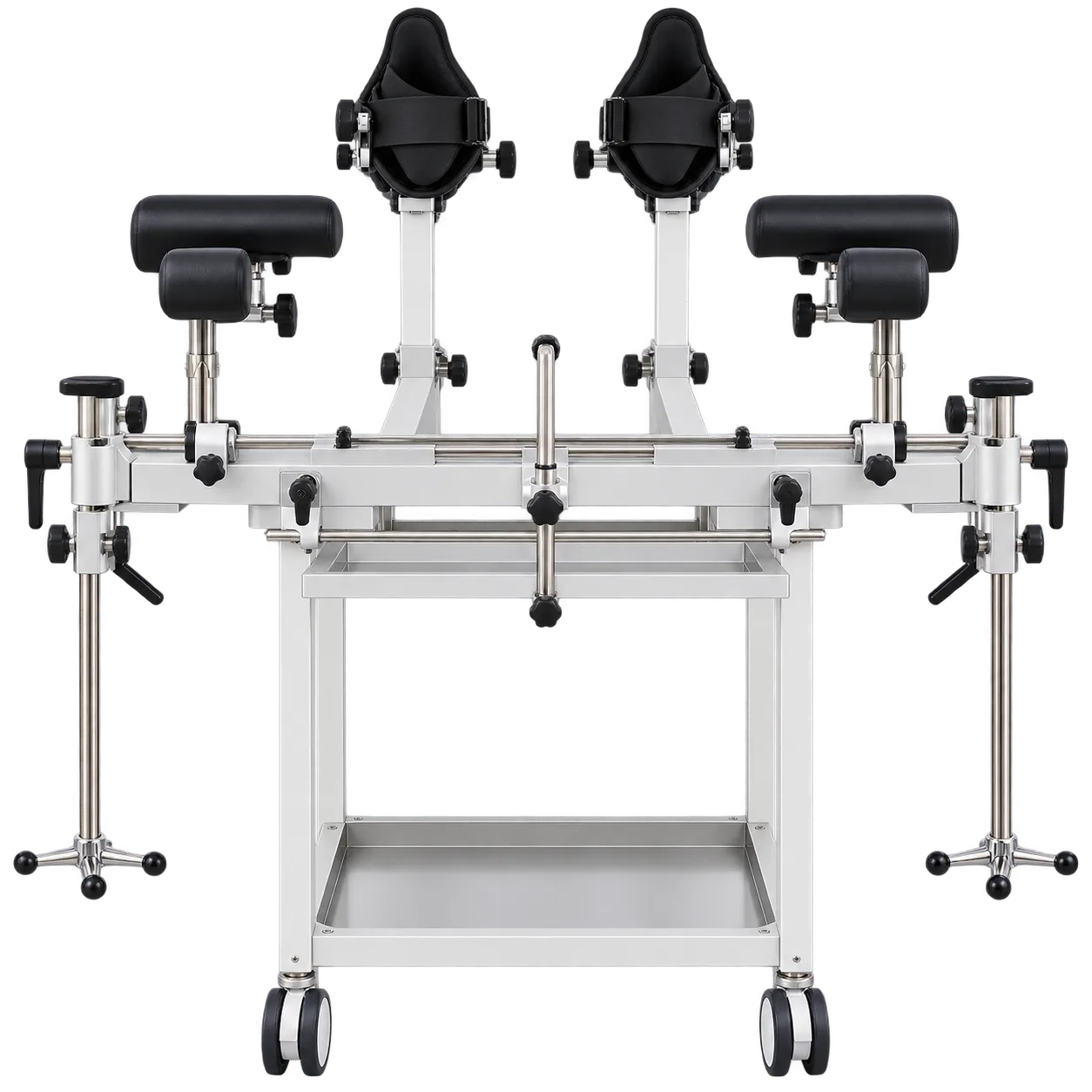
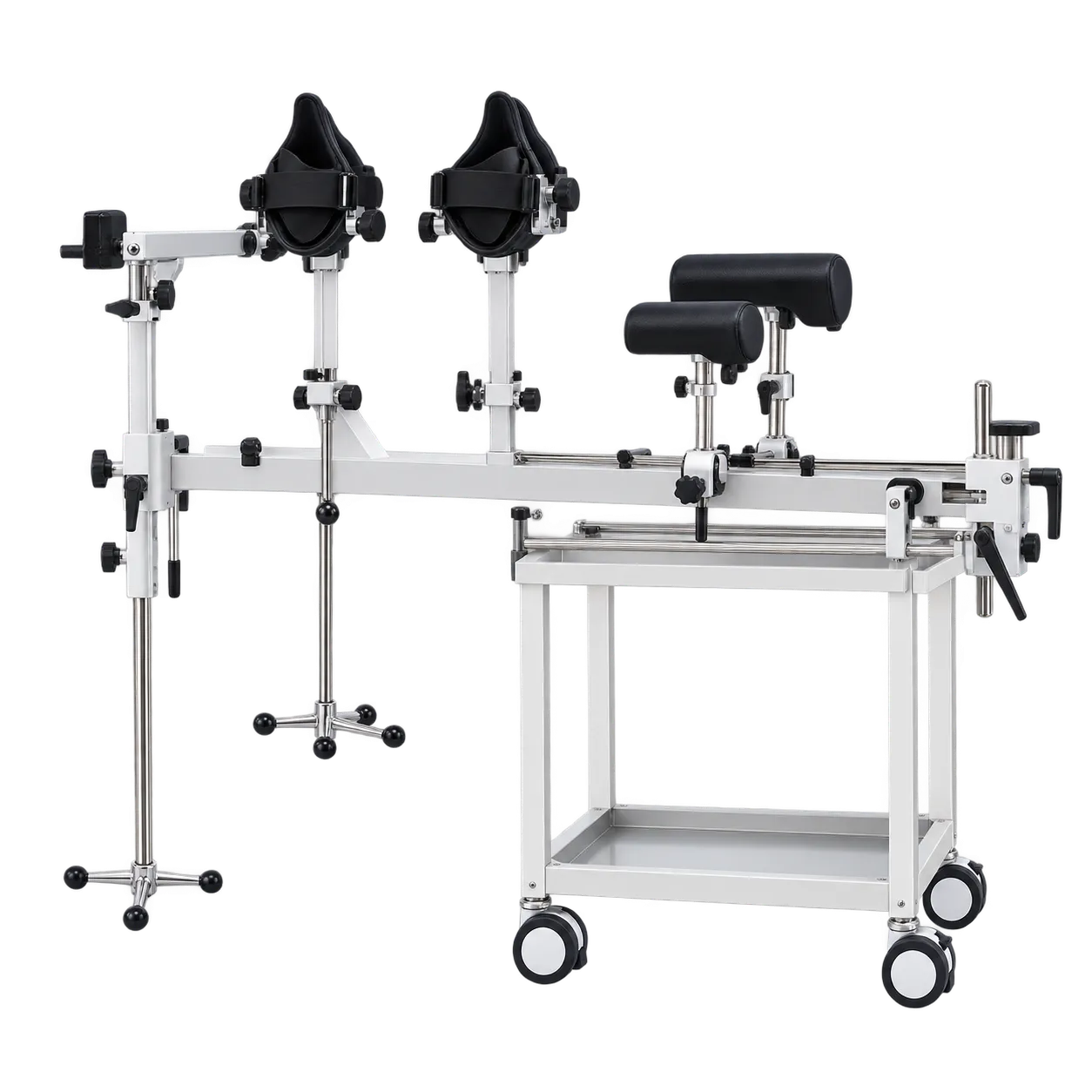
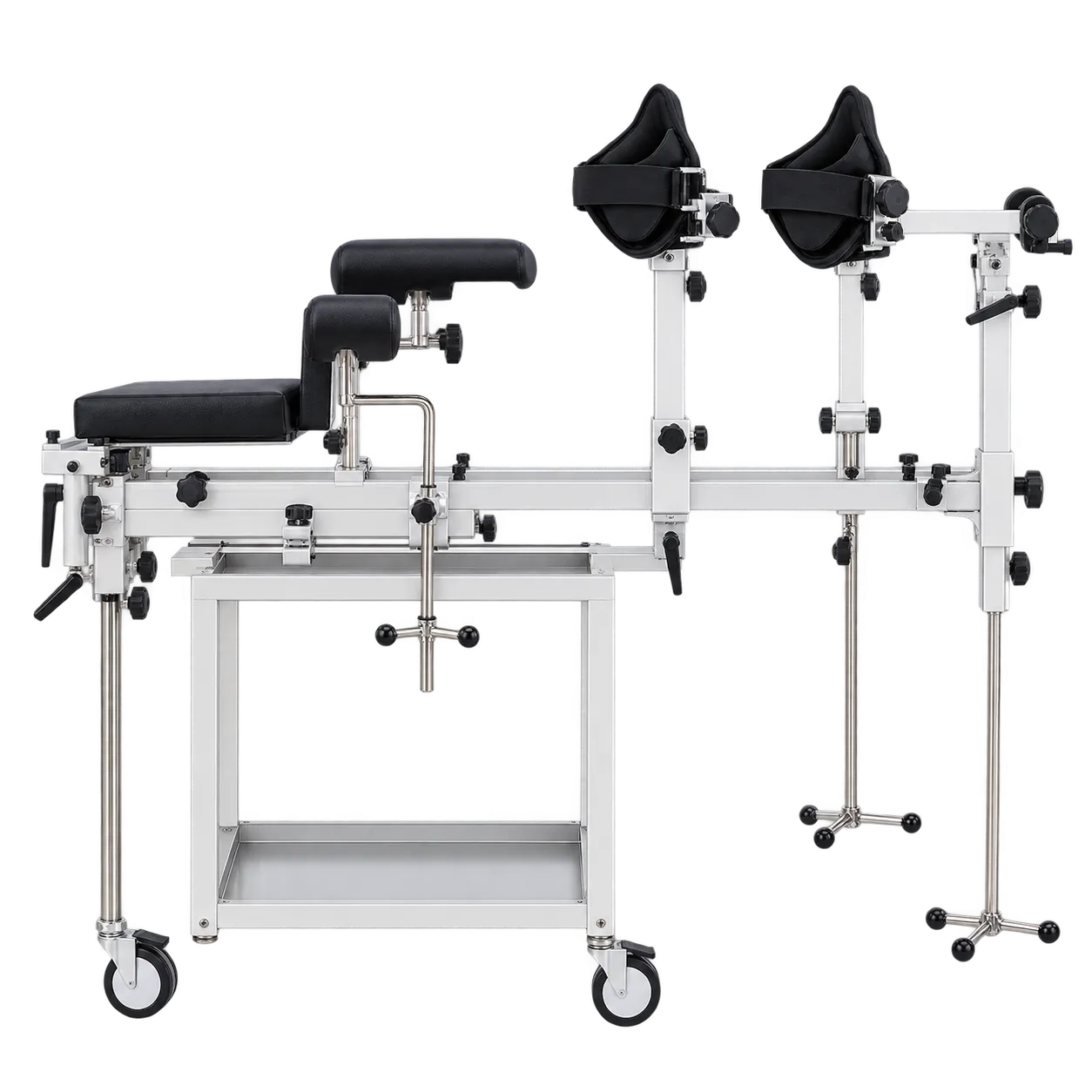
The KL-6B is an orthopaedic traction frame for orthopaedic and trauma theatres, used to reduce lower-limb fractures and dislocations under controlled traction. Orthopaedic surgeons, theatre nurses, radiographers and anaesthetists work around it during reduction and fixation.
Hip fractures are its most frequent setting. For intertrochanteric and femoral neck fractures, the surgeon pulls the limb out to length with up to 200 mm of traction. The device then swings horizontally to set abduction or adduction, and the surgeon adjusts its height to control flexion. The surgeon confirms the reduction on the image intensifier before inserting a nail, screws or a plate.
Femoral shaft fractures treated with intramedullary nails require the limb to be held out to length and correctly rotated while the guide wire and nail pass across the fracture. Tibial shaft fractures are managed similarly, with the line of pull set by rotation and height adjustments to suit the injury.
Hip dislocations and fracture-dislocations requiring reduction under anaesthesia are also managed in theatre with steady, measured traction, with imaging confirming joint congruence.
District hospitals and trauma units with smaller theatres gain most from the compact 1420 × 765 mm frame. It extends from the foot end of the operating table while leaving space around the injured limb for the C-arm, the scrub nurse and the instrument table. The ±10% tolerance on traction distance gives the team consistent travel from one case to the next, and the 400 mm of height adjustment suits patients of different builds.