
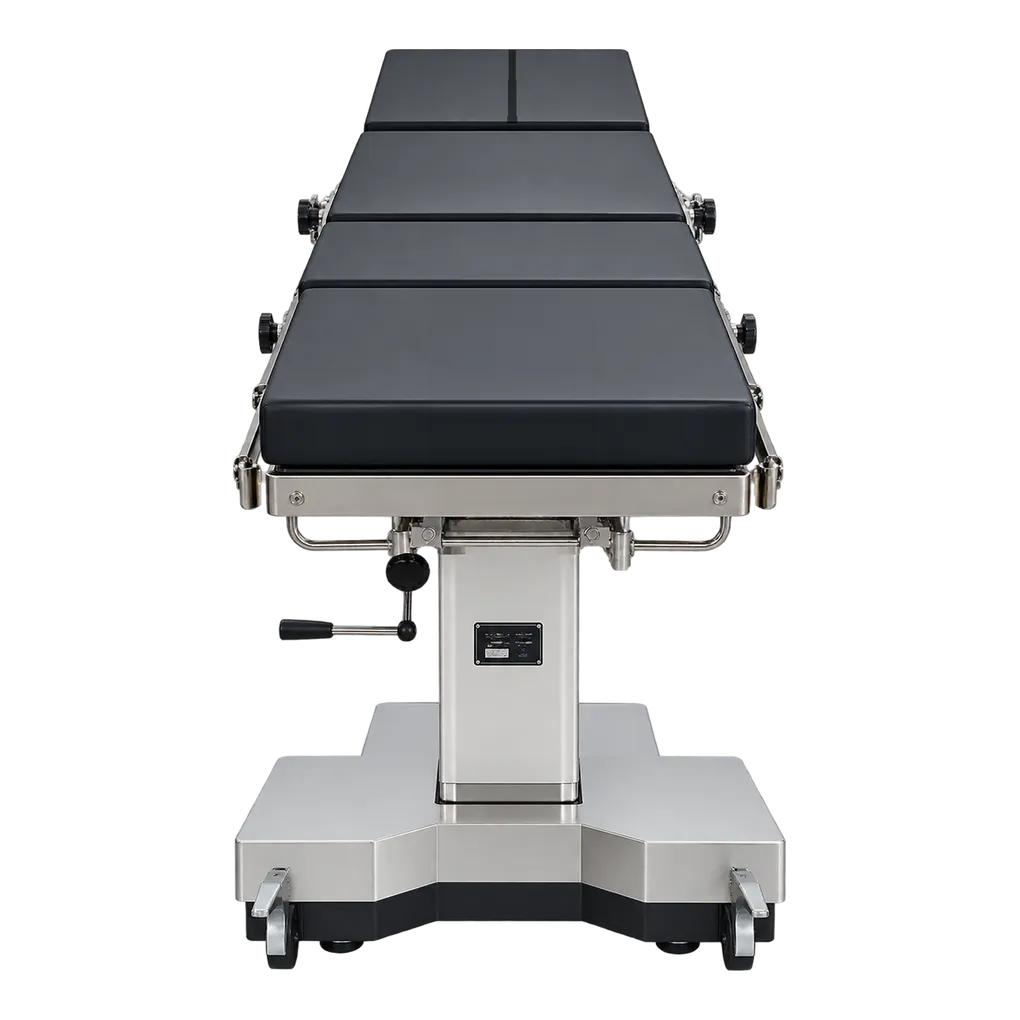
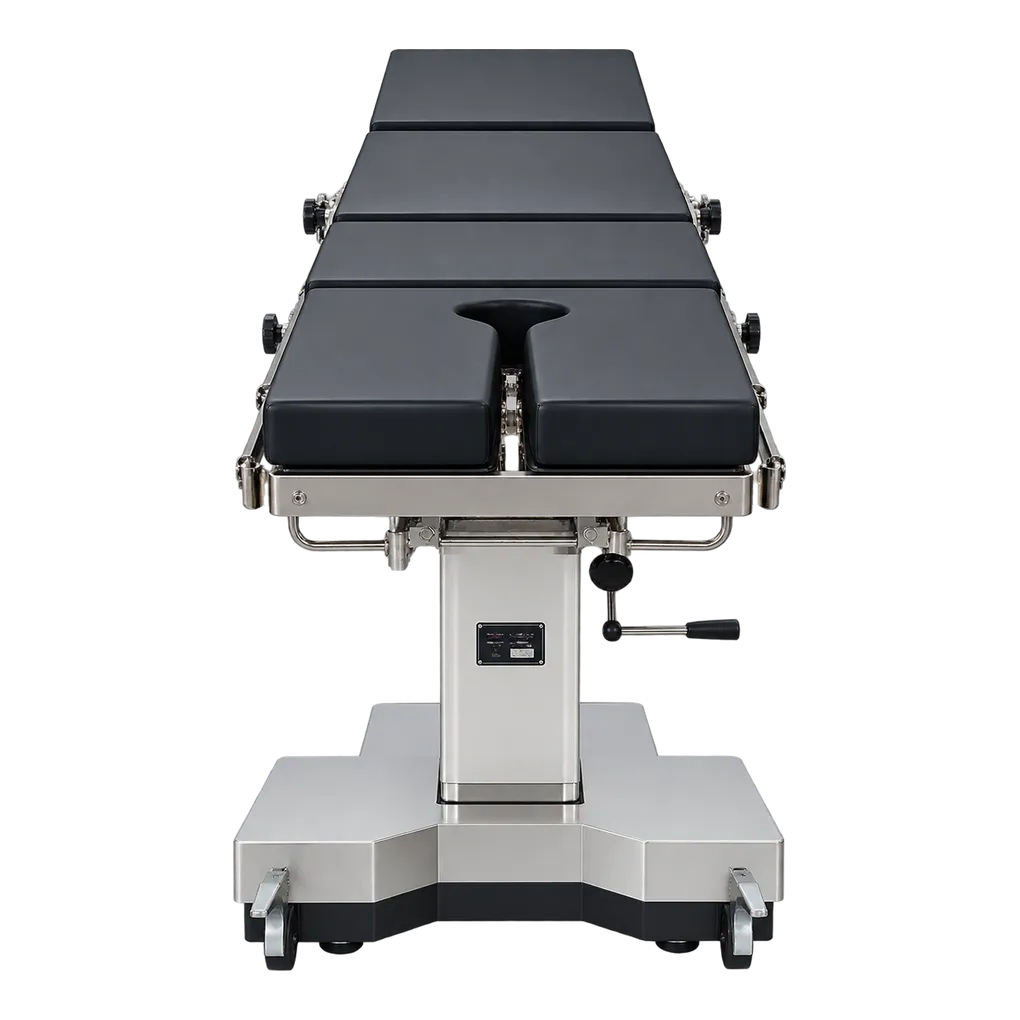
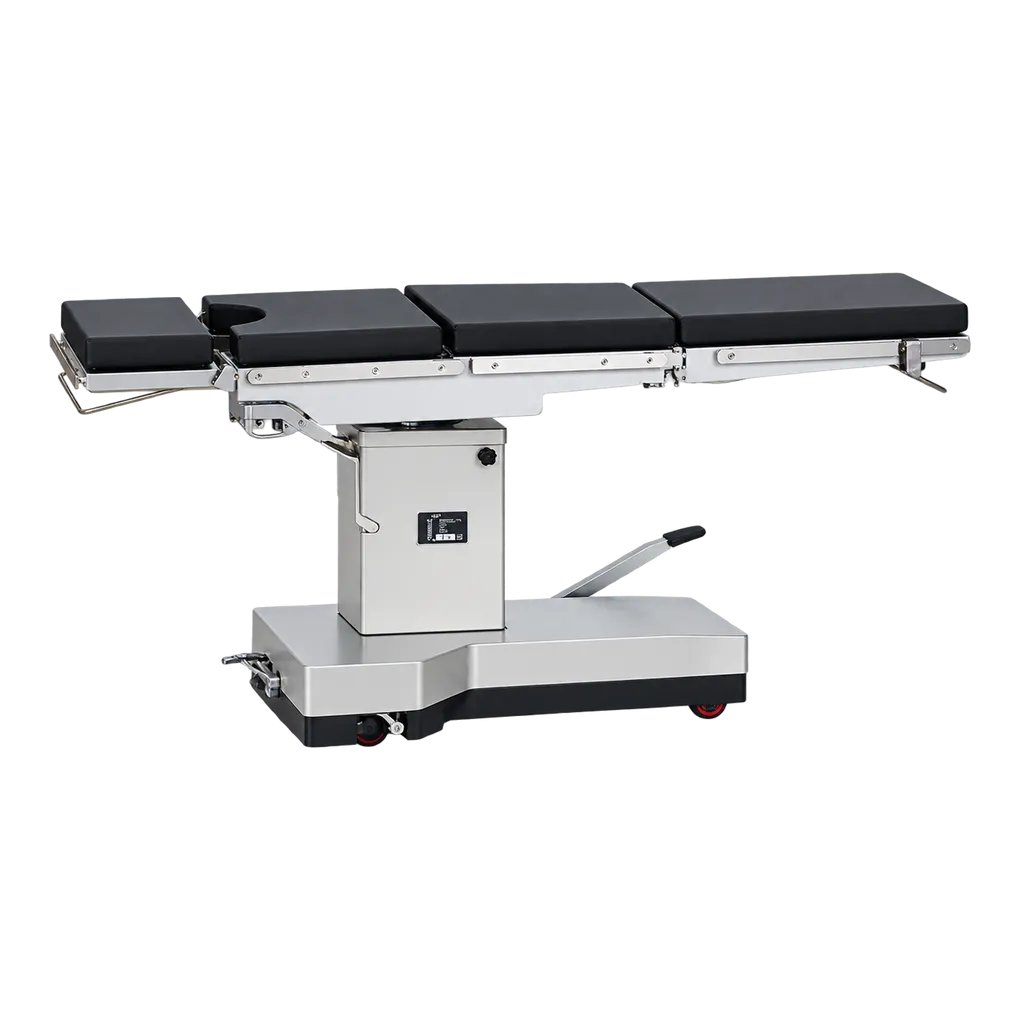
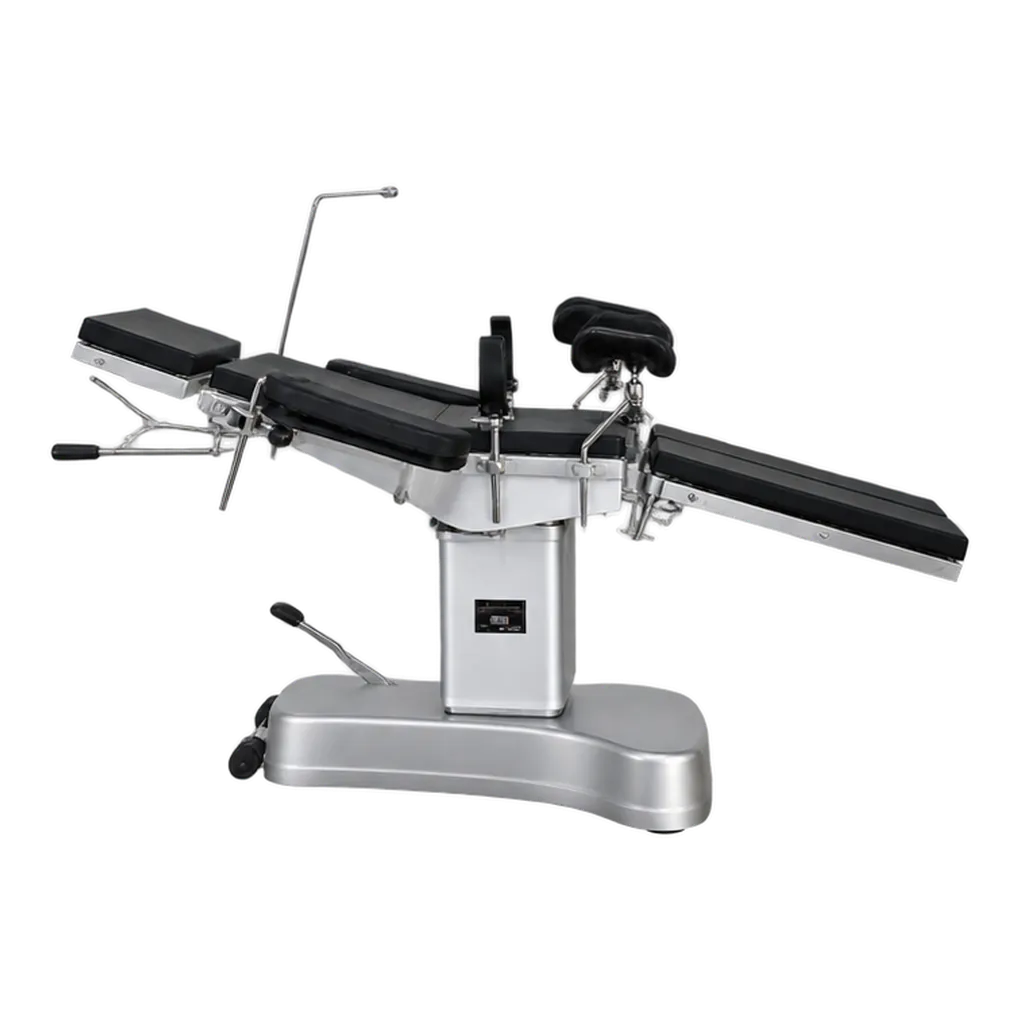
The 3009C is an operating table for hospitals that need intraoperative imaging on their hydraulically and mechanically driven theatre table. Orthopaedic and trauma surgeons, radiographers, anaesthetists and theatre nurses all work around it when a C-arm is in use.
Orthopaedic and trauma surgery is where the exchangeable plates matter most. To fix pelvic, femoral, and tibial fractures, the team swaps the head plate for the leg plate so the injured region lies over the top opening. The C-arm can then pass along the limb or pelvis to capture complete views, while the carbon-fibre surface allows X-ray photography during the case.
Spinal and urological work benefits in the same way. Lumbar procedures, nephrolithotomy and ureteric stenting all depend on clear imaging of the trunk, and reversing the patient’s orientation keeps the column away from the part being imaged.
General surgery uses 15° of Trendelenburg and reverse Trendelenburg for pelvic and upper abdominal operations, with 15° of lateral tilt to expose the gallbladder or spleen. Gynaecology lists lower the leg boards to 90° and open them outwards, with the leg support frames holding the patient in lithotomy. The headboard drops 90° for neck extension, the arm-resting frames support upper-limb surgery, and the screen frame separates the anaesthetist from the sterile field.
District and general hospitals that run fracture lists on their main theatre table gain most. The memory sponge mattress supports the patient during long imaging-guided cases, and the stainless rails, base and column wipe clean between operations.