
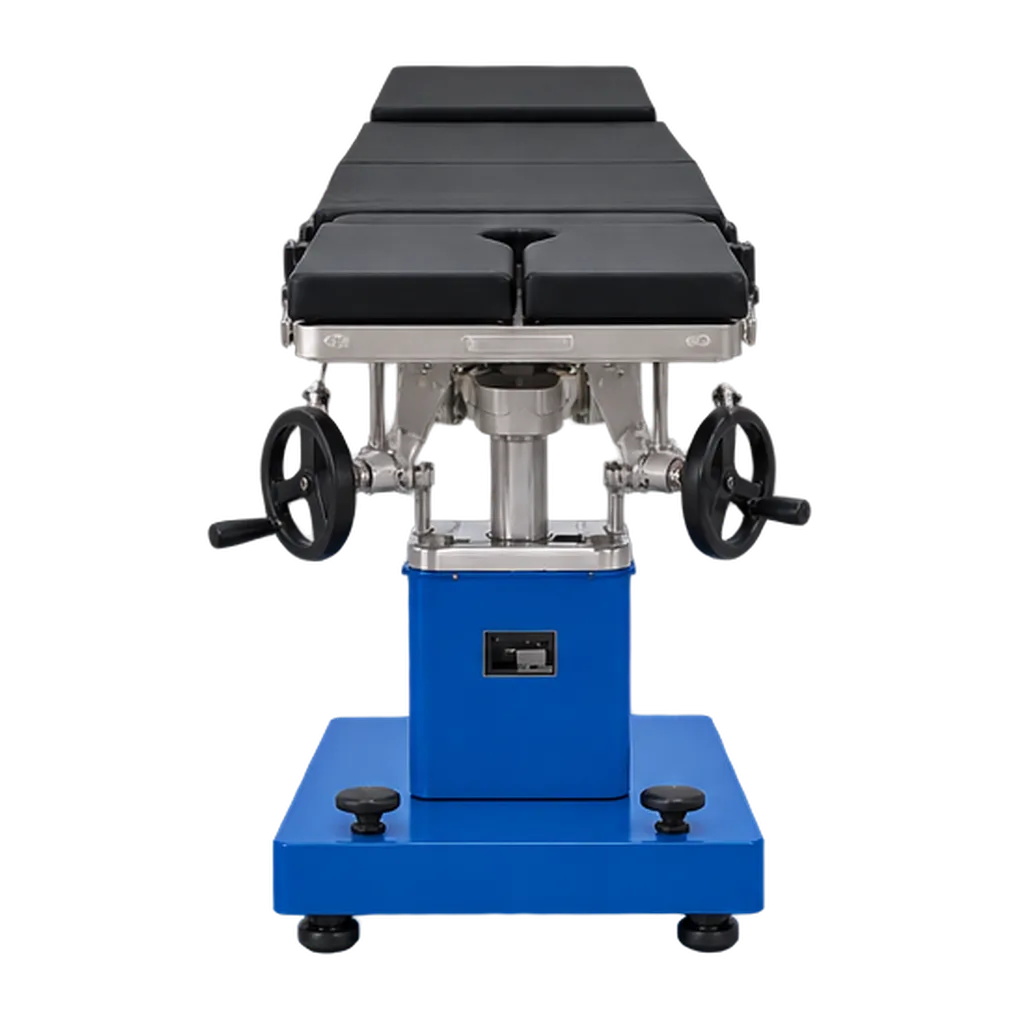
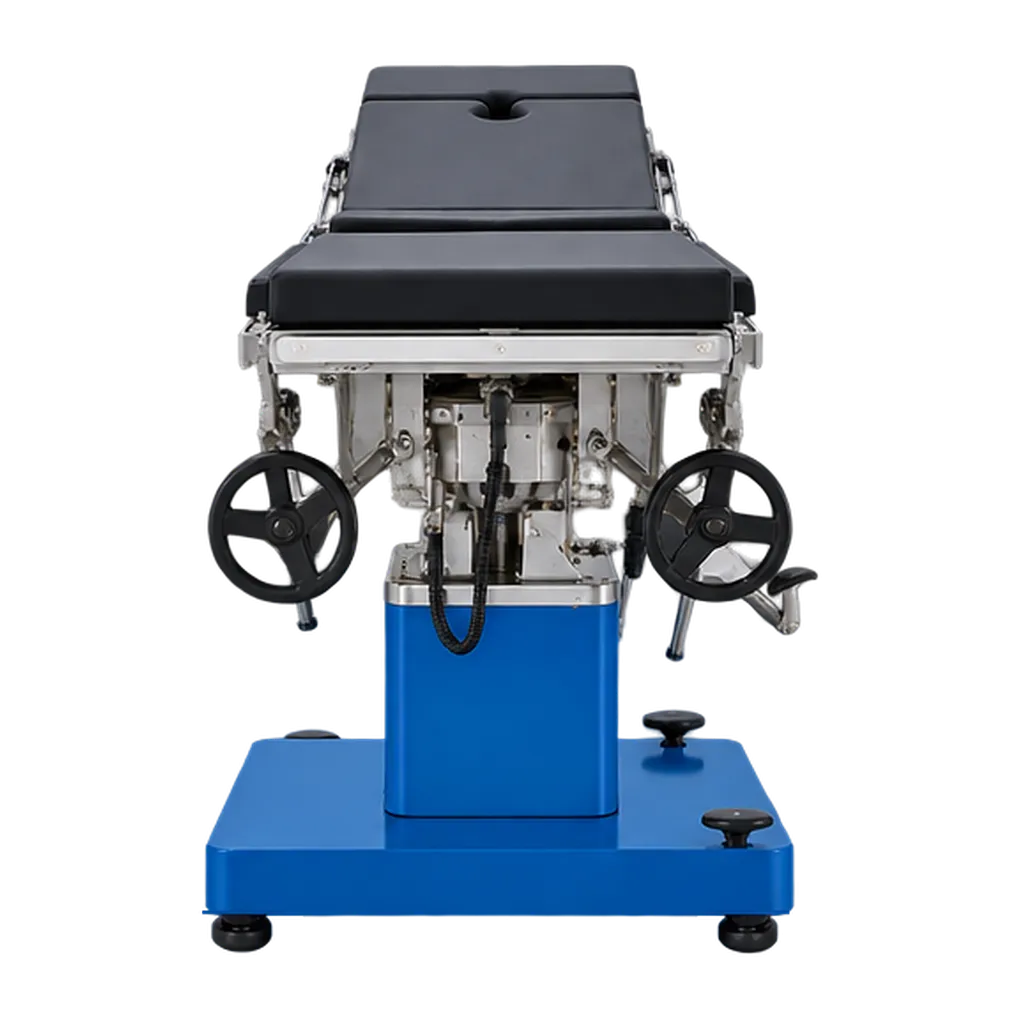
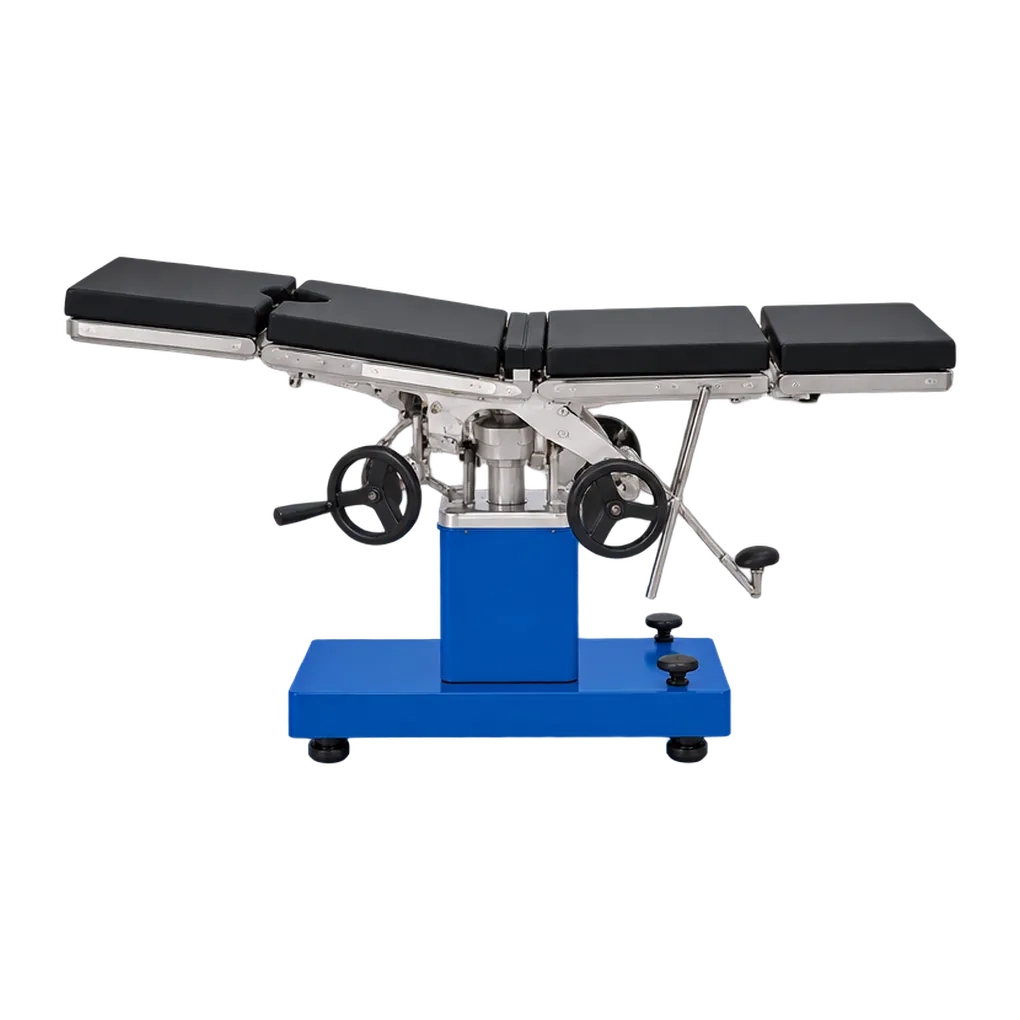
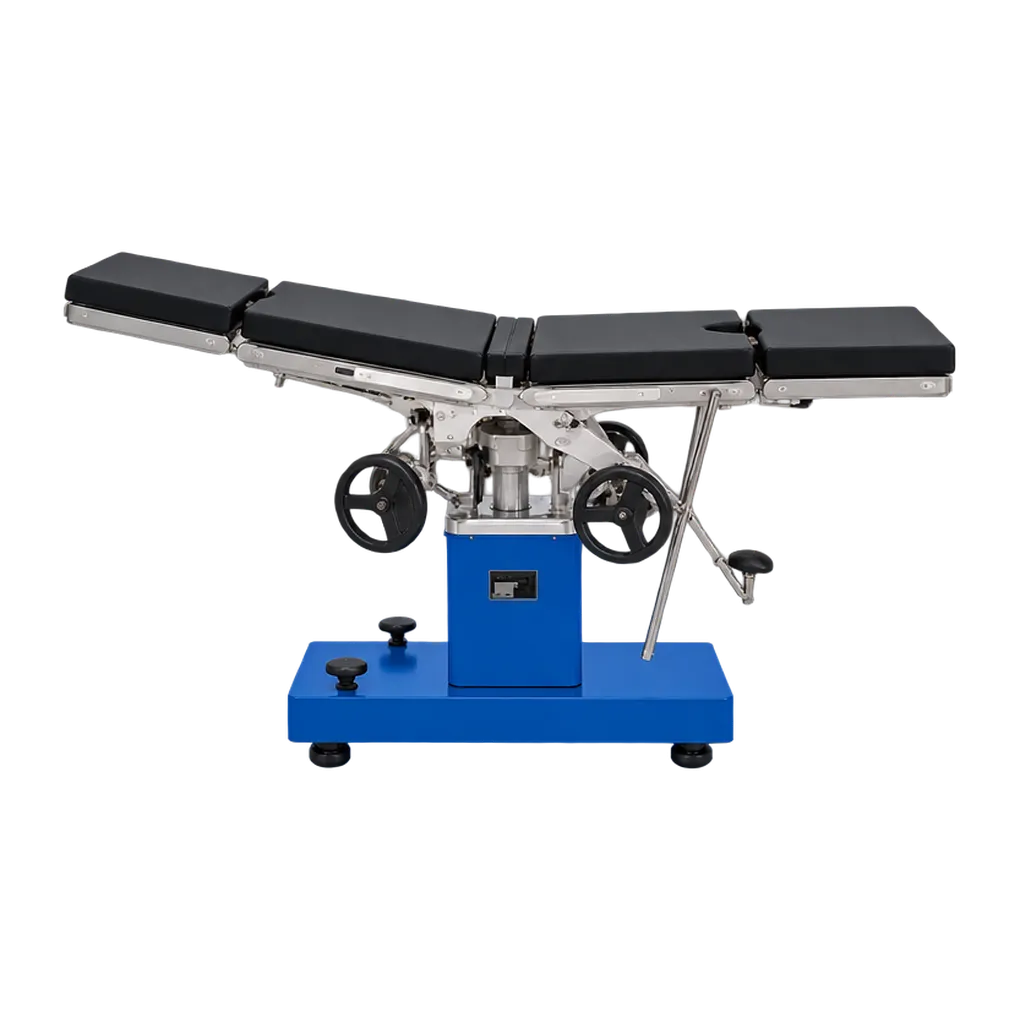
The 3001 is a manual operating table for hospitals and clinics where a small theatre team shares patient positioning. Surgeons, anaesthetists, theatre nurses, and operating department practitioners adjust it at different times during a case.
District and rural hospitals, mission hospitals and day-surgery units often run theatres with one circulating nurse and an anaesthetic assistant. With controls on both sides, either can change tilt or height from where they stand, and the scrubbed team never has to step back to let someone through.
General surgery uses its 20° of Trendelenburg for hernia repair, appendicectomy and pelvic procedures, and 15° of reverse Trendelenburg for cholecystectomy and upper abdominal operations. A 15° lateral tilt rolls the patient to expose the gallbladder or spleen. A waist board that lifts at least 100 mm, used with the shoulder support frames, opens the flank for renal surgery.
Obstetric and gynaecological lists lower the leg boards 90° and fit the leg support frames for lithotomy, while the headboard drops 90° for neck extension in thyroid operations. The backboard rises to 70° for semi-sitting positions, and the arm-resting frames support hand surgery. The screen frame separates the anaesthetist from the sterile field.
Small hospitals with lean staffing and busy daily lists gain most from this design. Two-sided control cuts the walking, reaching and waiting that slow positioning, and the spray-coated cold plate construction and Y-type sealing keep the table practical for daily use. The rotary brake lets one person move and secure it between cases.