
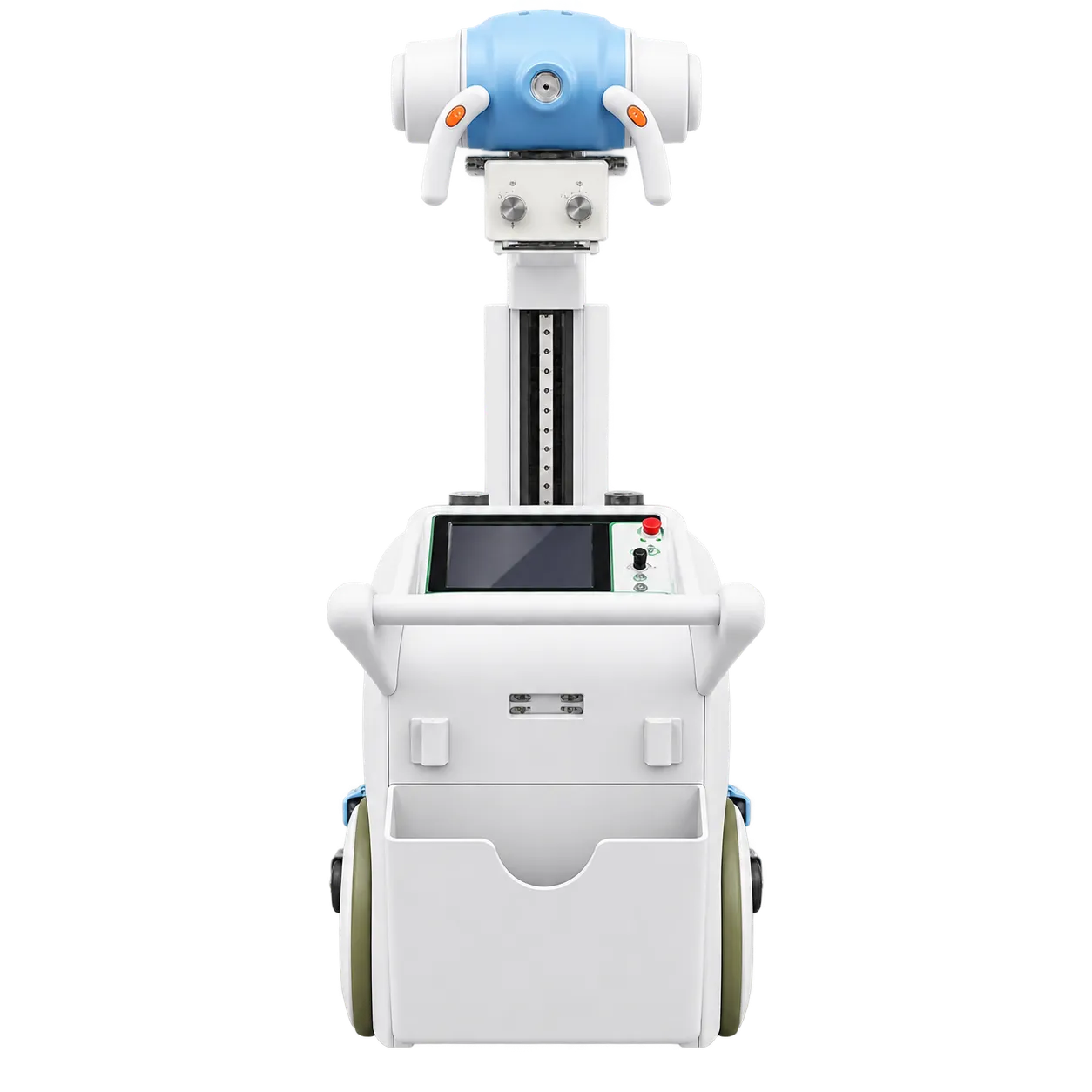
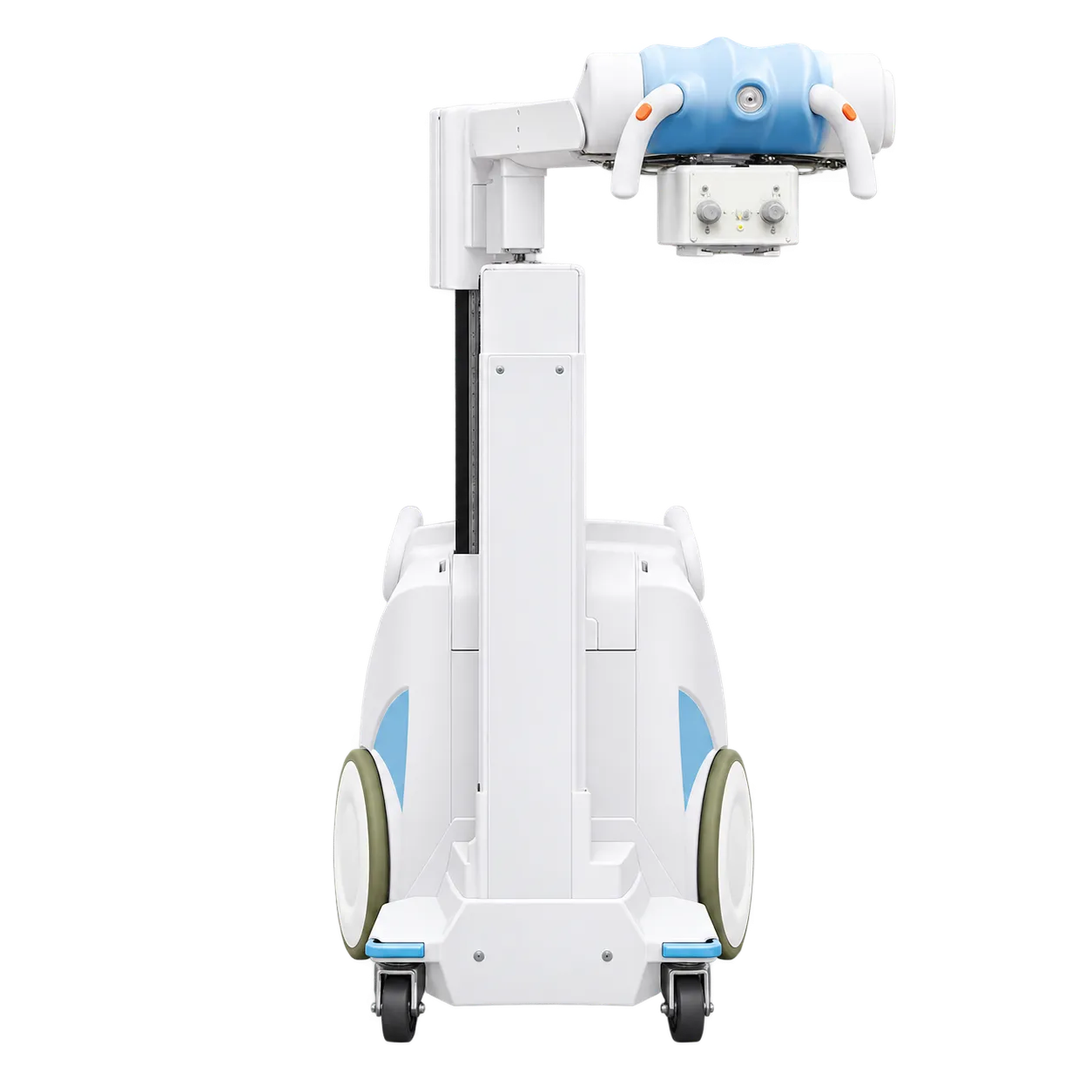
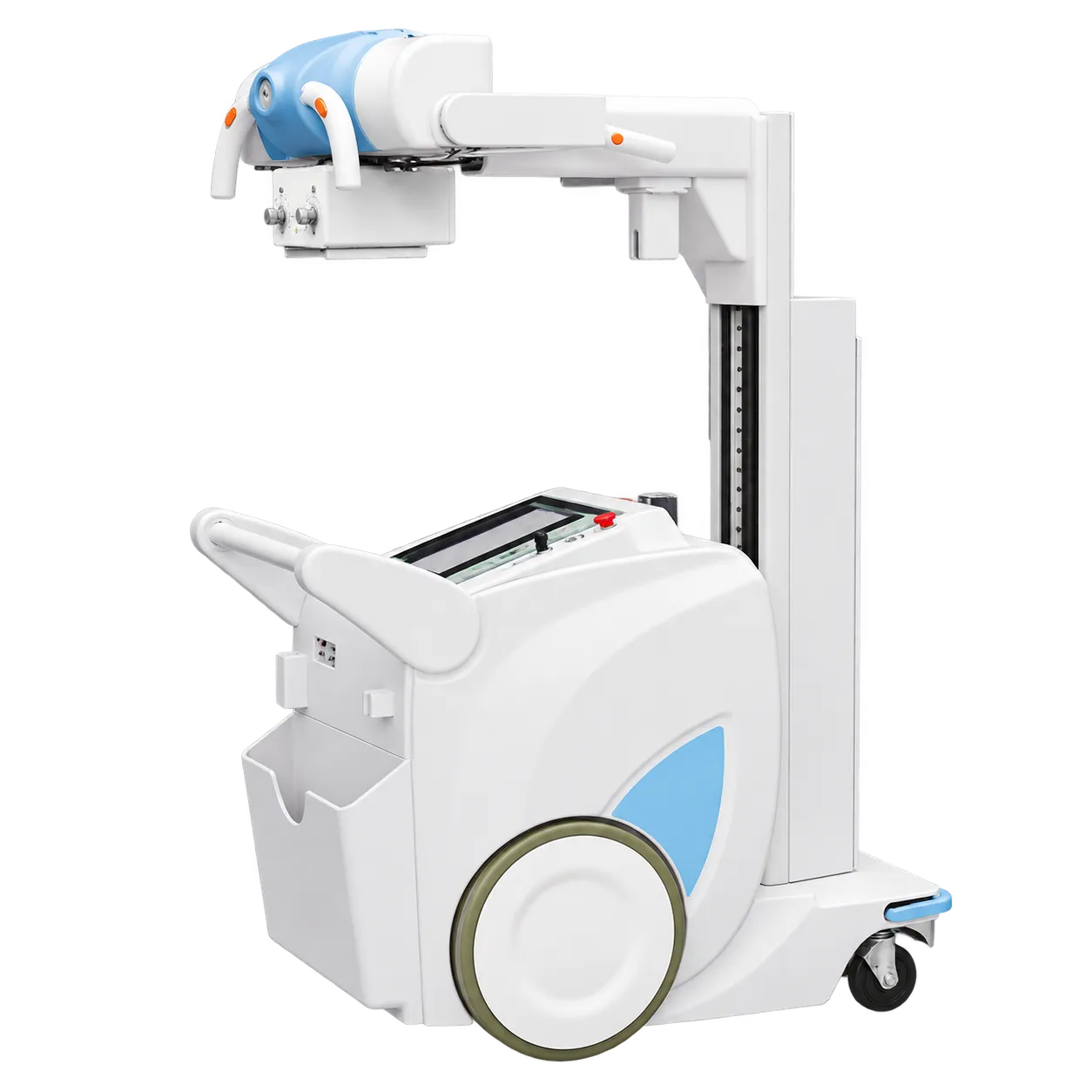
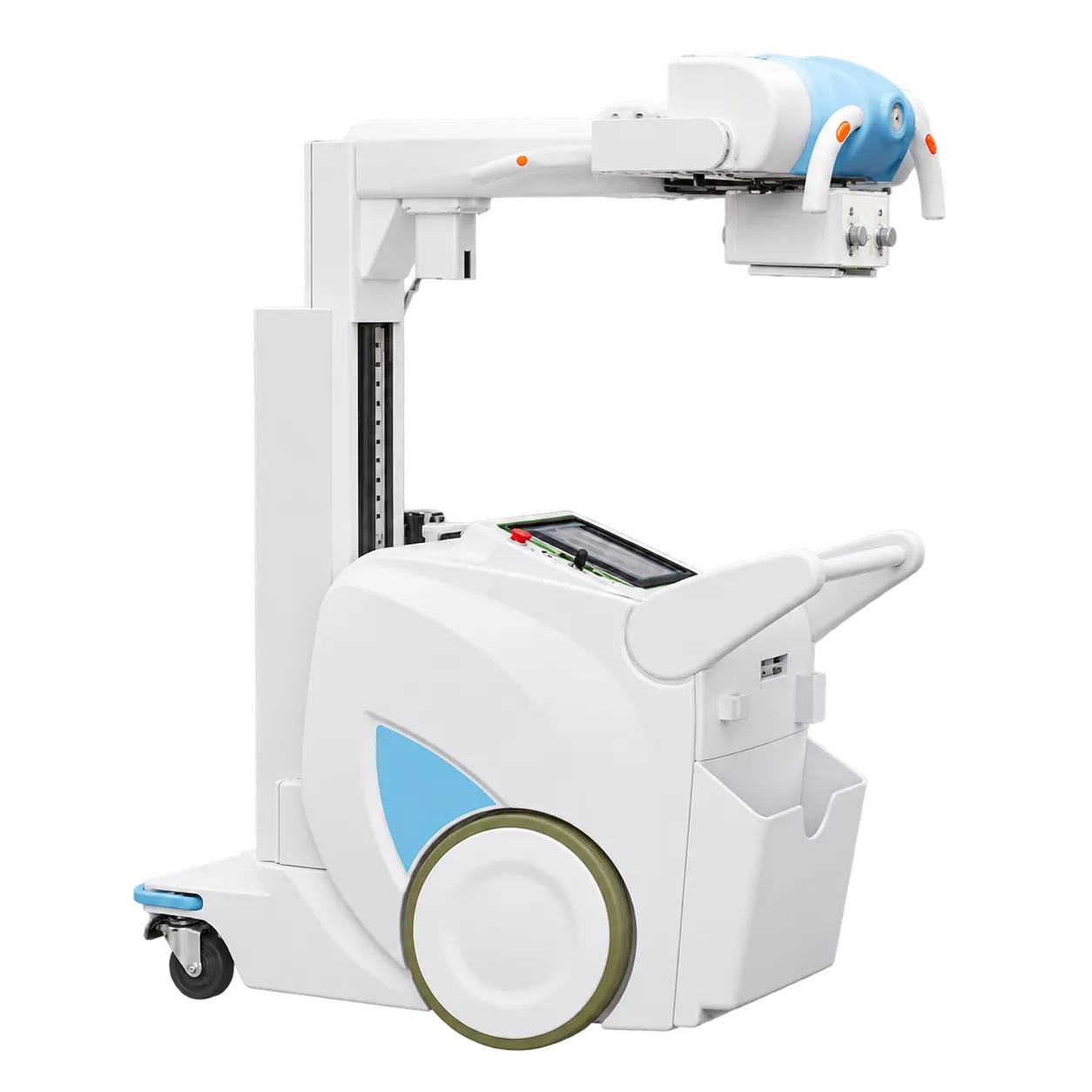
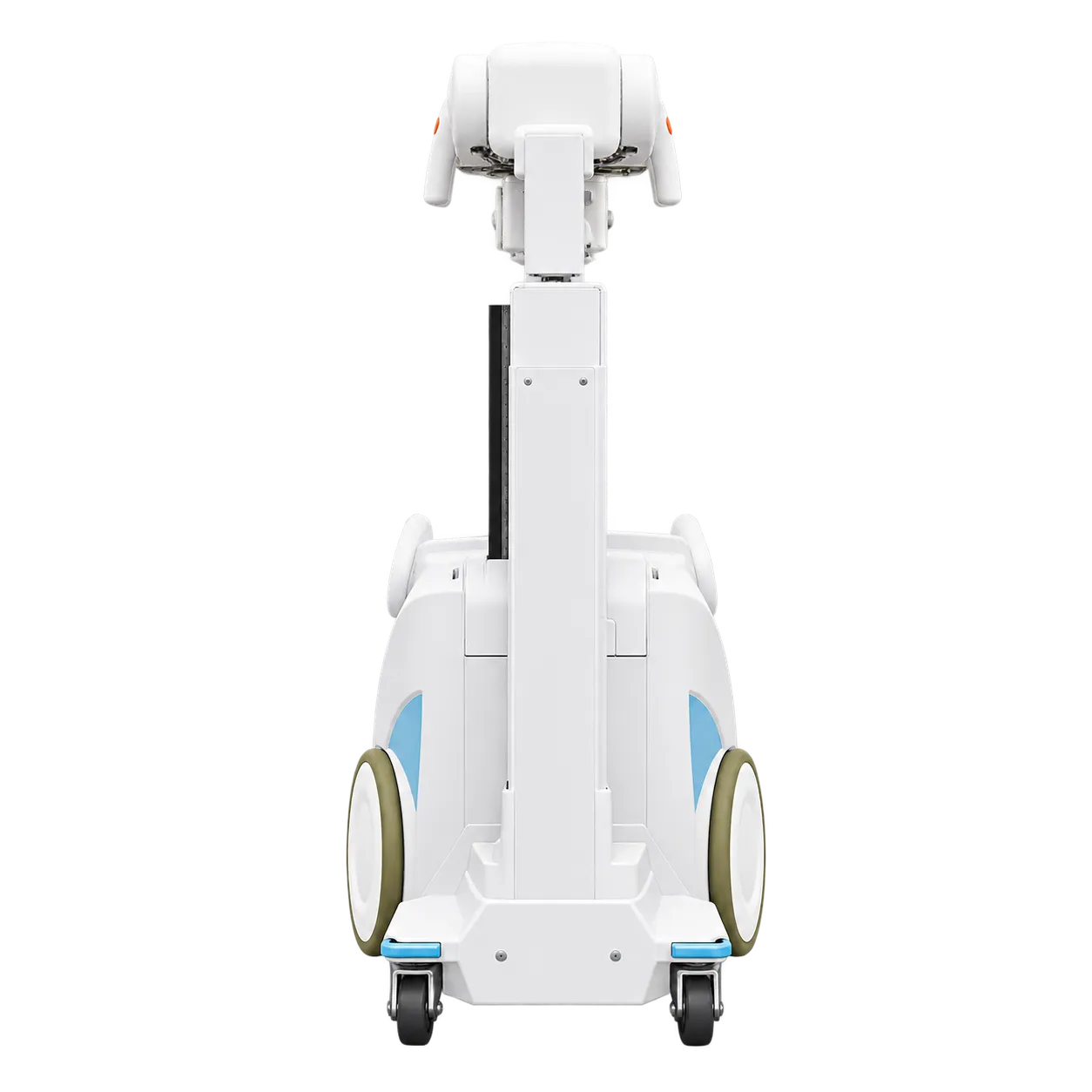
Radiology departments and imaging centres use the MobileSparkler 300 for bed-based examinations that require careful positioning: chest and abdomen, spine and pelvis, and extremities down to the foot and knee. Much of that work involves patients too unwell to travel to the imaging department. One button frees the column, arm and tube together, so the radiographer sets each view in a single movement and moves on to the next.
That freedom counts for a great deal in emergency rooms and orthopaedic services. A trauma patient on a trolley often has to stay still for each view, so the rotating column, the three-section arm and the turning tube head bring the angles to the patient. Panoramic stitching adds whole-spine and full-leg images for orthopaedic planning, built from several exposures on the same unit.
Intensive care and neonatal intensive care are regular settings for the unit. Over an adult bed crowded with monitors, the arm reaches the chest from wherever the unit is parked. Over an incubator, the tube head is angled into place while the infant stays inside, and the handle brake keeps the unit still for the exposure.
Operating rooms use the system for table-side imaging, and the obstacle sensor and dual-motor drive help it move between theatres. Sites with tight storage and lifts between floors suit the collapsible design, and departments with a dedicated equipment bay can run the fixed column. Radiographers operate the unit from its 19-inch touchscreen, which handles exposure settings and image processing in one place.