
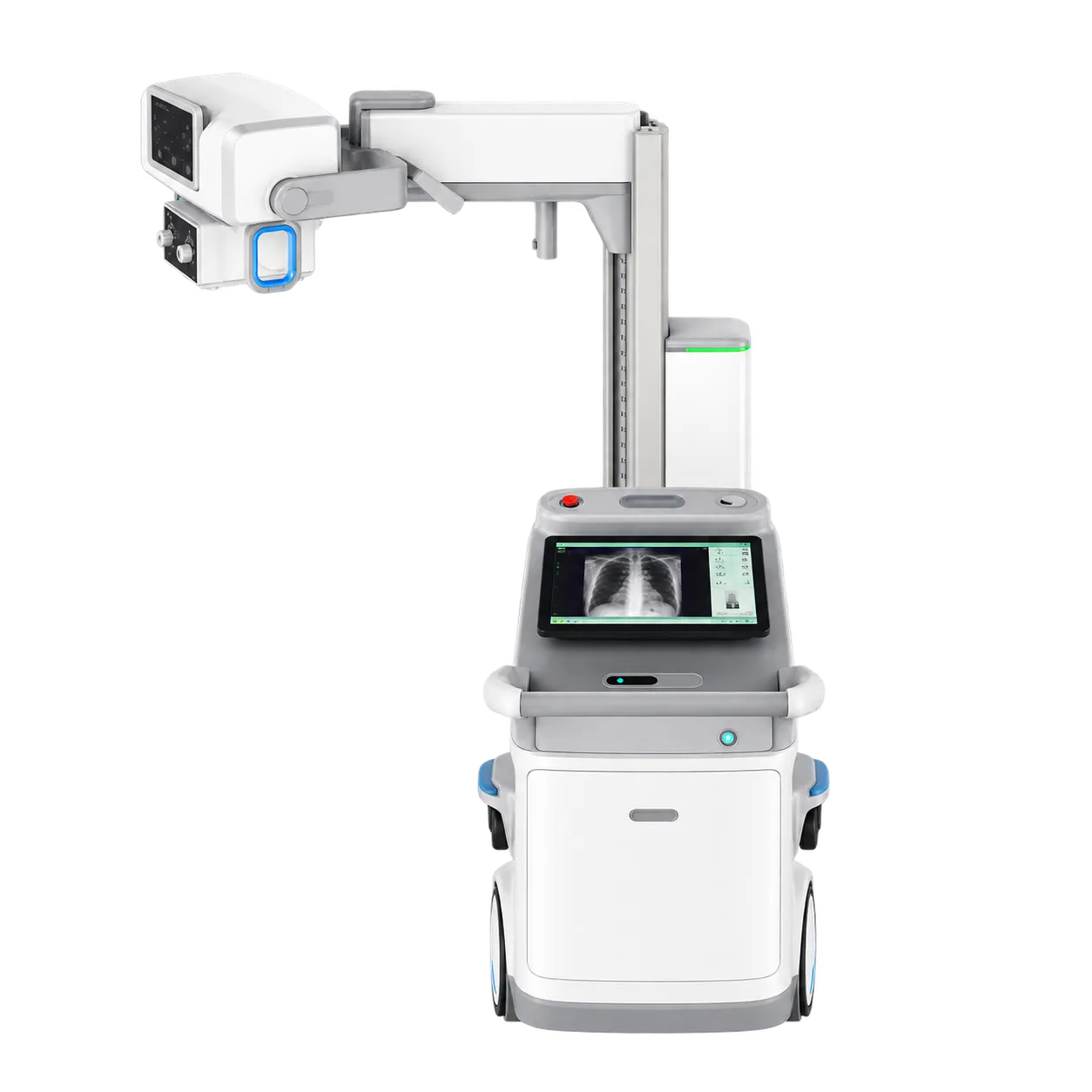
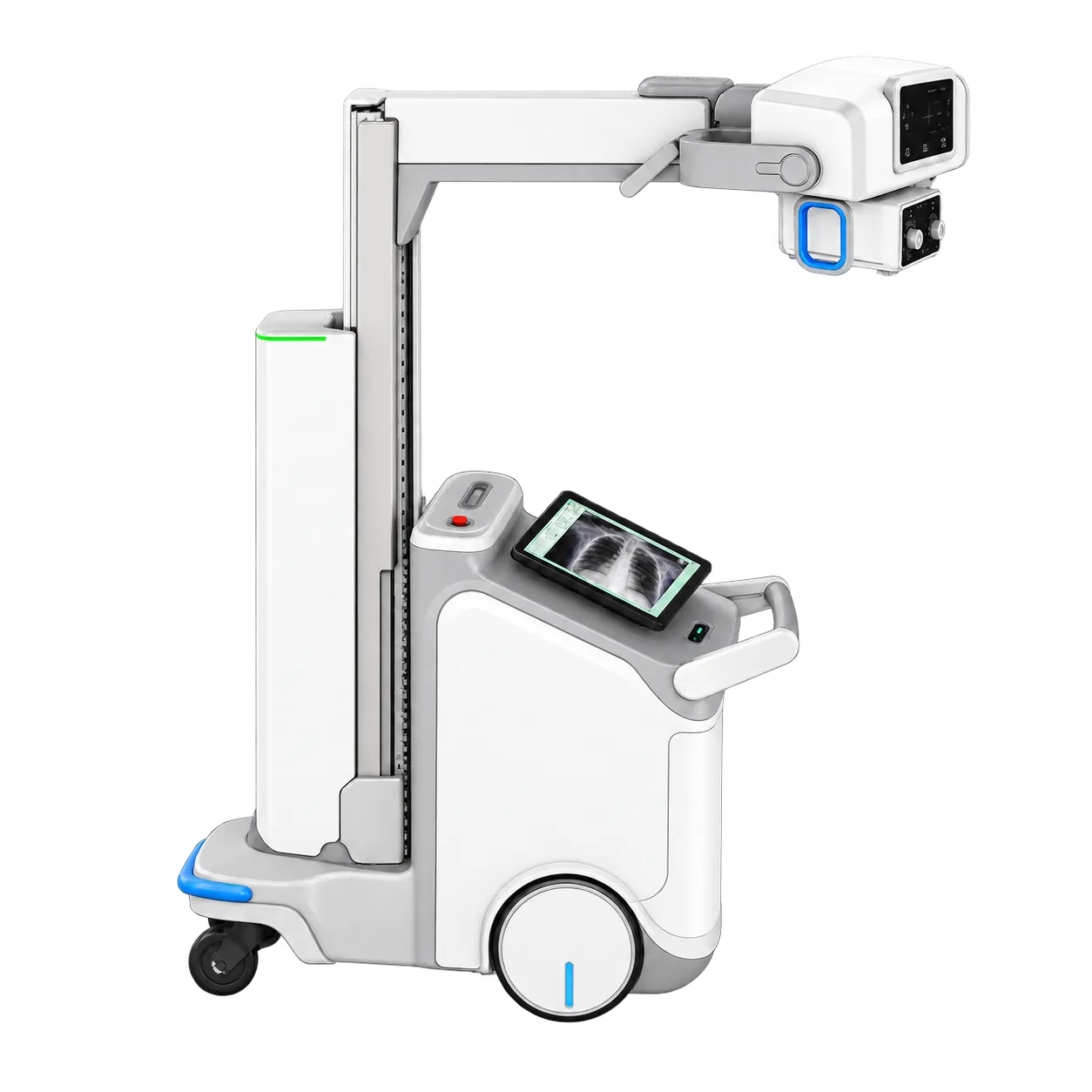
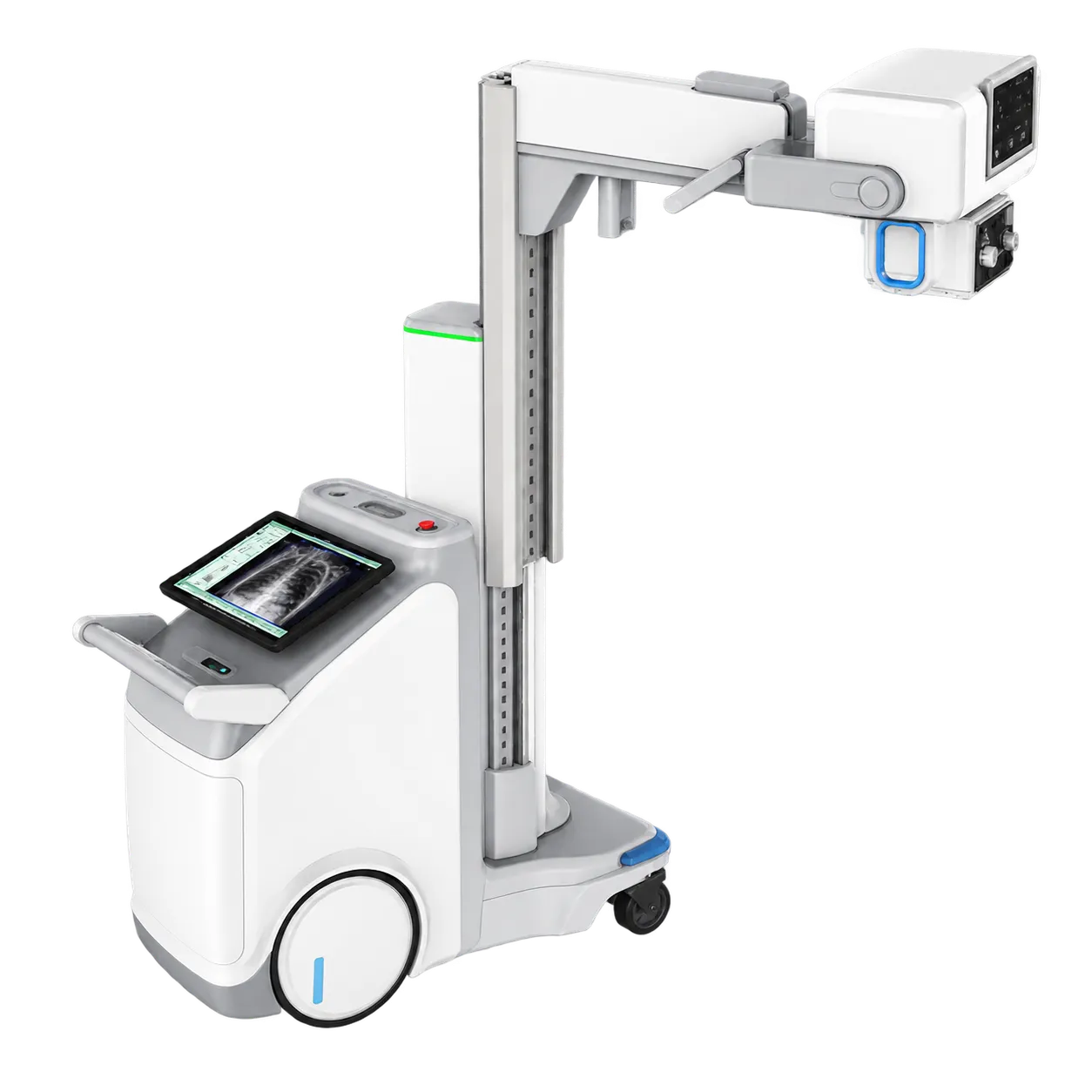
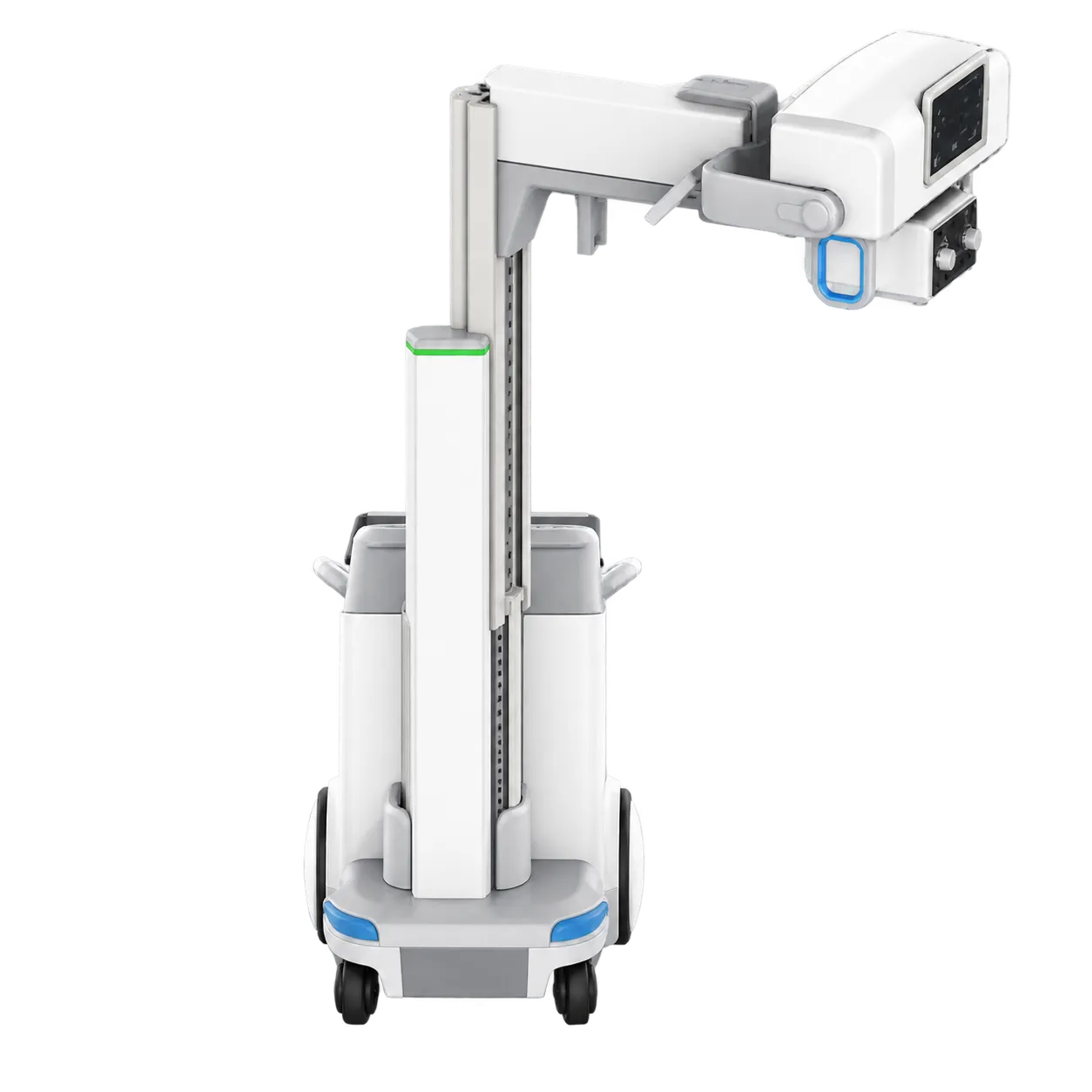
Intensive care units are the core setting, where bedside chest films check lines, tubes and lung changes in ventilated adults who cannot leave the bed space. Emergency departments can bring the MobileApex to resuscitation bays, theatre teams can use it for checks before a patient leaves the table, and wards and isolation rooms can call it for patients who should stay put. Browiner also lists neonatal intensive care, but the US clearance covers adults only, so neonatal use depends on the intended purpose in the manufacturer's conformity documents.
The tablet sets the choreography of each request. With it docked, the radiographer positions the patient, places the detector and checks the field on the camera preview from the bedside. Lifting it off, they step out to the distance set by local rules, expose, and review the image on the same screen before the detector returns to charge. Distance is one of the three radiation protection controls alongside time and shielding, and the employer's local rules, written on RPA advice, decide where staff stand. Evidence shapes how often that route is walked. A 2009 cluster-randomised trial in 21 French intensive care units, involving 849 ventilated adults, tested routine daily chest films against films ordered on clinical need. The on-demand approach cut radiograph use by about 32 per cent, with no significant difference in ventilation days, ICU length of stay or ICU mortality. Under IR(ME)R 2017, each exposure on that route is still justified individually by a practitioner.
NHS trusts, independent hospitals and public health systems abroad buy mobile radiography through procurement routes that ask for a device's conformity status, registration and radiation protection records. The manufacturer issues the conformity documentation those procurement routes require, and the enquiry team shares it.