
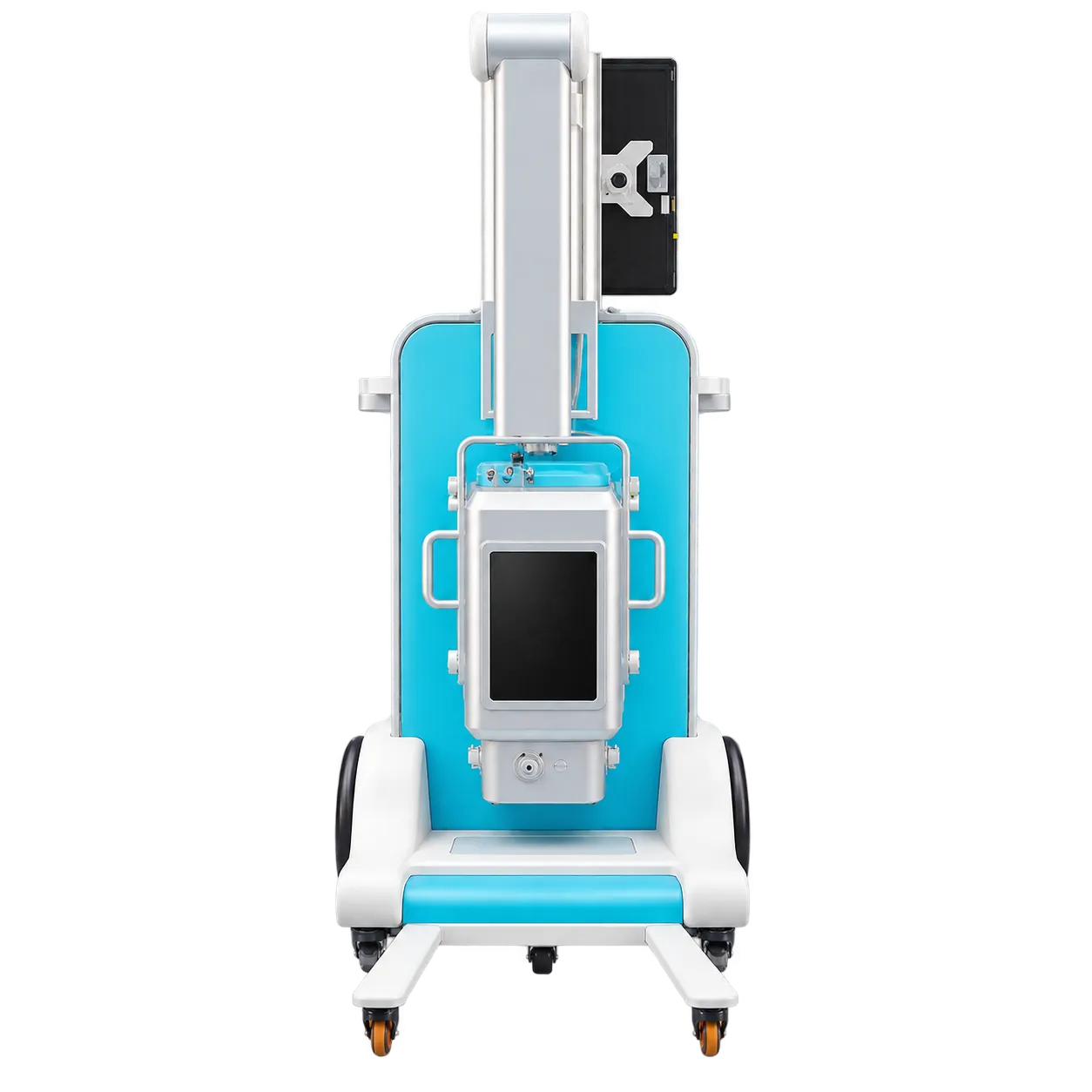
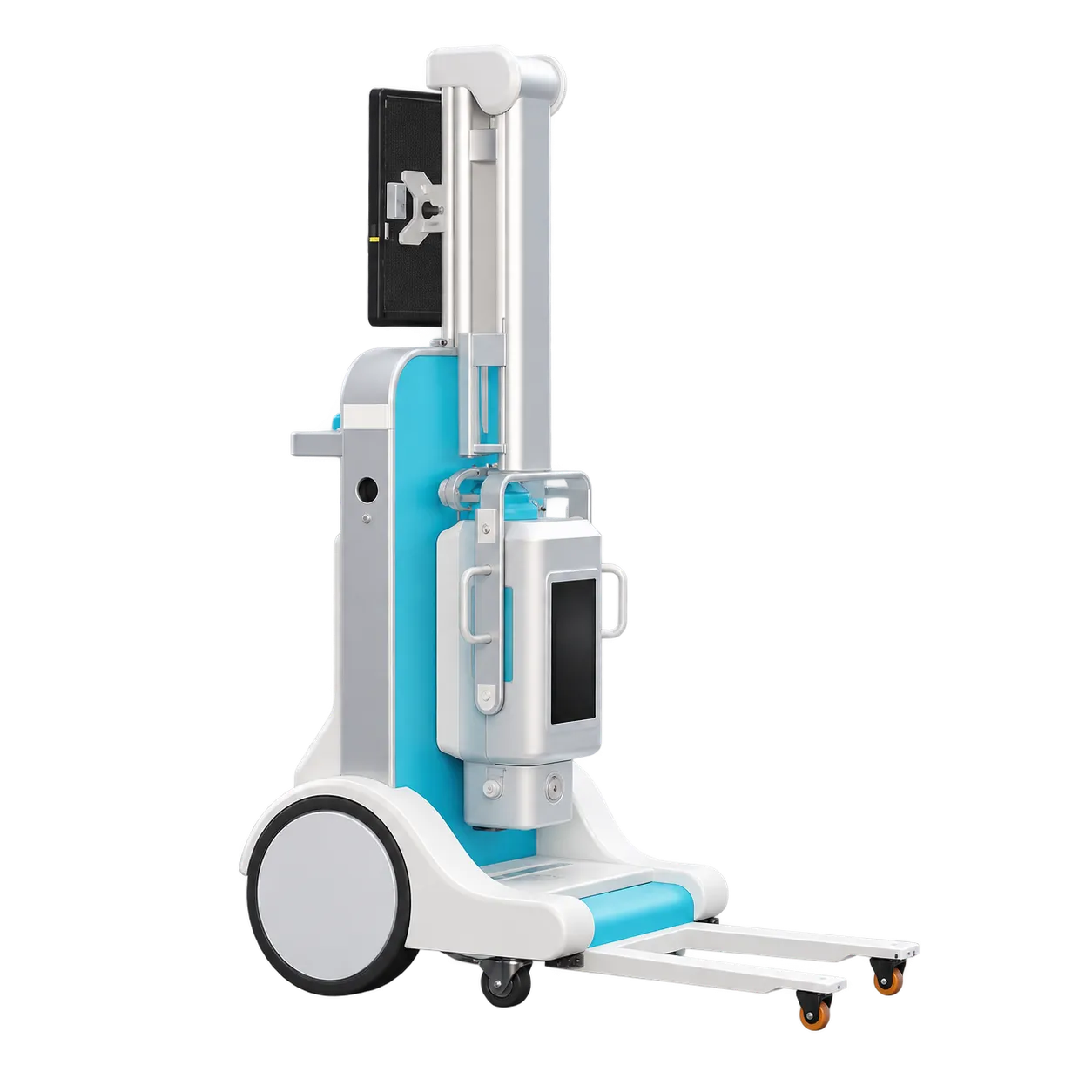
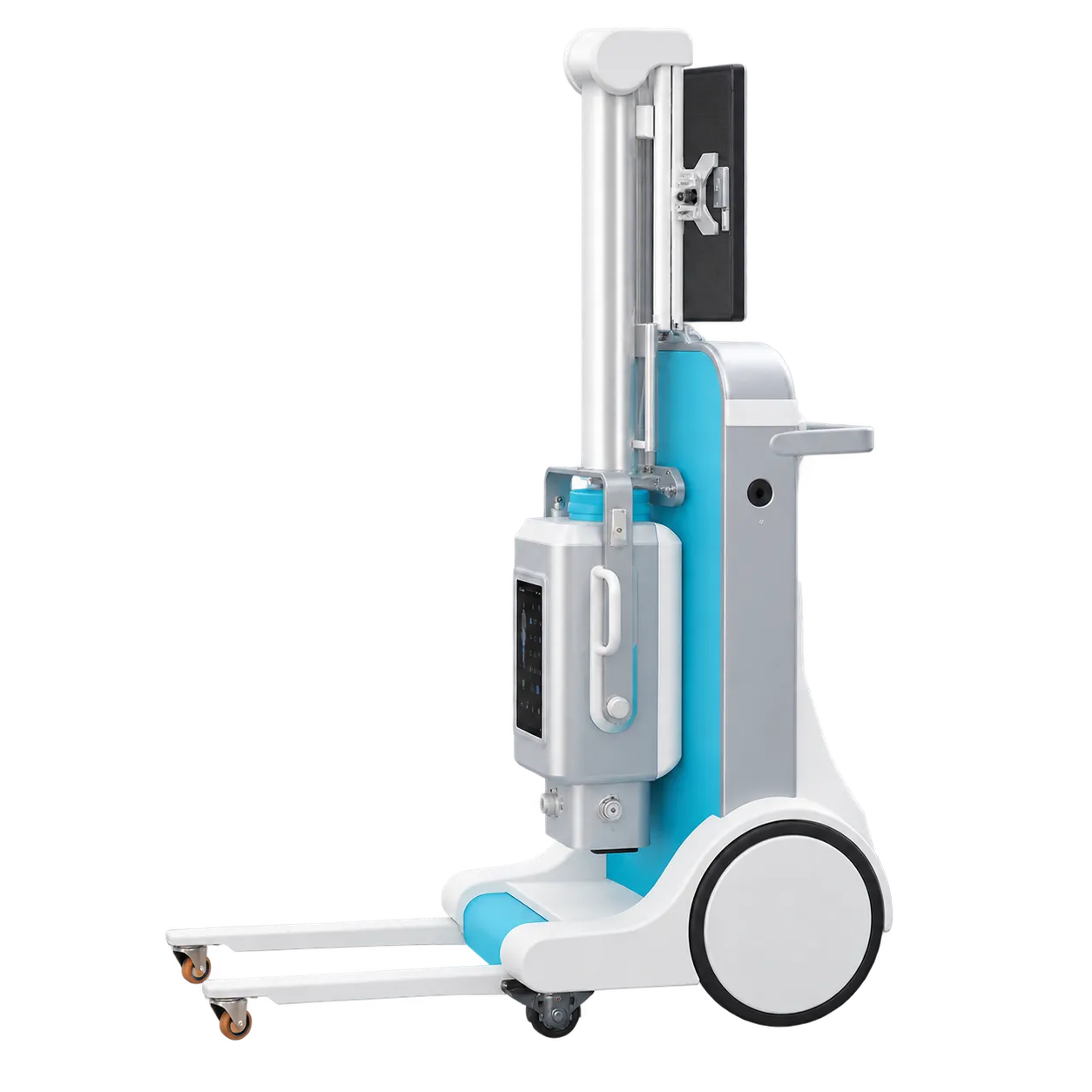
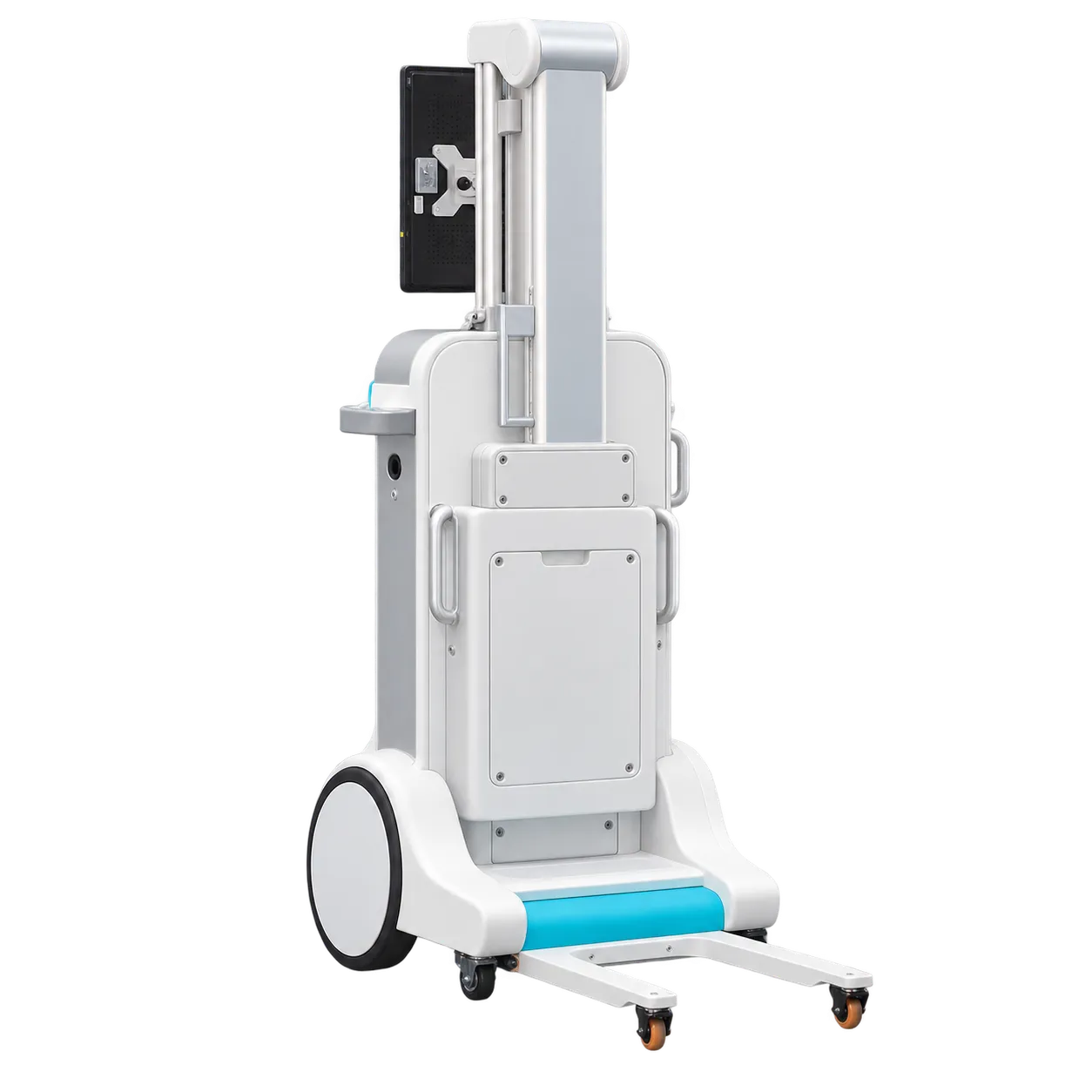
Radiology departments and ward teams use the ManntiX for bedside examinations of the head, cervical spine, chest, abdomen, lumbar spine, pelvis, and extremities. Its 10 kW tube head is rated for all body parts, so a single system handles the usual requests from a ward round. A compact, light body and a choice of stands let it travel to the patient, and the radiographer selects the support at the start of a round to suit the patients on the list.
Emergency departments and orthopaedic services image patients on stretchers and in wheelchairs, and the tube head moves to suit each position. A radiographer can take a supine chest film on a bed, then position the same system for a standing weight-bearing view of the limbs or spine. Browiner names the lumbar spine as an example of what the 10 kW output covers.
Intensive care and high-dependency units benefit from the battery. Up to 8 hours of standby covers a full working shift, and intelligent battery management shows its status in real time, so staff can read the charge before a round begins. Tripod and wheeled stands let the tube head sit where bed space is limited, and the built-in collimator shapes each beam to the area of interest.
Exposures are set at the 10-inch touch screen on the tube head, or at the image acquisition workstation, and finished images move into the hospital archive in DICOM 3.0 format. Panoramic stitching joins several exposures for long anatomy, and annotation and measurement tools prepare each study for the reporting radiologist.