
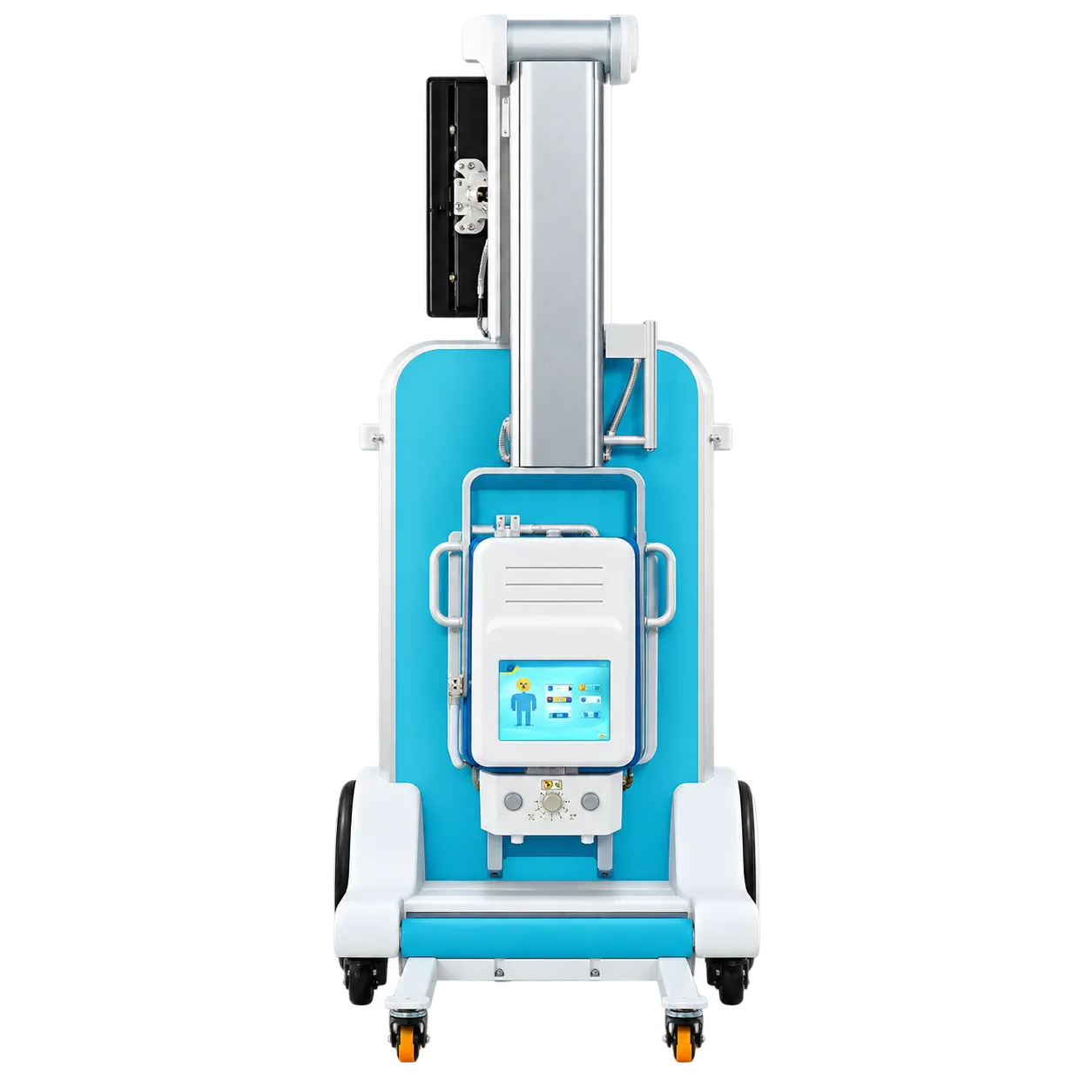
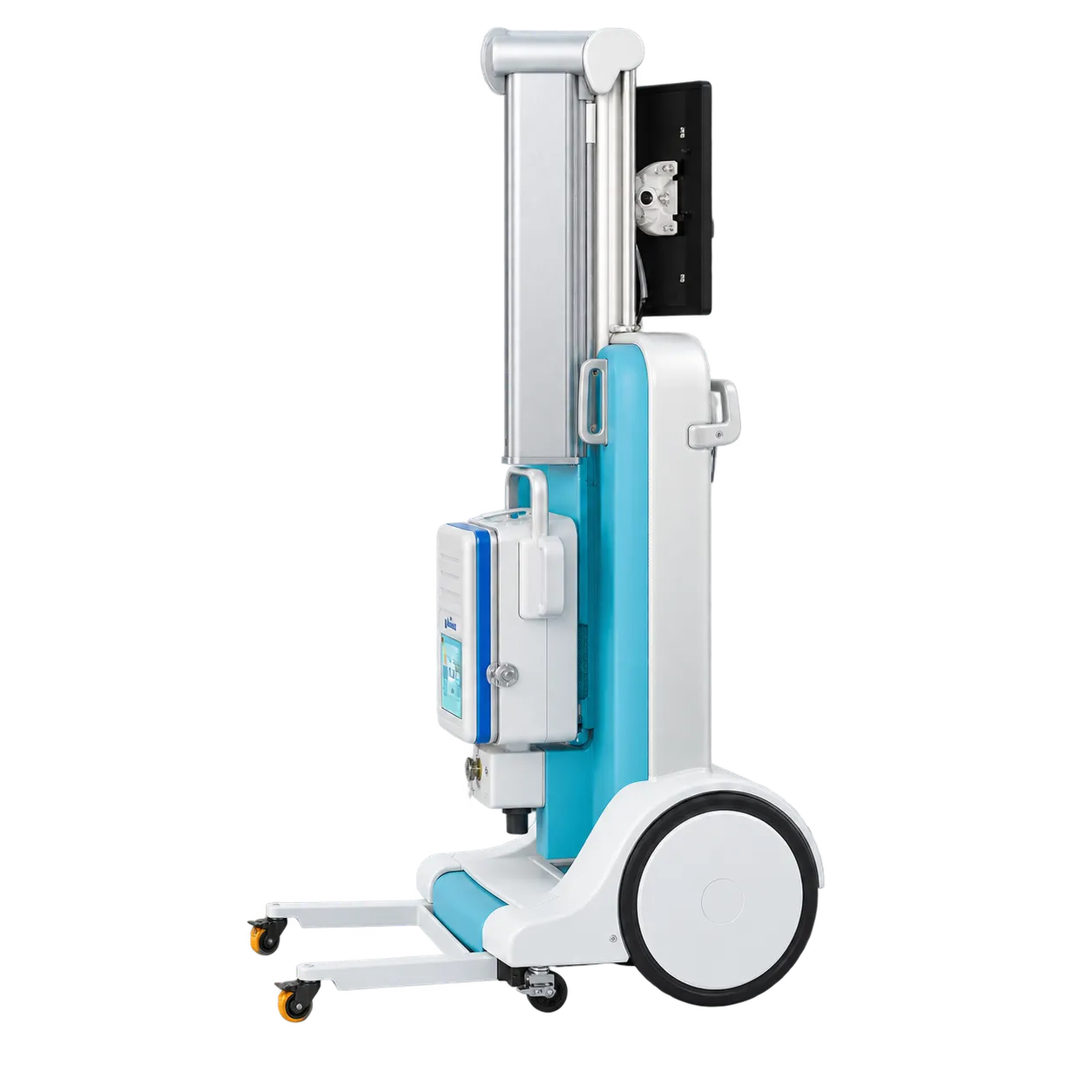
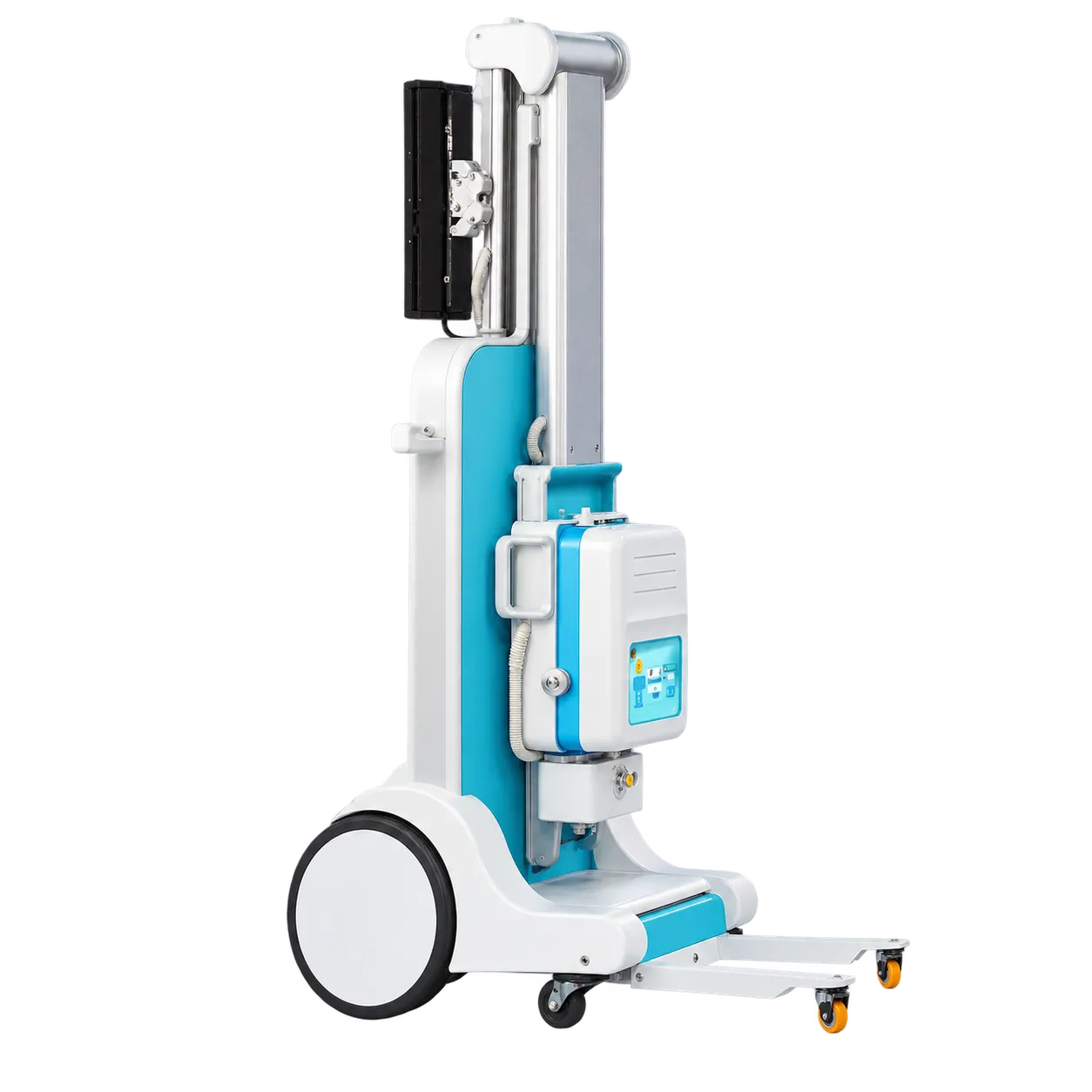
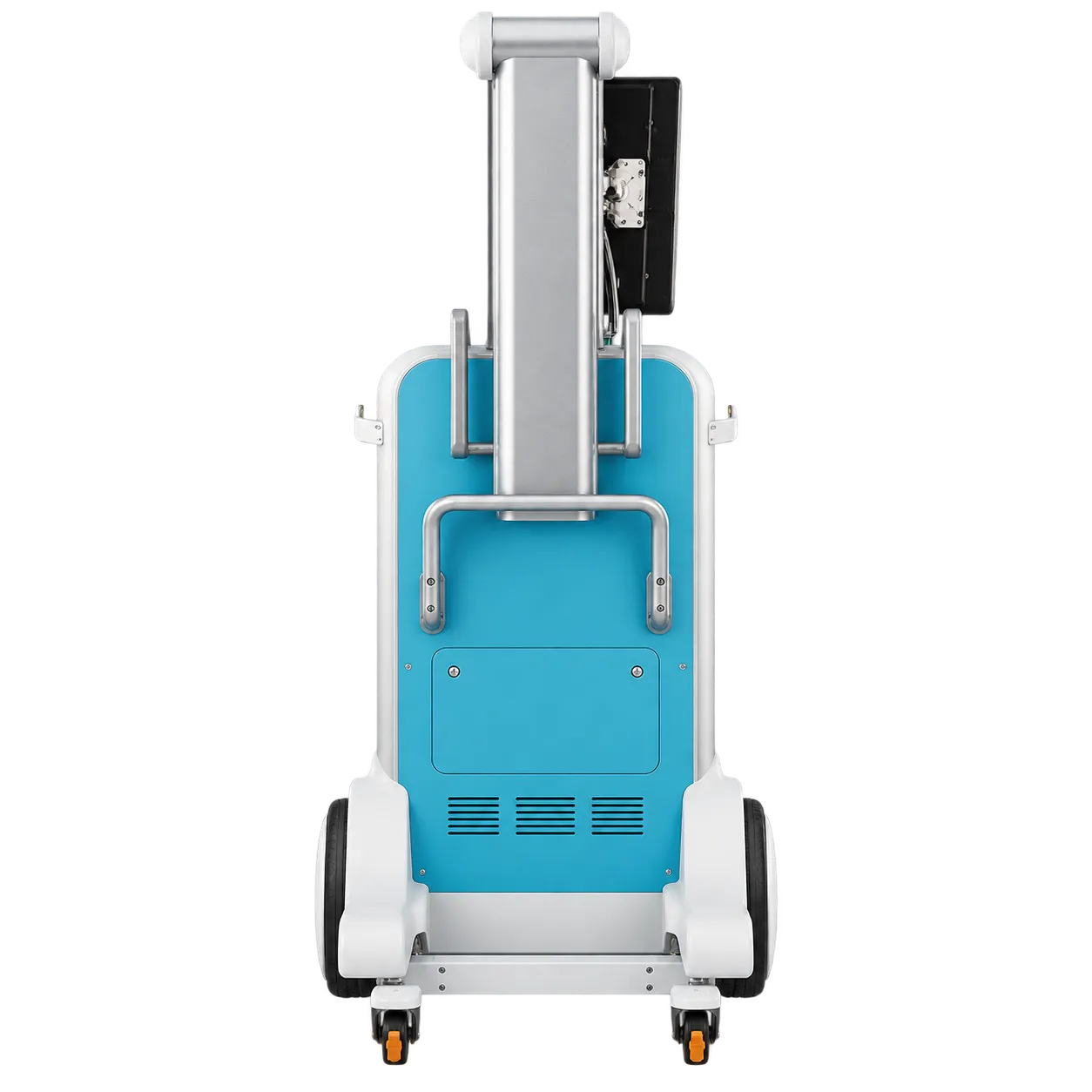
Emergency departments are where Browiner builds the Beatle-06P2. A patient arriving on a trolley often needs a chest film before anything else, and accurate chest radiography in these situations requires a source-to-image distance of more than 2 m. The operator brings the compact body alongside, takes a detector from the key-lock cabinet, and sets the exposure at the tube head panel or workstation.
Wards use the same unit for routine imaging. The compact body lets the operator move in narrow spaces, and the folded arm keeps the route visible as the unit moves between bays. Large wheels add stability, keeping the unit steady as it moves from one bed to the next.
Ambulances and in-vehicle DR come next. Browiner describes the system as easy to transfer between hospitals, ambulances and other application scenes, and the lowered height of the folded arm helps it enter a vehicle. A built-in lithium battery supports continuous use where a mains point may not be to hand, and the cabinet keeps two flat-panel detectors secured during the journey.
Temporary hospitals complete the list. Sites set up at short notice need imaging that moves with the staff, and the unit's compact body, battery and PACS connectivity let a team produce studies and send them to the archive from wherever the beds have been placed. Radiologists receive images through the integrated image workstation's digital workflow, which keeps each study in a standard form from exposure to archive.