
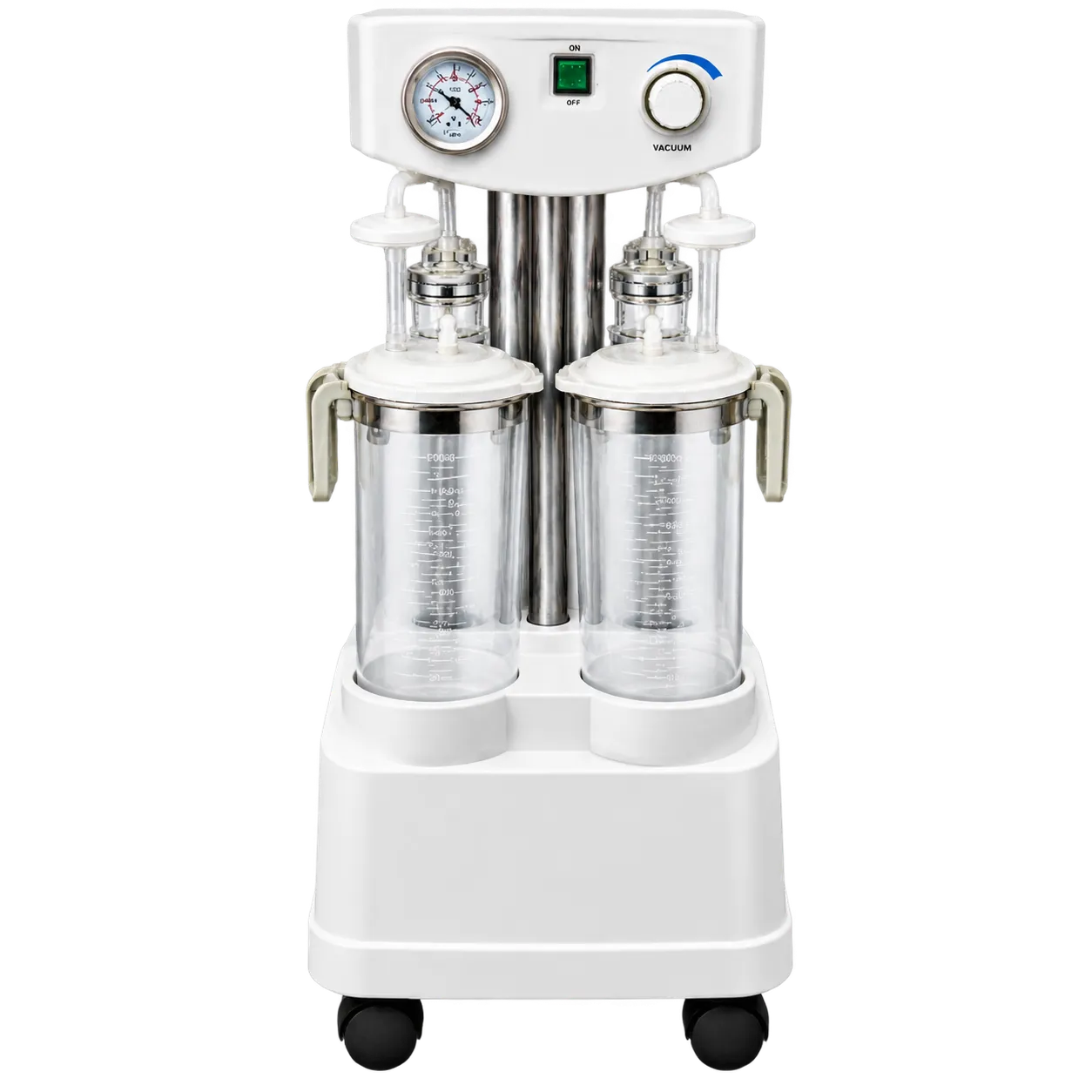
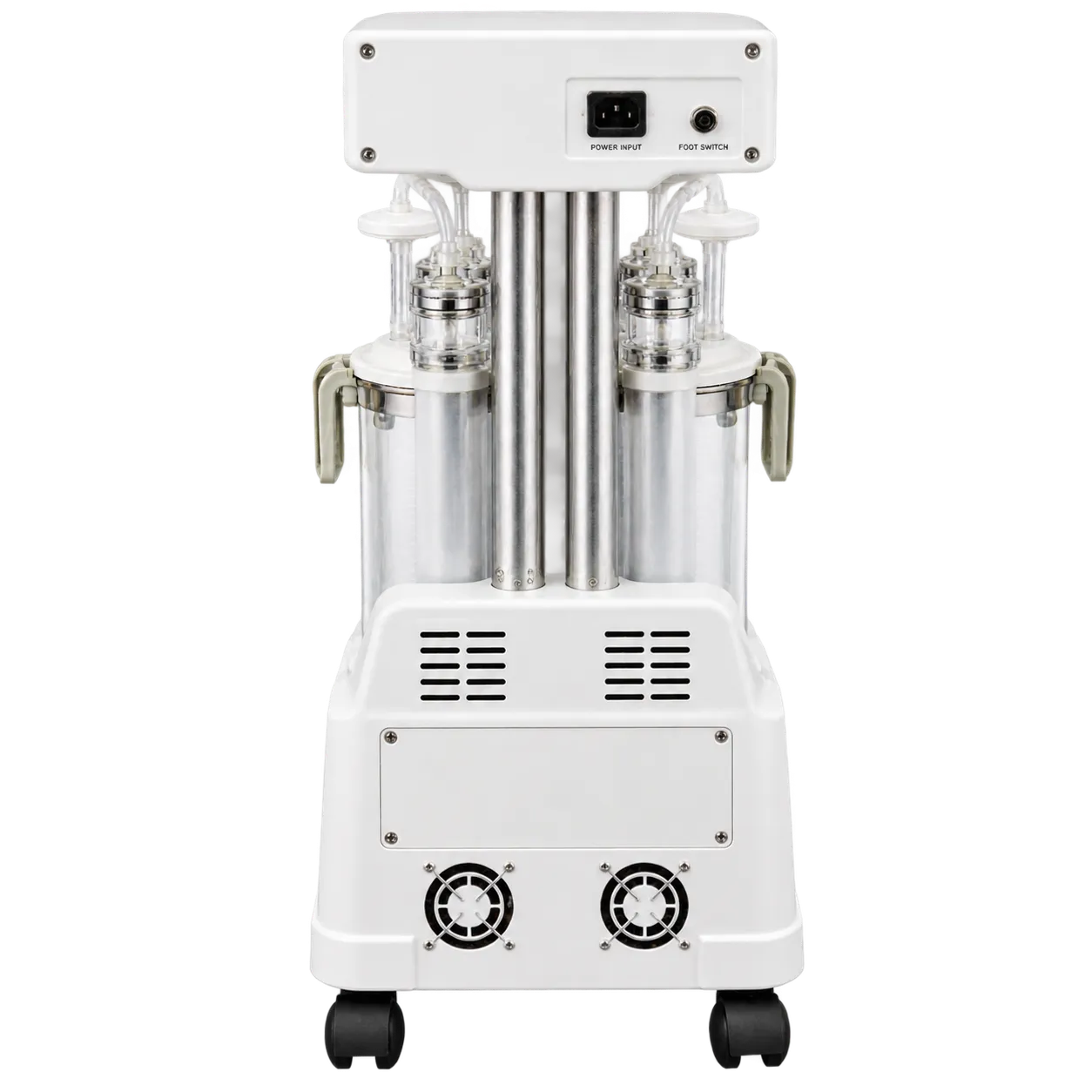
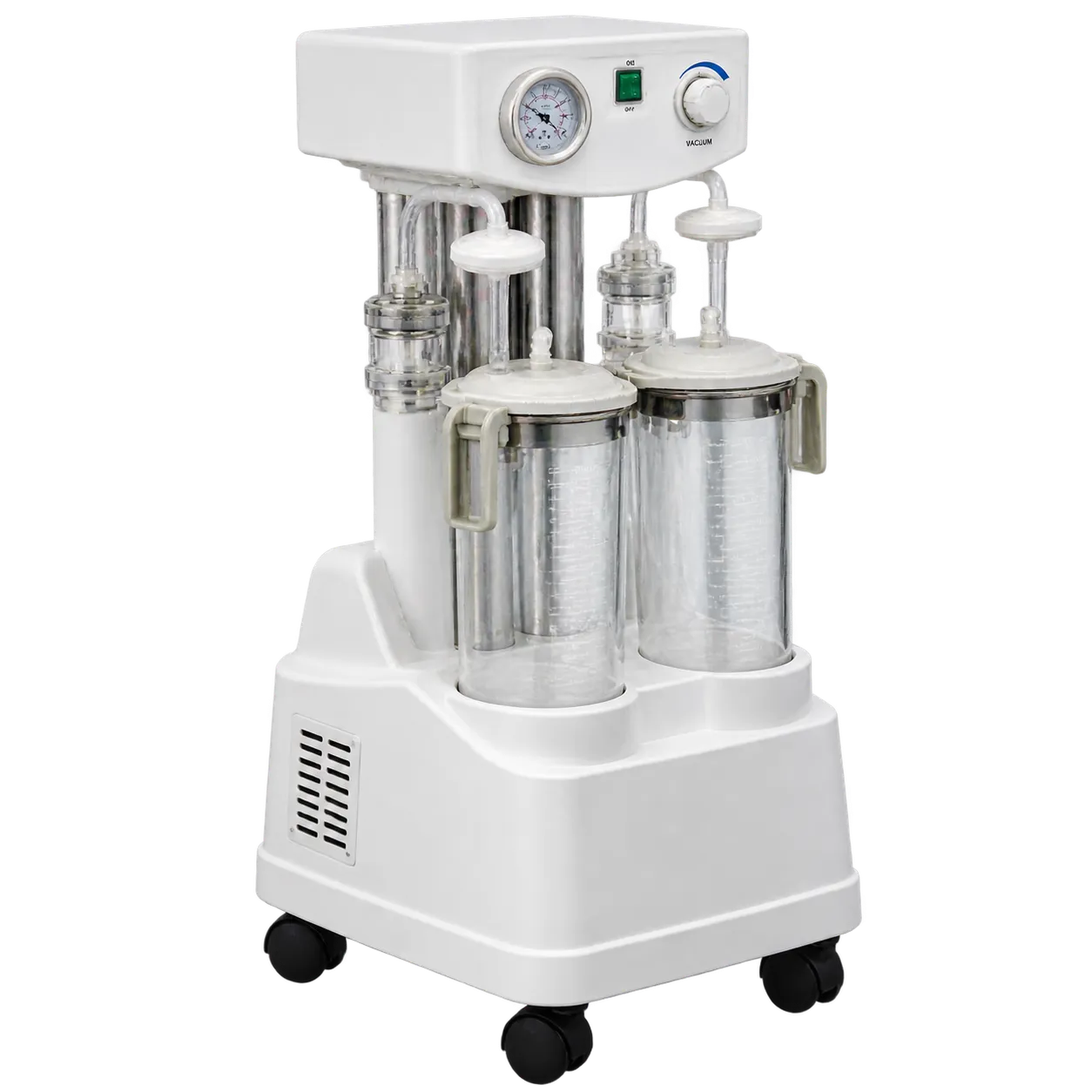
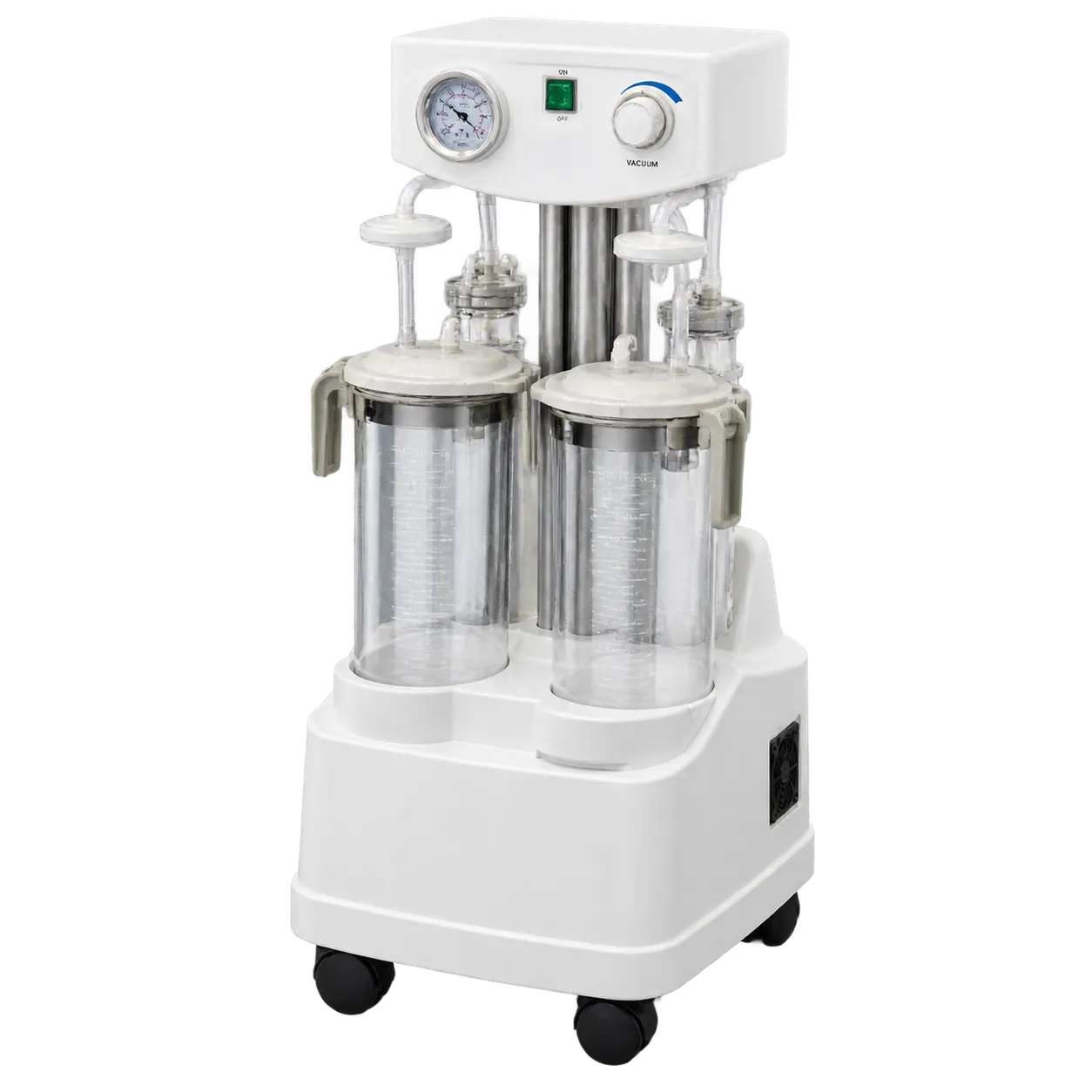
On a surgical suction unit, vacuum and flow answer different questions and both matter. Vacuum is the pressure pulling at the end of the tube, and too much of it damages tissue while too little fails to lift anything viscous. Flow is how much volume moves per minute once something has been lifted, and it is what empties a surgical field rather than trickling at it. Eighty litres a minute alongside 680 mmHg describes a machine built for volume, and volume is what theatre suction exists to shift.
The minimum setting is the figure a department should weigh most carefully. One hundred and fifty millimetres of mercury is a reasonable adult airway figure and an unreasonable paediatric one, and a unit that cannot go below it should not be the machine a children's ward reaches for when a child needs their airway cleared. None of that counts as a fault in a theatre unit. It simply decides which areas the machine should be placed in, and which it should not.
Overflow is the practical risk to raise with whoever maintains the equipment. Four jars holding twelve litres between them reduce how often anyone changes a vessel, which in turn reduces how often anyone checks the levels. A unit without a float or shut-off relies entirely on somebody noticing, and a busy theatre is exactly where nobody does. Medigear.uk establishes the overflow arrangement, exhaust filtration, duty cycle, and jar reprocessing limits before this unit reaches a theatre.