
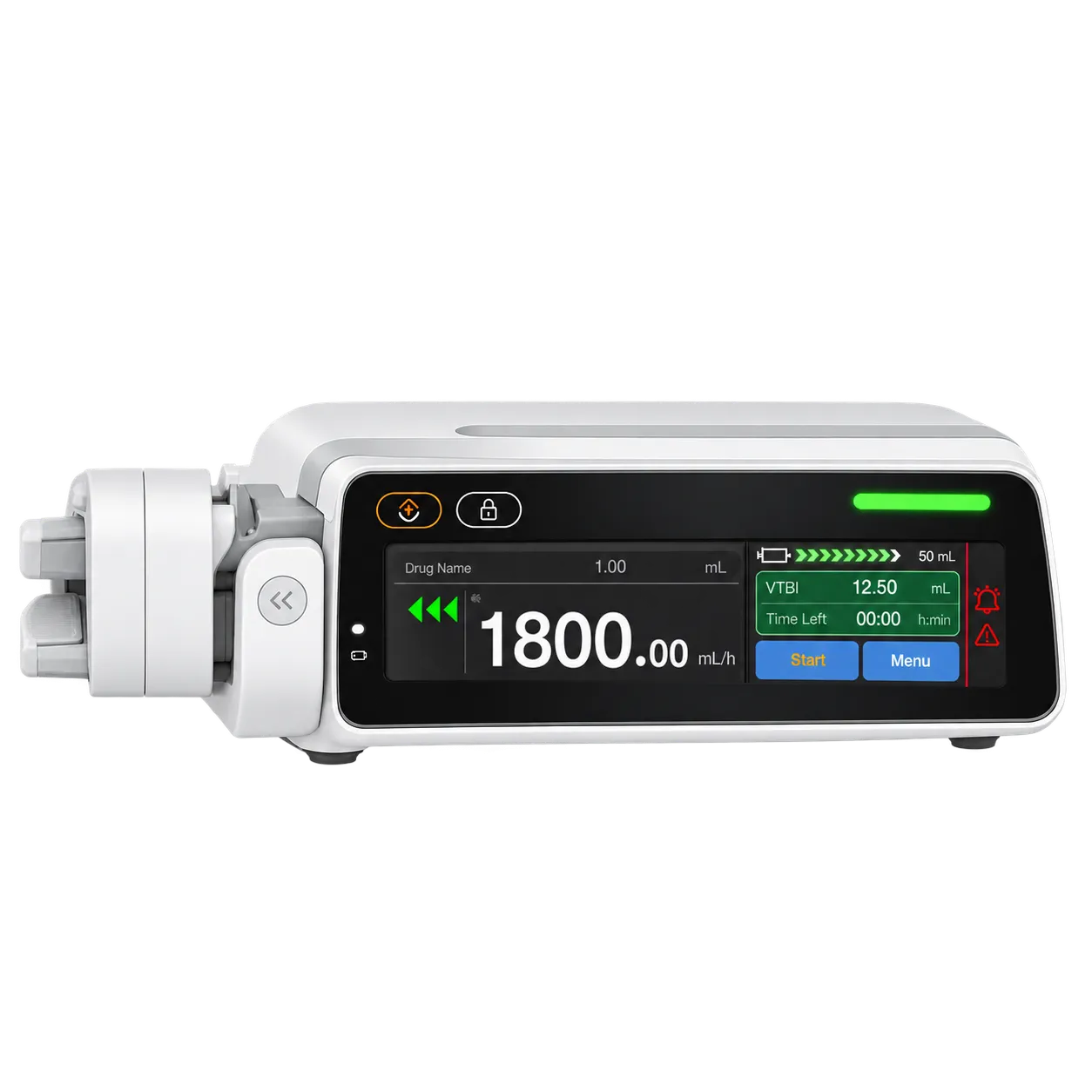
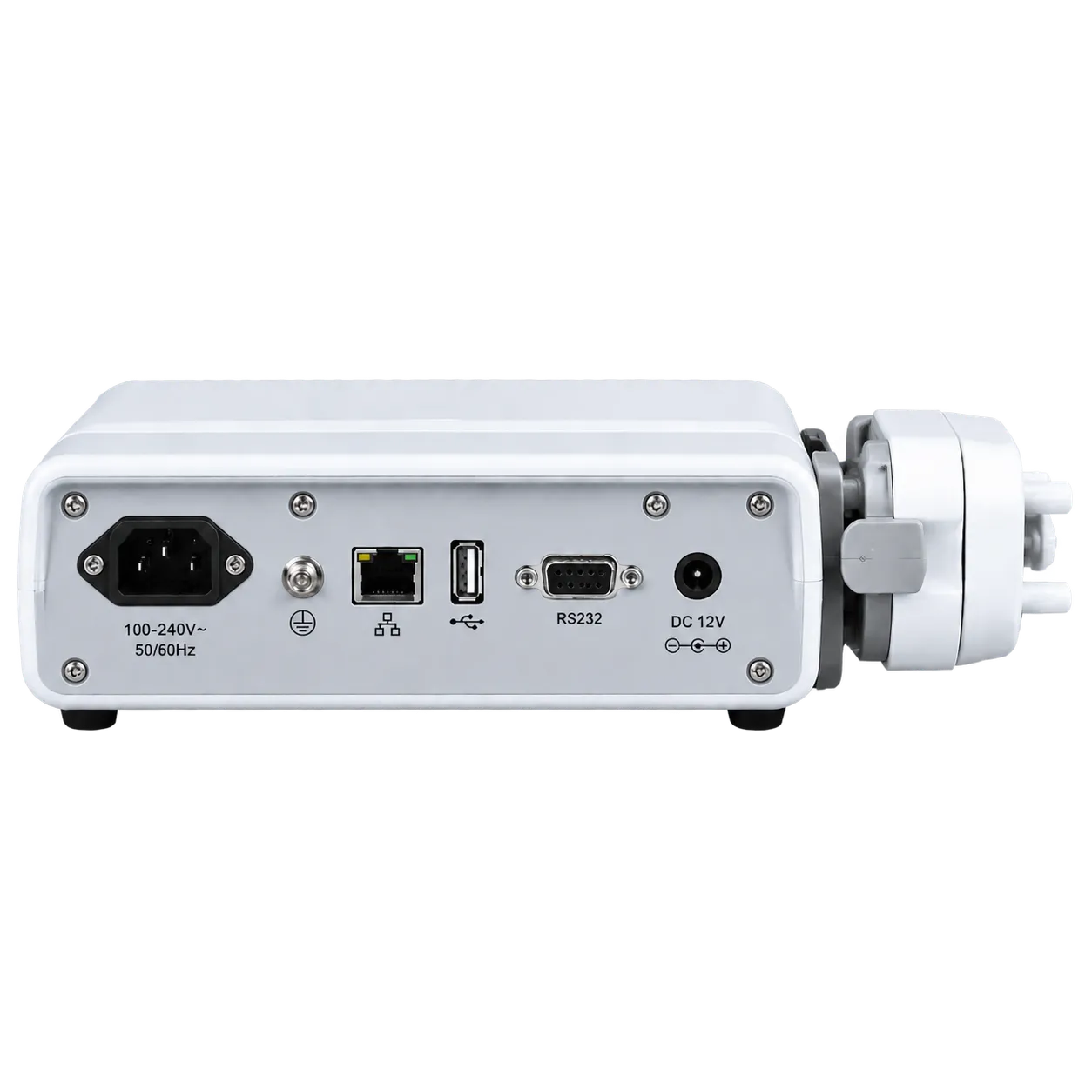
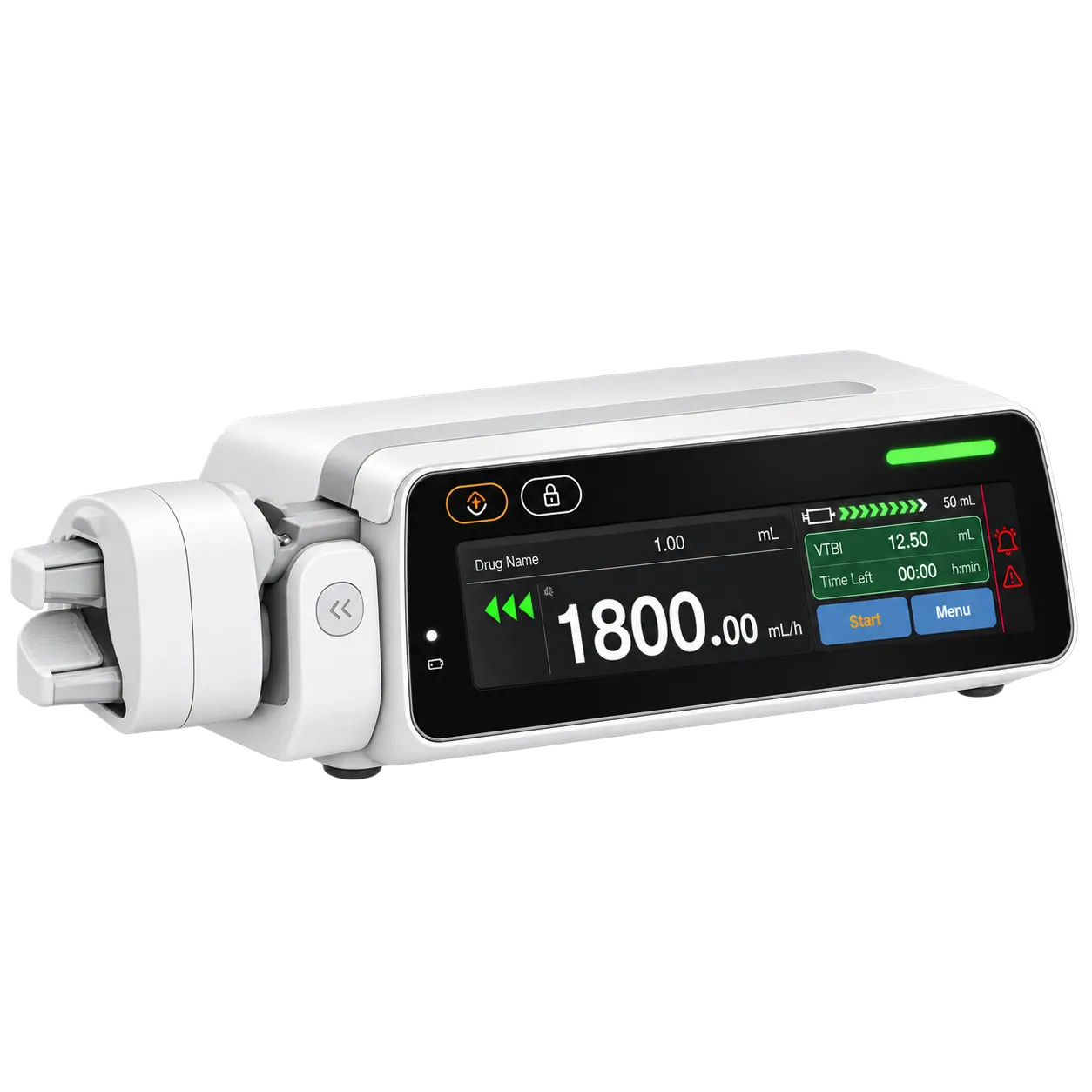
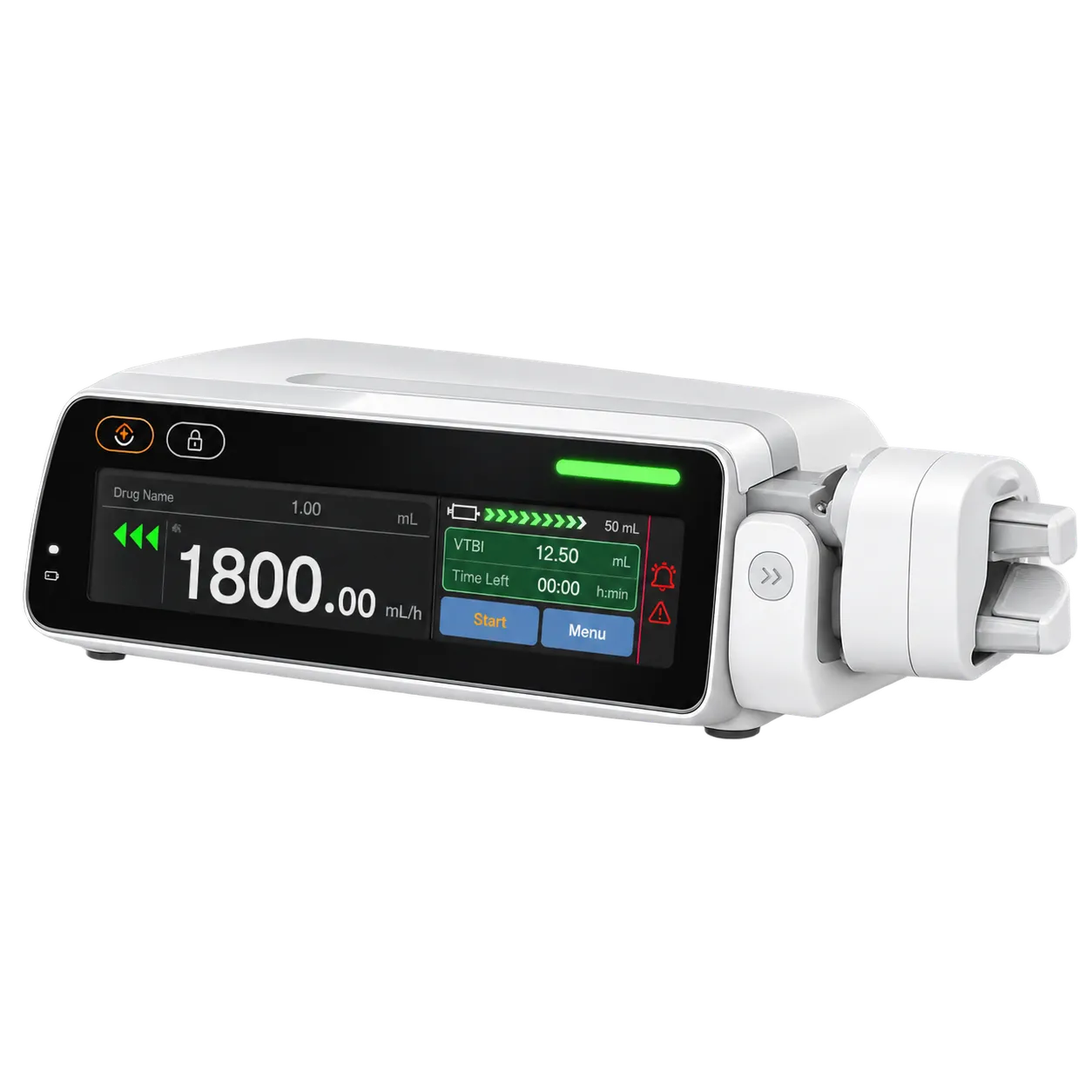
On a programmable syringe pump, relay mode deserves more attention than a mode list usually gets. Drugs given by infusion in theatre and intensive care frequently have half-lives measured in minutes, so an infusion that stops while a syringe is changed produces an effect that stops with it. Handing over automatically from one pump to the next removes that gap. Doing it without a clinician standing over the changeover removes the moment when it gets forgotten.
Weight-based dosing is useful in the same understated way. Entering a dose per kilogram per minute and letting the pump work out the rate removes an arithmetic step performed under time pressure, and arithmetic done under pressure is exactly where infusion errors tend to begin. Automatic syringe recognition does something similar at setup. Selecting the wrong syringe size is a classic cause of a delivered rate that does not match the rate set on the screen.
The dose-checking system must be addressed. Every safeguard described above reduces the chance of an error being made in the first place. A dose error reduction system catches the error anyway, after all of them. The HS-39 carries one, and this sheet does not mention it, so a department choosing the larger pump may be choosing better ergonomics and worse protection.
Medigear.uk establishes whether dose checking is available at all, what TIVA mode actually provides and under what conditions 1.5 per cent was measured before this programmable syringe pump reaches a ward.