
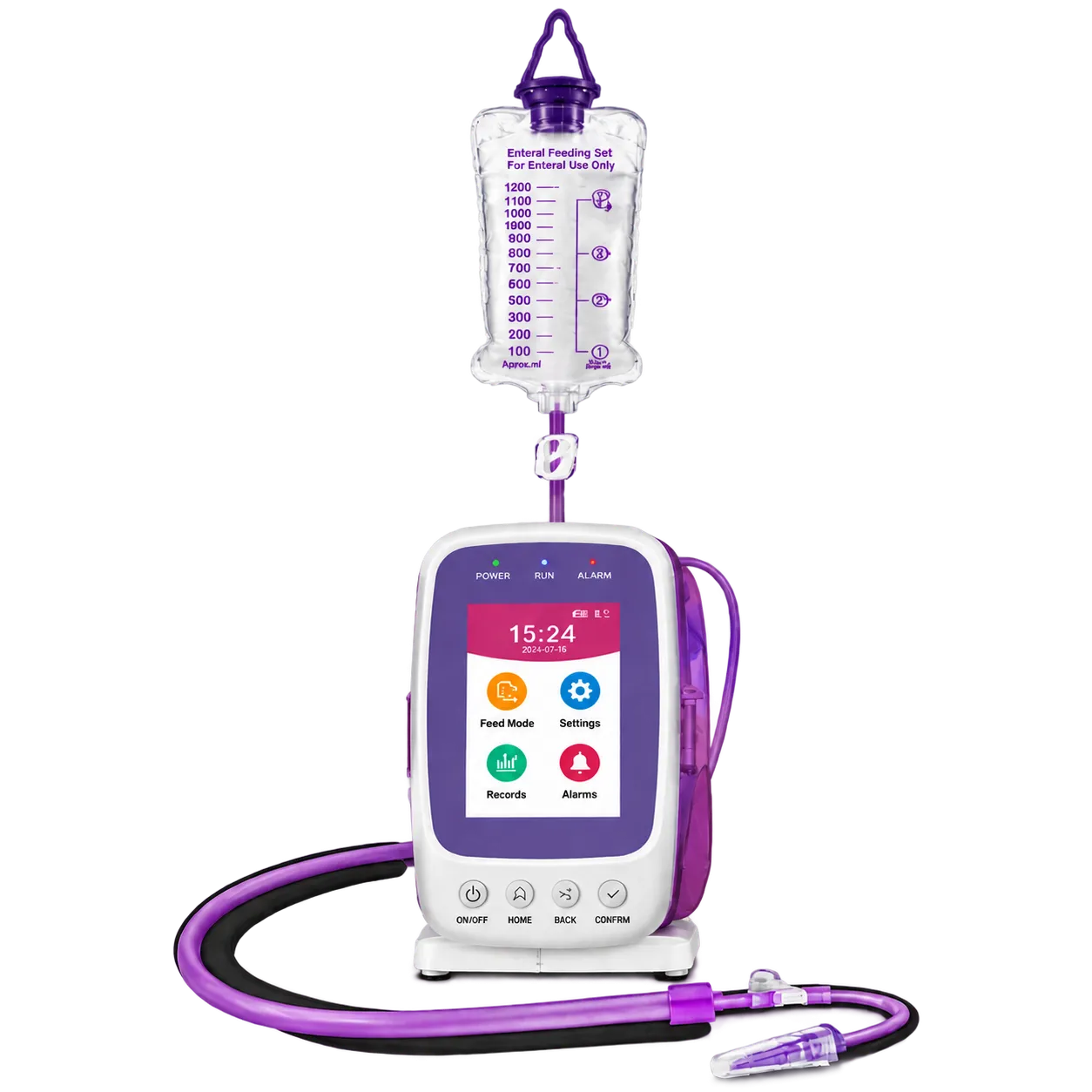
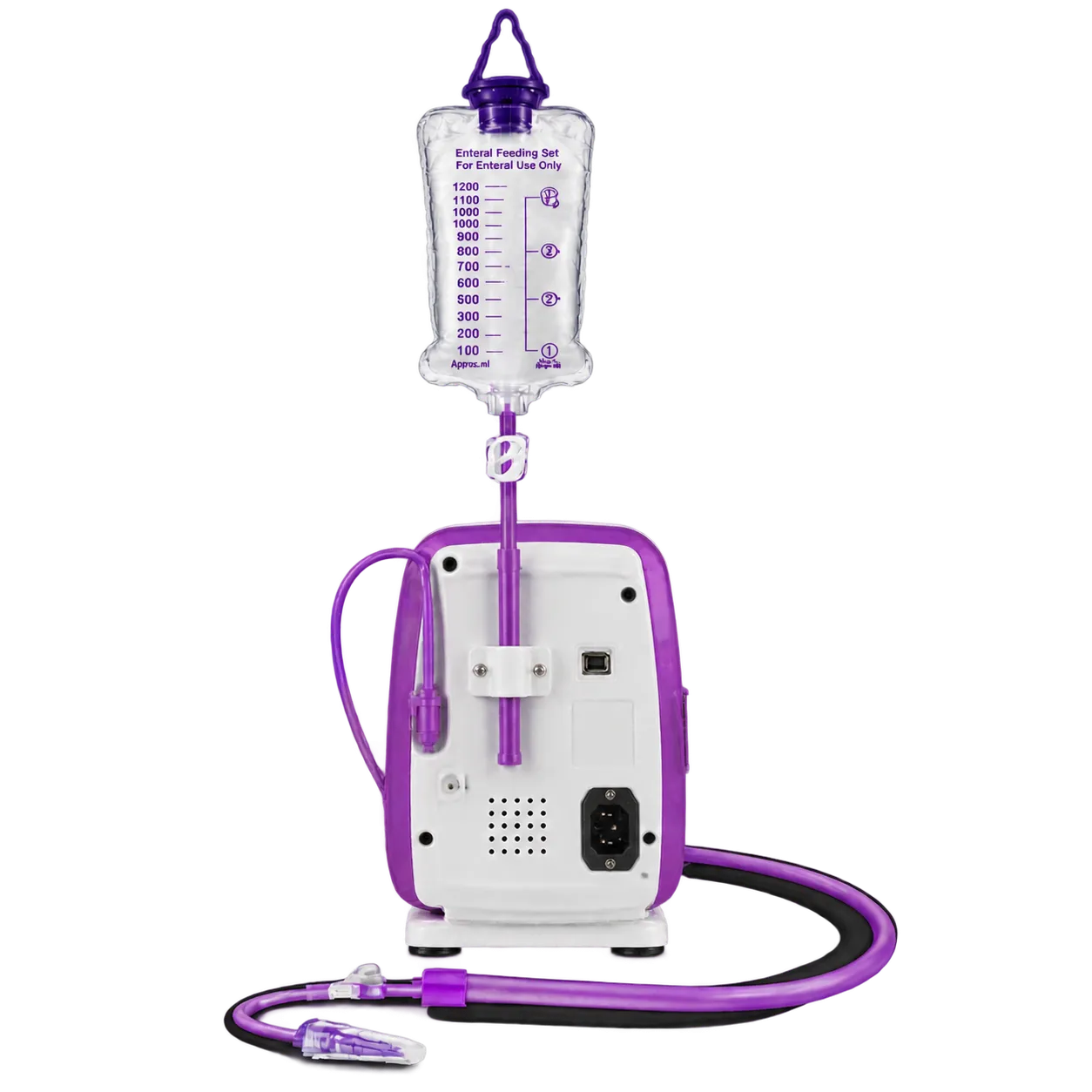
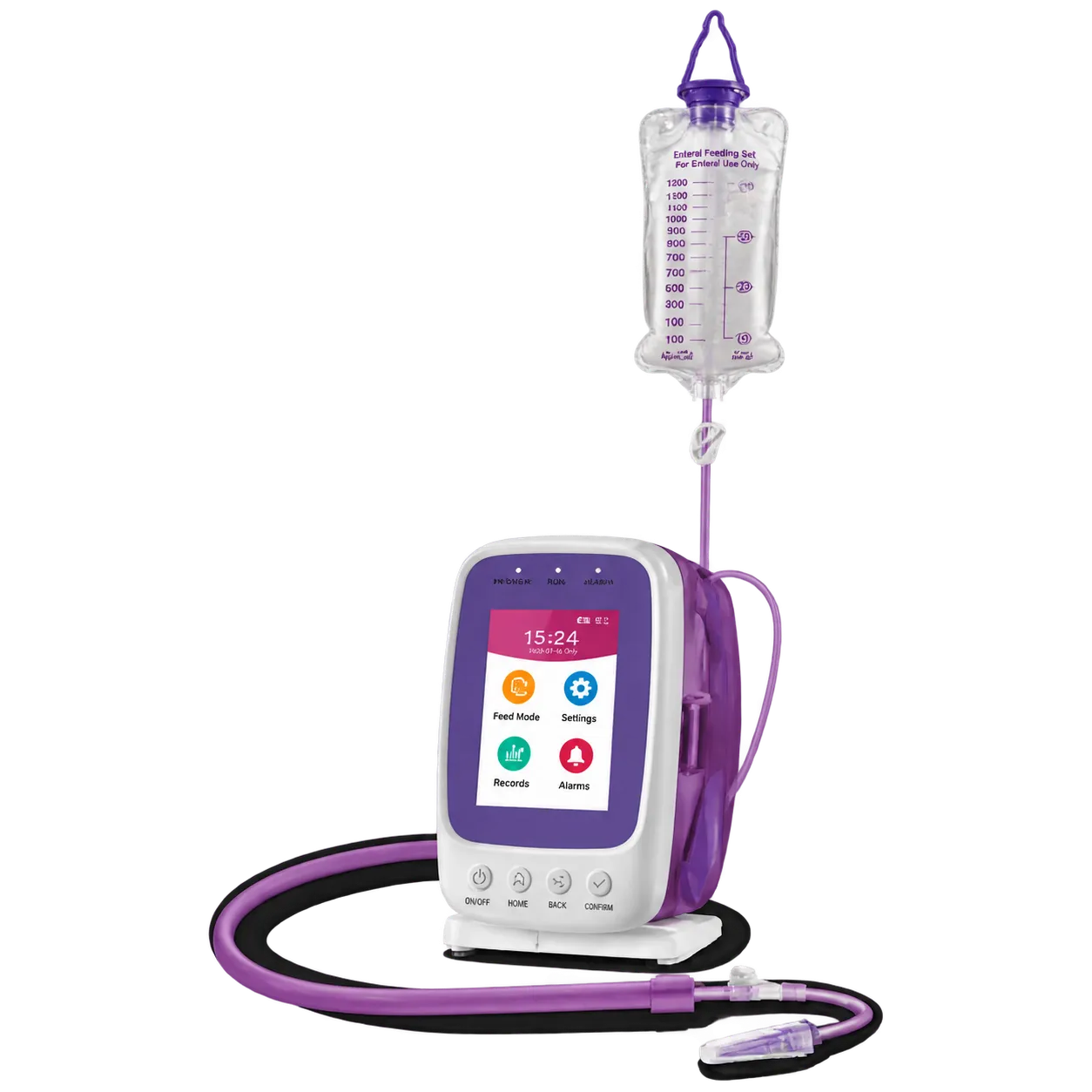
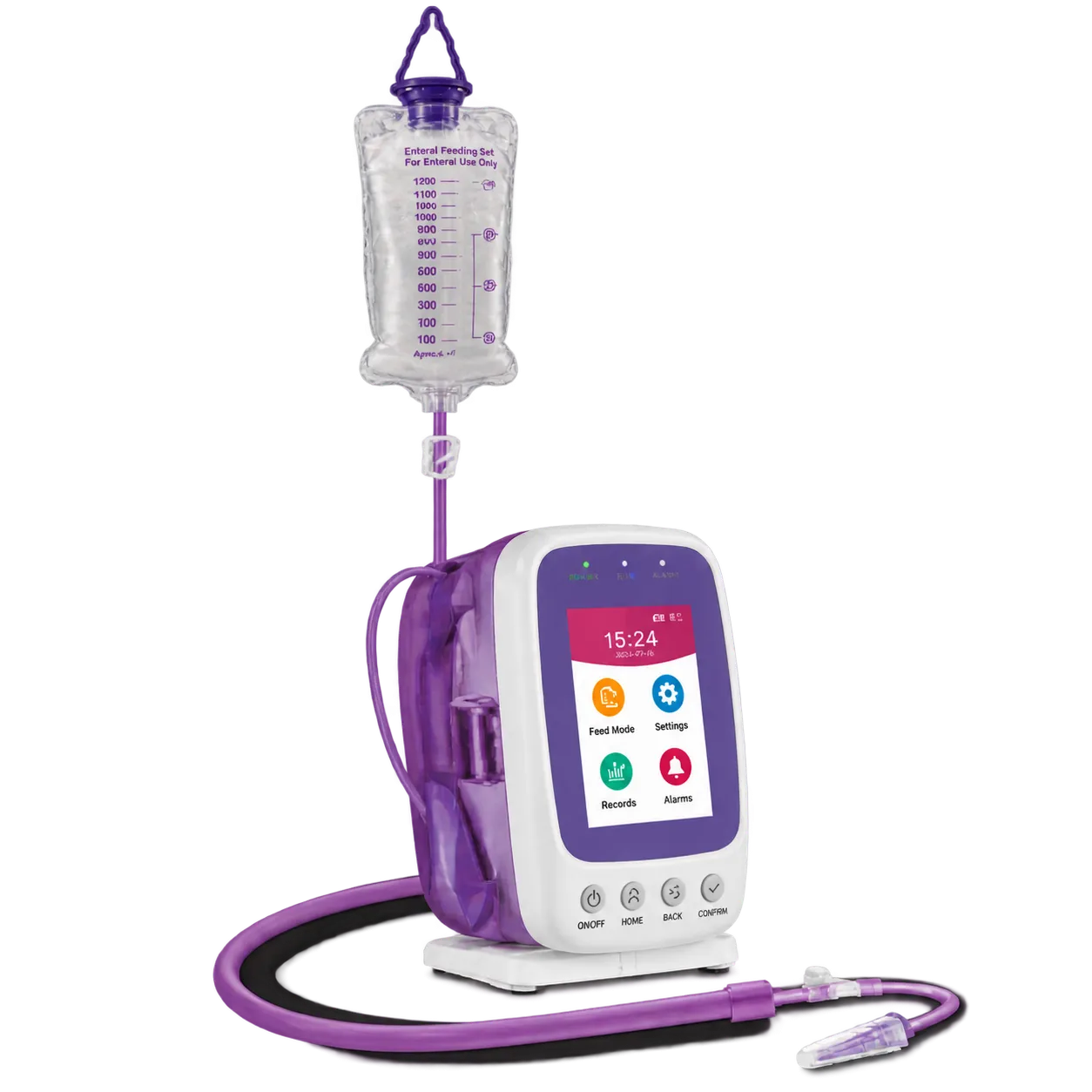
An enteral feeding pump is not a drug delivery device, and this specification reflects that correctly. Five per cent accuracy is looser than the 1.5 per cent a Blackstone syringe pump claims, and that is right rather than a shortfall: a feed runs at hundreds of millilitres an hour over many hours, and what matters is that a patient receives their prescribed nutrition over a day, not that each millilitre lands precisely. Applying drug-pump tolerances here would mean paying for a precision that nobody in the chain actually needs.
Adjustable occlusion pressure is where an enteral feeding pump earns its keep. Fine-bore nasogastric tubes block readily, particularly where medication has been given through them. A gastrostomy tolerates far more pressure before anything is actually wrong. Seven levels spanning 20 to 80 kPa let the threshold follow the feeding access rather than the pump. That reduces both false alarms that get ignored and real blockages that get missed entirely.
The warming function needs a conversation with a dietetic team, not an assumption about how it will be used. Feed held at temperature supports bacterial growth. That is exactly why hang times for enteral feed are limited in the first place, and adding warmth shortens the window further still. The sheet is missing the temperature reached and the period the feed is held at it.
Medigear.uk obtains the warming specification, the connector standard, the dedicated tube arrangement and the blank entries on the sheet before this pump reaches a ward.