
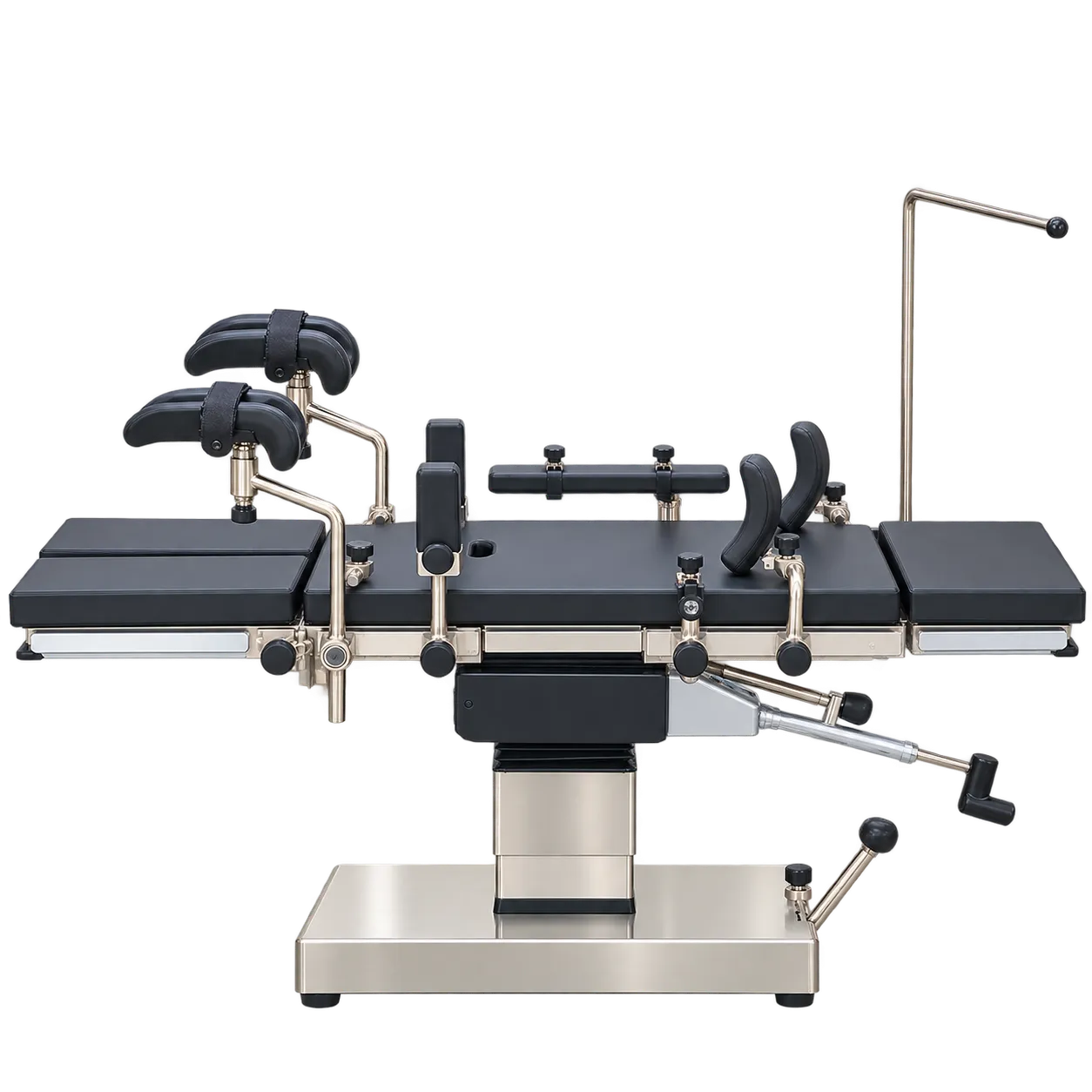
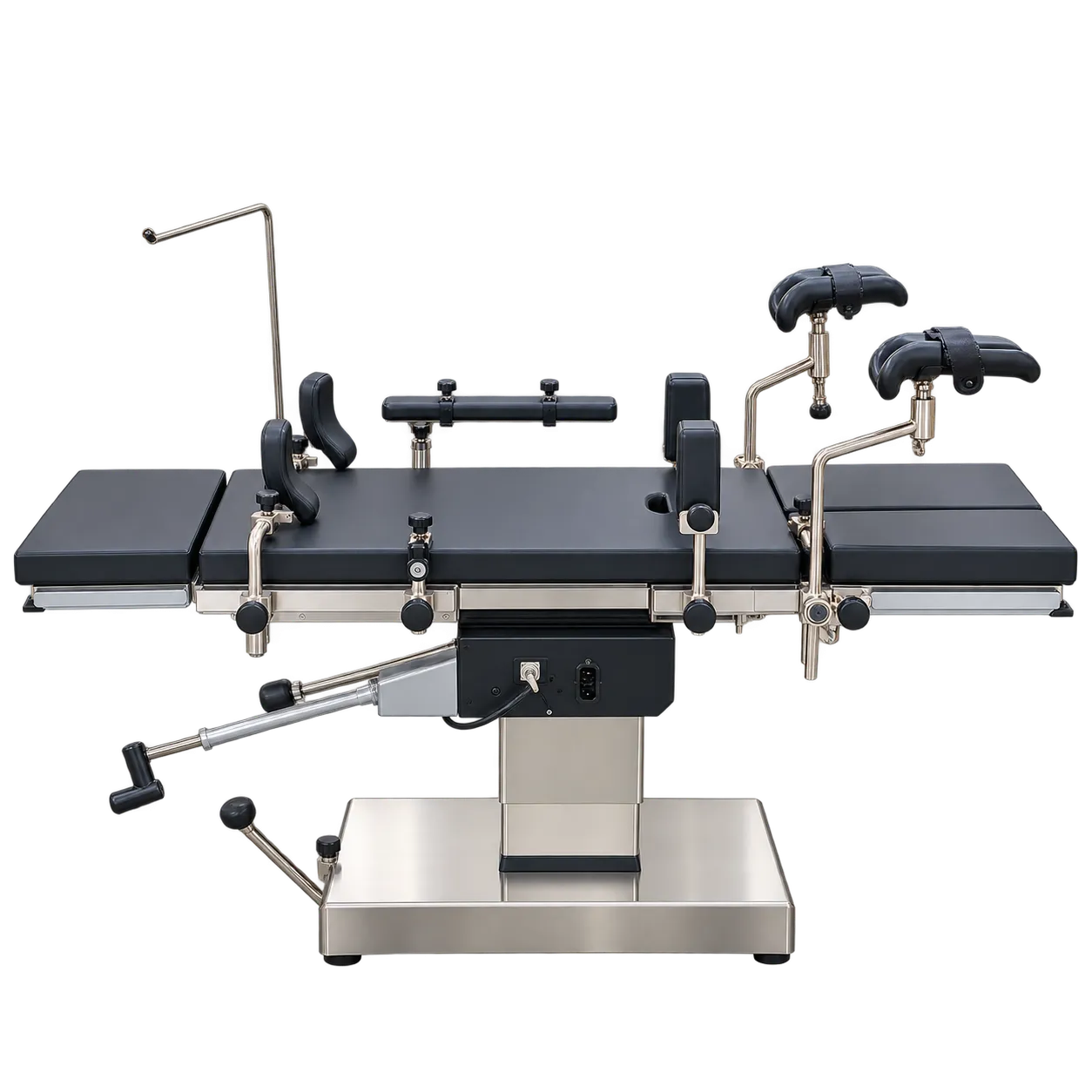
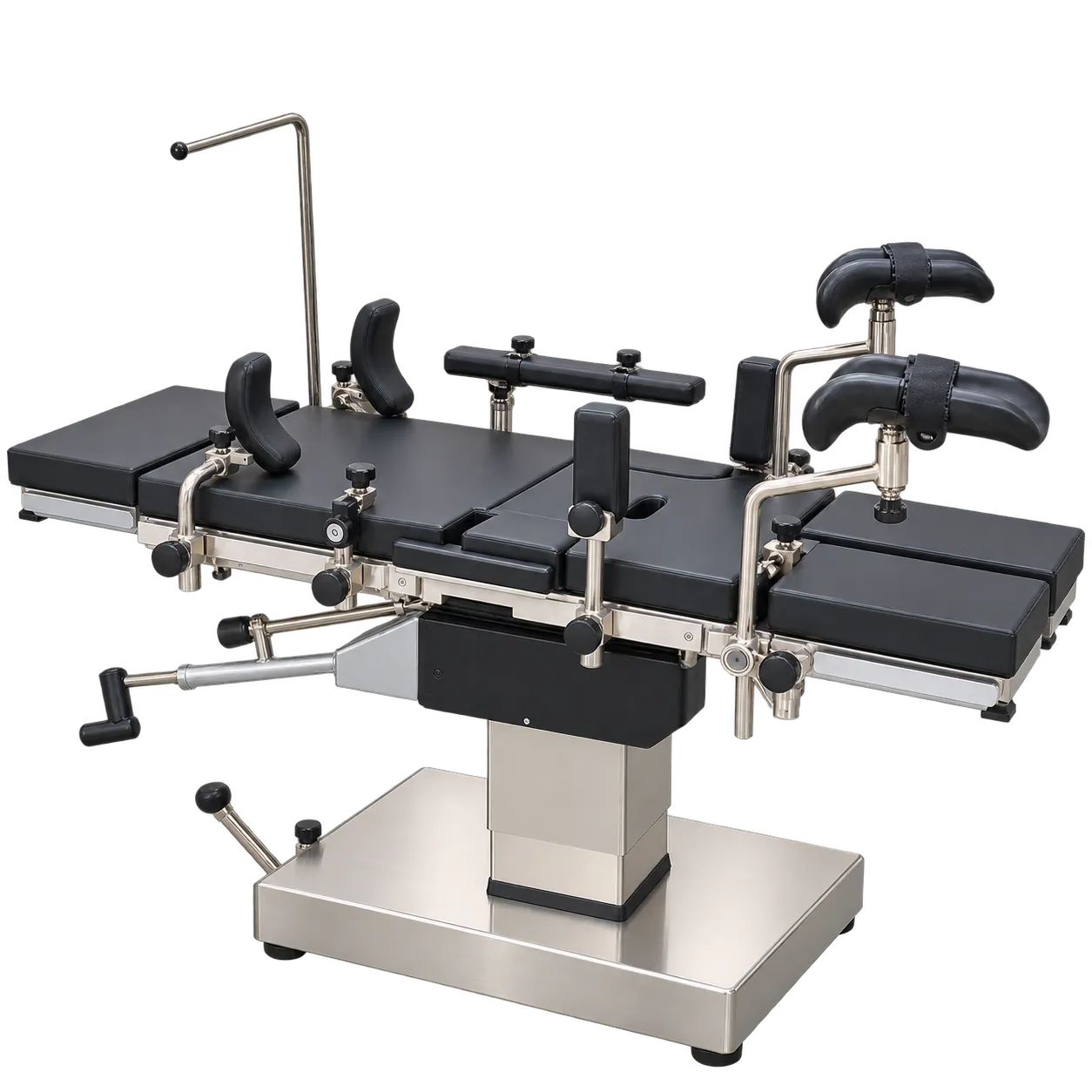
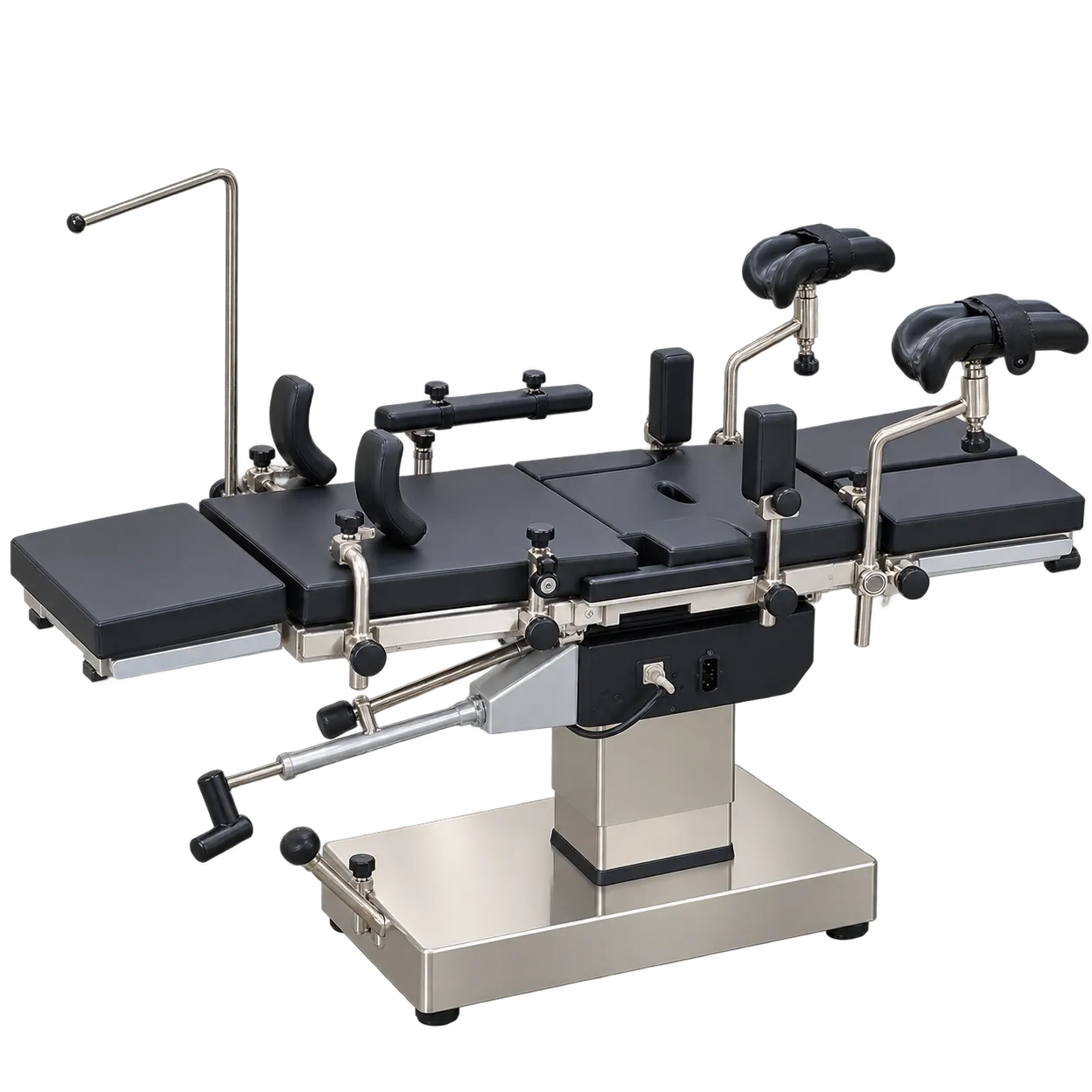
A hydraulic operating table earns its place where power is unreliable. Theatres in regions with unstable supplies, field and disaster hospitals, and back-up theatres all benefit from a table that works through a power cut. Some hospitals also keep a manual table as a fallback in case an electric one fails mid-list. The trade-off is effort and speed. Pumping and cranking take longer than pressing a button, and staff need to learn which handle does what. Training on the manual controls should form part of commissioning.
The accessories in the photograph cover the common positions. Leg holders support lithotomy for gynaecology and urology, and body supports hold a lateral position. The arm board and anaesthesia screen serve supine general surgery. The stainless top suits settings where heavy contamination is routine, such as trauma and obstetric theatres, because it can be cleaned thoroughly between cases. It cannot image through the top, so fracture fixation requiring fluoroscopy belongs on a different table.
A 480 mm top leaves little spare width for larger patients, and only the safe working load, which the sheet omits, can confirm what the table can take. Hydraulic systems also need planned maintenance. Seals and fluid should be checked so the table holds its set height through a long case. Medigear.uk obtains the load rating, positioning ranges, maintenance schedule and approved cleaning agents from Blackstone.
Clinical engineers will also want a spares list for the pump and seals. Those details go to the theatre manager and the estates team before placing an order.