
Tomatoes Hepatic Steatosis: MASLD Trial Signals Liver Benefit
A new exploratory randomized controlled trial in the journal Nutrients has flagged a possible benefit of tomatoes on hepatic steatosis. The tomatoes hepatic steatosis study ran for 6 weeks. It enrolled 79 adults with metabolic dysfunction-associated liver disease (MASLD).
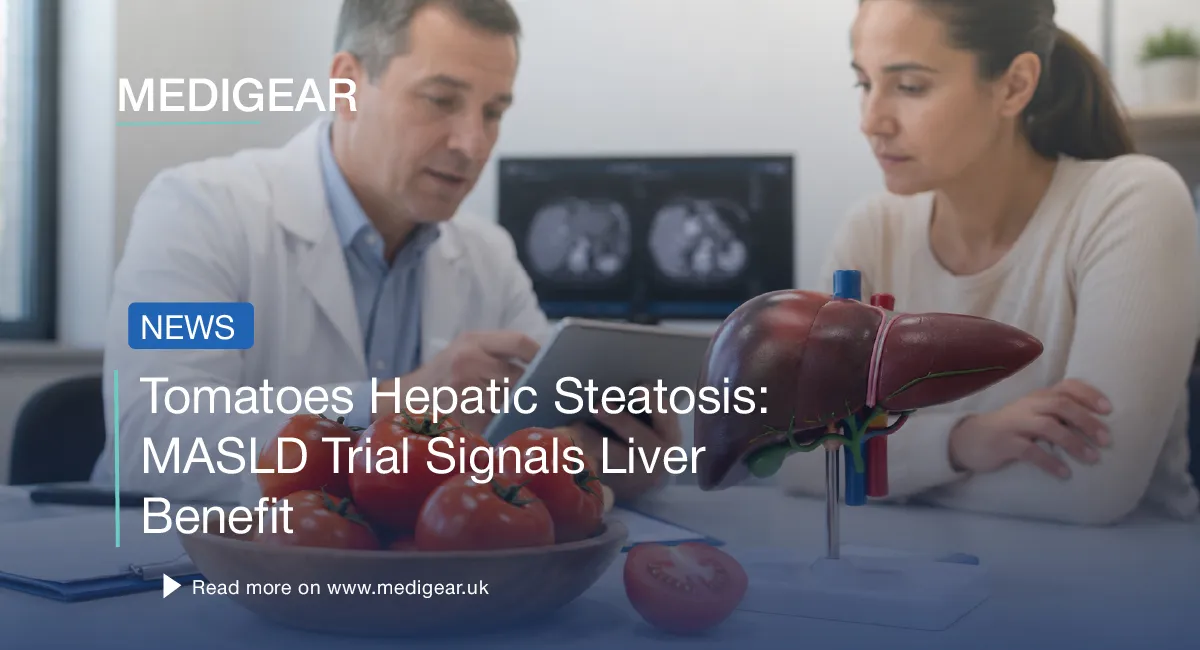
A new exploratory randomised controlled trial in the journal Nutrients has flagged a possible benefit of tomatoes on hepatic steatosis. The tomatoes hepatic steatosis study ran for 6 weeks. It enrolled 79 adults with metabolic dysfunction-associated liver disease (MASLD).
MASLD covers a range of liver problems. Its main feature is hepatic steatosis. That is, fat buildup in the liver. For a MASLD diagnosis, patients also need at least one cardiometabolic risk factor. Options include obesity or high blood pressure.
The TOMATOES hepatic steatosis trial split patients into two groups. One group ate 200 grams of raw tomatoes and 50 grams of tomato sauce each day. The other followed a tomato-free control diet. All tomato products came from the same producer. Patients kept their normal lifestyles otherwise.
What the tomatoes hepatic steatosis study tested
The tomatoes hepatic steatosis team enrolled 79 adults with MASLD. It excluded heavy drinkers. It also excluded adults with a body mass index over 30. That marks obesity. All were 65 or younger.
The tomato hepatic steatosis intervention lasted 6 weeks. The team tracked several health indicators. These included body composition, hepatic steatosis, liver stiffness, and cholesterol levels.
The tomatoes came from the Mediterranean diet framing. The authors wanted to test how this common food affected liver steatosis.
Key 6-week results
Hepatic steatosis declined in both groups. But the tomato group saw a bigger drop. Baseline hepatic steatosis was similar between arms.
The team did not find major changes in liver stiffness. They also did not find significant differences in lipids, liver enzymes, or body mass index at 6 weeks.
The authors summed up their finding: "tomato consumption may reduce hepatic fat accumulation independently of major changes in body weight, total and abdominal adiposity."
Limits of the tomato hepatic steatosis study
The intervention ran only 6 weeks. Long-term benefits are outside its scope. The study also capped the age at 65. Most participants were men. Excluding adults with a body mass index over 30 also limits reach.
The team could not measure blood levels of lycopene and carotenoids. Those tomato components may drive any liver effect. Dietary compliance also depended on counselling and self-reports.
Expert reactions
Randa Abdelmasih, MD, DipABOM, an endocrinologist and obesity specialist at the University of Texas Medical Branch (UTMB), was not involved. Abdelmasih told Medical News Today: "The study demonstrates a modest reduction in hepatic steatosis over only six weeks in a highly selected population of adults with MASLD and BMI [body mass index] of 30 kg/m² [kilograms per square meter] or more. Most patients we see in clinical practice have obesity (BMI over 30 kg/m²), type 2 diabetes, or more advanced metabolic disease, so the generalizability of these findings is limited."
Jonathan Jennings, MS, MD, a board-certified internist with Medical Offices of Manhattan, was also not involved. He flagged a design concern.
"The inclusion criteria required only one cardiometabolic risk factor, and it could be any risk factor. I am concerned that not all risks are equal, and people with multiple factors are at higher risk than those with a single risk factor," Jennings told Medical News Today.
"Type 2 diabetes is more likely to lead to MASLD than high blood pressure, but the study evaluates them as equal risk factors," he added.
What clinicians say about applicability
The TOMS hepatic steatosis trial did not move key clinical markers. Liver stiffness, fibrosis scores, and inflammatory markers held steady.
Abdelmasih added: "The study showed improvement in liver fat but no significant improvements in liver stiffness, fibrosis scores, liver enzymes, insulin resistance, inflammatory markers, lipid profile, or body composition. Therefore, while the imaging findings are interesting, we cannot conclude that tomato consumption meaningfully alters disease progression or improves clinically relevant outcomes."
Jennings pointed out real-world caveats. Tomatoes can worsen gastroesophageal reflux disease (GERD). Some tomato-based foods are calorie-dense. They may also worsen insulin resistance in certain patients.
Abdelmasih framed the study in the wider MASLD care context.
"While tomatoes can certainly be part of a healthy Mediterranean diet, they should not distract from therapies that have demonstrated meaningful improvements in liver and cardiometabolic outcomes," she concluded.
For hepatology, primary care, and dietetics teams, the tomatoes hepatic steatosis signal is worth watching. But it is hypothesis-generating only. Coverage on Medigear.uk tracks the field.
Source: Originating coverage based on Medical News Today reporting on an exploratory randomized controlled trial published in the journal Nutrients on daily tomato consumption and hepatic steatosis in 79 adults with metabolic dysfunction-associated liver disease (MASLD). Outside commentary from Randa Abdelmasih, MD, DipABOM (University of Texas Medical Branch) and Jonathan Jennings, MS, MD (Medical Offices of Manhattan).
Sourcing medical equipment?
Tell us the model and destination — our sourcing team will respond within one business day.

Rebecca Miles builds out MediGear's product listings, writing the descriptions and specification detail that help buyers understand what each item is and whether it fits their needs. She keeps listings accurate, consistent and grounded in manufacturer data across the marketplace.
View all articles
MiniMed Smart MDI System: 8.1pp TIR Lift at EASD 2026
Type 1 diabetes patients who responded to more MiniMed Smart MDI alerts hit better glucose numbers i…
Corcym Memo 4D Curve Mitral Ring: First-in-Human US Implant
The Corcym Memo 4D Curve mitral repair ring has landed its first-in-human implant. The news comes so…
Myrava 3D-Printed Bolus Wins FDA 510(k) for Radiotherapy
The Myrava 3D-printed bolus has cleared the US Food and Drug Administration (FDA). The 510(k) nod co…
Medical device news, once a week.
Approvals, trials, recalls and market moves — the essentials for procurement and clinical teams.