
Introduction
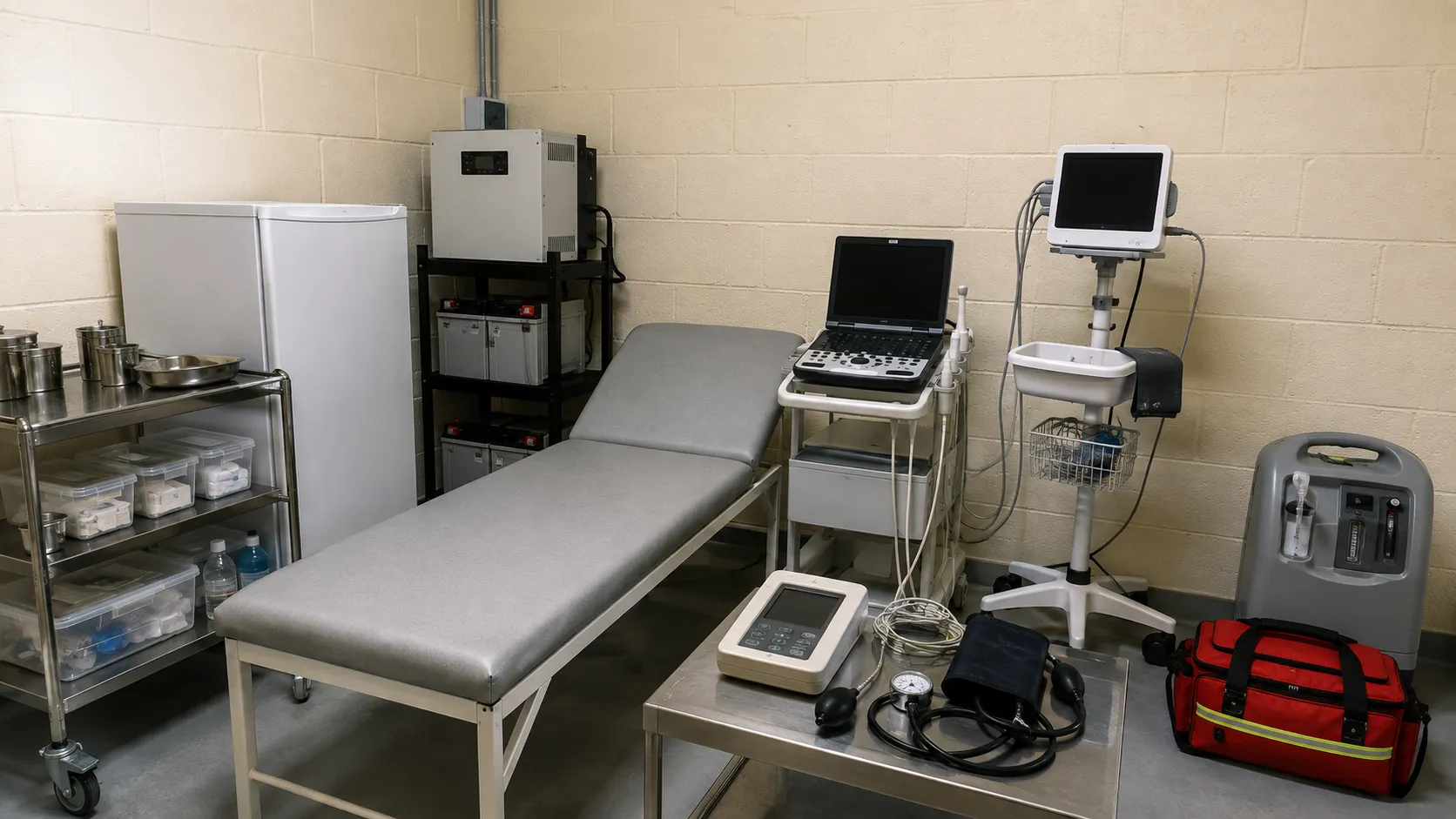
A remote area health clinic provides care far from the nearest hospital. Support, supplies and specialists are all a long way off. So it must be self-sufficient and appropriately equipped. It centres on primary care, portable diagnostics, and its own power, cold chain and connectivity. Setting one up means choosing equipment that suits a remote setting, and adding the telemedicine links that reach specialists from a distance.
This guide covers the full remote clinic equipment list by area. It then walks through the infrastructure, the planning sequence, and the approval and compliance points. Use it for a new clinic, an upgrade, or added capacity. It focuses on the equipment and self-sufficiency decisions. Where clinical, technical and safety input is essential, it says so.
A remote clinic is shaped by distance. Help is far away, so the clinic has to manage on its own for long stretches. That makes appropriate, reliable equipment more important than advanced equipment. A device that cannot be powered, maintained or supported locally is of little use. So power, a reliable cold chain and connectivity are as central as the clinical kit. Telemedicine extends what a small team can safely do, letting them reach specialists far away. The clinic is built to be dependable and self-sufficient, not just well-stocked. Dependable is the goal.
In practice, the decisions that matter most are about self-sufficiency, appropriateness and connectivity. Choose equipment that local power and support can sustain, or it sits idle. Plan the cold chain carefully, since a failure wastes vaccines and medicines that are hard to replace. Make connectivity a priority, because it links the clinic to specialists and records. Keep the kit simple and robust, so a small team can run it. Plan power, cold chain and connectivity alongside the clinical equipment, and the clinic stays reliable far from support. Distance shapes every choice.
The short version — what every remote clinic is built around
Strip it back, and a remote clinic needs three things. Appropriate primary-care equipment. Its own power and cold chain. And connectivity that reaches specialists from afar.
-
Primary care & diagnostics — appropriate, reliable equipment for common needs.
-
Self-sufficiency — its own power, environment and a dependable cold chain.
-
Connectivity & telemedicine — links to specialists and records from a distance.
Remote clinic equipment by area
-
Primary care & examination. Examination couches, lighting and basic diagnostic tools for everyday primary care. The kit is chosen to be reliable and simple to run. A small team handles it all.
-
Portable diagnostics. Portable ultrasound, ECG and point-of-care testing. Compact, rugged, battery-capable devices suit a remote setting best. Simple beats advanced here.
-
Emergency & stabilisation. Resuscitation, airway and stabilisation equipment for emergencies. The clinic must hold a patient until transfer is possible. Transfer can take hours.
-
Power & environment. A reliable power source with backup, often including solar, and climate control. Remote sites cannot assume mains power. Solar and batteries fill the gap.
-
Cold chain. Portable medical refrigeration with temperature monitoring. A broken cold chain wastes vaccines and medicines that are hard to replace. Monitoring guards against it.
-
Connectivity & telemedicine. Connectivity, electronic records and a telemedicine link. This lets a small team reach specialists far away. Advice arrives without a journey.
-
Infection control & sterilisation. Hand hygiene, waste handling and compact sterilisation. A self-contained clinic manages infection control on its own. Waste is handled safely on site.
-
Storage & appropriate technology. Secure storage and equipment matched to local support. Appropriate technology lasts; advanced kit that cannot be maintained does not. Choose what survives locally, every time.
Remote clinic equipment checklist
|
Section |
Equipment |
Notes |
|
Primary care |
Couches; lighting; basic tools |
Reliable, simple |
|
Diagnostics |
Portable ultrasound; ECG; POC |
Rugged, battery-capable |
|
Emergency |
Resus; airway; stabilisation |
Hold until transfer |
|
Power |
Backup; solar; climate |
No mains assumed |
|
Cold chain |
Portable fridge; monitoring |
Hard to replace stock |
|
Connectivity |
Records; telemedicine |
Reach specialists |
|
Infection control |
Hand hygiene; waste; sterilisation |
Self-contained |
|
Storage/tech |
Secure; appropriate technology |
Lasts locally |
Scale each area to your setting and remoteness. A clinic near a small town and one truly isolated differ widely in self-sufficiency and connectivity needs. Remoteness drives the plan.
Planning a remote clinic?
We'll help you equip it end-to-end. Tell us your setting, remoteness, budget and market. We'll select appropriate equipment, balance new and refurbished units, and make sure everything is compliant and supported.
No pressure, no obligation. → Talk to the team
What else does setting up a remote area health clinic involve
-
Appropriate beats advanced. A device that cannot be powered or maintained locally is of little use. So appropriate, reliable equipment matters more than advanced equipment in a remote setting. The best device is the one that runs.
-
Power and cold chain are critical. Remote sites have no mains and hard-to-replace stock. So power, backup and a dependable cold chain are planned as critical systems from the start. Both are lifelines here.
-
Connectivity extends the clinic. Telemedicine lets a small team reach specialists far away. So connectivity is planned in because it extends what the clinic can safely do. A link is worth the effort.
-
Simple and robust. A small team must run everything with little support. So simple, robust equipment matters as much as capability.
-
Consumables, staffing and service. Consumables that reach the clinic, a small trained team, and service that travels all shape the running model. The purchase is only the start.
Setting up a remote area health clinic, step by step
-
Define your setting and remoteness. Decide the care the clinic must provide, and how far help is.
-
Confirm self-sufficiency. Plan power, backup, cold chain and connectivity. Start any works early.
-
Select appropriate equipment area by area, reliable and simple, sized to your setting.
-
Decide new versus refurbished per item. Plan consumables and service that can reach the clinic.
-
Install and test everything. Set up the cold chain and telemedicine, and train the team before opening.
Power, cold chain and connectivity take time to set up remotely. Build them into the schedule, so the clinic runs reliably from day one rather than only being stocked.
Budget and procurement
A remote clinic is equipment- and logistics-intensive. So the purchase price is only part of the story. Power, cold chain, connectivity, and resupply all carry ongoing costs. A common approach is to buy new for high-throughput core units and certified refurbished for ancillary equipment. Because these are regulated devices, check the device risk class and the certification for your market. Match the technology to what your setting can sustain. Appropriate, well-supported equipment then stays useful, rather than sitting idle far from help.
Approval and accreditation by region
|
Region |
Regulator |
Device requirement |
|
United Kingdom |
UKCA mark (CE accepted to 2028–2030) |
|
|
European Union |
CE marking under the MDR |
|
|
United States |
FDA clearance or approval |
|
|
Gulf (GCC) |
SFDA & GCC bodies |
National registration / GCC conformity |
|
South Africa |
Medical device licensing |
Devices are regulated, so confirm each is approved for your market. Remote clinics also depend on a reliable cold chain and safe power, so these matter alongside device approval. For quality standards and clinical guidance, the World Health Organisation and NICE are useful references. If you're equipping a remote area health clinic, our buyer hub sets out how to purchase with confidence.
More from Business
-
Buyers — select and source appropriate, self-sufficient equipment for your remote clinic.
-
Suppliers — list your equipment and reach buyers worldwide.
-
Advertise — promote your products and services to a clinical audience.
-
Business overview — explore everything MediGear offers healthcare organisations.
Disclaimer
This article is for general information only. It is not clinical, medical, procurement, engineering or regulatory advice. Remote clinic design, equipment, power, cold-chain, connectivity and safety requirements vary by country, setting and remoteness, and change over time. The checklist is a planning aid, not a specification. Always work with qualified clinical, biomedical, facilities and procurement professionals. And confirm every device is approved for your market — for example, UKCA, CE, FDA, SFDA/GCC or SAHPRA. Requirements change, so check the current position before you buy. medigear.UK accepts no liability for actions taken on this content.
Equip your remote clinic end-to-end.
From primary care and portable diagnostics to power, cold chain and telemedicine, we help services across the UK, Europe, the US, the Gulf and South Africa build remote area clinics — compliant, supported and self-sufficient.
Frequently Asked Questions
A remote clinic needs primary-care and examination equipment, portable diagnostics such as ultrasound, ECG and point-of-care testing, and emergency and stabilisation kit. It also needs its own power with backup, a reliable cold chain, connectivity for records and telemedicine, and infection-control provision. Everything is chosen to be appropriate, reliable and simple to run far from support.
The main areas are primary care and examination, portable diagnostics, emergency and stabilisation, power and environment, the cold chain, connectivity and telemedicine, infection control and sterilisation, and storage and appropriate technology. These are planned together, because a remote clinic must be self-sufficient far from help.
Costs depend on the setting, the remoteness and the self-sufficiency required, so there is no single figure. A remote clinic is equipment- and logistics-intensive. Weigh the purchase price against power, cold-chain, connectivity and resupply costs over time rather than the upfront price alone.
Yes, often. Appropriate, well-supported refurbished equipment can suit a remote setting better than advanced kit that cannot be maintained locally. What matters is that a device is approved for your market, reliable, and able to run on the clinic's power, whether new or refurbished.
It varies with the setting and the works involved, but planning, equipping and setting up self-sufficiency typically takes a few months. The power, cold chain and connectivity are the parts most often underestimated remotely, so build them into the schedule from the start.
A remote clinic needs its own reliable power with backup, often solar, a dependable cold chain with monitoring, connectivity for records and telemedicine, and secure storage. This self-sufficiency is as important as the clinical equipment, because a remote clinic must run on its own, far from the support a hospital takes for granted.