
Introduction
Setting up a hospital after a natural disaster is a race to restore care, then a plan to build back stronger. Power, water and equipment may be damaged or gone. Patients still need care, often more than ever. So recovery runs in two stages. First, restore essential services fast, with temporary and mobile equipment if needed. Then re-equip properly, and rebuild in a way that is more resilient next time.
This guide covers re-equipping a hospital after a disaster, area by area. It then walks through the infrastructure, the planning sequence, and the approval and compliance points. Use it after a flood, storm, earthquake or other damage. It focuses on restore-essentials-first, then rebuild-resilient decisions. Where clinical, engineering and safety input is essential, it says so.
Disaster recovery is different because it happens under pressure and out of order. You rarely start from a clean plan. You start from damage, urgency and whatever still works. So the priority is triage of the hospital itself. What is safe to use? What is damaged? What must be restored first? Essential services come before everything else. Emergency care, power, water, oxygen and infection control cannot wait. Temporary and mobile equipment can bridge the gap while permanent kit is replaced. Then, as things stabilise, the focus shifts to rebuilding properly and more resiliently.
In practice, the decisions that matter most are about sequence, resilience and logistics. Restore the essentials first, in the right order, so care resumes safely and fast. Use temporary and mobile equipment to bridge gaps, then replace it in a planned way. Build back with resilience in mind. Backup power, protected utilities and equipment that survives the next event all matter. Logistics are hard after a disaster, so plan supply and delivery carefully. Sequence the restore and rebuild together, and the hospital recovers quickly and comes back stronger. Recovery is a plan, not luck.
The short version — what every hospital recovery is built around
Strip it back, and disaster recovery needs three things. A fast restore of essential services. Temporary equipment to bridge the gap. And a resilient, planned rebuild.
-
Restore essentials — emergency care, power, water and oxygen first, fast.
-
Bridge the gap — temporary and mobile equipment while permanent kit is replaced.
-
Build back resilient — backup utilities and equipment that survive the next event.
Hospital recovery equipment, area by area
-
Damage & needs assessment. A fast assessment of what is damaged, what still works and what must be restored first. It sets the whole recovery in order. Speed and order both matter.
-
Essential services first. Emergency care, resuscitation, power, water and oxygen are restored before anything else. These cannot wait for a full rebuild. Life safety comes first.
-
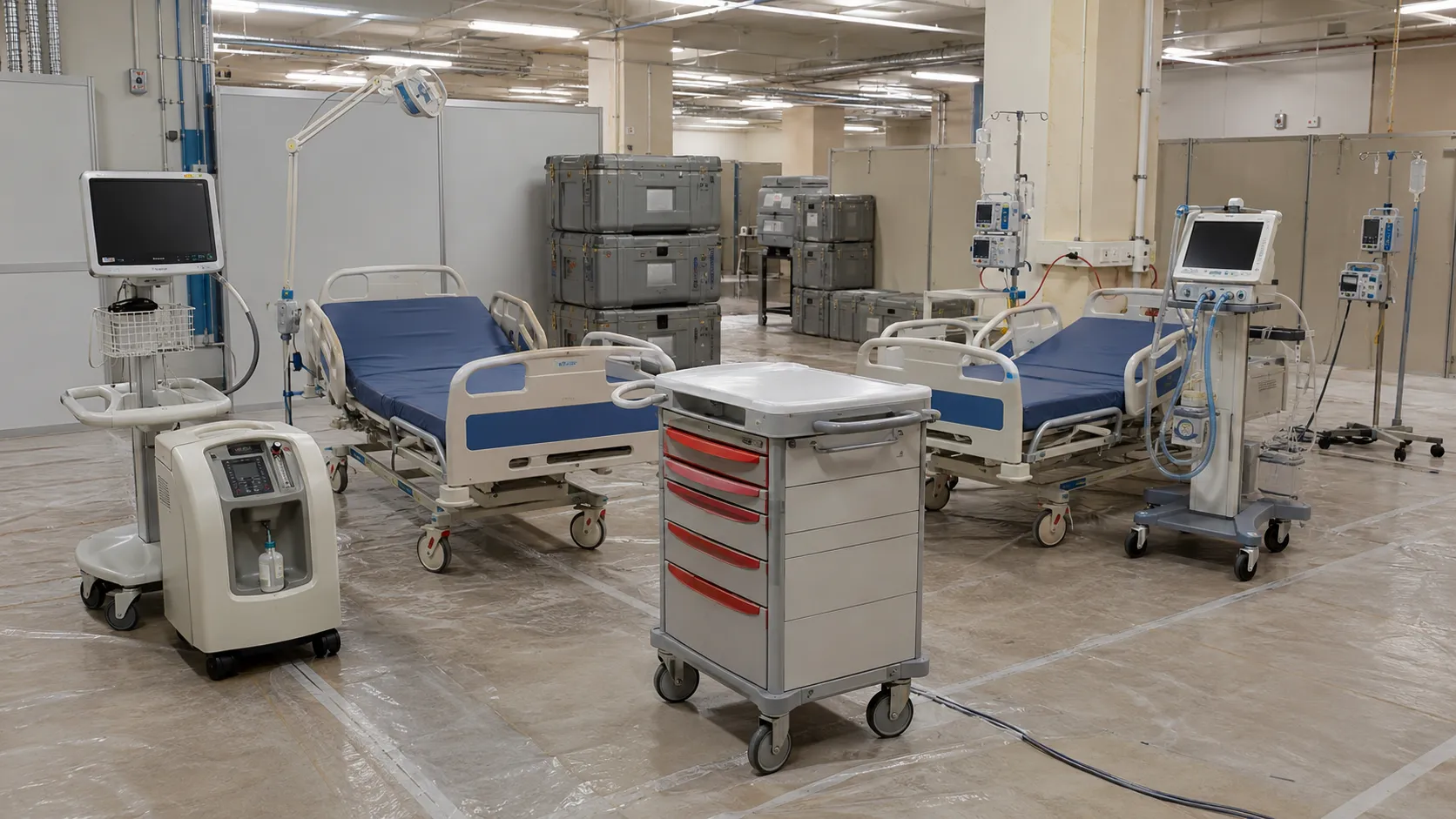
Temporary & mobile equipment. Portable and mobile equipment to bridge the gap while permanent kit is replaced. It keeps care going during recovery. Mobile kit buys valuable time.
-
Replacement equipment. Planned replacement of damaged permanent equipment, department by department, as the hospital stabilises. Order follows priority, not habit.
-
Utilities & resilience. Restored and protected power, water and medical gases, with backup, so the hospital is not knocked out again as easily. Resilience is designed, not hoped for.
-
Infection & safety. Infection control, clean water and safe waste, which are often at risk after a disaster and matter enormously. Clean water cannot be assumed.
-
Procurement & logistics. A supply and delivery plan that works despite damaged infrastructure, so equipment actually reaches the hospital. Roads and supply lines may be broken.
-
Infrastructure. Structural safety checks, protected utilities and a rebuild designed to withstand the next event.
Hospital recovery equipment checklist
|
Section |
Equipment |
Notes |
|
Assessment |
Damage and needs triage |
Set the order |
|
Essentials |
Emergency; power; water; oxygen |
Before anything else |
|
Temporary |
Portable and mobile equipment |
Bridge the gap |
|
Replacement |
Planned permanent replacement |
Department by department |
|
Utilities |
Protected power/water/gases + backup |
Resilient |
|
Infection/safety |
Clean water; waste; infection control |
Often at risk |
|
Logistics |
Supply and delivery plan |
Reach the hospital |
|
Infrastructure |
Structural checks; resilient rebuild |
Withstand next event |
Scale each area to the damage and the hospital. A partial disruption and a hospital rebuilding from severe damage differ widely in temporary equipment and rebuild needs.
Rebuilding after a disaster?
We'll help you re-equip end-to-end. Tell us the damage, your services, budget and market. We'll build the recovery equipment plan, balance new and refurbished units, and make sure everything is compliant and supported.
No pressure, no obligation. → Talk to the team
What else does setting up a hospital after a natural disaster involve
-
Essentials come first. Care cannot wait for a full rebuild. So emergency services, power, water and oxygen are restored first, before the rest of the recovery follows. Order saves lives.
-
Bridge, then replace. Temporary and mobile equipment keeps care going during recovery. So plan to bridge the gap first, then replace permanent kit in an orderly way. Bridge first, rebuild next.
-
Build back resilient. A disaster is a chance to rebuild stronger. So backup power, protected utilities and durable equipment are designed in to reduce the next disruption. Build for the next event.
-
Logistics are the hard part. Supply and delivery are difficult after a disaster. So the logistics plan is as important as the equipment list, because kit has to actually arrive.
-
Consumables, staffing and service. Consumables in quantity, staff working under pressure, and service that reaches a recovering site all shape the running model. The purchase is only the start.
Setting up a hospital after a natural disaster, step by step
-
Assess the damage fast. Decide what still works and what must be restored first.
-
Restore essential services first. Bring back emergency care, power, water and oxygen, with a temporary kit if needed.
-
Build the replacement plan area by area, as the hospital stabilises, sized to your services.
-
Design in resilience. Protect utilities, add backup, and choose durable equipment. Plan the logistics carefully.
-
Replace, commission and hand over each area in turn. Keep essential care running throughout.
Restoring utilities and logistics take time under pressure. Sequence them first, so essential care resumes safely before the wider rebuild.
Budget and procurement
Disaster recovery is urgent and phased, and logistics are hard. So the purchase price is only part of the story. Temporary equipment, replacement, resilience and delivery all carry costs. A common approach is to buy new for high-throughput core units and certified refurbished for ancillary equipment. Because these are regulated devices, check the device risk class and the certification for your market. Match temporary and permanent equipment to the damage and your services. That way essential care returns fast, and the rebuild is resilient without overreaching.
Approval and accreditation by region
|
Region |
Regulator |
Device requirement |
|
United Kingdom |
UKCA mark (CE accepted to 2028–2030) |
|
|
European Union |
CE marking under the MDR |
|
|
United States |
FDA clearance or approval |
|
|
Gulf (GCC) |
SFDA & GCC bodies |
National registration / GCC conformity |
|
South Africa |
Medical device licensing |
All replacement medical devices are regulated, so confirm each is approved for your market. Recovery also depends on restored, protected utilities, so resilience matters alongside device approval. For quality standards and clinical guidance, the World Health Organisation and NICE are useful references. If you're equipping a hospital after a natural disaster, our buyer hub sets out how to purchase with confidence.
More from Business
-
Buyers — source a full recovery equipment package for your hospital.
-
Suppliers — list your equipment and reach buyers worldwide.
-
Advertise — promote your products and services to a clinical audience.
-
Business overview — explore everything MediGear offers healthcare organisations.
Disclaimer
This article is for general information only. It is not clinical, medical, procurement, engineering or regulatory advice. Disaster recovery, equipment, utilities, resilience and safety requirements vary by country, event and facility, and change over time. In an emergency, follow official guidance and local authorities first. The checklist is a planning aid, not a specification. Always work with qualified clinical, biomedical, facilities and procurement professionals. And confirm every device is approved for your market — for example, UKCA, CE, FDA, SFDA/GCC or SAHPRA. Requirements change, so check the current position before you buy. medigear.UK accepts no liability for actions taken on this content.
Re-equip your hospital end-to-end.
From restoring essential services to temporary equipment and a resilient rebuild, we help hospitals across the UK, Europe, the US, the Gulf and South Africa recover after disasters — compliant, supported and on budget.
Frequently Asked Questions
Recovery runs in two stages. First, assess the damage and restore essential services fast, including emergency care, power, water and oxygen, using temporary and mobile equipment if needed. Then replace permanent equipment in a planned way, department by department, and rebuild with resilience in mind. Essentials come first, and logistics are often the hardest part.
The main areas are damage and needs assessment, restoring essential services first, temporary and mobile equipment, replacement equipment, utilities and resilience, infection and safety, procurement and logistics, and a resilient infrastructure rebuild. These run partly in order, because care must resume before the full rebuild.
Costs depend on the damage, the services affected, and the resilience built in, so there is no single figure. Recovery is urgent and phased. Weigh the cost of temporary equipment, replacement, resilience and logistics over the whole recovery rather than the upfront price alone.
Yes, and it is often essential. Mobile and temporary equipment bridges the gap while permanent kit is replaced, and certified refurbished units can speed replacement. Every device must be safe, approved for your market and fully supported, whether temporary, refurbished or new.
It varies enormously with the damage. Restoring essential services is a matter of hours to days, while a full, resilient rebuild can take months to years, phased department by department. Restoring utilities and managing logistics under pressure are the parts most often underestimated.
Recovery needs restored and protected power, water and medical gases, with backup, plus structural safety checks and a rebuild designed to withstand the next event. It also needs a logistics plan that works despite damage. This resilient infrastructure matters as much as the equipment, because it is what keeps the hospital running next time.