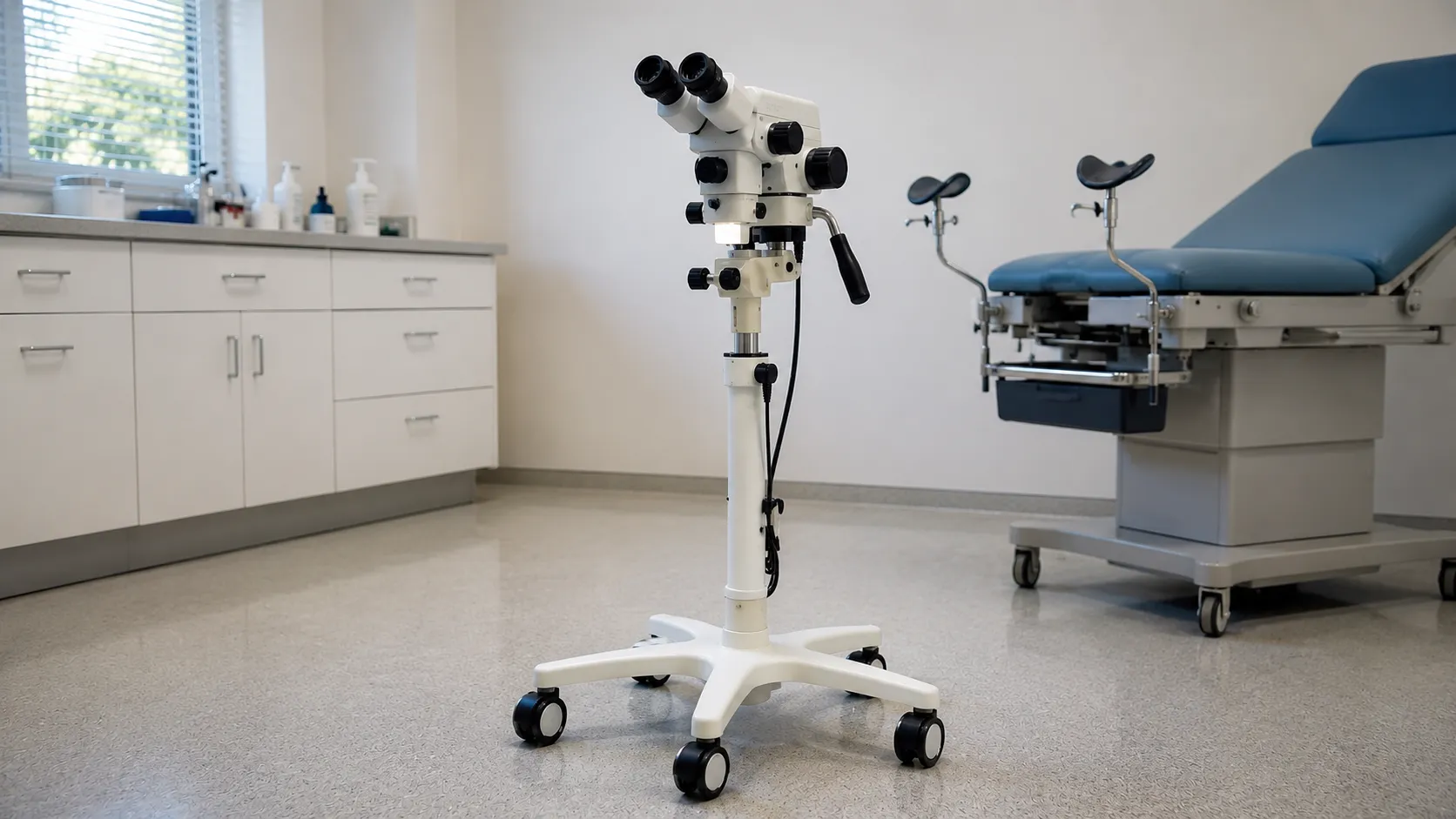
A colposcope is a low-power binocular microscope on a stand, with its own bright light, that magnifies the cervix, vagina and vulva during a colposcopy examination. It lets a clinician inspect tissue in detail after cervical screening has flagged an abnormality, guiding targeted biopsy or treatment. In effect, it is a stereo magnifier with strong, adjustable illumination and, increasingly, an integrated camera.
Colposcopy sits at the heart of the cervical screening pathway, so gynaecology and colposcopy services choose these instruments carefully. For a buyer, the questions are optical quality, whether to specify optical or video, illumination, ergonomics, and how images are captured for the record. This guide covers the principles, variants, specifications, standards, and running costs that shape a good purchase.
How a colposcope works
The instrument provides stereoscopic magnification, typically stepped or zoomed across a range from roughly low single figures to around forty times so that the examiner can move from an overview to fine detail. A powerful light, now usually LED, illuminates the field, and a green or blue filter can be swapped in to enhance the contrast of blood vessels, since abnormal vascular patterns are an important sign. During examination, the clinician applies solutions such as acetic acid to highlight areas of interest, then studies the tissue under magnification to decide where, if anywhere, to take a biopsy.
The main variants you will compare.
Optical colposcopes
The clinician views directly through binocular eyepieces. Optical quality is excellent,t and there is no screen latency, which many colposcopists prefer for fine assessment. Documentation depends on adding a camera.
Video colposcopes
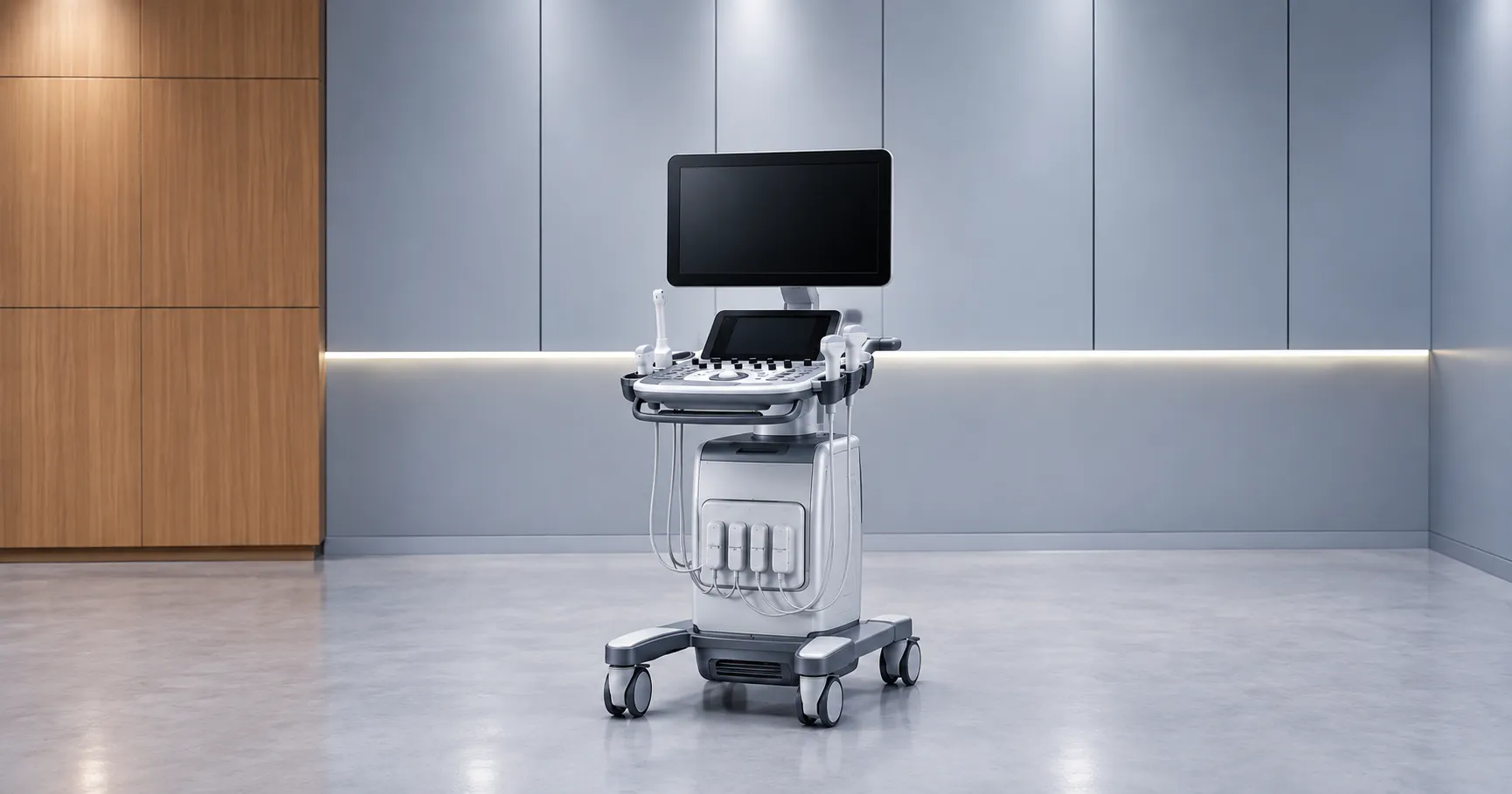
A high-resolution camera feeds a monitor, so the examiner and team view the same live image. This aids teaching, lets the patient see the view if appropriate, and streamlines documentation, at some cost in outright optical resolution compared with the best optics.
Mounting styles
Colposcopes come on mobile floor stands, swing-arm wall or couch mounts, and counterbalanced arms. The mount affects stability, positioning ease and how well the instrument suits the room layout, so match it to the clinic's fixed furniture and workflow.
Key specifications a buyer must check
Assess the magnification range and whether it steps or zooms, the working distance, and the quality and depth of field of the optics. Check illumination brightness, colour temperature and the availability of a green or vascular filter. For video systems, consider camera resolution, image and video capture, storage, and how files link to the patient record or a colposcopy reporting system. Evaluate the stand's stability, reach and fine-focus control, and the eyepiece comfort for clinicians who examine many patients in a session. Confirm compatibility with any documentation software already in use.
Standards, regulation and electrical safety
A colposcope sold in Great Britain must carry UKCA or, during the recognised transition, CE marking, and the manufacturer or their UK Responsible Person must be registered with the MHRA. As a mains-powered active medical device, it is built to the IEC 60601-1 electrical-safety family, with electromagnetic-compatibility requirements and, where a camera and monitor are involved, the relevant system standards. Ask for the Declaration of Conformity, confirm the device class and intended use, and check that any bundled software is covered. Screening pathways also follow national clinical guidance, and NHS cervical screening standards set the service context in which the equipment operates.
Calibration, maintenance and infection control
The optics themselves are not routinely calibrated, but the instrument needs planned maintenance: LED or lamp checks, lens cleaning, focus and zoom mechanism servicing, stand and brake inspection, and inclusion of the mains system in estates electrical-safety testing. Infection control focuses on the surfaces the clinician and patient touch and on any part that could be splashed; the instrument is used near, but not inside, the patient, so cleanable surfaces and wipe-down compatibility matter. Confirm which cleaning agents the manufacturer approves so decontamination does not degrade the optics or housing.
Use across care settings.
Most colposcopy happens in dedicated hospital colposcopy clinics with fixed, high-specification instruments and integrated documentation. Some community sexual and reproductive health services run colposcopy with more compact or mobile units. Training centres value video colposcopes so a group can view the same image. The clinical demands are similar across settings, so the practical differences are room size, whether the instrument must move between rooms, and how tightly documentation must integrate with the reporting system. Decide the mounting and video strategy around those realities.
Consumables, warranty and total cost of ownership
Colposcopes have modest direct consumables—the clinical solutions and biopsy instruments belong to the procedure rather than the scope—but lifetime cost still includes LED or lamp replacement, camera and monitor servicing, software updates or licences, and eventual optics or mechanism repair. A video system adds IT dependencies and storage. Weigh warranty length, the availability and cost of spares, and expected service response, because a colposcope is a long-life capital item and downtime disrupts a screening clinic. Ask suppliers for a multi-year service and consumable estimate and confirm how long spares will be supported.
Documentation, reporting and image governance
Colposcopy findings feed a formal report and often a national screening dataset, so how the instrument captures and stores images matters as much as its optics. A video-camera-equipped colposcope can save stills and clips against the patient episode, support the reporting proforma, and provide a record for audit, multidisciplinary review, and medico-legal purposes. Confirm where images are stored, how they are backed up, who can access them and whether the system meets your information-governance requirements. Check that captured images carry the correct patient identifiers and that the workflow prevents an image from attaching to the wrong record. Integration with an existing colposcopy reporting system avoids duplicate data entry and keeps the clinic moving.
Ergonomics and clinician comfort
A colposcopist may examine many patients in a session, so eyepiece comfort, smooth focus and zoom, and easy instrument positioning reduce fatigue and improve consistency. A stable stand with fine, backlash-free focus lets the clinician hold a precise view while working with both hands. For video systems, monitor size, placement and image latency affect how comfortably the team works. Trial the instrument in a realistic clinic layout before committing, because a scope that is awkward to position slows every examination.
Procurement checklist
-
Confirm UKCA or CE marking and MHRA registration of the manufacturer or UK Responsible Person.
-
Decide between optical and video based on your documentation and teaching needs.
-
Check magnification range, working distance, optical quality and depth of field.
-
Confirm illumination type and the presence of a green or vascular filter.
-
For video, verify camera resolution, capture, storage and reporting-system integration.
-
Match the mounting style to the room and confirm stand stability and fine focus.
-
Confirm approved cleaning agents and wipe-down compatibility.
-
Compare warranty, spares availability and service response across suppliers.
Buying well through MediGear
Specifying a colposcope means balancing optical quality, documentation, mounting and lifetime support against the demands of a screening clinic. MediGear links UK healthcare buyers with vetted suppliers to compare diagnostic equipment on specification and service. To scope a colposcope for your clinic, get in touch with your room and documentation requirements.
Conclusion
A colposcope is a precise magnifier that guides a critical part of the cervical screening pathway, and the best choice reflects optics, documentation, mounting and long-term support rather than price alone. Weighing that whole picture is where a marketplace like MediGear helps a procurement team decide.
Disclaimer
This article is for informational purposes only. MediGear (medigear.uk) publishes it for general information and procurement guidance. It is not clinical, diagnostic, treatment, technical, engineering, legal or regulatory advice, nor a product endorsement, guarantee or substitute for professional assessment. MediGear does not provide medical consultations. Buyers should consult their clinical, biomedical, estates and regulatory contacts, and the manufacturer's documentation, and independently verify all specifications, certifications, compatibility and suitability before purchase. Specifications, certifications and availability are correct at the time of publication and may change without notice. MediGear is a medical-equipment distributor and does not sell medicines or pharmaceutical products.