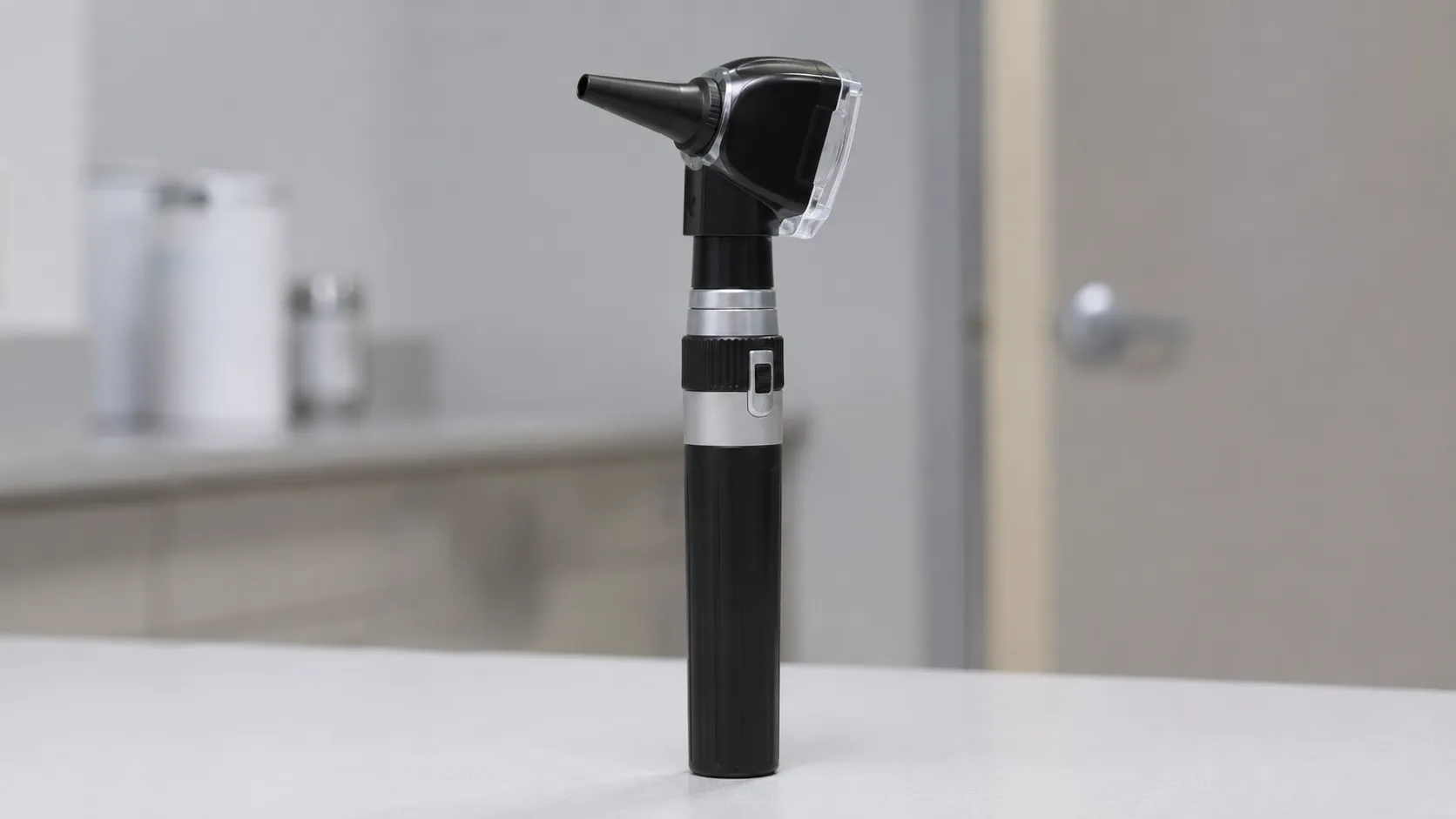
An otoscope is a handheld optical instrument that lights and magnifies the ear canal and tympanic membrane so a clinician can inspect them directly. A light source, a magnifying lens and a disposable or reusable speculum let the examiner assess the canal wall, the eardrum and, with a pneumatic attachment, how the drum moves. It is one of the most widely used diagnostic tools in ENT, general practice, paediatrics and audiology.
For a buyer, the interesting decisions sit beneath that simple description: illumination type, whether the head is diagnostic or operating, power source, speculum strategy and how the fleet will be maintained. This guide covers how otoscopes work, the main variants and the specifications, standards and running costs that shape a sound purchase.
How an otoscope works
Light travels from a lamp, down the instrument head and through the speculum onto the ear canal and drum, while the clinician views the illuminated field through a magnifying lens. Older instruments carry the lamp in the head; fibre-optic designs pipe light from a base-mounted bulb or LED through fibres to the speculum tip, giving even, shadow-free illumination and cooler operation. A diagnostic head seals against a pneumatic bulb so the examiner can puff air and watch the eardrum move, which helps assess middle-ear effusion. An operating head has an open, movable lens allowing instruments to pass down the canal for wax removal or foreign-body work.
The main variants you will compare.
Pocket versus full-size
Pocket otoscopes run on AA or rechargeable batteries in a slim handle and suit domiciliary and ward rounds. Full-size handles offer brighter, more consistent light and pair with wall-mounted transformer bases in a treatment room.
Halogen, xenon and LED
LED illumination now dominates for its long life, low heat, stable colour temperature and negligible maintenance. Halogen and xenon give warm, high-quality light but the bulbs are a recurring consumable. Colour rendering matters because clinicians judge redness and landmarks by eye.
Diagnostic, operating and video
Diagnostic heads are the everyday workhorses, while operating heads support procedures. Video otoscopes add a camera and screen or software link, useful for teaching, documentation and sharing images with a patient or a referral.
Key specifications a buyer must check
Look at illumination intensity and colour temperature, magnification (commonly around three times), field of view, and whether the light is fibre-optic for even coverage. Check the power option — dry cell, rechargeable handle or wall transformer — and battery or charge life across a clinic day. For video units, assess resolution, capture and storage, and how images reach the patient record. Ergonomics and weight matter for staff using the device dozens of times a day, as does compatibility with the speculum range you intend to stock.
Specula: single-use versus reusable
The speculum is the part that enters the ear, so it is central to infection control. Single-use specula remove reprocessing labour and cross-contamination risk but add a per-patient consumable and a waste stream. Reusable specula lower per-use cost but require validated cleaning and disinfection between patients and a system to track that reprocessing. Whichever you choose, confirm the speculum sizes fit both adult and paediatric canals, and that supply is dependable — a head that only takes a proprietary speculum ties you to one manufacturer's pricing and lead times.
Standards, regulation and safety
Otoscopes placed on the market in Great Britain require UKCA or, during the recognised transition, CE marking, with the manufacturer or UK Responsible Person registered with the MHRA. Mains-powered charging bases and video systems are designed to the IEC 60601-1 electrical-safety family, with electromagnetic-compatibility requirements where applicable. Battery-only handheld heads are lower risk but still fall under medical device rules. Ask for the Declaration of Conformity and confirm the intended-use statement. For the wider regulatory framework, UK government guidance is a helpful starting point.
Maintenance, spares and calibration
Otoscopes are not calibrated in the metrological sense, but they need upkeep. Bulbs are the classic consumable on halogen and xenon heads; LEDs largely remove that. Lenses scratch and cloud, rechargeable handles lose capacity, and pneumatic bulbs perish. A sensible fleet policy keeps spare bulbs, seals and specula in stock, schedules battery replacement, and includes the charging bases in the estate's electrical-safety testing programme. Ask the supplier which parts are user-replaceable, how spares are priced and how long they will be available, because a head with no spares is a false economy.
Use across care settings.s
A GP surgery typically wants durable diagnostic heads on wall-mounted bases in each room, plus a pocket set for home visits. Paediatric services rely on smaller specula and quick, reassuring examinations, so light quality and speed count. ENT clinics may add operating heads and video otoscopes for procedures and documentation. Audiology values clear pre-test canal inspection. Community, care-home and domiciliary teams need rugged, battery-powered pocket sets. Veterinary practices use otoscopes too, with their own speculum needs. Matching the head type and power source to the setting avoids buying capability that never gets used.
Total cost of ownership
Over a working life, running costs often exceed the purchase price. Add up specula, replacement bulbs, rechargeable batteries, lens or seal spares and any video-system licences or storage. LED heads with reusable-plus-single-use flexibility usually offer the lowest lifetime cost for a busy clinic, but the right answer depends on volume. Ask each supplier for a multi-year consumable and warranty summary so a fleet decision rests on total cost rather than unit price, and confirm warranty length and whether loan units cover downtime.
Ergonomics, training and workflow
An otoscope is picked up dozens of times a day, so weight, balance and how the head illuminates on first look affect both speed and comfort. Staff who are not specialists benefit from a bright, even field that makes landmarks obvious, shortening examinations and reducing repeat attempts on children. Standardising on one or two head types across a service simplifies training, spares and speculum stock, and lets any clinician pick up any instrument and work confidently. Where video otoscopes are used, factor in the short training needed to capture and store images well, and decide who is responsible for filing them to the record. A consistent, well-lit fleet is easier to teach on and quicker in clinic than a mix of ageing handles.
Procurement checklist
-
Confirm UKCA or CE marking and MHRA registration of the manufacturer or UK Responsible Person.
-
Decide on diagnostic, operating, or video heads based on what each setting actually does.
-
Choose the illumination type — LED for low maintenance, weighing colour rendering.
-
Decide between single-use and reusable specula, and confirm sizes and reliable supply.
-
Check power option and battery or charge life across a full clinic day.
-
Verify which spares are user-replaceable, their price and availability.
-
For video units, confirm image capture, storage and EPR integration.
-
Compare warranty, servicing and loan-unit cover across suppliers.
Buying well through MediGear
Equipping a fleet of otoscopes well means matching head type, illumination and speculum strategy to each setting, then costing the consumables honestly. MediGear connects UK healthcare buyers with vetted suppliers to compare diagnostic instruments on specification and lifetime support. To specify otoscopes for your service, share your room count and caseload.
Conclusion
An otoscope looks simple, but the right choice balances illumination, head type, speculum strategy and running cost against how each clinic works. Deciding on that whole picture, rather than the cheapest handle, is where a marketplace like MediGear adds value to the procurement decision.
Disclaimer
This article is for informational purposes only. MediGear (medigear.uk) publishes it for general information and procurement guidance. It is not clinical, diagnostic, treatment, technical, engineering, legal, or regulatory advice, nor a product endorsement, guarantee, or substitute for professional assessment. MediGear does not provide medical consultations. Buyers should consult their clinical, biomedical, estates and regulatory contacts, and the manufacturer's documentation, and independently verify all specifications, certifications, compatibility and suitability before purchase. Specifications, certifications and availability are correct at the time of publication and may change without notice. MediGear is a medical-equipment distributor and does not sell medicines or pharmaceutical products.