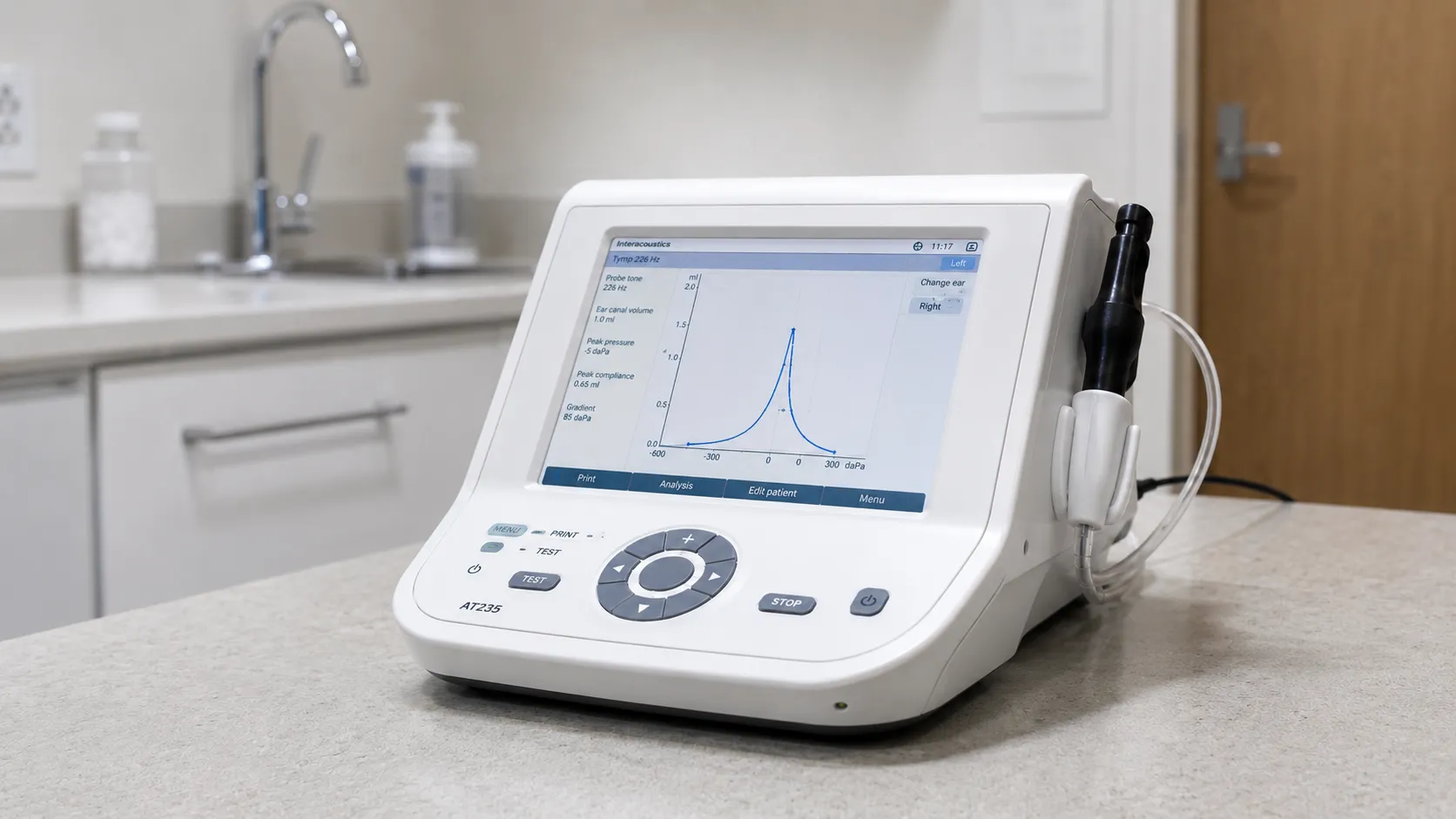
A tympanometer measures how well the eardrum and middle ear move in response to changes in air pressure inside the ear canal. In plain terms, it tells a clinician whether the middle ear is healthy, holds fluid, or sits under abnormal pressure, without looking behind the drum. It does this in a few seconds by sealing the canal, varying the pressure and recording how much sound energy the drum reflects at each point.
For anyone buying for a GP practice, an audiology clinic or a paediatric service, the tympanometer is a workhorse. It is quick, objective and easy for non-specialist staff to run, which is exactly why the buying decision turns on probe reliability, calibration and how the results move into the patient record.
The Measurement Principle
A probe with a soft tip creates an airtight seal in the ear canal. The instrument then plays a continuous probe tone, usually 226 Hz in adults, and sweeps the canal pressure from positive through zero to negative, typically across a range around +200 to −400 decapascals. A microphone in the probe measures how much of the tone is reflected by each pressure. The eardrum admits the most sound energy when the pressure on both sides is equal, so the point of peak admittance marks the pressure inside the middle ear. The result is plotted as a tympanogram, a curve of admittance against pressure.
Reading the tympanogram
Clinicians describe the curves using established patterns. A—ape: A curve peaks near zero pressure and suggests normal middle-ear function. A Type B curve is flat, which can indicate fluid or a perforation. A Type C curve peaks at markedly negative pressure, pointing to poor ventilation of the middle ear. The device does not diagnose; it produces the objective trace a clinician interprets alongside history and other tests.
Probe Tones and Why They Vary
The standard 226 Hz probe tone works well for adults and older children. In babies under about six months, a higher probe tone, commonly 1000 Hz, gives more reliable results because the infant ear canal behaves differently. If you serve a neonatal or paediatric population, a multi-frequency instrument that offers a 1000 Hz tone is not a luxury; it is a clinical requirement. Buyers should match the probe-tone options to the ages they actually see.
Acoustic Reflex Testing
Many tympanometers add acoustic reflex measurement, which records the tiny protective contraction of the middle-ear muscles in response to a loud sound. The device presents tones at rising levels and watches for the small admittance change that marks the reflex threshold, testing the same ear (ipsilateral) and the opposite ear (contralateral). Reflex results add information about the middle ear and the reflex pathway. Still, they need extra probe stability and a slightly longer test, so decide up front whether your service needs them. A screening clinic often does not; an audiology or ENT department usually does. Consider where you need reflexes, the level range the device can present, and whether reflex decay testing is included.
Screening, Diagnostic and Combined Units
Handheld screening tympanometers are compact, battery-powered, and offer fast throughput in general practice, health visiting, and community clinics. Diagnostic instruments, usually bench units, add wider pressure ranges, multiple probe tones, acoustic reflex testing and detailed printouts for audiology departments. Many mid-range devices also combine tympanometry with acoustic reflex measurement, and some bundle otoacoustic emissions or basic audiometry into one platform. Deciding between a pocket screener and a full diagnostic system comes down to who runs it, how many ears a day, and whether you need reflex thresholds as well as pressure.
Key Specifications to Compare
Look past the headline and compare the pressure range and pump speed, the probe tones offered, and whether acoustic reflex testing is included. Check the size range of disposable ear tips supplied, because a poor seal is the most common cause of a failed reading. Consider the display and whether curves are shown live, the internal storage for results, and the calibration interval the manufacturer specifies. Battery—battery charging matters for mobile and domiciliary use. For paediatric work, note how fast the pump completes a sweep, since a quick test is far easier on a wriggling child.
Standards, Regulation and Calibration
A tympanometer sold in the UK is a medical device and must carry a UKCA or CE mark, with the supplier registered with the regulator. The instrument type falls under the IEC 60645 series for audiometric and impedance equipment, and its electrical safety sits under the IEC 60601-1 family. Calibration is not optional: acoustic admittance meters drift, and most manufacturers specify an annual calibration against a traceable standard, often with a daily or weekly user check using the supplied test cavity. Build the recurring calibration cost and turnaround into the business case from the start. The MHRA publishes device guidance worth reviewing during evaluation, and clinical service expectations can be cross-checked against NHS references.
Decontamination and Consumables
The probe tip touches the ear canal, so infection control drives the consumable choice. Most modern instruments use single-use disposable ear tips, which are cheap per unit but add up across a busy clinic, so build them in. The cost: body. Wipe down any reusable parts per the manufacturer's instructions; confirm which cleaning agents are approved so you don't degrade the acoustic seal or the housing. Keep a spread of tip sizes in stock, because the wrong size defeats the seal and wastes appointment time.
Warranty, Servicing and Spares
The probe is the part that fails, because it is handled constantly and its narrow acoustic channels can clog. Ask what a replacement probe costs, how long a repair takes, and whether a loan unit is offered while yours is serviced, since a clinic without a working tympanometer loses appointments. Check the warranty length, whether the first annual calibration is included, and how readily spares such as probe tips, seals and cables are supplied over a multi-year contract. A low purchase price with a costly probe and slow turnaround is a false economy.
Use Across Care Settings and Total Cost
In general practice, a handheld screener supports quick checks and referral decisions. In audiology, a diagnostic bench unit anchors the assessment pathway. Health visitors and community teams value light, robust, battery units, while paediatric and ENT clinics need multi-frequency capability and reflex testing. Total cost of ownership runs well beyond the purchase price: annual calibration, disposable tips, printer paper or thermal rolls, batteries, and eventual probe replacement all count. A device that connects to your patient record system through Noah or a documented data export saves clinician time on every test, which is a real recurring saving. If you are equipping several sites, our team can help you match specifications through MediGear for buyers.
What to Check Before You Buy
-
Probe tones offered, including a 1000 Hz tone if you test infants.
-
Pressure range and pump speed suited to your patient mix, especially children.
-
Whether acoustic reflex testing is included or optional.
-
Calibration interval, cost and turnaround, plus the daily user-check method.
-
Disposable ear-tip sizes and price per test.
-
UKCA or CE marking, IEC 60645 conformity and IEC 60601-1 electrical safety.
-
Data export or Noah connectivity into your patient record system.
Conclusion
A tympanometer earns its place by giving a fast, objective picture of middle-ear pressure that any trained member of staff can capture. Buy on the probe tones your patients need, the calibration and consumable costs you will carry, and the connectivity that saves time on every test rather than on sticker price alone. To compare screening and diagnostic options for your service, talk to MediGear and choose the unit that fits your workload.
Disclaimer
This article is for informational purposes only. It is published by MediGear (medigear.uk) for general information and procurement guidance and is not clinical, technical, engineering, legal, or regulatory advice, a product endorsement, a guarantee, or a substitute for professional assessment. MediGear does not provide medical consultations. Buyers should consult their clinical, biomedical, estates and regulatory contacts, and the manufacturer's documentation, and independently verify all specifications, certifications, compatibility and suitability before purchase. Specifications, certifications and availability are correct at the time of publication and may change without notice. MediGear is a medical-equipment distributor and does not sell medicines or pharmaceutical products.