Suction equipment is checked far less often than it is relied on. A unit that has sat unused in a treatment room for months is the one a team will reach for during an emergency, and that is exactly when a flat battery or a missing collection jar becomes a serious problem.
These ten suction types cover ward, theatre, transport and specialist use. Each entry explains where it fits and what to confirm before ordering.
Vacuum performance is two numbers, not one.
Suction capability is described by the vacuum level a unit can reach and the airflow it can sustain. High vacuum with poor flow clears thin secretions slowly, while good flow at a controlled vacuum handles realistic clinical material far better. Ask for both figures rather than accepting a single headline number.
Adjustable regulation matters as much. Airway suction in neonates and children requires controlled, lower vacuum levels, so a unit with a clear regulator and an accurate gauge is safer than one with a simple high- and low-switch.
The ten suction unit types
1. Mains-powered mobile suction units
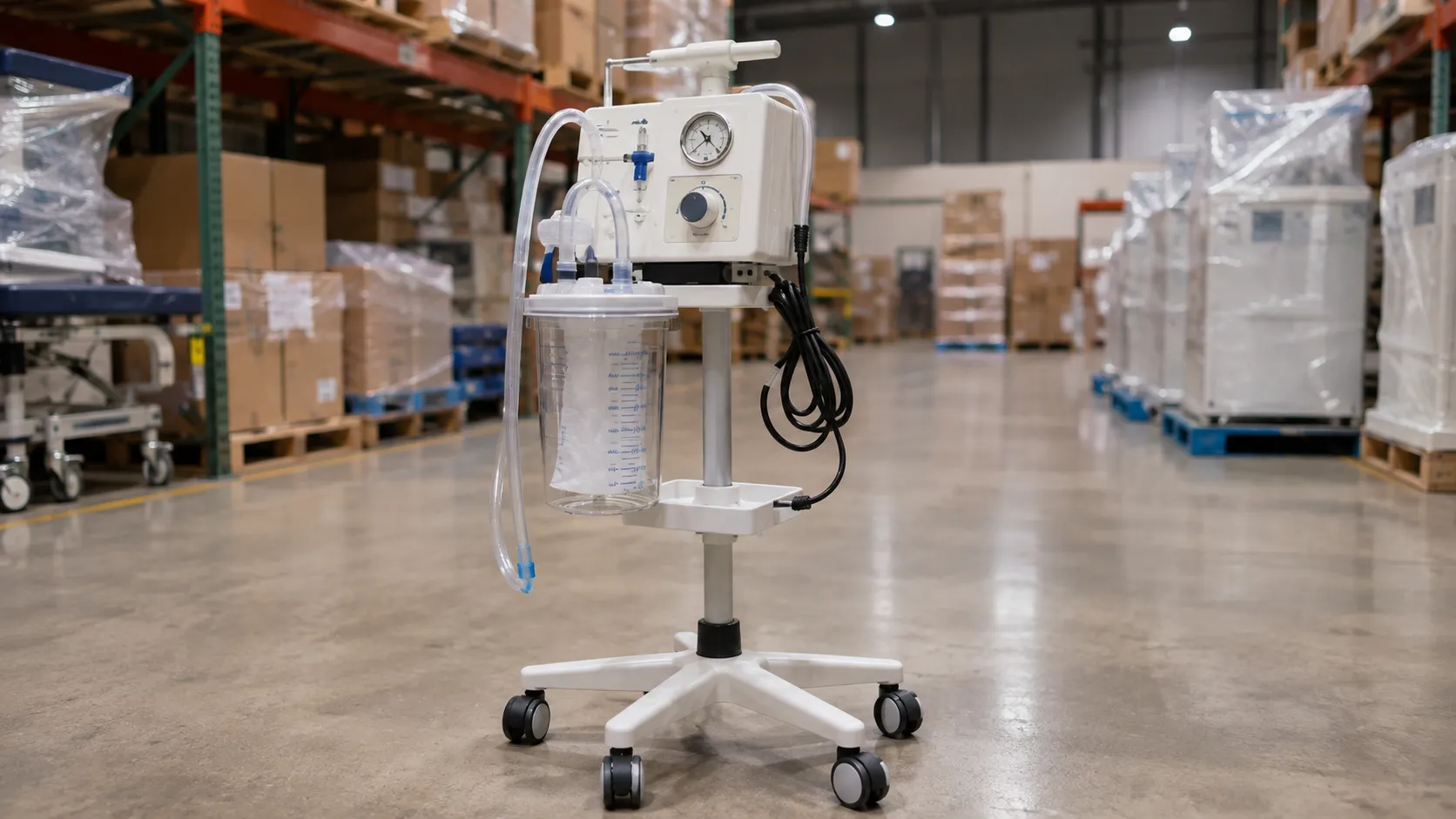
Trolley-mounted aspirators for wards and treatment rooms, offering strong continuous performance. Jar capacity, filter arrangement and ease of cleaning decide day-to-day usability.
2. Portable battery suction units
Compact devices for resuscitation trolleys, transfers and community work. Battery endurance and charge status indication matter more than peak vacuum.
3. Wall-mounted vacuum regulators
Connect to piped hospital vacuum through a regulator, gauge and collection system. Confirm the regulator range, the fitting standard and the collection system used across the site.
4. Manual and foot-operated pumps
Require no power at all, making them a dependable backup for outreach, transport, and contingency planning.
5. High-flow theatre suction
Higher airflow for surgical fields where volume clearance matters. Usually paired with larger collection capacity and secure tubing connections.
6. Low-vacuum neonatal and paediatric units
Provide fine control at lower vacuum levels appropriate for small airways, with clear gauges and limited maximum settings.
7. Thoracic drainage suction systems
Dedicated units for chest drainage, with controlled low-level suction and monitoring features distinct from general airway aspirators.
8. Transport and vehicle-mounted suction
Built to tolerate movement and temperature variation, with secure mounting and a power arrangement suited to the vehicle or trolley.
9. Units with disposable liner systems
Use a single-use liner inside a reusable canister, removing jar washing and reducing handling of contents. Liner supply becomes a stock commitment.
10. Units with reusable jar systems
Use washable polycarbonate jars processed after each patient. Lower consumable dependence, but they require a reliable decontamination route.
Where the units live
Placement decides whether suction is available when it matters. Treatment rooms, resuscitation areas, and theatre recovery each need their own unit rather than sharing one across a floor, and every location needs a charging point for a battery-powered device. Units stored in a distant equipment room tend to arrive late, which defeats the purpose of holding them at all.
What to confirm before ordering
-
Vacuum and flow. Ask for both maximum vacuum and sustained airflow figures.
-
Overflow protection. Confirm the shut-off mechanism that prevents fluid reaching the pump.
-
Filters. Establish filter type, replacement interval and supply arrangements.
-
Tubing and catheters. Check connector compatibility with the catheters your service already stocks.
-
Jar capacity. Match capacity to the clinical use, since frequent changes during a procedure are disruptive.
-
Noise. Consider sound output for bedside and community use.
Checks, training and servicing
Suction units on emergency trolleys require a documented readiness check covering charge status, tubing presence, jar and liner availability, and a brief functional test. Keep the check brief enough that staff complete it reliably.
Training should cover assembly, vacuum setting for the patient group, recognising blockage, safe disposal of contents and the cleaning routine. Decontamination is the step most often done inconsistently, so agree a single method per unit type.
For servicing, agree on planned maintenance intervals, filter replacement, battery replacement cycles, electrical safety testing, and spare parts availability. Ensure the organisation receives published device safety alerts so field safety notices reach the clinical engineering team.
Liner and filter supply should be settled at the same time as the units themselves. Availability across mains, portable and piped options can be checked with verified equipment suppliers.
Final thoughts
Match the unit to where it will be used, then make sure it is checked. Most services need mains-powered units for treatment areas, portable battery units on resuscitation trolleys, piped regulators where infrastructure allows, and a manual pump on standby. Settle filters, liners and decontamination before rollout.
This article provides general procurement guidance for healthcare organisations. It is not clinical advice and does not replace manufacturer instructions or local airway management policy.