Home oxygen programmes succeed or fail on logistics. The concentrator has to suit the patient's prescribed flow, fit into their home, run quietly enough to live with, and be maintained without a lengthy service visit. Devices chosen on flow rating alone often turn out to be too loud, too heavy or too demanding to service.
The ten types below cover stationary, portable and specialised provision. Each entry explains the design and what to confirm before a programme adopts it.
Match the device to the prescription and the home.
Two figures matter first: the flow the patient requires and whether that flow is continuous or intermittent. A device rated for maximum flow may deliver reduced oxygen purity at that setting, so confirm purity performance across the full range rather than at a single point.
Then assess the home. Note the electrical supply, the room where the unit will sit, the required tubing length, and whether stairs affect delivery and servicing. Noise deserves particular attention where the unit runs overnight in or near a bedroom.
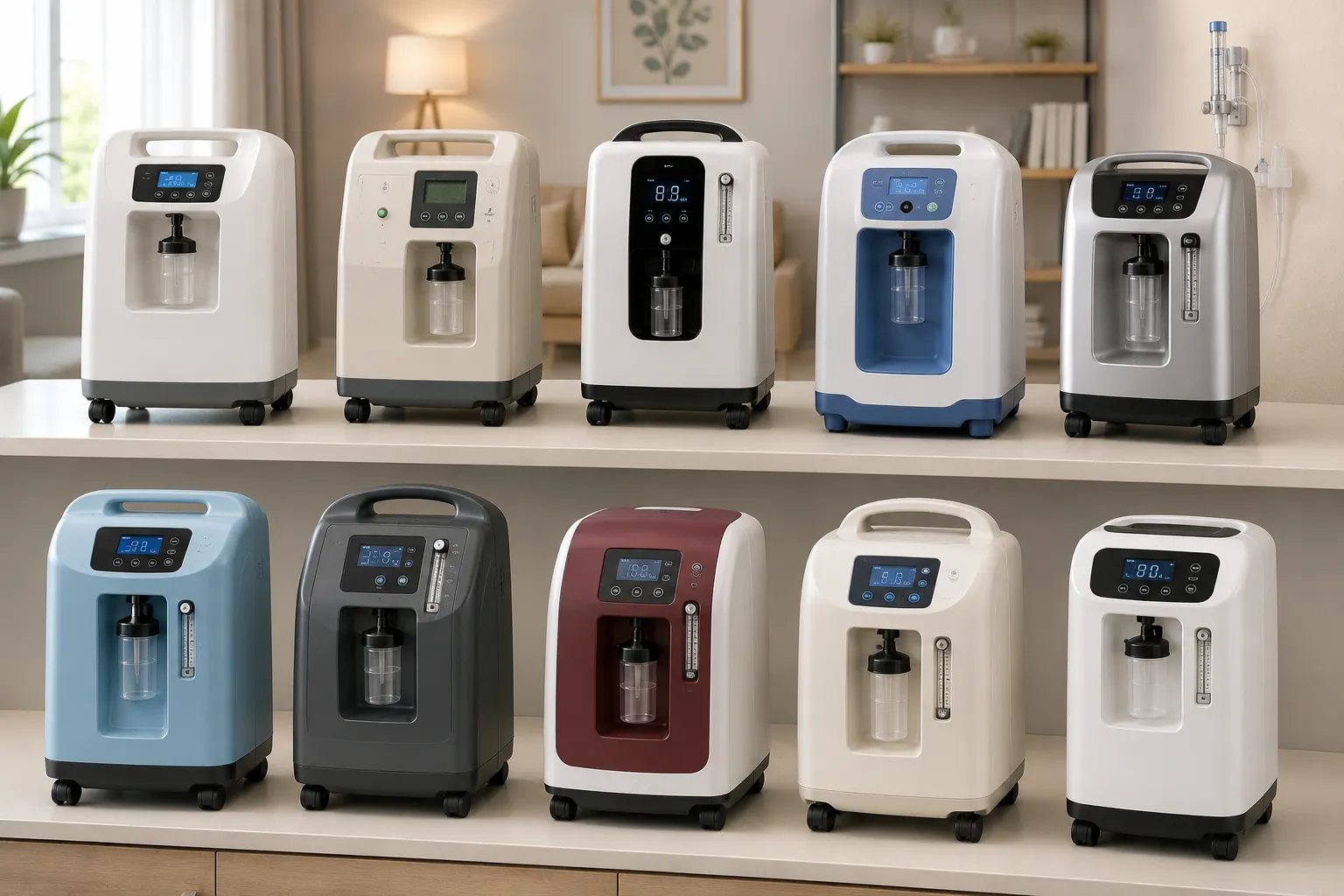
The ten concentrator types
1. Stationary concentrators for standard flows
The mainstay of home oxygen provision, delivering continuous flow from a mains-powered unit. Suitable for most patients on long-term therapy.
2. High-flow stationary concentrators
Support higher continuous flows for patients with greater requirements. Confirm oxygen purity at the upper end of the range and the effect on noise.
3. Dual-outlet concentrators
Provide two outlets from one unit, sometimes used where two patients in the same setting require oxygen. Confirm the flow available at each outlet simultaneously.
4. Portable pulse-dose concentrators
Deliver a measured oxygen pulse triggered by inspiration to extend battery life. Suitability depends on the patient's ability to reliably trigger the device.
5. Portable continuous flow concentrators
Provide continuous flow in a transportable unit, usually heavier and with shorter battery endurance than pulse-dose designs.
6. Hybrid portable units
Offer both pulse and continuous modes in one device, providing flexibility between daytime activity and rest.
7. Transportable trolley-mounted units
Larger portable machines carried on a wheeled base, bridging stationary and portable provision for patients who move between rooms or make short trips.
8. Concentrators with humidifier provision
Include fittings for a humidifier bottle where required. Confirm the cleaning routine and replacement supply if humidification is part of the programme.
9. Concentrators with hour meters and usage recording
Record running hours to support servicing schedules and programme management. Some units also report usage remotely.
10. Units with backup and alarm features
Include alarms for power interruption, low purity or flow faults. Confirm which alarms are present, how audible they are, and what the patient is instructed to do.
Practical points for programme management
-
Purity across the range. Ask for oxygen concentration performance at each flow setting, not just the headline figure.
-
Noise level. Confirm the stated sound output and assess it in a realistic room setting.
-
Filters. Establish filter types, cleaning or replacement intervals and who carries them out.
-
Sieve bed servicing. Confirm the expected interval and whether the work is done at home or requires an exchange unit.
-
Tubing and cannulae. Specify the maximum supported tubing length and the consumable supply route.
-
Electrical supply. Confirm power draw and any effect on the patient's household arrangements.
Safety guidance, training and servicing
Patient and household safety guidance is essential. Oxygen supports combustion, so devices must be kept away from naked flames, smoking materials, and heat sources, with clear instructions provided at installation and repeated during reviews. Local fire service notification arrangements should be followed where they apply.
Training should cover switching the unit on and off, setting the prescribed flow, cleaning the filters, fitting cannulae, understanding alarms and knowing who to contact. Provide written instructions and leave contact details visible near the machine.
For servicing, agree planned maintenance intervals, filter and sieve bed arrangements, electrical safety testing, response times and how replacement units are supplied during faults. Ensure the programme receives published device safety alerts so field safety notices reach the clinical and technical teams.
Final thoughts
Specify around the prescription, the home and the service route. Most programmes need a dependable stationary unit as standard provision, portable capability for patients who remain active, clear safety instructions at installation, and a maintenance arrangement that keeps units running without lengthy visits. Settle servicing and consumable supply before rollout.
This article provides general procurement guidance for healthcare organisations. It is not clinical advice, does not cover oxygen prescribing, and does not replace manufacturer instructions or local safety policy.