
Medical equipment may perform well during installation and still become a poor long-term purchase when technical support is slow, spare parts are unavailable, or warranty exclusions are unclear. These risks often only become apparent after the equipment develops a fault and the healthcare facility urgently needs assistance.
For medical equipment buyers and healthcare managers, after-sales support should be assessed before a purchase is approved. Buyers need to understand who will install, maintain and repair the device, how quickly assistance will be provided and which costs remain the facility’s responsibility.
A long warranty does not automatically mean strong support. Coverage may exclude labour, engineer travel, software, freight or frequently replaced components. Service availability can also differ significantly between locations.
This guide explains how buyers can evaluate medical equipment after-sales support, compare supplier commitments and reduce lifecycle and downtime risks.
Why After-Sales Support Matters to Medical Buyers
After-sales support affects how reliably equipment can remain available throughout its service life. It connects the supplier’s commercial promises with the facility’s daily clinical and technical needs.
Equipment uptime — Fast and competent support can reduce the time a device remains unavailable after a fault. Buyers should consider the clinical impact of downtime rather than focusing only on repair charges.
In practice, medical buyers often find that a low-priced device becomes expensive when repeated failures disrupt patient care or necessitate emergency replacement arrangements.
Technical accountability — The support agreement should identify who receives fault reports, performs diagnostics and authorises repairs. Several organisations may be involved where the manufacturer, distributor and local engineer are different companies.
Lifecycle cost control — Maintenance, calibration, spare parts, software and engineer travel create costs after the initial purchase. Buyers should include these expenses in total ownership calculations.
Clinical continuity — Critical care, diagnostic and surgical equipment may require stronger service-response commitments than lower-risk devices. Backup capacity should also influence the support plan.
Regulatory and safety control — Repairs and maintenance should follow manufacturer guidance and applicable local regulatory standards. Unauthorised work may affect performance, traceability or warranty coverage.
Supplier performance evidence — Service records reveal how effectively the supplier responds post-sale. This information should influence future purchasing and contract-renewal decisions.
Strong after-sales support helps healthcare facilities keep equipment safe, reliable and available for its intended clinical purpose.
Support Requirements Across Healthcare Settings
After-sales support requirements should reflect facility size, equipment risk, location and internal engineering capacity.
Large hospitals and teaching facilities — Major hospitals may operate complex imaging, laboratory, surgical and critical care systems. Service agreements may need scheduled maintenance, software support, uptime targets and access to specialist engineers.
These facilities may also require integration support across several digital and clinical systems.
District and regional hospitals — Regional facilities may experience longer engineer and spare-parts lead times. When evaluating specialist medical equipment supply networks, buyers should confirm whether service commitments apply to the facility’s exact location.
Experienced clinical supply managers typically request evidence of previous support in similar areas rather than accepting general claims of international coverage.
Community clinics and outpatient centres — Smaller facilities may have limited internal technical resources. Remote troubleshooting, clear fault-reporting procedures and predictable repair charges can be especially valuable.
Diagnostic and laboratory facilities — Service agreements may need to cover calibration, quality controls, software, reagents and analyser uptime. Buyers should understand whether service is linked to consumable purchasing.
Surgical and critical care settings — High-risk devices may require urgent response, backup systems and priority spare-parts access. Delayed repair can directly affect clinical capacity.
Mobile and remote healthcare services — Portable equipment may depend on the availability of batteries, chargers, and protective components. Support models should account for transport and limited access for engineers.
Multi-facility healthcare groups — Central service contracts can standardise response times and maintenance processes. Each location should still confirm escalation routes and local support availability.
Support terms should be proportionate to the clinical consequences of equipment failure.
Technical and Commercial Support Terms to Review
After-sales support should be described in terms of measurable commitments rather than general statements such as “full service included.”
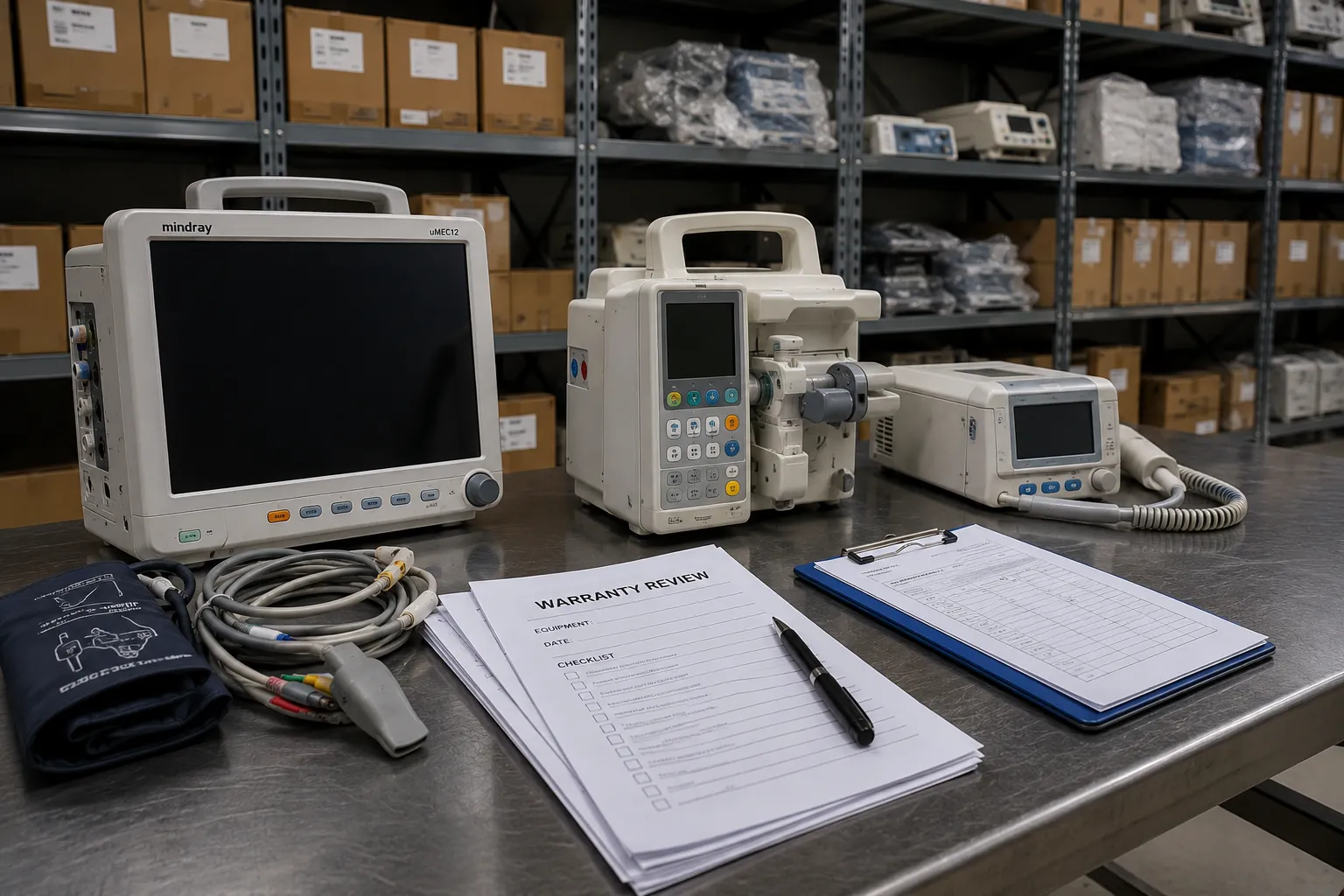
Warranty duration and start date — Buyers should confirm whether the warranty begins at shipment, delivery, installation, or commissioning. Starting coverage before installation can reduce its practical value.
Parts and labour coverage — The agreement should identify which components and repair activities are included. Frequently used accessories and consumable parts may be excluded.
Engineer travel and accommodation — International and remote service may involve travel, accommodation and local transport costs. Responsibility for these charges should be stated clearly.
Remote technical support — Suppliers may provide telephone, video or online diagnostics before dispatching an engineer. Buyers should confirm support hours, languages and expected response times.
Preventive maintenance — The agreement should define frequency, tasks, inspection records and calibration requirements. Buyers should know which activities are included and which are charged separately.
Corrective maintenance — Fault diagnosis, repair approval and parts replacement procedures should be documented. The supplier should explain how unresolved faults are escalated.
Spare parts availability — Buyers should request the expected support periods and indicative lead times for common components. Parts availability should match the intended equipment lifecycle.
Software and licence support — Connected devices may require security patches, feature updates and recurring licences. Responsibilities and future charges should be visible before purchase.
Loan or backup equipment — Critical devices may require temporary replacement when repairs take longer than expected. Availability and transport responsibilities should be negotiated in advance.
A support package should show how the supplier will respond throughout the equipment lifecycle, not only during the first fault.
How Buyers Should Evaluate Supplier Support
Support evaluation should combine formal documents, practical evidence and reference checks. A supplier’s sales presentation does not demonstrate its ability to resolve technical problems.
Request an itemised support proposal — The supplier should separate warranty, preventive maintenance, corrective repair, software, parts and training. This allows buyers to compare complete support packages.
Verify advertised service claims — Healthcare equipment vendors advertising across global markets should provide accurate information about warranty and technical support. Buyers should compare these claims with formal service agreements and exclusions.
Assess engineer capability — Buyers should confirm where qualified engineers are located, which models they can service and whether manufacturer authorisation is required.
Check support references — References should relate to similar equipment and healthcare environments. Buyers should ask about response time, parts availability, communication and unresolved issues.
Define service performance measures — Agreements can include acknowledgement time, remote assessment, engineer attendance, repair completion and repeat-failure targets.
Review escalation procedures — The facility should know who to contact when normal service channels fail. Escalation contacts should remain current throughout the contract.
Compare lifecycle value — A higher support price may provide greater value by reducing downtime and unplanned expenditure. Buyers should compare service scope rather than price alone.
Healthcare organisations that manage repeat purchases may benefit from long-term medical equipment supply partnerships. These arrangements should still retain measurable support standards, transparent charges and documented performance reviews.
Maintenance, Training and Lifecycle Support
After-sales support should help the healthcare facility maintain equipment safely and competently, rather than simply repairing failures after they occur.
Preventive maintenance planning — Service schedules should reflect manufacturer instructions, equipment risk and workload. Maintenance dates should be linked to the asset-management system.
Calibration and performance testing — Diagnostic and measuring devices may require periodic calibration. Reports should identify equipment results, reference standards and next due dates.
Operator training — Users should understand routine setup, checks, cleaning and fault reporting. Poor operation can increase the number of avoidable service calls and equipment damage.
Biomedical engineering training — Technical teams may require service documentation, diagnostic tools and approved training. The scope should match the level of maintenance they are authorised to perform.
Replacement-part planning — Batteries, cables, sensors and other wear components should be forecast before failure. Minimum stock levels may be needed for frequently used devices.
Software-update management — Updates should be tested and documented before deployment. Buyers should know how the supplier handles compatibility and cybersecurity concerns.
Service-record retention — Maintenance, repairs, parts replacement and software changes should remain linked to the equipment asset record.
End-of-support planning — Manufacturers may discontinue software, parts or technical service before the equipment physically fails. Buyers should request advance notice and prepare replacement plans.
One aspect that surprises first-time buyers is how strongly training and preventive maintenance influence the overall quality of after-sales support.
International Support and Cross-Border Service Risks
International equipment purchases require additional planning because the supplier, manufacturer and service provider may be located in different markets.
Destination service coverage — Buyers should confirm whether warranty and service terms apply at the equipment’s final location. General international coverage may contain regional exclusions.
Parts freight and customs — Replacement components may require international shipping, customs clearance and local delivery. Responsibility for costs and documentation should be clear.
Remote diagnosis limitations — Remote support can resolve software or user issues, but mechanical or electrical failures may still require an engineer. The agreement should explain when on-site service will be arranged.
New and refurbished equipment — Professionally refurbished equipment should include defined warranty, testing, parts and service commitments. Buyers should confirm remaining manufacturer or third-party support.
Local engineer arrangements — A supplier may use independent local technicians. Buyers should verify their qualifications, authorisation and access to genuine parts and technical documentation.
Payment for service work — International repairs may require advance payment, purchase orders or cost approval before parts are dispatched. These processes should not unnecessarily delay urgent support.
Regulatory service requirements — Maintenance and repairs should comply with applicable local standards and manufacturer instructions. Records should remain suitable for audits and equipment traceability.
Specialist support enquiries — Medical buyers reviewing warranty, maintenance, or international equipment support options can contact the Medigear.uk team for supply support. A useful enquiry should include the manufacturer, model, quantity, destination and required support scope.
International after-sales arrangements should be confirmed before shipment so the facility understands how faults will be managed after delivery.
Final thoughts
Medical equipment after-sales support should be evaluated with the same care as product specifications and purchase price. Weak support can increase downtime, maintenance costs and operational risk throughout the equipment lifecycle.
Buyers should review warranty coverage, response times, engineer access, spare parts, software and training before approving a purchase. General promises should be converted into measurable contractual commitments.
Support requirements should reflect equipment risk and facility location. Critical or internationally supplied devices may need stronger escalation, backup and parts arrangements.
A clear after-sales support agreement helps healthcare facilities protect their investment, maintain equipment availability and make more reliable long-term purchasing decisions.
Disclaimer
Medigear.uk is a global medical equipment supplier, exporter, and distributor. The content published on this site is intended for educational and product awareness purposes only. Nothing on this page constitutes medical advice, clinical guidance, or treatment recommendations. All healthcare procurement and clinical decisions should be made by qualified medical professionals and compliant procurement teams operating within the regulatory frameworks of their respective countries.