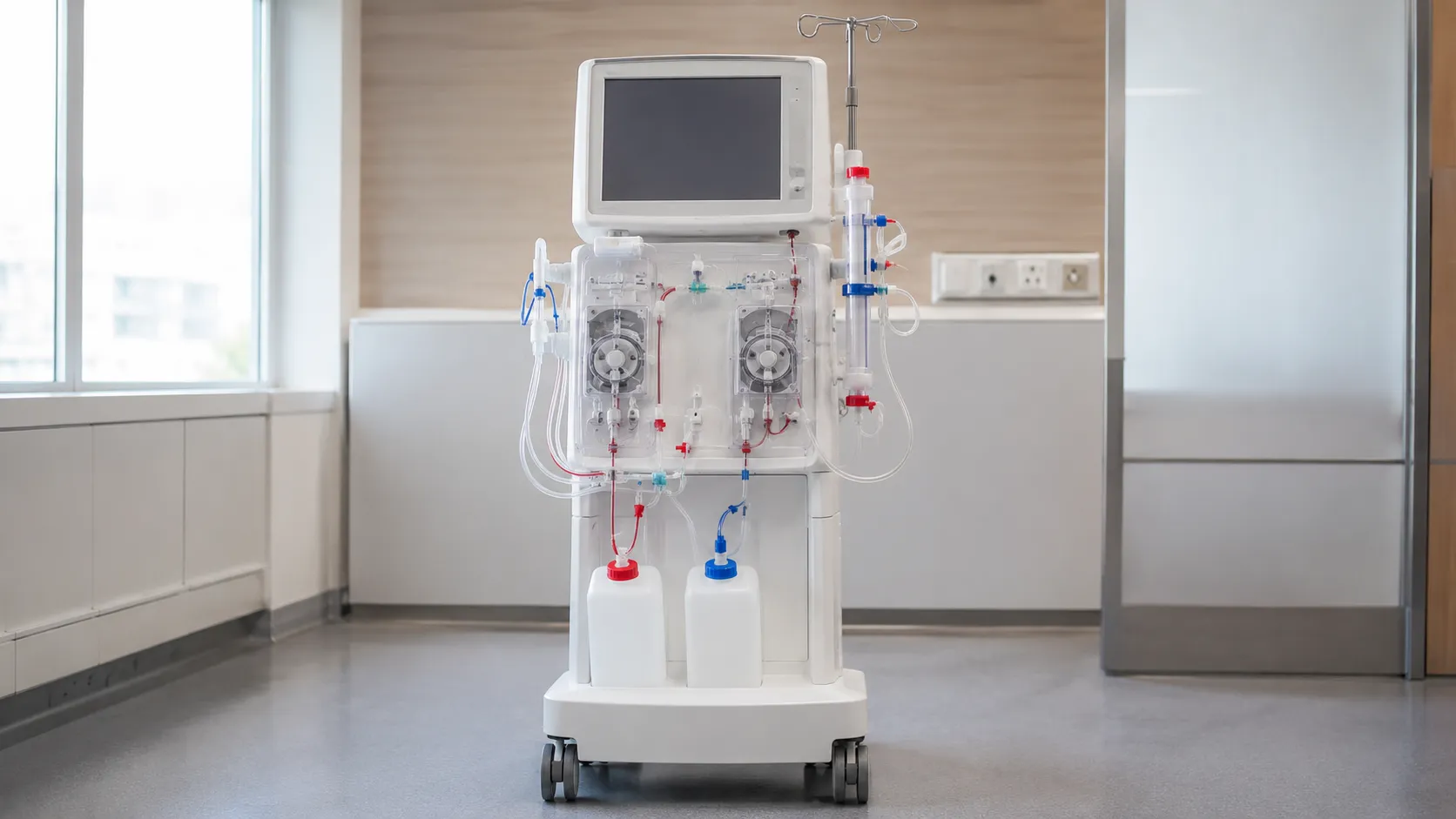
Choosing a dialysis machine for a renal unit expansion is an important decision, because the machine delivers treatment that patients depend on regularly and must do so safely, reliably, and comfortably. The right dialysis machine supports safe, efficient treatment and a smooth expansion; the wrong one adds difficulty for both patients and staff. Some departments review dialysis machines for buyers on Medigear.uk when planning.
Dialysis machines vary in their treatment modes, water and safety requirements, usability and integration, so a renal unit must match the machine to its patients and its expansion plans. Understanding these differences before choosing leads to a dialysis machine that supports the expanded unit rather than one that constrains it.
This guide sets out what to weigh when choosing a dialysis machine for renal unit expansion, from treatment modes and water to usability, safety and support, so a unit can expand with confidence.
Why the right dialysis machine matters
A dialysis machine delivers treatment that many patients depend on several times a week, so its safety, reliability and usability are directly matters of patient wellbeing and the smooth running of a renal unit. The right machine supports safe, comfortable treatment and a dependable service, while a poorly matched one creates difficulty for patients and staff alike. Because an expansion adds machines that will be used intensively for years, choosing ones that fit the unit matters greatly.
What to weigh when choosing a dialysis machine
Treatment modes
Consider the treatment modes the machine offers, since a renal unit's patients may need different dialysis therapies, and a machine with the right modes serves them all. Matching modes to the patients supports flexible care. The range of modes is central to the choice, and a good spread lets a unit treat its patients appropriately. Buyers can also ask the Medigear.uk team about dialysis machines.
Water and consumables
Weigh the machine's water and consumable needs, since dialysis depends on suitable water treatment and a dependable supply of consumables. A machine whose water and consumable needs the unit can meet supports reliable treatment. Water and consumables are fundamental to dialysis, and matching them to the unit is essential.
Safety systems
Examine the machine's safety systems and monitoring, because dialysis involves the patient's blood and fluid balance, so safeguards are essential. Clear, reliable safety systems protect patients during treatment. Dependable safety features are central to dialysis, and they must monitor treatment closely and alert staff clearly.
Usability
Consider how usable the machine is, since staff set up and monitor many treatments and patients may use machines regularly. An intuitive machine supports safe, efficient treatment. Usability is a genuine feature in a busy unit, and a clear machine reduces error and eases the work of both staff and patients.
Patient comfort
Weigh the comfort the machine supports, since patients undergo dialysis regularly for hours at a time. Features that improve comfort support the patient experience. Comfort matters in a treatment patients live with, and a machine that eases treatment supports patients over the long term.
Infection control
Consider the machine's design for cleaning and disinfection, since dialysis machines are used repeatedly and must be turned around hygienically. A machine that is straightforward to clean and disinfect supports safe, efficient use. Infection control is essential in dialysis, and easy decontamination protects patients between treatments.
Integration and records
Weigh how the machine integrates with the unit's records and systems, since integration supports documentation and oversight of treatment. A machine that shares its data reduces manual recording. Connectivity supports safe, accountable treatment, and good integration helps a unit track its care.
Reliability and support
Examine the machine's reliability and the support behind it, since dialysis runs to schedules and downtime disrupts treatment, so a dependable machine with responsive servicing keeps the unit running. Reliability and support are central to the choice, and a well-supported machine stays dependable across years of intensive use.
Reliability for a scheduled service
A defining consideration for dialysis machines is reliability, because a renal unit runs to a demanding schedule and patients depend on treatment several times a week, so downtime disrupts many people. A dependable machine with responsive support keeps the unit running to schedule. Choosing for reliability is central to a service patients depend on, since missed treatment matters greatly in renal care.
Matching machines to the unit
The right dialysis machine depends on the unit's patients, therapies, and way of working, so a unit describes its own needs and matches the machines to them. This produces a far better choice than adopting a generic recommendation. Fit to the unit's real work is what makes a machine serve well, and it ensures an expansion genuinely supports the unit's patients.
Water and the whole system
Dialysis depends not only on the machine but on the water treatment and consumables around it, so a unit chooses machines whose water and supply needs it can meet dependably. Considering the whole system, not just the machine, ensures treatment is reliable. Weighing water and consumables is central to a dialysis expansion, since the machine works only within the wider system.
Safety through every treatment
Dialysis involves the patient's blood and fluid balance, so safety systems and monitoring are essential, protecting patients through every treatment. A machine with clear, reliable safeguards supports safe care. Considering safety systems carefully is central to choosing a dialysis machine, since the safeguards work quietly through every hour of treatment.
Comfort in a long treatment
Patients undergo dialysis regularly for hours at a time, so a machine's comfort features affect the experience of a treatment patients live with. A machine that supports comfort helps patients tolerate and continue their treatment. Considering patient comfort is part of choosing a dialysis machine that works well for the people who depend on it, week after week.
Infection control in repeated use
Dialysis machines are used repeatedly and shared, so their design for cleaning and disinfection matters greatly, since machines must be turned around hygienically between patients. A machine that is straightforward to disinfect supports both safety and efficiency. Considering infection control is central to choosing machines for an expanding unit, where turnaround and safety go together.
Standardising across the unit
Consistency across an expanded unit's dialysis machines eases training, spares and safe use, since staff who know one machine can use any. A common platform lowers the risk of error and eases support. Considering standardisation when expanding keeps a unit's machines coherent, which quietly supports safety and smooth running across the whole service.
Involving the renal team
The nurses and technicians who run a renal unit understand what makes a dialysis machine work in practice, so involving them in the choice leads to a better decision. Their experience of setup, monitoring and cleaning reveals what a specification cannot. Choosing machines with the renal team, not just for them, ensures they support the unit's real work.
The whole life of the machine
A dialysis machine is a long-term investment used intensively, so a unit considers its durability, servicing, water needs and support over years. A machine that is well supported stays dependable far longer. Thinking about the whole life protects both the treatment it delivers and the investment, keeping the machine serving the unit well throughout its service.
Planning the expansion
Expanding a renal unit involves machines, water treatment, space, staffing and training, so a unit plans the expansion as a whole rather than machine by machine. Thinking through the whole expansion keeps treatment running smoothly as capacity grows. A well-planned expansion brings new machines into safe, dependable service and ensures the unit can genuinely support its added capacity.
A checklist before you choose
-
Modes. Confirm the treatment modes your patients need
-
Water. Confirm you can meet water and consumable needs
-
Safety. Check clear, reliable safety systems
-
Comfort. Weigh comfort for regular, hours-long treatment
-
Infection control. Confirm easy cleaning and disinfection
-
Support. Weigh reliability and prompt servicing cover
Planning a dialysis machine choice
A unit choosing dialysis machines for an expansion starts from its patients, therapies and way of working, then matches the machines' treatment modes, water needs, safety and usability to them, weighing reliability above all. Because dialysis runs to schedules and the machines are used intensively, the choice is planned carefully alongside water treatment, space and staffing.
It also helps to consider standardisation, infection control, training and support from the outset, so the machines serve the expanded unit well over their whole life. Dialysis machines chosen to fit a unit support safe, reliable treatment and a smooth expansion for years.
Machines that support the expansion
Choosing a dialysis machine for renal unit expansion comes down to matching its treatment modes, water needs, safety and usability to the unit's patients and way of working, with reliability weighed above all. A unit that considers the whole system, involves its renal team,m and plans the expansion as a whole chooses dialysis machines that support safe, reliable treatment and a smooth expansion for years. Departments often supply dialysis machines from suppliers on Medigear.uk for their service.
Servicing and safety
A dialysis machine delivers treatment involving blood and fluid balance, so servicing, water checks and safety testing are essential to keep it safe and dependable. Staff should also know how to use the MHRA's Yellow Card scheme to report device problems if a dialysis machine is found faulty.
Choosing a dialysis machine in short
The right dialysis machine matches its treatment modes, water needs, safety and usability to a renal unit's patients and way of working, with reliability weighed above all. Considering the whole system, involving the renal team and planning the expansion as a whole leads to machines that support the expansion. Chosen this way, dialysis machines support safe, reliable treatment.
This guide offers general procurement guidance on choosing a dialysis machine and is not clinical advice; local policy and manufacturer instructions always take precedence.