Hospital mattresses play a vital role in preventing pressure injuries, also known as bedsores, in patients who are bedridden or have limited mobility.
Selecting the right mattress can improve patient comfort, reduce the risk of skin breakdown, and enhance overall clinical care in hospitals, ICUs, and long-term care facilities.
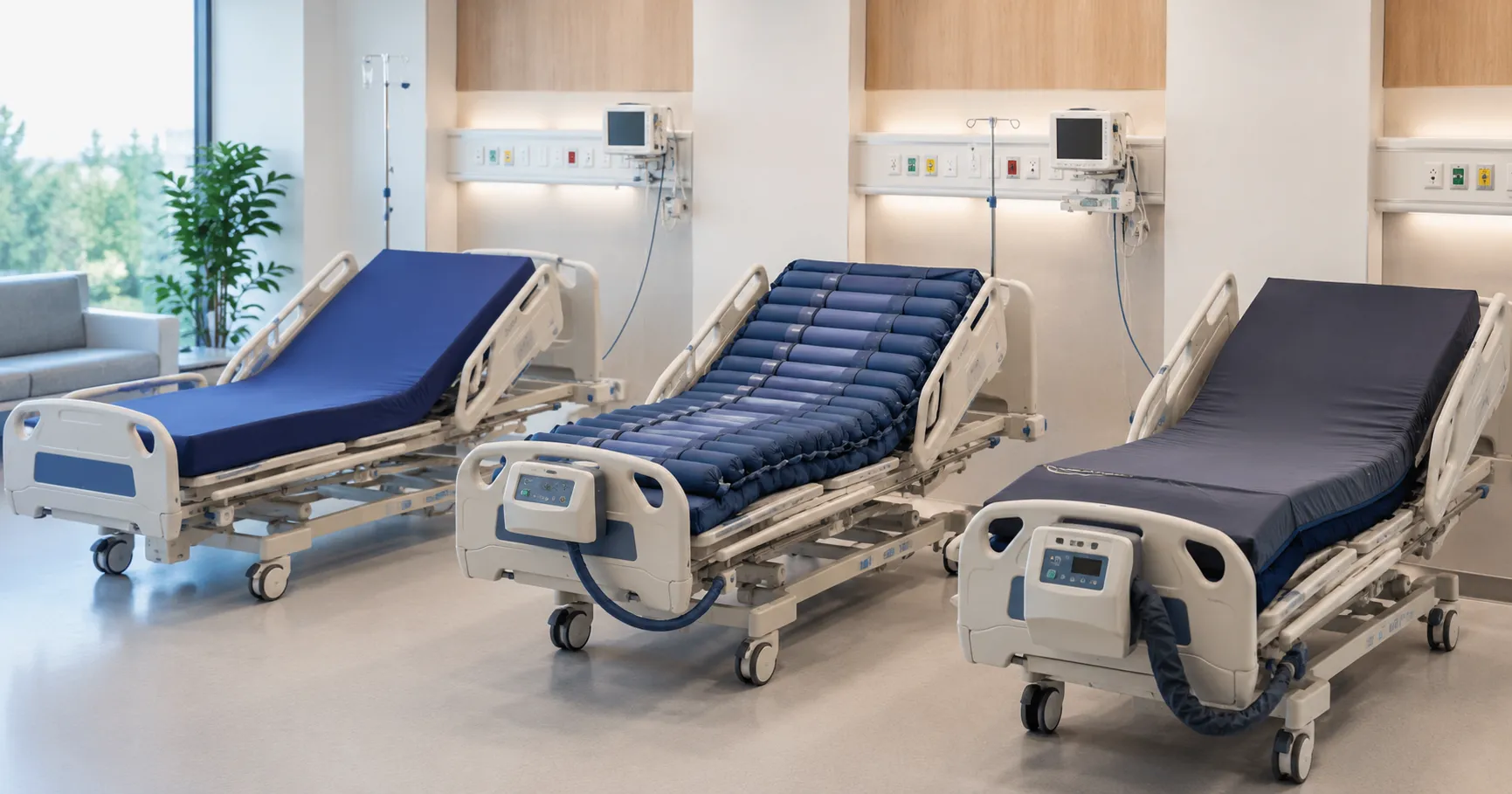
Modern hospital mattresses incorporate advanced materials and technologies, such as foam, alternating pressure, low-air-loss, and hybrid systems, to distribute weight evenly and relieve pressure points.
Hospitals can consult Medigear. UK business buyers' services for selecting certified mattresses that meet patient care and safety requirements.
Types of Hospital Mattresses
Foam Mattresses — Standard hospital mattresses with high-density foam to support patients at low risk of pressure injuries.
Alternating Pressure Mattresses — Electrically powered mattresses that alternate pressure points to prevent tissue breakdown.
Low-Air-Loss Mattresses — Circulate air to reduce moisture and friction, ideal for high-risk patients.
Hybrid Mattresses — Combine foam and air systems for optimised support and pressure relief.
Speciality Mattresses — Designed for bariatric patients or long-term care with extra support and durability.
Hospitals can source certified mattresses from Medigear.uk business suppliers.
Clinical Benefits
-
Pressure Injury Prevention — Reduces the risk of bedsores and skin breakdown.
-
Patient Comfort — Adjustable and supportive surfaces improve rest and recovery.
-
Staff Efficiency — Easy-to-clean, easy-to-maintain designs save caregivers time.
-
Infection Control — Materials and covers reduce the risk of contamination.
-
Customised Care — Options for patients of various weights, mobility levels, and medical conditions.
Hospitals can advertise their mattress solutions on Medigear.uk, a business advertising network.
Long-term procurement agreements can be arranged through Medigear.uk business partners.
Expert guidance is available via contact Medigear.uk.
Technical Features
-
High-density foam for pressure distribution
-
Alternating pressure air cells for tissue relief
-
Low-air-loss airflow to reduce moisture and friction
-
Waterproof and antimicrobial mattress covers
-
Adjustable mattress firmness and height options
Maintenance and Service Life
-
Regular Cleaning & Disinfection — Maintains hygiene and infection control.
-
Inspection of Air Pumps & Cells — Ensures performance in powered mattresses.
-
Replacement of Worn Covers — Maintains durability and safety.
-
Routine Checks — Monitor for pressure loss, leaks, or foam degradation.
Final Thoughts
Hospital mattresses are essential for preventing pressure injuries, improving patient comfort, and supporting clinical care.
Selecting certified, ergonomic, and durable mattresses ensures optimal outcomes for patients and staff efficiency.
Hospitals should evaluate features, patient needs, and vendor reliability, and contact Medigear.uk for expert guidance.
Disclaimer
Medigear.uk is a global medical equipment supplier, distributor, and exporter providing information about hospital mattresses, patient support systems, and clinical care equipment for educational and informational purposes only. The content on Medigear.uk is not intended to replace professional medical advice, clinical judgment, or hospital protocols. Healthcare professionals, nurses, ICU staff, and hospital procurement teams are responsible for selecting and using medical equipment in accordance with clinical requirements, regulatory standards, and institutional policies. Medigear.uk does not provide medical treatment, prescriptions, or clinical decision-making services, and any reliance on the information provided is strictly at the user’s discretion.