
Introduction
Surgical robotics gets talked about a lot and understood surprisingly little. The word “robot” does most of the damage, because it suggests a machine operating on its own while the surgeon watches. That is not what happens. A better way to picture it: the surgeon is still doing every part of the operation, just with their hands on a set of controls rather than directly on the instruments.
This article explains surgical robotics technology in plain terms — what the equipment is, how the pieces fit together, and what it does and doesn't do. It is written for procurement, surgical and theatre teams across the UK, Europe, the US, the Gulf and South Africa who want a clear picture before they weigh up a purchase or a business case.
So what is actually in the room?
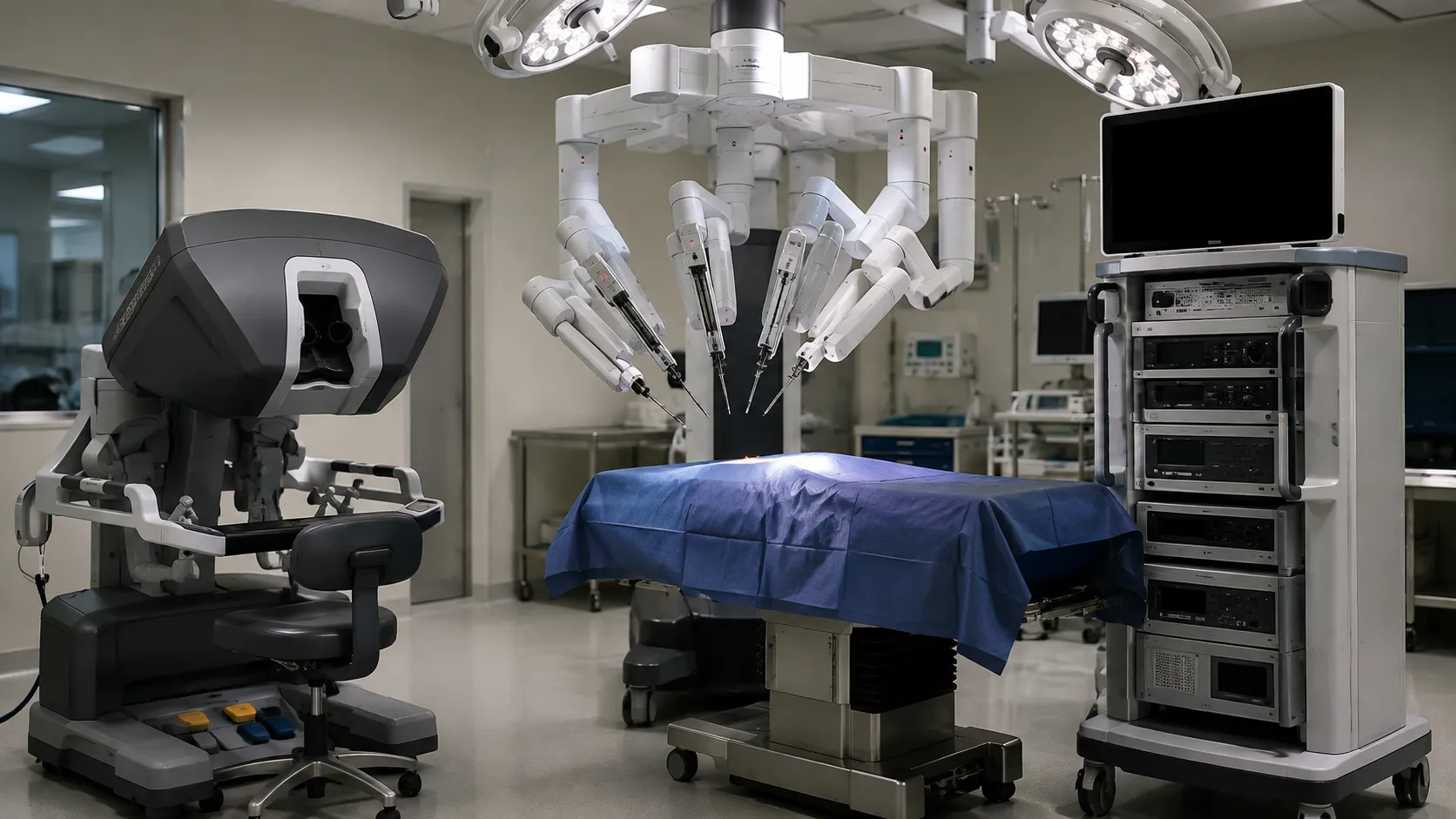
Picture the theatre and the machine resolves into a few distinct objects. Off to one side sits the surgeon, at a station with hand controls and a screen, driving the whole thing without touching the patient. Reaching over the table is the part that does the physical work — slim arms that pass through openings a few millimetres wide. And feeding the surgeon's eyes is a camera that turns the inside of the body into a large, sharp, often three-dimensional image.
That is really the whole trick: a place to sit and control, a set of arms to carry out the movements, and a way to see clearly what those movements are doing. Everything else — the instruments that clip on and off, the software, the everyday theatre kit — supports those three jobs. When someone says a hospital has “bought a robot”, this bundle is what they mean, and none of it works without the surgeon at the helm.
Why it is not really a robot
The label is misleading, and it matters. These systems do nothing without direct human command. Every movement of every instrument is driven by the surgeon's hands at the console, moment by moment. The FDA is blunt about this: it classes them as computer-assisted surgical systems that the surgeon controls, and points out that the device is not truly a robot because it cannot perform surgery on its own.
So the honest description is a tool that extends what a surgeon's hands can do through very small openings. It scales their movements down, steadies them, and gives them a much closer view than they would have leaning over an open wound. Useful, sometimes transformative — but a tool in a surgeon's hands, not a replacement for the surgeon.
What the technology adds
The gains are easy to describe. Instruments on a robotic system can bend and rotate in ways a human wrist cannot, which helps in tight, deep spaces where open surgery is awkward. The view is magnified and steady. Small hand tremors are filtered out before they reach the instrument. And because the surgeon is seated rather than hunched over a table for hours, the physical strain of a long operation eases.
Put together, those features support the aims of minimally invasive surgery: smaller incisions, less disruption to the body, and often a smoother recovery for the patient. None of it is magic. It is a set of sensible engineering answers to problems surgeons have always faced when working through a keyhole.
What stays exactly the same
It helps to be just as clear about what does not change. The surgeon still plans the operation, still makes every judgement, and still carries the responsibility for the result. The basics of safe surgery — the team checks, the anaesthesia, the reliable theatre equipment — matter every bit as much as before. A robotic system sits on top of good surgical practice; it does not stand in for it.
That is why experienced centres talk less about the machine and more about the people around it. The equipment is identical from one hospital to the next. What differs is the training, the teamwork and the governance, and that is what decides whether the technology earns its keep.
Where it fits, and where it doesn't
Robotic systems are not a general upgrade to every operation. Their approvals are tied to specific procedures, and the benefit depends on the case, the patient and the team's experience. For some work — particularly certain keyhole procedures in confined parts of the body — they help a great deal. For plenty of other operations they add cost and complexity without a clear gain.
-
Best suited to keyhole work in tight, deep spaces.
-
Approved procedure by procedure, not for surgery in general.
-
Most valuable in the hands of a trained, practised team.
-
Not a sensible fit for every operation a hospital does.
The team the console needs
One thing the brochures underplay is how much the technology depends on the whole theatre team, not just the surgeon. When the surgeon moves to a console, the people at the table take on more, not less. They position the patient, dock the system, exchange the instruments and keep a constant line of communication with a colleague who is no longer at arm's reach.
This is why a robotic list runs smoothly or badly depending on the team around the system. The learning curve is real, and it belongs to everyone in the room. A unit that has run hundreds of cases together works differently from one just starting out, and that difference shows up in how long a case takes and how calmly it runs. The equipment is identical in both rooms; the practised teamwork is what separates them. The Royal College of Surgeons of England frames robotic-assisted surgery in exactly these terms — a change to be adopted safely by trained teams, not a gadget for a lone operator.
Reading a specification without the spin
When you come to compare systems, the specifications will compete on arm count, vision quality, instrument range and so on. Those things matter, but they are rarely what decides success. A slightly better-specified system used by an untrained team will disappoint; a modest one in the hands of a practised team can be excellent. Judge the equipment on how well it will fit your theatre, your procedures and your people, not on the longest feature list.
A useful habit is to translate every claimed feature into a plain question: what would this let our surgeons do that they cannot do now, and for which of our operations? If a feature does not change the answer for the work you actually do, it is not a reason to choose one system over another, however impressive it sounds.
What a hospital should take from this
The plain summary is this. Surgical robotics is a way for a surgeon to operate through tiny openings with more reach, more steadiness and a better view than the naked hand allows. It is three pieces of equipment — console, cart and vision — wrapped around a surgeon who is still fully in charge. It shines for the right procedures and adds little to the wrong ones.
Understanding that is the first step in any sensible business case. The technology is genuinely impressive, and for the right work in the right hands it changes what a theatre can offer. But it is a tool, and like any tool it is only as good as the people and the system around it. Keep that in view and the rest of the decision becomes a lot clearer.
More from Business
-
Buyers — source approved, well-documented equipment.
-
Suppliers — list your equipment and reach buyers worldwide.
-
Advertise — promote your products and services to a clinical audience.
-
Business overview — explore everything MediGear offers healthcare organisations.
Disclaimer
This article is for general information only and is not clinical, procurement or regulatory advice. Robotic-assisted surgery is a developing field; device approvals are procedure-specific, and outcomes depend on the patient, the procedure, training and case selection. Always confirm current requirements with the relevant authorities and consult qualified professionals for decisions specific to your organisation. medigear.uk accepts no liability for actions taken on the basis of this content.
The kit behind the console
Genuine, approved, fully documented theatre and surgical equipment — the dependable foundation a robotic programme is built on.Frequently Asked Questions
It is a way for a surgeon to operate through very small openings using instruments held by a machine they control from a console. A system has three main parts: the console where the surgeon sits, a patient-side cart carrying the instrument arms, and a vision system giving a magnified view. The surgeon drives every movement; the equipment extends the reach and steadiness of their hands.
Not in the way the word suggests. These systems cannot operate on their own and do nothing without direct human command. Regulators class them as computer-assisted surgical systems that the surgeon controls throughout. The name sticks because it is short, but the honest description is a tool that extends a surgeon's hands, not a machine that replaces them.
Instruments that bend and rotate beyond the human wrist, a magnified and steady view, filtering of small hand tremors, and a seated working position that eases strain on long cases. Together these support minimally invasive surgery — smaller incisions and often a smoother recovery — particularly for keyhole work in tight, deep spaces where open surgery is awkward.
No. Approvals are tied to specific procedures rather than granted in general, and the benefit depends on the case, the patient and the team's experience. For certain keyhole procedures it helps considerably; for many other operations it adds cost and complexity without a clear gain. It is a targeted tool, not a universal upgrade.
The surgeon still plans the operation, makes every judgement and carries responsibility for the outcome. The basics of safe surgery — team checks, anaesthesia and reliable theatre equipment — matter as much as ever. A robotic system sits on top of sound surgical practice rather than replacing any part of it.
That the equipment is only part of the picture. The console, cart and vision system are broadly similar between hospitals; what differs is the training, teamwork and governance around them. Which procedures the system will genuinely improve, and how many such cases there are, matters more to the business case than the specification of the machine itself.