
Introduction
The female pelvis is a deep, confined space, crowded with delicate structures — and much of gynaecological surgery happens down inside it, where hands and straight instruments struggle to work. That is precisely the setting where robotic surgery tends to shine, which is why gynaecology became one of its earliest and largest homes.
This article explains robotics in gynaecology surgery equipment: why the anatomy suits a robotic approach, where it is used, and the honest limits. It is written for gynaecology and procurement teams across the UK, Europe, the US, the Gulf and South Africa who want a clear account of the technology.
Why the pelvis suits a robotic approach
Gynaecological operations often take place deep in the pelvis, in a narrow, enclosed space where good access and fine control are hard to achieve. Straight keyhole instruments can be awkward at that depth and angle, and open surgery means a large incision to reach a small, deep target. This is exactly the kind of problem robotic surgery was built for.
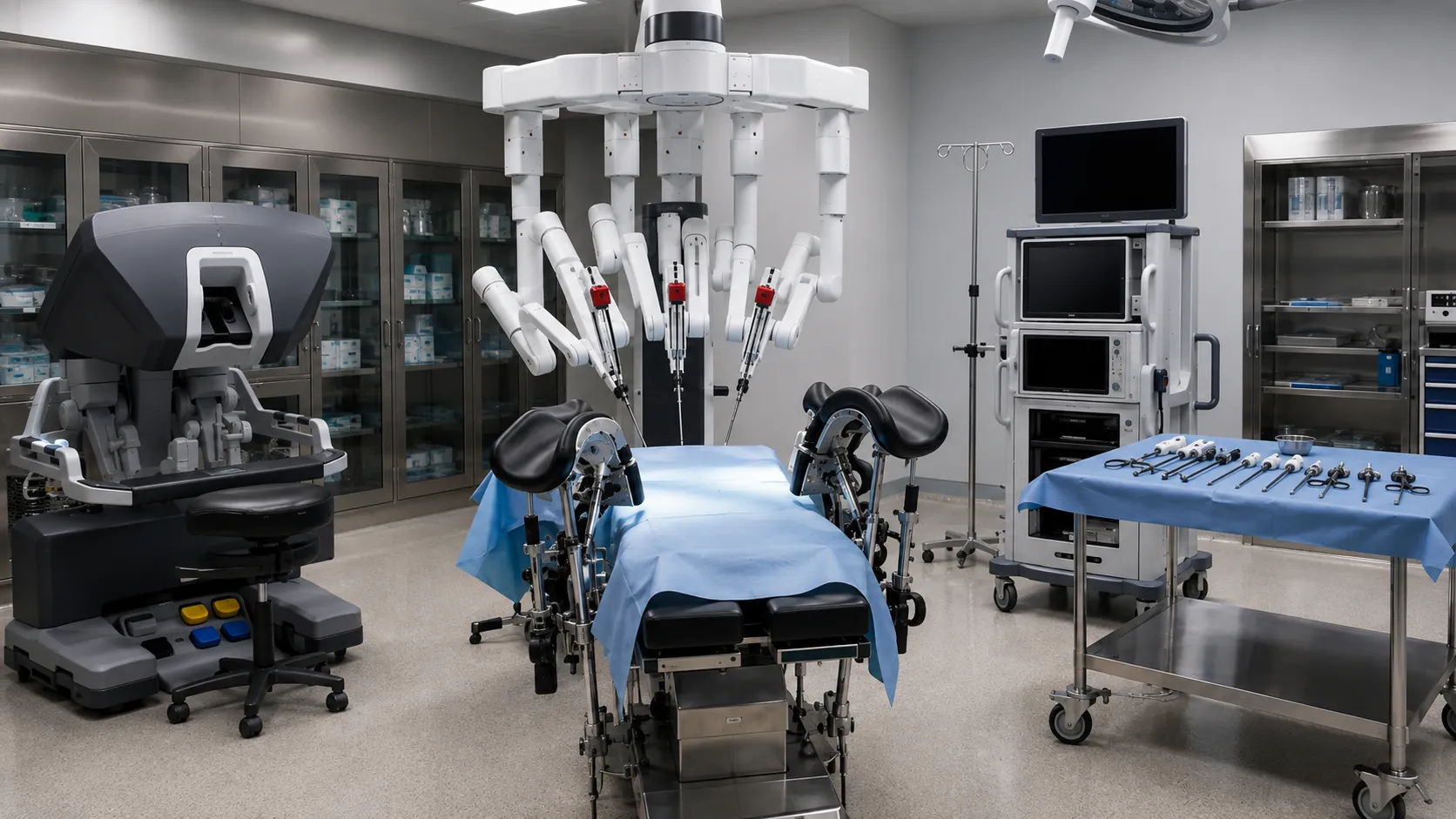
A robotic system offers wristed instruments that bend and rotate like a human hand, a magnified three-dimensional view, and steady, tremor-free control in a confined space. Reaching down into the pelvis and working precisely there — suturing, dissecting, handling delicate tissue — becomes more manageable. The anatomy and the technology are well matched.
Where it is used in gynaecology
Robotic surgery is used across a range of gynaecological operations, both for benign conditions and in cancer care:
-
Hysterectomy — removal of the womb, a common robotic procedure.
-
Benign conditions — operations for fibroids and similar problems.
-
Endometriosis — careful dissection of difficult, adherent disease.
-
Gynaecological cancer — procedures where precision in the pelvis matters.
What these share is a demand for precise work in a confined pelvic space. In cancer care in particular, where careful, complete surgery matters, the precision of a robotic approach is valued — a concern the World Health Organisation reflects in its emphasis on quality treatment as central to good cancer outcomes.
Across these varied operations, the common thread is the pelvis itself: a space that rewards a magnified view, wristed instruments and steady control. Whether the operation is for a benign condition or a cancer, it is the demand for precise work in a confined, deep space that makes robotics such a natural fit for so much of gynaecology.
The benefit for patients
For patients, the appeal of a robotic gynaecological operation is largely the appeal of minimally invasive surgery done well: smaller incisions than open surgery, less disruption, and often a quicker recovery. Being able to complete a complex pelvic operation through small openings, rather than a large one, is a real benefit where it is achievable.
It is worth remembering, too, that for many women a shorter hospital stay and a faster return to everyday life carry real weight, particularly where the operation would otherwise mean a long recovery from a large incision. Where a robotic approach delivers that, its appeal to patients is easy to understand. A measured view is still right, though. These benefits depend on the procedure, the patient and the surgeon's experience, and a robotic approach is not automatically better than a skilled conventional keyhole one for every case. The value is real where the anatomy and the operation genuinely call for it, rather than universal.
An early and well-established home
Gynaecology holds a particular place in the story of robotic surgery: it was one of the first specialities to adopt it widely, and it remains one of the largest. That long experience means the use of robotics in gynaecology is relatively mature, with established techniques and a substantial body of practice behind it.
That maturity is reassuring, but it does not remove the need for judgement. Even in a well-established field, the right question is still which patients and which operations genuinely benefit, rather than assuming that robotic is the answer because it is available and familiar. Experience makes for wiser use, not automatic use.
Suturing deep in a tight space
One task shows the robotic advantage in gynaecology especially clearly: suturing deep in the pelvis. Placing stitches accurately at the bottom of a narrow space, at awkward angles, is one of the harder things to do with straight keyhole instruments. Wristed robotic instruments, which turn and angle like a hand, make it markedly more manageable.
This matters for operations that involve reconstruction or careful closure deep in the pelvis, where the quality of that fine work affects the result. Where an operation hinges on precise suturing in a confined, deep space, the case for a robotic approach is at its strongest — a concrete example of the anatomy and the technology fitting together.
Handling difficult, adherent disease
Conditions like severe endometriosis pose their own challenge: disease that binds structures together and distorts the normal anatomy, demanding painstaking dissection to separate what has become stuck. Doing that safely, deep in the pelvis, calls for exactly the precision and clear view a robotic system provides.
The magnified, steady view helps a surgeon distinguish and separate delicate structures that adherent disease has drawn together, reducing the risk of damage to what should be preserved. For this kind of difficult, distorted anatomy, the clarity and control of a robotic approach are a genuine help — another setting where the technology earns its place.
The surgeon and team remain central
As throughout robotic surgery, the system assists rather than acts. The gynaecological surgeon controls every movement from the console, and the outcome depends on their skill and judgement. The FDA treats these platforms as computer-assisted surgical systems under the surgeon's control, not autonomous devices.
And, as ever, it is a team undertaking. A smooth robotic gynaecology list depends on practised staff around the system as much as on the surgeon. The technology extends what a skilled team can do in a difficult space; it does not substitute for the skill, and it is at its best in experienced hands.
What a hospital should take from this
Robotics suits gynaecological surgery because so much of it happens deep in the confined pelvis, where wristed instruments, a magnified view and steady control genuinely help. From hysterectomy to complex cancer and endometriosis surgery, it offers a way to do precise, minimally invasive work in a demanding space — which is why the speciality embraced it early.
The sensible view is enthusiasm tempered by judgement: a well-matched, well-established technology whose benefit still depends on the right patient, the right operation and an experienced team. Used that way, robotic gynaecology is a genuinely valuable capability rather than a default — and that distinction, valuable capability versus automatic default, is what a hospital should keep firmly in mind when weighing the technology for its own patients.
More from Business
-
Buyers — source approved, well-documented equipment.
-
Suppliers — list your equipment and reach buyers worldwide.
-
Advertise — promote your products and services to a clinical audience.
-
Business overview — explore everything MediGear offers healthcare organisations.
Disclaimer
This article is for general information only and is not clinical or procurement advice. The suitability and benefits of robotic gynaecological surgery depend on the procedure, the patient and the surgeon's experience, and approvals are procedure-specific. Confirm current guidance with the relevant authorities and professional bodies. medigear.uk accepts no liability for actions taken on the basis of this content.
Gynaecology, dependable kit
Genuine, approved, fully documented theatre and surgical equipment — the dependable foundation precise pelvic surgery relies on.Frequently Asked Questions
Because much of it happens deep in the pelvis — a narrow, enclosed space where good access and fine control are hard to achieve, straight keyhole instruments are awkward, and open surgery means a large incision to reach a small, deep target. A robotic system offers wristed instruments, a magnified three-dimensional view, and steady control in that confined space, so the anatomy and technology are well matched.
A range, both benign and cancer-related: hysterectomy (removal of the womb, a common robotic procedure), operations for fibroids and similar benign conditions, careful dissection of endometriosis, and gynaecological cancer procedures where precision in the pelvis matters. What they share is a demand for precise work in a confined pelvic space, which a robotic approach supports.
Largely those of minimally invasive surgery done well: smaller incisions than open surgery, less disruption, and often a quicker recovery. Completing a complex pelvic operation through small openings rather than a large one is a real benefit where achievable — though it depends on the procedure, the patient and the surgeon's experience, and is not automatically better than a skilled conventional keyhole approach.
Yes. Gynaecology was one of the first specialities to adopt robotic surgery widely, and remains one of the largest. That long experience means its use is relatively mature, with established techniques and a substantial body of practice. That maturity is reassuring but does not remove the need to judge which patients and operations genuinely benefit rather than assuming robotic is the answer.
No. The gynaecological surgeon controls every movement from the console, and the outcome depends on their skill and judgement. Regulators treat these platforms as computer-assisted systems under the surgeon's control, not autonomous devices. It is also a team undertaking — a smooth robotic list depends on practised staff around the system as much as on the surgeon.
No. The value is real where the anatomy and the operation genuinely call for it, rather than universal. Even in a well-established field, the right question is which patients and which operations genuinely benefit, not assuming robotic is the answer because it is available. It is a valuable capability used with judgement, not a default for every case.