
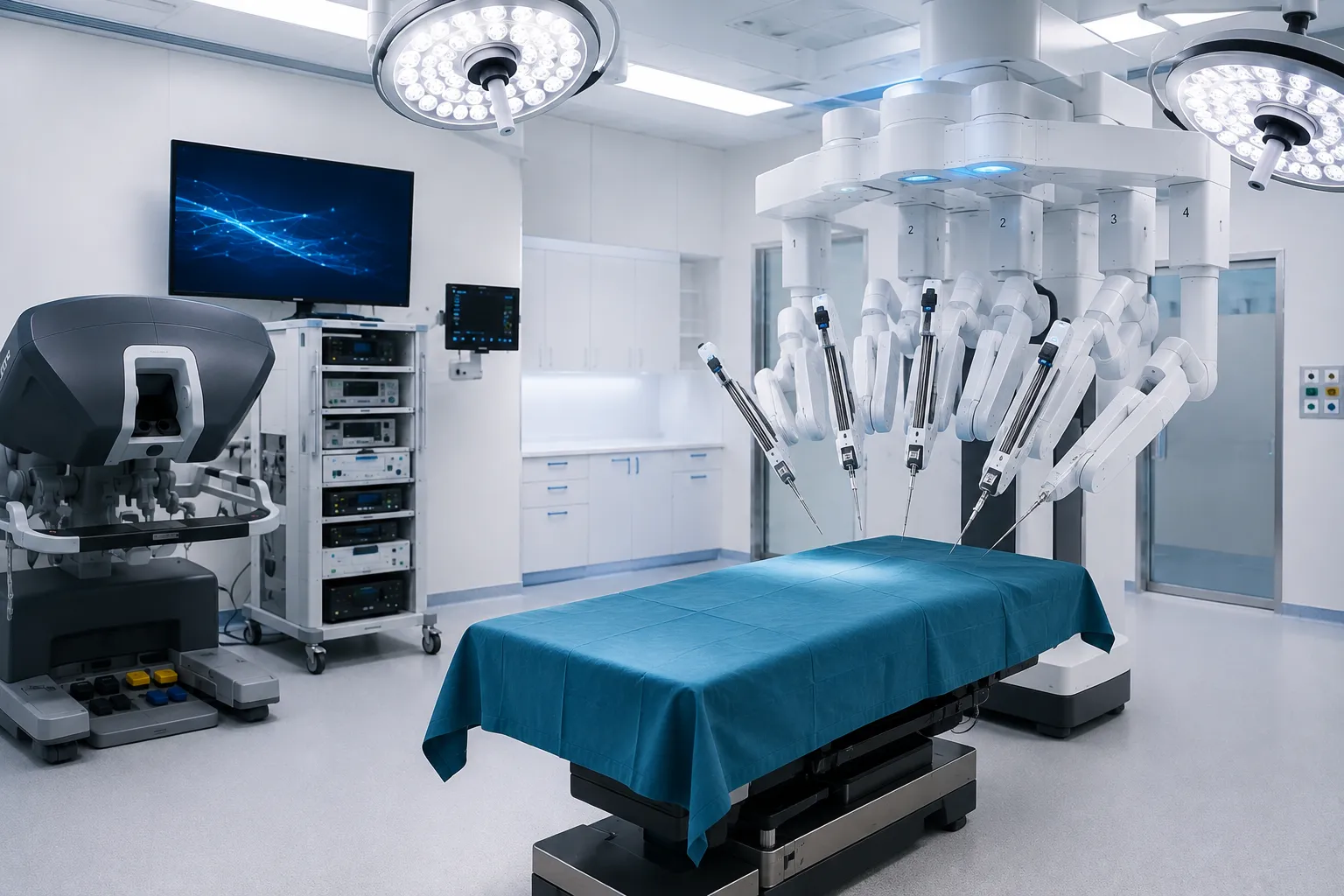
Introduction
Robotic surgery has quietly moved from a curiosity in a handful of specialist centres to something hospitals everywhere are actively planning for. The shift has been faster in the last few years than in the two decades before, and it is worth understanding what is driving it — and what is holding it back.
This article looks at the adoption trends shaping robotic surgery in hospitals around the world, with an eye on the UK picture in particular. It is written for procurement, surgical and planning teams across the UK, Europe, the US, the Gulf and South Africa trying to read where the technology is heading.
From niche to mainstream
For a long time, robotic surgery was concentrated in a small number of procedures — certain complex cancer operations, most famously in urology — at a limited number of well-resourced hospitals. That has changed. The technology is spreading into more specialities and into higher-volume, less complex procedures, and more hospitals are taking it on. The curve that was flat for years has turned sharply upward.
Part of the reason is simply time. As surgeons trained on these systems and evidence accumulated, confidence grew, and what once looked experimental began to look established. Newer systems and more competition in the market have widened the choice, too, which tends to accelerate any technology's spread.
What is driving the growth
Several forces are pushing adoption along at once. Health systems under pressure to treat more patients see robotic surgery as one way to support efficient, minimally invasive care. Surgeons increasingly expect to train and work with these systems. And in some countries, national policy has begun to actively champion the technology.
-
A wider range of procedures now suited to a robotic approach.
-
More systems and suppliers, widening choice.
-
A generation of surgeons trained to expect the technology.
-
Policy and waiting-list pressure encouraging efficient, keyhole care.
In the UK, this has become explicit. The Getting It Right First Time programme, with NHS England, has been developing a structured framework to support the adoption of robotic-assisted surgery, noting that uptake is now accelerating rapidly as the technology moves beyond complex cancer work into benign and higher-volume procedures.
The brakes on adoption
Growth is not friction-free. These systems represent a large, long commitment, and the running requirements — instruments, service, training — are substantial. Historically, that has slowed uptake, particularly outside the best-funded hospitals. There is also a genuine learning curve for both surgeons and whole teams, during which the full benefit is not yet realised.
And there is a healthy caution about the evidence. Bodies that assess value ask, reasonably, whether a robotic approach genuinely improves outcomes over the alternatives for a given procedure, or simply adds cost. The NICE assessment of robot-assisted surgery for orthopaedic procedures, for instance, allows use while further evidence is gathered — a measured stance that reflects this careful approach to adoption.
An uneven global picture
Adoption is far from uniform around the world. Well-resourced health systems have moved fastest, and within countries the picture varies from one region and hospital to the next. Some places have a coordinated national approach; others leave the decision to individual hospitals, which produces patchy coverage. The result is that a patient's access to robotic surgery still depends a great deal on where they happen to be treated.
This unevenness is itself a trend to watch. As the technology matures and systems become more varied and competitive, the expectation is that access will broaden, though how quickly depends on funding, policy and the willingness to invest in the training and governance that make adoption safe.
Training and governance set the ceiling
A trend that is easy to miss in the headline figures is that adoption is increasingly tied to standards, not just purchases. As robotic surgery spreads beyond a few expert centres, the question shifts from who can buy a system to who can run one safely. The Royal College of Surgeons of England sets out training pathways and governance for introducing robotic-assisted surgery, precisely so that a wider rollout does not mean a patchier standard.
This matters for how the trend plays out. The hospitals that adopt well are not necessarily those that buy first, but those that put the training, proctoring and oversight in place around the equipment. As national frameworks mature, that structured approach is becoming the expected way to adopt, which should make the spread of the technology safer and more consistent than an unmanaged rush would be.
What to watch next
A few developments are worth keeping an eye on. The range of systems is widening as more suppliers enter, which changes the choices a hospital has and tends to broaden access. Newer designs aimed at simpler set-up and smaller footprints could bring robotic surgery within reach of theatres that could not house the earlier, bulkier systems.
-
More suppliers and system designs, widening choice and access.
-
Expansion into further specialities and higher-volume procedures.
-
A growing evidence base clarifying where the benefit is real.
-
National frameworks shaping how, not just whether, hospitals adopt.
Taken together, these point to robotic surgery becoming both more common and better understood. The open questions are less about whether the technology works and more about where it genuinely helps, and how to spread it without losing the standards that keep it safe.
For a hospital, the practical takeaway from all this movement is to plan on a horizon of a few years rather than react to the latest announcement. The direction of travel is steady even if individual products come and go, and a hospital that has thought through its procedures, its training and its governance will be able to take advantage of the trend when the moment is right, rather than being rushed by it.
Reading the trend sensibly
The overall direction is clear enough: robotic surgery is becoming a mainstream option across more specialities and more hospitals, with national policy in several countries now behind it. For a hospital planning ahead, that makes it less a question of whether to engage with the technology than of when, for what, and how to do it well.
The sensible reading is to watch the trend without being swept along by it. Adoption succeeds where it is matched to genuine clinical need, backed by training and governance, and justified by a real case load. The Royal College of Surgeons of England and national programmes are clear that the pace of adoption must be matched by rigorous standards. Growth is coming; done properly, it is worth having.
None of which means every hospital should rush to buy. It means the trend is real and worth planning around, so that when a hospital does invest, it does so for the right procedures, with the training and governance to match, and at a moment of its own choosing rather than under pressure to keep up.
More from Business
-
Buyers — source approved, well-documented equipment.
-
Suppliers — list your equipment and reach buyers worldwide.
-
Advertise — promote your products and services to a clinical audience.
-
Business overview — explore everything MediGear offers healthcare organisations.
Disclaimer
This article is for general information only and is not procurement, clinical or investment advice. Adoption of robotic-assisted surgery varies by country, system and procedure, and its value depends on evidence, training and case selection. Confirm current guidance and evaluations with the relevant authorities and professional bodies. medigear.uk accepts no liability for actions taken on the basis of this content.
Ready for what's coming
Genuine, approved, fully documented theatre and surgical equipment — the dependable foundation a growing robotic programme depends on.Frequently Asked Questions
Much faster in the last few years than in the two decades before. What was once concentrated in a few complex cancer procedures at well-resourced hospitals is spreading into more specialities and higher-volume, less complex operations, with more hospitals taking it on. The adoption curve that was long flat has turned sharply upward, though the pace varies widely by place.
Several forces at once: a wider range of procedures now suited to a robotic approach; more systems and suppliers widening choice; a generation of surgeons trained to expect the technology; and policy and waiting-list pressure encouraging efficient, minimally invasive care. In the UK, national programmes with NHS England are actively developing frameworks to support adoption.
The scale and length of the commitment, and substantial running requirements for instruments, service and training, which has historically slowed uptake outside well-funded hospitals. There is a genuine learning curve for surgeons and teams, and a healthy caution about evidence — value assessors reasonably ask whether a robotic approach improves outcomes for a given procedure or simply adds cost.
No, it is very uneven. Well-resourced health systems have moved fastest, and within countries the picture varies from region to region and hospital to hospital. Some places coordinate adoption nationally; others leave it to individual hospitals, producing patchy coverage. A patient's access still depends a good deal on where they are treated.
The direction is clear: robotic surgery is becoming a mainstream option across more specialities and more hospitals, with national policy in several countries now behind it. For a planning hospital, it is less whether to engage than when, for what, and how to do it well. Access is expected to broaden, though funding, policy and investment in training will set the pace.
Watch it without being swept along. Adoption succeeds where it is matched to genuine clinical need, backed by training and governance, and justified by a real case load. Professional bodies and national programmes are clear that the pace of adoption must be matched by rigorous standards. Growth is coming; done properly and for the right procedures, it is worth having.