
Introduction
Endoscopy — guiding a slim, flexible camera inside the body to look and, often, to treat — is one of medicine's quiet workhorses. It is also demanding: steering a bending scope through winding internal passages takes skill, patience and a steady hand. Robotics is beginning to change how that is done.
This article explains robotic endoscopy systems for hospitals: what they add to conventional endoscopy, where the benefits lie, and how mature the technology is. It is written for endoscopy and procurement teams across the UK, Europe, the US, the Gulf and South Africa who want a clear account.
What conventional endoscopy asks of a clinician
To see why robotics is of interest, it helps to picture the conventional task. An endoscopist advances a flexible scope by hand, steering its tip through bends and turns while watching a screen, managing the instrument, the view and any treatment at once. It is a genuine skill, honed over many procedures, and it can be physically awkward over a long list.
Two things make it hard: the fine control needed to steer a bending scope accurately, and the endurance to do it well, case after case. Both are places where a robotic system might help — not by removing the clinician, but by making the instrument easier and steadier to control.
What robotic endoscopy adds
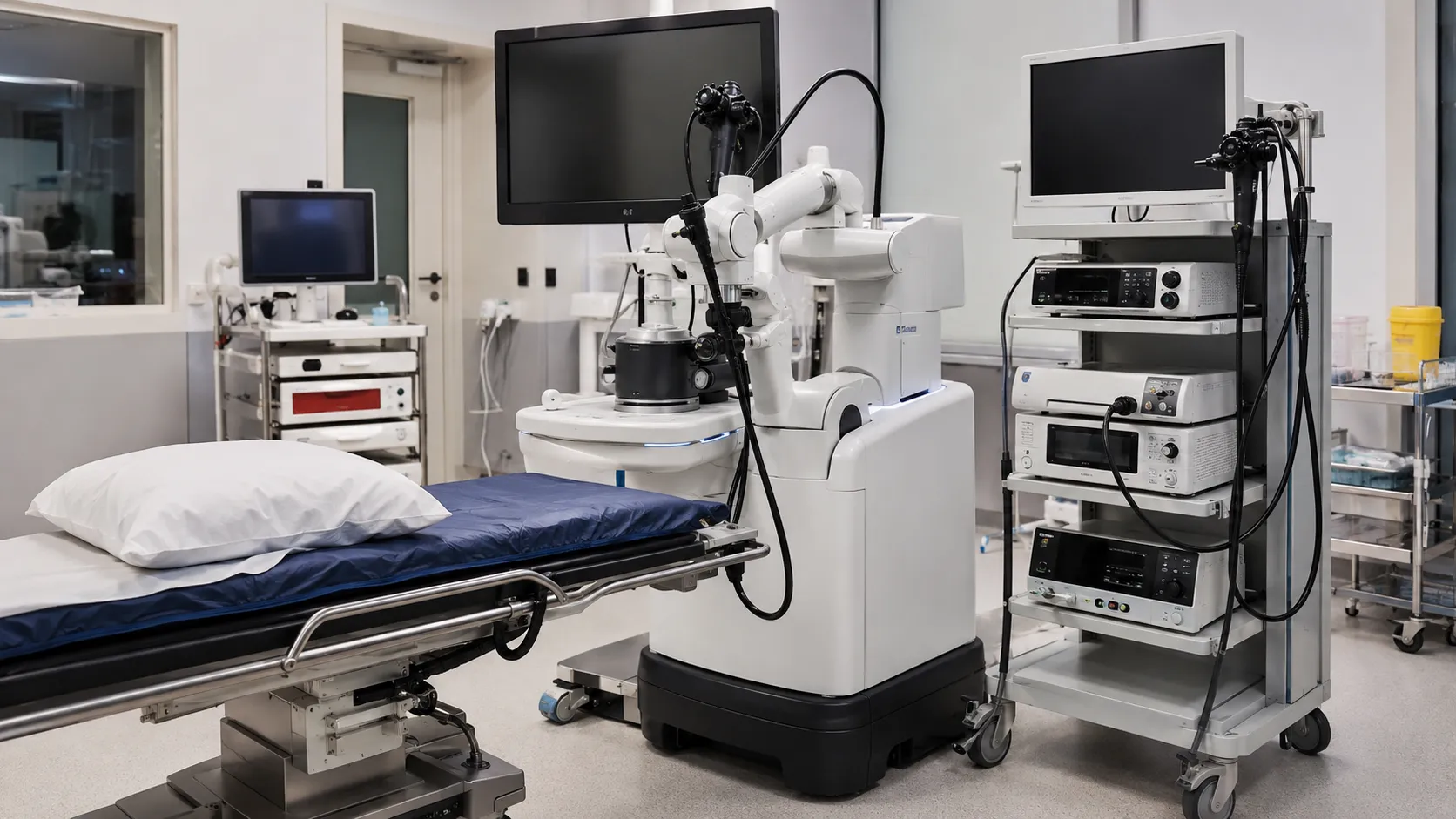
A robotic endoscopy system changes how the scope is driven. Instead of manipulating it directly by hand, the clinician controls it through a system that translates their intentions into precise, steady movements of the scope, often with a more comfortable working position and finer control of the tip than manual handling allows.
-
Precise steering — finer, steadier control of the scope's tip.
-
Stability — holding position without hand tremor or drift.
-
Ergonomics — a more comfortable posture over a long list.
-
Reach — navigating winding passages more controllably.
The clinician stays in charge throughout; the system executes their commands with more precision and steadiness than a hand on the scope. As with surgical robotics generally, the FDA treats such platforms as computer-assisted surgical systems under the operator's control, not machines acting independently.
Why steadier control matters
The benefits of steadier, more precise control are practical. A stable, accurately steered scope can make a difficult examination more controlled, may help the clinician navigate awkward anatomy, and can ease the physical strain that contributes to fatigue over a busy list. Where a procedure involves treatment as well as inspection, precise instrument control is an obvious asset.
None of this replaces the endoscopist's judgement about what they are seeing and what to do — that remains entirely human. What the technology offers is a better means of carrying out the mechanical part of the task, so the clinician's skill is spent on interpretation and decisions rather than wrestling with the instrument.
A tool that can carry more than a camera
Endoscopy is rarely only about looking. Through the working channel of a scope, clinicians take samples, remove growths and carry out a range of treatments, all guided by the view on the screen. Steadier, more precise control of the instrument therefore helps not just with getting a clear look, but with the delicate business of acting on what is seen.
This is part of why robotic control is of interest. When the scope is held stable and steered accurately, the fine tasks done through it — sampling a precise spot, treating a specific area — become easier to perform well. The precision that helps navigation also helps the treatment that navigation was for.
The team around the scope
As with every robotic system in this series, an endoscopy platform is only as good as the people using it. The endoscopist and the wider team learn to work with the system, set it up, and integrate it into the rhythm of a list. There is a learning curve, and early cases may take longer as a team finds its feet.
That investment is part of the honest cost of the technology. A robotic endoscopy system does not make a novice an expert; it gives a skilled team a more capable and comfortable way to do demanding work, once they have learned to use it well. Buying the platform is the start of that, not the end.
An evolving field
Robotic endoscopy is a developing area rather than a settled standard. Some platforms are established in particular niches; others are newer and still proving themselves. As with any emerging technology, the sensible questions are what a given system actually does today, for which procedures it is supported, and what evidence backs those uses.
The Royal College of Surgeons of England emphasis on adopting robotic-assisted techniques safely, with proper training and governance, applies here as it does across surgical robotics. A hospital should treat robotic endoscopy as a capability to evaluate carefully on its merits, procedure by procedure, rather than a finished answer to buy off the shelf.
Comfort that lasts a whole list
One benefit that deserves emphasis is what steadier control does over a full day. Endoscopy lists can be long, and the physical demands of manipulating a scope by hand for hours are real. A system that lets the clinician work in a more comfortable posture, with the instrument held steady, can ease the fatigue that builds across a busy list.
That matters for more than comfort. A tired clinician late in a list is working against their own body, and anything that reduces that strain helps sustain careful, precise work when it might otherwise flag. It is a quieter benefit than raw precision, but experienced users tend to value it highly.
What a hospital should weigh
For a hospital, robotic endoscopy is worth considering where finer control, stability and better ergonomics would genuinely improve difficult procedures or ease the strain of a heavy workload. As with all this technology, it is bought and run as a capability — the system, the training, and the team — rather than a machine alone.
Judged that way, and matched to the procedures where its strengths tell, robotic endoscopy can make a demanding task more controlled and less tiring for the clinician. It is an extension of a skilled endoscopist's ability, not a replacement for it, and it earns its place where that extension genuinely helps. Kept to that role, and matched to the procedures that call for it, robotic endoscopy is a considered addition to what an endoscopy service can offer, rather than a novelty for its own sake. As with the rest of this technology, the machine is the easy part; the trained team and sound judgement around it are what turn it into better care.
More from Business
-
Buyers — source approved, well-documented equipment.
-
Suppliers — list your equipment and reach buyers worldwide.
-
Advertise — promote your products and services to a clinical audience.
-
Business overview — explore everything MediGear offers healthcare organisations.
Disclaimer
This article is for general information only and is not clinical or procurement advice. Robotic endoscopy is a developing field; availability and approvals are procedure-specific, and the benefit depends on the procedure, the patient and training. Confirm the current status of any system with the manufacturer and the relevant authorities. medigear.uk accepts no liability for actions taken on the basis of this content.
Endoscopy, dependable equipment
Genuine, approved, fully documented endoscopy and theatre equipment — the dependable foundation demanding procedures rely on.Frequently Asked Questions
It is a system that changes how a flexible endoscope is driven. Instead of manipulating the scope directly by hand, the clinician controls it through a system that translates their intentions into precise, steady movements of the scope, often with a more comfortable working position and finer control of the tip than manual handling allows. The clinician stays in charge throughout.
Finer, steadier control of the scope's tip, stability without hand tremor or drift, a more comfortable posture over a long list, and more controllable navigation of winding passages. Conventional endoscopy demands both fine control to steer a bending scope and the endurance to do it well case after case — both places where a robotic system can help.
No. The clinician stays in charge, and the system executes their commands with more precision and steadiness than a hand on the scope. It does not replace judgement about what is seen and what to do — that remains entirely human. The technology offers a better means of carrying out the mechanical part of the task, so skill is spent on interpretation and decisions.
A stable, accurately steered scope can make a difficult examination more controlled, may help navigate awkward anatomy, and can ease the physical strain that contributes to fatigue over a busy list. Where a procedure involves treatment as well as inspection, precise instrument control is an obvious asset — letting the clinician focus on decisions rather than wrestling with the instrument.
It is a developing area rather than a settled standard. Some platforms are established in particular niches; others are newer and still proving themselves. The sensible questions are what a given system actually does today, for which procedures it is supported, and what evidence backs those uses — treating it as a capability to evaluate carefully, procedure by procedure.
Whether finer control, stability and better ergonomics would genuinely improve difficult procedures or ease the strain of a heavy workload. Like all this technology, it is bought and run as a capability — the system, the training and the team — not a machine alone, and adopted safely with proper training and governance. Matched to the right procedures, it can make a demanding task more controlled.