
Introduction
If you are the person who has to sign off a robotic-surgery purchase, the glossy brochures are not much help. They sell the promise. What a hospital needs is a clear-eyed look at the actual kit — what makes up a system, what you keep buying after the system itself, and which questions decide whether it will be used or left in a corner.
This is a practical guide to robotic-assisted surgery equipment for hospitals: the parts, the running costs in kind rather than pounds, and the considerations that matter at the point of purchase. It is written for procurement, surgical and theatre teams across the UK, Europe, the US, the Gulf and South Africa building a sensible business case.
What a system is made of
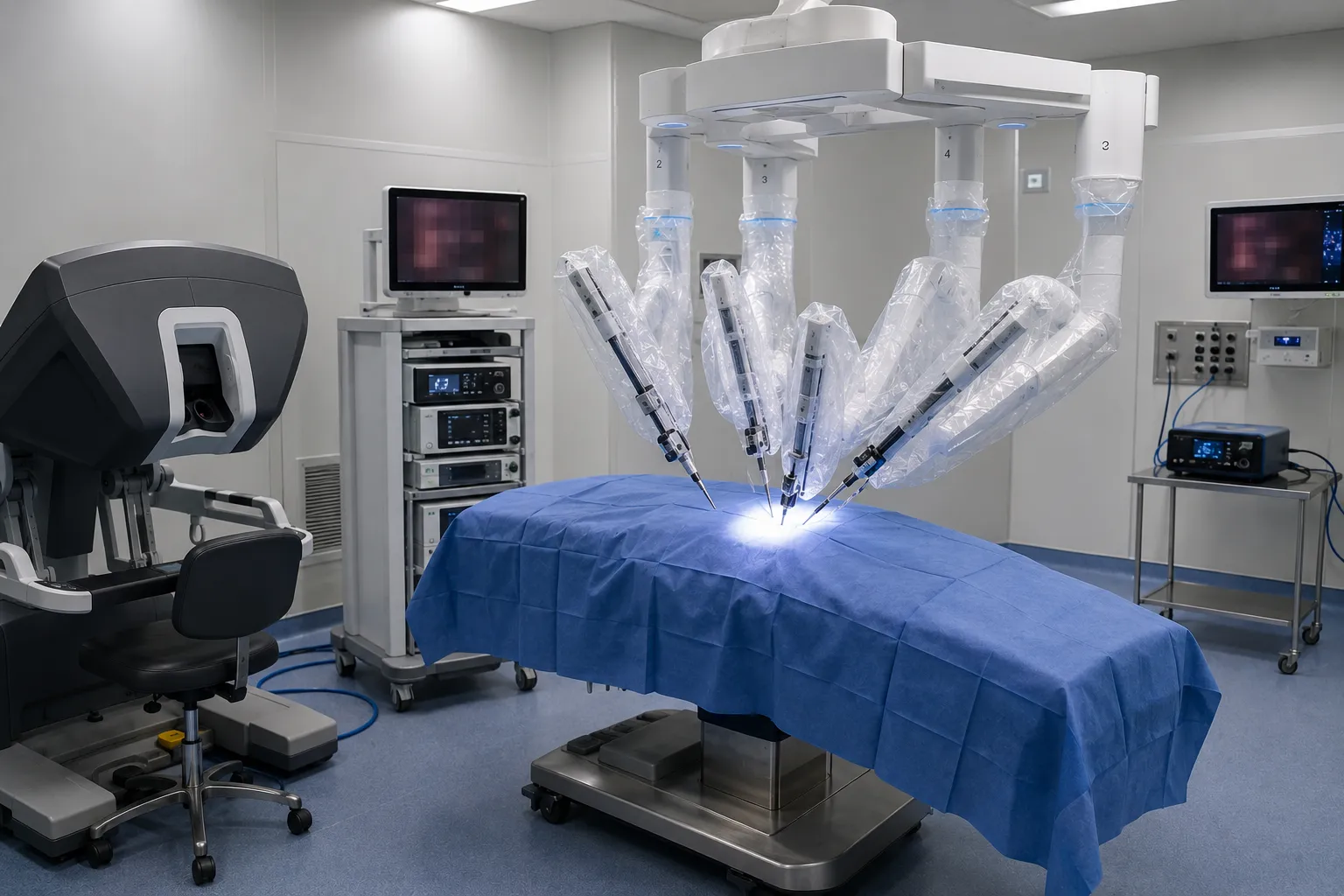
A robotic-assisted surgery system is not a single object but a set of them. The FDA describes the usual components clearly: a console where the surgeon sits and controls the instruments while viewing the site; a bedside cart with several hinged arms carrying the camera and instruments; and a separate cart holding supporting hardware such as the electrosurgical unit, suction and light source.
-
Surgeon console — controls and the magnified display.
-
Patient-side cart — the instrument arms and camera.
-
Support cart — the hardware and software that drive it all.
-
Instruments and accessories — graspers, scissors, needle drivers and more.
That last line is where a lot of the ongoing spend hides. A system is bought once; the instruments and accessories are used, reprocessed or replaced case after case, and they add up over the life of the machine.
The equipment you keep buying
It is a mistake to think of a robotic system as a one-off purchase. The instruments that do the cutting, grasping and stitching have a working life and are replaced regularly. There are drapes and consumables for every case. There is a service and maintenance arrangement to keep the system safe and running. And there is the software that needs updating over time.
None of this is a reason to avoid the technology; it is a reason to plan for the whole picture rather than the headline. A realistic view of what a system consumes over years, not just what it costs to wheel through the door, is the difference between a business case that holds up and one that unravels a year in.
Making it fit the theatre
The equipment has to live somewhere, and a robotic system is bulky. The console, carts and vision system take up floor space and change where everyone stands. Older theatres may need adapting to house it comfortably, with room to move the carts in and out and to dock the system to the patient without a scramble.
It also has to connect to the theatre around it — power, imaging, and the everyday equipment a case relies on. Thinking about the physical fit and the practical workflow early, rather than after delivery, saves a great deal of awkwardness. A system that is hard to set up and pack away will be used less, however capable it is.
The questions that decide the purchase
Beyond the specification, a handful of questions really settle whether the equipment will earn its place. They are less about the machine and more about the hospital around it:
-
Which procedures will it genuinely improve, and how many are there?
-
Can the team be trained and supported through the learning curve?
-
Is there space and infrastructure to house and run it well?
-
What is the whole-life picture of instruments, service and support?
-
Is there governance to oversee a safe introduction?
The Royal College of Surgeons of England sets out how a hospital should approach introducing robotic-assisted surgery safely, with proper training pathways and governance around the equipment. Reading the purchase through that lens keeps the focus where it belongs.
You are buying capability, not just hardware
The most expensive mistake in robotic surgery is to treat the purchase as a hardware transaction. The system arrives, and then the real work begins: training the surgeons, training the theatre team, and building the routines that let a list run smoothly. Without that, an excellent machine sits underused while the business case quietly falls apart.
So the sensible way to think about the spend is capability, not kit. You are paying to be able to offer certain procedures well, reliably and safely. The console and carts are the visible part; the training, the proctored early cases and the governance are the part that actually turns the equipment into a working service. Budget for the whole of that, or the hardware never earns its keep.
Service, support and keeping it running
A robotic system is a piece of equipment that has to work every time it is scheduled, which makes the service and support arrangement more than an afterthought. Downtime is not just an inconvenience; a system out of action means cancelled lists and disrupted patients. The maintenance contract, the response times and the availability of parts and instruments all feed directly into how dependable the service will be.
-
Maintenance and servicing to keep the system safe and available.
-
Response times and support when something goes wrong.
-
A dependable supply of instruments and consumables.
-
Software updates and the support that comes with them.
None of this is glamorous, but it is where a robotic programme either earns a reputation for reliability or a reputation for cancelled lists. The relationship with the supplier, and the terms of support, deserve as much scrutiny as the specification of the machine.
It is worth asking, too, how the supplier handles the arrival of newer systems and instruments over the years. A robotic programme is a long relationship, and the terms on which equipment is updated, instruments are supplied and staff are retrained shape the true cost and dependability of the service well beyond the first purchase. A good arrangement plans for that long life from the start.
Buying the equipment, not the hype
The equipment itself is remarkable, and for the right procedures it changes what a theatre can do. But a robotic system is a serious, long commitment, and it succeeds as part of a whole: a trained team, a suitable theatre, sound governance and a genuine case load to justify it. The console in the corner earns its place when all of those line up.
Approached that way, the guide to buying robotic-assisted surgery equipment is simple to state, if not always easy to follow. Look past the system to everything around it. Plan for the whole life, not the first day. And make sure the procedures that will actually run on it are there in the numbers to make it worthwhile. Get those right, and the equipment does the rest.
More from Business
-
Buyers — source approved, well-documented equipment.
-
Suppliers — list your equipment and reach buyers worldwide.
-
Advertise — promote your products and services to a clinical audience.
-
Business overview — explore everything MediGear offers healthcare organisations.
Disclaimer
This guide is for general information only and is not procurement, clinical or financial advice. Robotic-assisted surgery equipment, its approvals and its running requirements vary; outcomes depend on training, case selection and governance. Confirm current requirements with the relevant authorities and consult qualified professionals for decisions specific to your organisation. medigear.uk accepts no liability for actions taken on the basis of this content.
Equipment you can rely on
Genuine, approved, fully documented theatre and surgical equipment — the dependable kit that surrounds any robotic system in a working theatre.Frequently Asked Questions
Usually three units plus instruments. A surgeon console holds the controls and the magnified display. A patient-side cart carries the hinged arms with the camera and instruments. A separate support cart holds hardware and software such as the electrosurgical unit, suction and light source. Around these sit the instruments and accessories — graspers, scissors, needle drivers — used case by case.
No. The system is bought once, but the instruments and accessories have a working life and are replaced regularly, there are drapes and consumables for every case, and there is ongoing service, maintenance and software support. A realistic view of what a system consumes over years, rather than the headline purchase, is essential to a sound business case.
Often, yes. A robotic system is bulky; the console, carts and vision system take up floor space and change where the team stands. Older theatres may need room to move the carts and dock the system to the patient without a scramble, along with the right power and connections. Planning the physical fit early avoids awkwardness after delivery.
Less about the machine, more about the hospital: which procedures it will genuinely improve and how many there are; whether the team can be trained and supported through the learning curve; whether there is space and infrastructure to run it well; the whole-life picture of instruments, service and support; and whether governance is in place to oversee a safe introduction.
Mostly in the instruments and consumables. The tools that cut, grasp and stitch are used, reprocessed or replaced case after case, and drapes and other consumables are needed every time. Add service, maintenance and software updates, and the running requirement over the life of the system is a large part of the true commitment.
As part of a whole, not as a standalone purchase. Professional guidance sets out introducing robotic-assisted surgery safely, with proper training pathways and governance around the equipment. Reading the purchase through that lens — trained team, suitable theatre, sound oversight and a genuine case load — keeps the focus where it belongs.