
Introduction
For a patient, the appeal of robotic surgery is not the clever engineering. It is the hope of a smaller wound, less pain, and getting home and back to normal sooner. That hope is reasonable — but it comes with conditions, and it is worth understanding both the reason recovery can be quicker and the reasons it is not guaranteed.
This article explains how robotic surgery can shorten patient recovery time, and where that benefit comes from. It is written for surgical, theatre and procurement teams across the UK, Europe, the US, the Gulf and South Africa who want an honest account rather than a sales pitch.
It starts with a smaller wound
The recovery benefit is really a benefit of minimally invasive surgery, which robotic systems are built to support. Instead of one large opening, the surgeon works through a few small ones. Less of the body is cut, less muscle and tissue is disturbed, and there is usually less blood loss. The body then has less to repair, which is the root of a faster recovery.
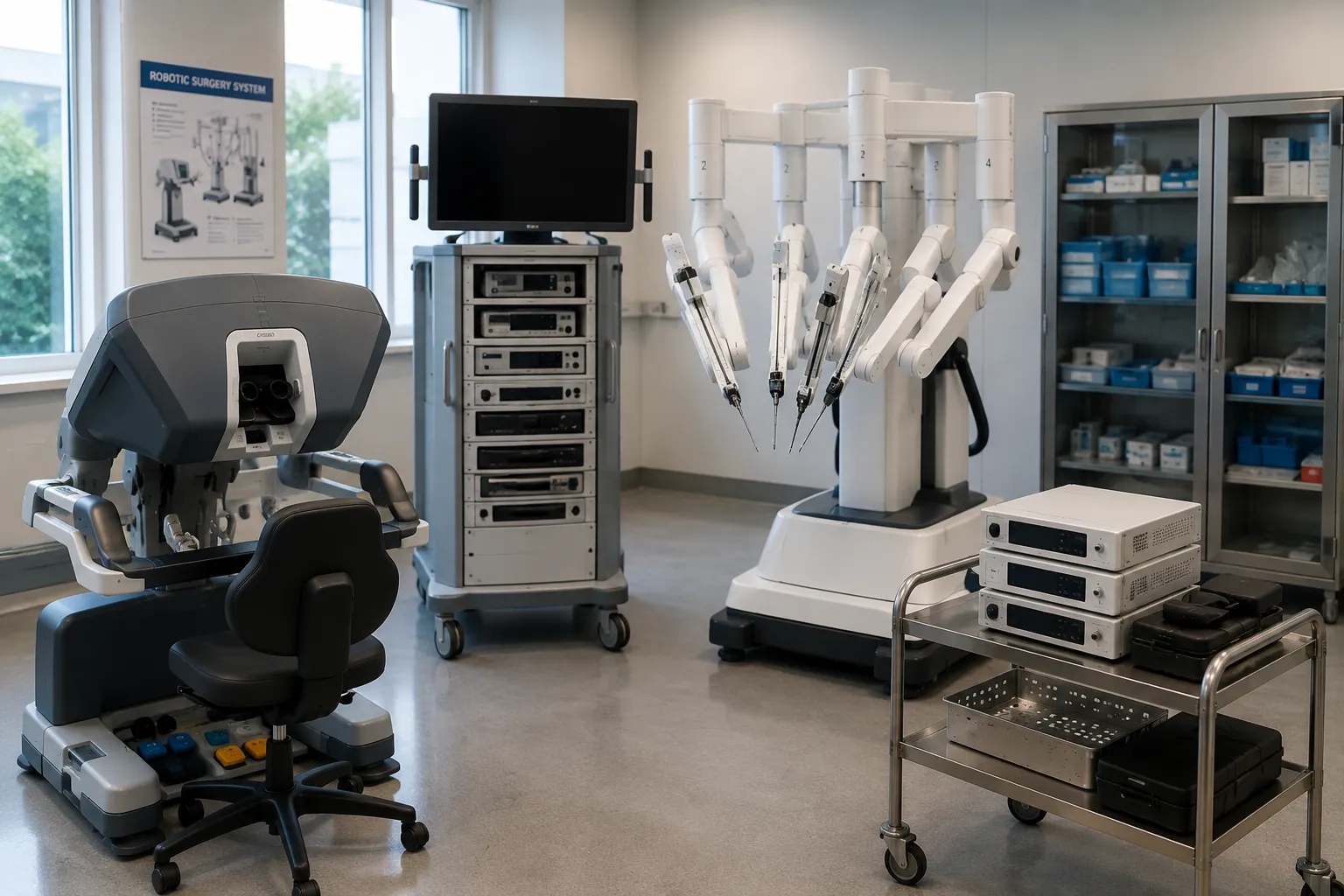
The FDA describes these systems as able to facilitate minimally invasive surgery, and that is the mechanism at work. A robotic approach can let a surgeon carry out through keyholes an operation that might otherwise need a large incision, keeping the disruption to the patient small.
Why less disruption means quicker healing
Smaller wounds tend to lead, on the whole, to a gentler recovery. There is commonly less pain afterwards and less need for strong pain relief. Wounds are smaller to heal and less prone to certain complications. Many patients are able to move sooner, leave hospital earlier, and return to ordinary life and work in less time than a large open operation would allow.
-
Less pain and often less need for strong pain relief.
-
Smaller wounds to heal, with less scarring.
-
Earlier movement and, frequently, a shorter hospital stay.
-
A quicker return to normal activity for many patients.
These are tendencies, not promises. They describe what often happens when a suitable operation is done through keyholes rather than a large incision, in the right patient by an experienced team.
The conditions that come attached
Here is where honesty matters. The recovery benefit depends heavily on the procedure, the patient and the team's experience. A robotic approach helps recovery only where it genuinely delivers a less invasive operation than the alternative — and for some procedures, a skilled surgeon using ordinary keyhole techniques achieves much the same. The robot is one route to minimally invasive surgery, not the only one.
Patient factors matter too. Age, general health and the specifics of the condition all shape how quickly someone recovers, whatever the surgical approach. And a team early on its learning curve may not yet see the smoothest results. The benefit is real, but it is conditional, and overstating it does patients no favours.
Recovery is a whole-pathway matter
It also helps to remember that recovery is not decided in the operating theatre alone. How well a patient is prepared beforehand, how their pain and movement are managed afterwards, and the support they have at home all shape how quickly they get back on their feet. A less invasive operation gives recovery a good start; the rest of the pathway carries it through.
Modern surgical care increasingly treats recovery as something to be designed, not left to chance, with the operation as one part of a planned pathway. A robotic approach can contribute a gentler starting point, but it works best inside that wider effort to help patients recover well.
What the evidence actually says
It is fair to ask whether the recovery benefit is real or just marketing. The answer, carefully put, is that the benefit is genuine for the right work but should not be overstated. The Royal College of Surgeons of England describes robotic-assisted surgery as offering enhanced precision and reduced recovery times when it is adopted safely and used well — a considered statement, not a blanket promise, and one tied to appropriate procedures.
The important word is appropriate. Where a robotic approach genuinely makes an operation less invasive than it would otherwise be, quicker recovery follows naturally. Where it does not, no amount of technology speeds healing. Reading the evidence sensibly means separating the procedures where the benefit is well supported from those where it is assumed, and being honest about the difference.
The patient's own part in recovery
Even the best operation is only the start of recovery, and much of what follows is in the patient's hands. Following the advice they are given, moving as encouraged, managing pain sensibly and taking any rehabilitation seriously all shape how quickly someone gets back to normal. A less invasive operation gives them a head start; what they do with it matters.
Expectations matter too. A smaller wound does not mean no recovery at all, and patients who understand what a realistic return to normal looks like tend to do better than those expecting to bounce back overnight. Clear information, sensible goals and good support turn the head start of a gentler operation into the faster recovery that was hoped for.
There is a wider lesson here for hospitals weighing the technology. If the recovery benefit depends on the whole pathway — a suitable procedure, an experienced team, good preparation and solid aftercare — then investing only in the equipment and neglecting the rest wastes much of the advantage. The systems that deliver the smoothest recoveries are set within a service that takes the entire journey seriously, not just the hour in theatre.
An honest summary of the benefit
So the plain answer is this. Robotic surgery can shorten recovery time because it helps surgeons operate through small openings, and smaller operations are usually kinder to the body. For the right procedure, the right patient and an experienced team, that can mean less pain, a shorter stay and a quicker return to normal life.
What it is not is a guarantee, or a benefit unique to robotics. It is the reward of a genuinely less invasive operation, delivered well, as part of a well-run recovery pathway. Understood on those terms, the promise of a smoother recovery is a fair one — and a good reason to use the technology where it truly fits.
The message for patients and hospitals alike is to hold on to the benefit and the caveat at the same time. A smaller operation is usually a kinder one, and that is worth having. But it is the less invasive operation that does the work, not the word robotic on the label, and keeping that clear helps everyone judge the technology fairly.
More from Business
-
Buyers — source approved, well-documented equipment.
-
Suppliers — list your equipment and reach buyers worldwide.
-
Advertise — promote your products and services to a clinical audience.
-
Business overview — explore everything MediGear offers healthcare organisations.
Disclaimer
This article is for general information only and is not clinical advice. Recovery after any operation depends on the procedure, the patient, training and case selection, and robotic-assisted surgery is not suited to every case. Confirm current clinical guidance with the relevant authorities and professional bodies, and discuss individual care with qualified clinicians. medigear.uk accepts no liability for actions taken on the basis of this content.
Better recovery starts with good kit
Genuine, approved, fully documented theatre and surgical equipment — the dependable foundation that minimally invasive care is built on.Frequently Asked Questions
By helping surgeons operate through a few small openings instead of one large incision. Less of the body is cut, less tissue is disturbed and there is usually less blood loss, so the body has less to repair. That less invasive approach is the root of a faster recovery — the benefit comes from minimally invasive surgery, which robotic systems are built to support.
On the whole, less pain and often less need for strong pain relief, smaller wounds to heal with less scarring, earlier movement and frequently a shorter hospital stay, and a quicker return to normal activity. These are tendencies rather than promises — what often happens when a suitable operation is done through keyholes in the right patient by an experienced team.
No. The benefit depends on the procedure, the patient and the team's experience. A robotic approach helps recovery only where it genuinely delivers a less invasive operation than the alternative, and for some procedures ordinary keyhole techniques achieve much the same. Patient factors such as age and general health also shape recovery whatever the approach.
No. It is the reward of a genuinely less invasive operation, and the robot is one route to that, not the only one. A skilled surgeon using standard keyhole techniques can achieve similar results for some procedures. The recovery benefit belongs to minimally invasive surgery as a whole, which robotic systems support in certain cases.
No. How well a patient is prepared beforehand, how pain and movement are managed afterwards, and the support they have at home all shape how quickly they recover. A less invasive operation gives recovery a good start, but the wider pathway carries it through. Modern care increasingly designs recovery rather than leaving it to chance.
Those having a procedure where a robotic approach genuinely reduces how invasive the operation is, operated on by an experienced team, and who are otherwise reasonably well. The gentler starting point of a smaller operation helps most when the procedure suits it and the surrounding care is well organised. It is a conditional benefit, applied to the right cases.