
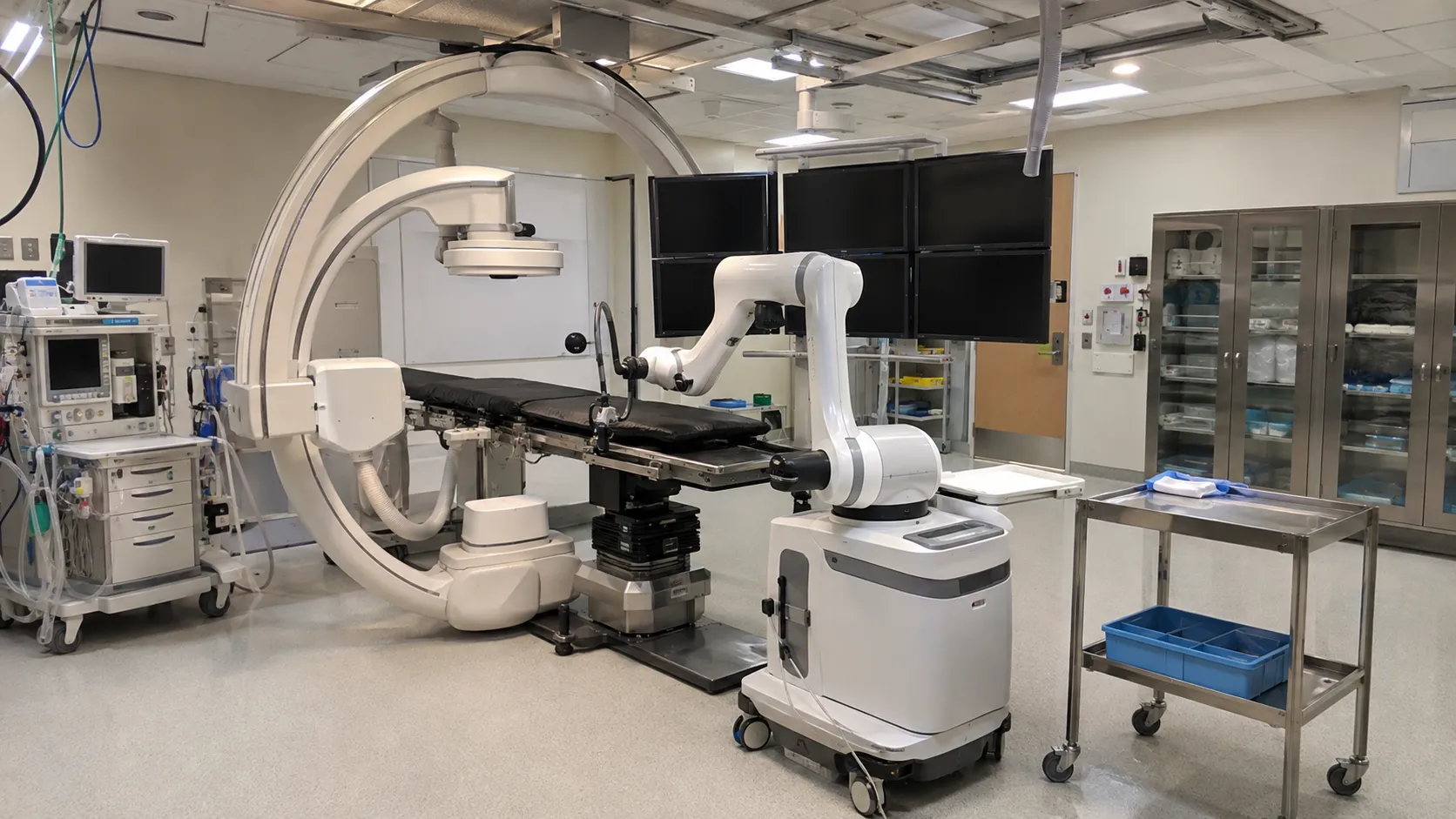
Introduction
Vascular surgery works on the body's pipework — the arteries and veins that carry blood everywhere it needs to go. It is unforgiving work: these vessels are delicate, they bleed, and a repair has to be precise and secure, because the consequences of a poor one are serious. That demand for precision is where robotics is beginning to help.
This article explains how robotics is advancing vascular surgery worldwide: why working on blood vessels is so exacting, how a robotic approach helps, and the honest limits. It is written for vascular and procurement teams across the UK, Europe, the US, the Gulf and South Africa who want a clear account.
Why vessels demand precision
Blood vessels are among the least forgiving structures to operate on. They are delicate and thin-walled, they carry blood under pressure, and joining or repairing them — sewing two vessels together, patching a wall, securing a graft — has to be done with great accuracy. A repair that is even slightly imperfect can leak, block, or fail, with serious consequences.
The fine, precise suturing that vascular work depends on is difficult and tiring to do by hand, especially on small or deeply placed vessels. This is exactly the kind of exacting, delicate task where the steadiness and control of a robotic system can make a genuine difference to how well the work is done.
It is the sheer intolerance of error that sets vascular work apart. In many operations a small imprecision can be corrected or simply does not matter; on a blood vessel under pressure, it can be the difference between a repair that holds and one that fails. That is why steadiness and accuracy are prized so highly here.
How robotics helps with delicate repair
A robotic system brings advantages well suited to work on vessels. Wristed instruments articulate to place fine sutures at awkward angles, tremor is filtered out so the smallest movements are steady, and a magnified three-dimensional view brings clarity to delicate structures. Together these support the precise, secure repair that vascular surgery demands.
-
Fine suturing — accurate stitching of delicate vessel walls.
-
Tremor filtering — steady movement for the finest work.
-
Articulation — reaching awkward angles on deep vessels.
-
Magnified vision — a clear view of small, delicate structures.
Where vessels sit deep or in confined spaces, the ability to reach and work on them precisely, without a large open exposure, is a further benefit. The combination of steadiness, articulation and clear vision addresses the core difficulty of vascular surgery: doing exacting, secure work on unforgiving structures.
The stakes of a secure repair
It is worth dwelling on why precision matters so much here. A vascular repair is load-bearing in a literal sense: it must hold against the pressure of flowing blood, keep the vessel open, and last. A small imperfection that might be trivial elsewhere can, in a blood vessel, lead to bleeding, clotting or failure of the repair.
So the value of a tool that supports more precise, more consistent suturing is not cosmetic; it goes to the heart of whether the operation succeeds. In surgery where the margin between a good repair and a dangerous one is so fine, anything that helps a surgeon work more accurately is worth serious attention.
A developing application
Robotics in vascular surgery is a developing rather than a fully established field, and its use varies by type of operation. Some vascular work is well suited to a robotic approach; other procedures are done by long-established open or catheter-based methods that serve very well. As with any evolving technology, the sensible questions are which operations it genuinely improves and what the evidence shows.
This is distinct from the robotic catheter systems used to navigate inside vessels from a workstation; here the focus is on precise surgical work on the vessels themselves. Both reflect a wider move towards precision in vascular care, but they are different tools for different tasks, and a hospital does well to keep the distinction clear.
Reaching vessels without a large exposure
A further benefit worth drawing out is access. Some vessels sit deep in the body, and reaching them by open surgery can mean a substantial exposure just to get to the vessel before any repair begins. Where a robotic approach can reach and work on such a vessel through small openings, it spares the patient much of that.
This matters because, in vascular surgery, the exposure needed to reach a deep vessel can be as much of a burden to the patient as the repair itself. Reaching the target precisely, through small openings, addresses both the access problem and the repair in one — a combination that is much of the appeal of a robotic approach where the anatomy suits it.
Skill and judgement lead
As throughout robotic surgery, the system assists rather than acts. The vascular surgeon controls every movement and makes every decision; the robot provides the steadiness and precision to carry those intentions out. The FDA treats these as computer-assisted surgical systems under the surgeon's control, not autonomous devices.
In a field this unforgiving, that human command matters enormously. Knowing how to plan and perform a vascular repair, and how to respond when things do not go to plan, is skill and judgement no machine provides. The Royal College of Surgeons of England emphasis on adopting robotic-assisted surgery safely, with proper training and governance, is especially apt where the stakes are so high.
A move towards precision in vascular care
Robotics is one part of a broader shift in vascular surgery towards greater precision and less invasive approaches. Across the speciality, the direction of travel is to achieve the same secure repairs with less disruption to the patient, and robotic tools fit naturally into that wider movement.
Seeing it that way keeps the technology in perspective. It is not a revolution that replaces vascular surgery's established methods but an addition to them, valuable for particular tasks. A hospital that understands where it fits within that broader picture will use it more wisely than one that treats it as a wholesale replacement.
What a hospital should take from this
Robotics is advancing vascular surgery by supporting the precise, secure suturing and delicate work that operating on blood vessels demands — with steady, tremor-free control, articulation and a magnified view. In a field where a repair must hold against flowing blood, that precision goes to the heart of whether an operation succeeds.
The measured view is of a developing, valuable capability for the operations it genuinely suits, judged on evidence and delivered by skilled teams — distinct from the catheter-navigation systems used elsewhere in vascular care. A hospital that matches it to the right work, and holds it to the high bar vascular surgery demands, gets the real benefit it offers.
More from Business
-
Buyers — source approved, well-documented equipment.
-
Suppliers — list your equipment and reach buyers worldwide.
-
Advertise — promote your products and services to a clinical audience.
-
Business overview — explore everything MediGear offers healthcare organisations.
Disclaimer
This article is for general information only and is not clinical or procurement advice. The suitability and benefits of robotic vascular surgery depend on the procedure, the patient and the surgeon's experience, and approvals are procedure-specific. Confirm current guidance with the relevant authorities and professional bodies. medigear.uk accepts no liability for actions taken on the basis of this content.
Vascular surgery, dependable kit
Genuine, approved, fully documented theatre and surgical equipment — the dependable foundation precise, secure vascular surgery relies on.Frequently Asked Questions
Because blood vessels are among the least forgiving structures to operate on. They are delicate and thin-walled, carry blood under pressure, and joining or repairing them must be done with great accuracy. A repair that is even slightly imperfect can leak, block or fail, with serious consequences — so the fine, precise suturing vascular work depends on is genuinely demanding.
With advantages well suited to work on vessels: wristed instruments that articulate to place fine sutures at awkward angles, tremor filtering so the smallest movements are steady, and a magnified three-dimensional view that brings clarity to delicate structures. Together these support the precise, secure repair vascular surgery demands, especially on small or deeply placed vessels.
Because a vascular repair is load-bearing in a literal sense: it must hold against the pressure of flowing blood, keep the vessel open, and last. A small imperfection that might be trivial elsewhere can, in a blood vessel, lead to bleeding, clotting or failure of the repair. So a tool that supports more precise suturing goes to the heart of whether the operation succeeds.
No. The robotic catheter systems used elsewhere navigate inside vessels from a workstation; here the focus is on precise surgical work on the vessels themselves — suturing, repairing, securing grafts. Both reflect a wider move towards precision in vascular care, but they are different tools for different tasks, and it helps to keep the distinction clear.
No. It is a developing field, and its use varies by operation. Some vascular work is well suited to a robotic approach; other procedures are done by long-established open or catheter-based methods that serve very well. The sensible questions are which operations it genuinely improves and what the evidence shows, rather than assuming it fits everywhere.
No. The vascular surgeon controls every movement and makes every decision; the robot provides the steadiness and precision to carry them out, and regulators treat these as computer-assisted systems under the surgeon's control. In a field this unforgiving, knowing how to plan a repair and respond when things go wrong is skill and judgement no machine provides.