
Introduction
There is a particular kind of hope in watching someone stand up who has not stood unaided for months. Wearable robotic exoskeletons — powered frames strapped to the body that support and drive movement — are making that moment possible for more patients, and doing something specific for rehabilitation that other equipment cannot.
This article explains how exoskeleton technology is advancing rehabilitation: what these wearable devices do, why being worn on the body matters, and where the honest limits lie. It is written for rehabilitation, therapy and procurement teams across the UK, Europe, the US, the Gulf and South Africa weighing the technology.
A robot you wear
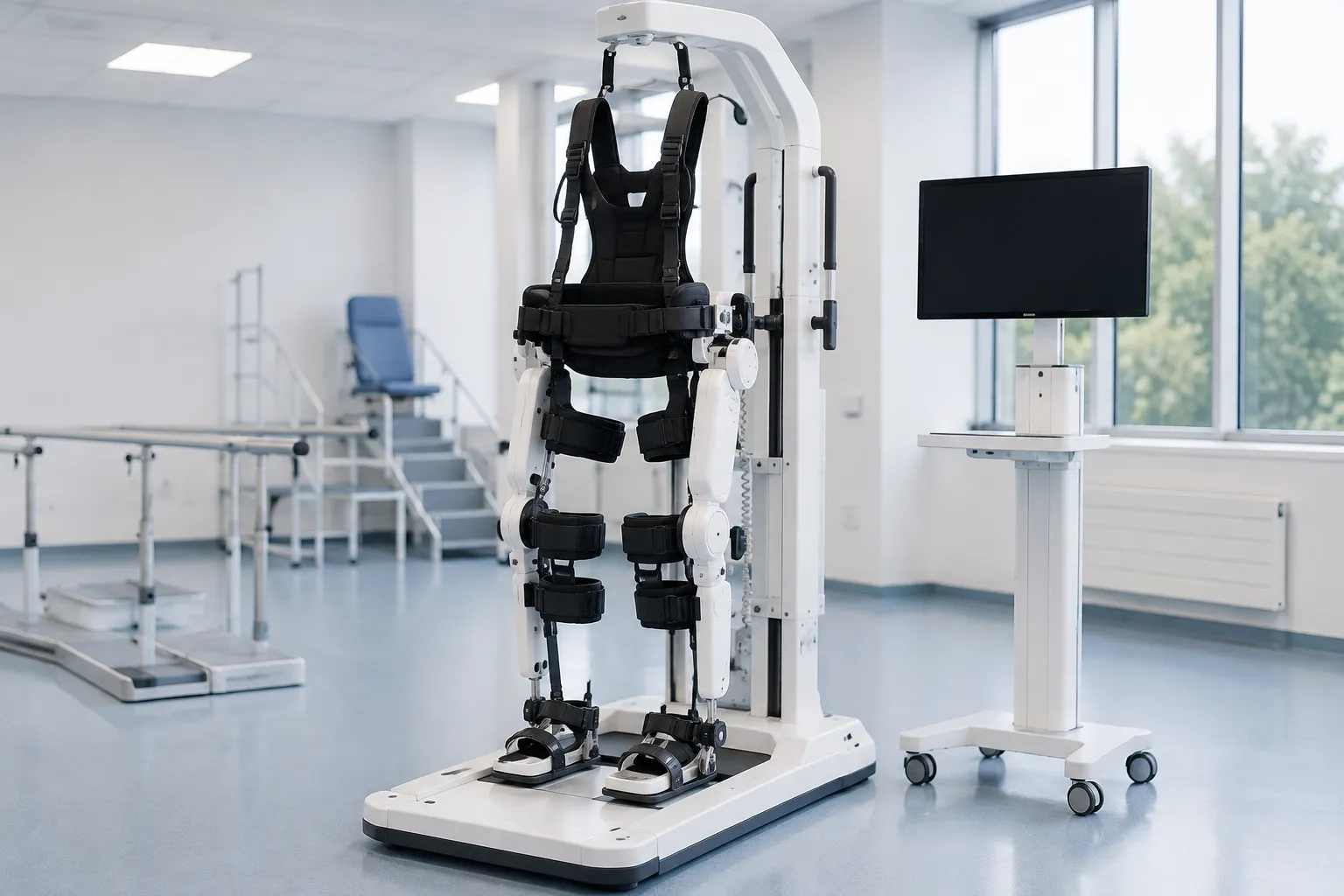
What sets an exoskeleton apart from other rehabilitation equipment is simple: you wear it. Rather than a patient using a machine that sits in the room, the device becomes a powered frame around their own limbs, with motors at the joints that support, assist or drive movement. The person is inside the robot, not operating one at arm's length.
That distinction changes what is possible. A worn exoskeleton can bear a patient's weight and move their legs through a natural walking pattern, letting someone who cannot yet walk unaided practise the real motion of walking, upright and over ground. It is rehabilitation done through the patient's own body, supported rather than substituted, which is a powerful thing for relearning movement.
Why standing and walking matter
The value here is not only that a patient moves, but how. Practising walking upright, bearing weight, and moving the legs in a proper gait pattern engages the body and, for neurological patients, the nervous system in a way that seated or passive exercises cannot. The World Health Organisation frames rehabilitation as helping people regain function and independence, and walking is often close to the heart of that goal.
There are wider benefits to being upright and active, too. Weight-bearing and movement support the body in ways that prolonged sitting does not, and the psychological lift of standing and walking again should not be underestimated. For many patients, that experience is itself a spur to keep working at a long and demanding recovery.
Repetition, but the real thing
Like other rehabilitation robotics, exoskeletons help deliver the intensive, repeated practice that recovery depends on. But they add something particular: the repetition is of genuine, weight-bearing walking rather than a simplified substitute. A patient can complete many correct steps in a session, with the device providing exactly as much support as they need and no more.
-
Weight support — bearing as much of the load as the patient requires.
-
Guided gait — moving the legs through a natural walking pattern.
-
High repetition — many correct steps within a single session.
-
Adaptive assistance — giving less help as the patient regains ability.
The best systems adjust to the person, easing off their support as strength and control return, so the patient does progressively more of the work. That graded challenge — enough help to succeed, little enough to have to try — is exactly the condition in which recovery is thought to happen.
Where it fits in rehabilitation
Exoskeletons are used most in recovery from conditions that affect walking: after a stroke, after spinal cord injury, and in other neurological conditions. Some are designed for use within a therapy session, under close supervision, to deliver intensive gait practice; others are aimed at helping people with lasting mobility loss to stand and move in daily life.
Those are different jobs, and it is worth being clear which a given device is for. A rehabilitation exoskeleton used in therapy is a tool for recovering function; an assistive one used day to day is a tool for living with a lasting condition. Both are valuable, but a hospital choosing a system needs to match it to the purpose it actually has in mind.
The therapist is still the therapist
It would be wrong to picture the exoskeleton doing the rehabilitation on its own. A therapist assesses the patient, sets up and fits the device, decides how much support to give and when to reduce it, watches how the person responds, and adjusts the whole programme accordingly. The device delivers the movement; the therapist directs the therapy.
This matters because a poorly supervised exoskeleton is not a shortcut to recovery — it is just an expensive frame. The judgement about what a particular patient needs, and the encouragement to keep going, remain human contributions the technology cannot replace. Used to amplify a skilled therapist, though, it lets them offer intensive gait practice that their hands alone could never sustain.
A measured view of the evidence
Enthusiasm for exoskeletons should be tempered with honesty about what is known. The technology can deliver intensive, upright, weight-bearing practice, which is valuable, but it is one part of a rehabilitation programme rather than a guaranteed route to walking again. The benefit varies with the condition, the severity and the individual, and the evidence continues to develop.
So the sensible stance is real interest without overselling. For the right patients, as part of a well-designed programme, an exoskeleton can add something no other equipment offers. Treated as a miracle, it will disappoint; treated as a powerful tool with a specific job, it earns its place.
Running the equipment safely
An exoskeleton is a substantial device that a patient is strapped into, so safe use is not optional. Fitting, supervision, maintenance and clear protocols all matter, and staff must be trained to use the system and to handle it if something goes wrong. The MHRA guidance on managing medical devices sets out the disciplines that keep such equipment safe and reliable throughout its life.
None of this is a reason to avoid the technology; it is simply the price of using it well. A rehabilitation service that invests in the training, the protocols and the upkeep gets a safe, dependable tool. One that treats the device as plug-and-play is asking for trouble with a machine that carries real people.
What a hospital should take from this
Exoskeleton technology advances rehabilitation by doing something distinctive: letting patients practise real, upright, weight-bearing walking, intensively and safely, when they could not manage it unaided. For recovery from stroke, spinal injury and similar conditions, that is a genuine addition to what a therapy service can offer.
The decision, as with all this technology, is about fit and honesty: the right patients, the right purpose, a trained team, and realistic expectations of the evidence. Matched carefully and kept firmly under a therapist's direction, a rehabilitation exoskeleton is a striking example of robotics amplifying human care rather than replacing it. That, more than any single feature, is what makes it worth having: not a machine that does the work, but one that lets a person do far more of it.
More from Business
-
Buyers — source approved, well-documented equipment.
-
Suppliers — list your equipment and reach buyers worldwide.
-
Advertise — promote your products and services to a clinical audience.
-
Business overview — explore everything MediGear offers healthcare organisations.
Disclaimer
This article is for general information only and is not clinical or procurement advice. The benefits of exoskeleton-assisted rehabilitation depend on the condition, the patient and the wider therapy programme, and the equipment supports rather than replaces skilled therapy. Confirm current guidance with the relevant authorities and professional bodies. medigear.uk accepts no liability for actions taken on the basis of this content.
Recovery, dependable equipment
Genuine, approved, fully documented rehabilitation and hospital equipment — the dependable foundation good therapy is built on.Frequently Asked Questions
It is a wearable powered frame strapped to the body, with motors at the joints that support, assist or drive movement. Rather than using a machine that sits in the room, the patient is inside the device, which can bear their weight and move their legs through a natural walking pattern. It lets someone who cannot yet walk unaided practise the real motion of walking, upright and over ground.
They let patients practise genuine, upright, weight-bearing walking, intensively and repeatedly, with the device giving exactly as much support as needed. Practising a proper gait pattern engages the body — and, for neurological patients, the nervous system — in a way seated or passive exercises cannot. The best systems ease off their support as the patient improves, so the person does progressively more of the work.
Most in recovery from conditions that affect walking: after a stroke, after spinal cord injury, and in other neurological conditions. Some are designed for intensive gait practice within a supervised therapy session; others aim to help people with lasting mobility loss to stand and move in daily life. Those are different jobs, so a device should be matched to the purpose actually intended.
No. A therapist assesses the patient, fits the device, decides how much support to give and when to reduce it, watches how the person responds, and adjusts the programme. The device delivers the movement; the therapist directs the therapy. A poorly supervised exoskeleton is just an expensive frame — used to amplify a skilled therapist, it offers intensive gait practice their hands alone could never sustain.
No. The technology delivers intensive, upright, weight-bearing practice, which is valuable, but it is one part of a rehabilitation programme rather than a guaranteed route to walking again. The benefit varies with the condition, the severity and the individual, and the evidence continues to develop. The honest stance is real interest without overselling — a powerful tool with a specific job.
Careful fitting, close supervision, clear protocols, maintenance, and staff trained to use the system and handle problems, since a patient is strapped into a substantial device. Guidance on managing medical devices sets out the disciplines that keep such equipment safe and reliable throughout its life. A service that invests in training and upkeep gets a dependable tool; treating it as plug-and-play invites trouble.