
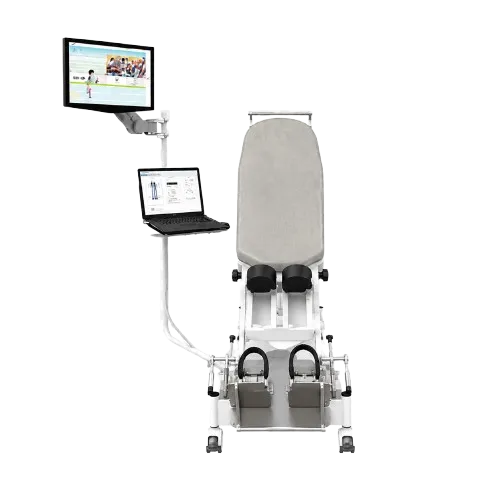
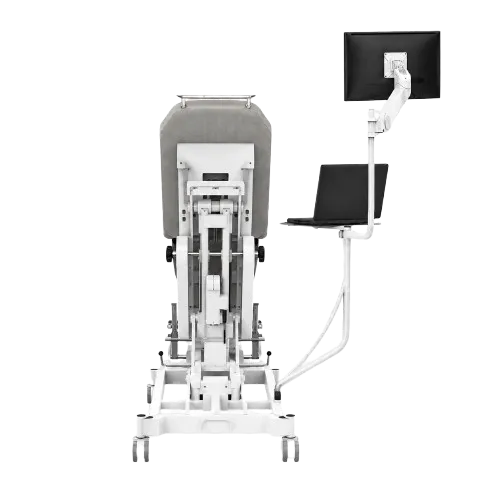
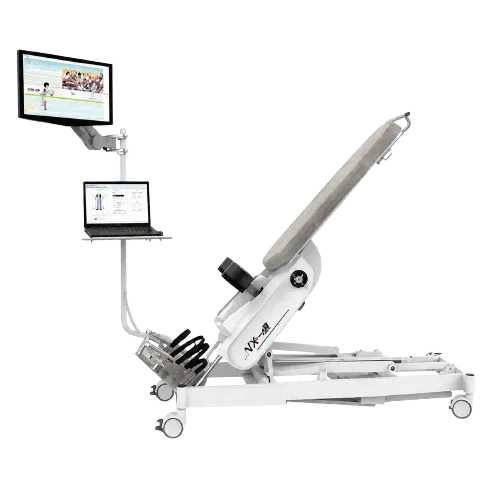
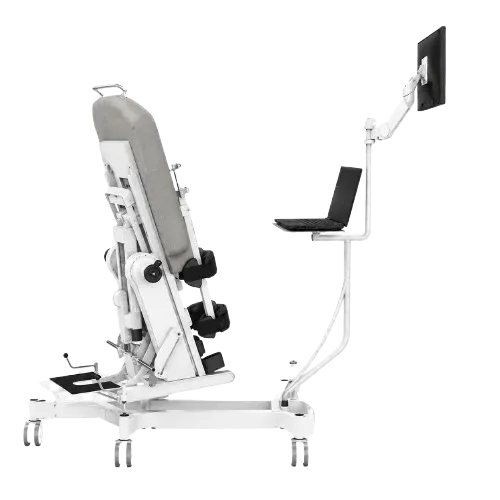
The A1S sits in the early and intermediate phases of the UK neurorehabilitation pathway, in the window where a patient is medically stable but not yet safe to stand or walk with hands-on support alone. In acute stroke units and hyperacute settings, it supports the early-mobilisation principle that underpins the National Clinical Guideline for Stroke and NICE guidance on stroke rehabilitation, bringing graded upright posture and repetitive lower limb movement forward rather than waiting for sitting balance to develop.
In inpatient rehabilitation units and Level 1 and 2 specialist services reporting through UKROC, the platform serves patients with severe hemiplegia, incomplete spinal cord injury, traumatic brain injury, and prolonged disorders of consciousness, where session tolerance is the limiting factor and any extension of upright time has therapeutic value. Critical care and post-ICU rehabilitation teams use equipment of this class to counter intensive-care-acquired weakness, where deconditioning outpaces the patient's readiness for the therapy gym.
Spinal injury centres apply graded verticalisation for orthostatic tolerance, bone density maintenance, and spasticity management as one element of a wider programme. Community and independent neuro-rehabilitation providers, including case-managed placements funded through litigation settlements, use the same platform for chronic-phase work where preserving range and standing tolerance is the goal rather than functional gait recovery.
Physiotherapists operating the system work within HCPC registration and Chartered Society of Physiotherapy standards, with selection typically reviewed by the clinical lead and, in NHS settings, procured through NHS Supply Chain frameworks or local tendering. CQC-registered providers should record the device in their equipment inventory, maintenance schedule, and staff competency framework. University physiotherapy programmes also use verticalisation platforms for teaching early mobilisation techniques and safe patient handling.