
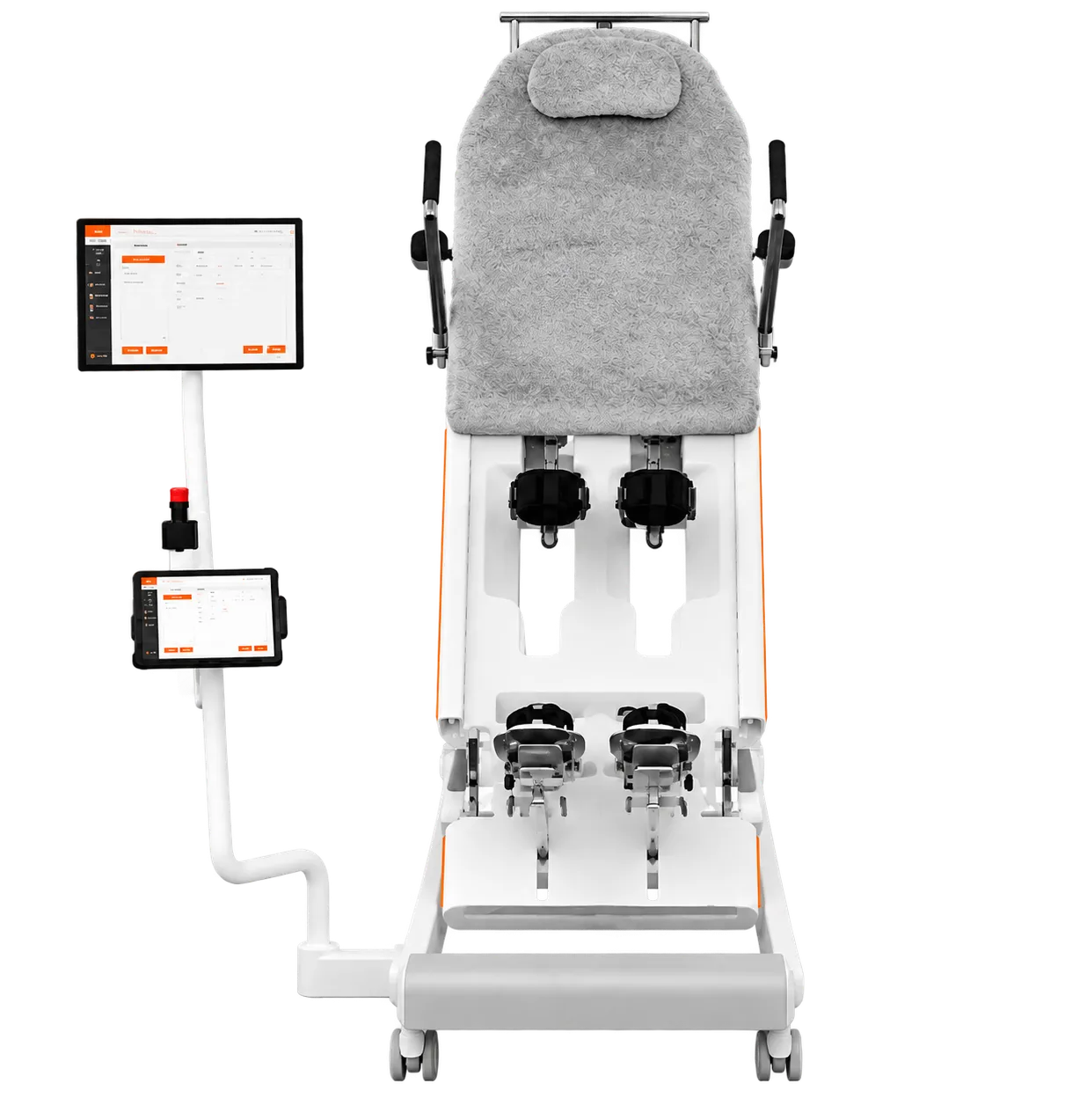
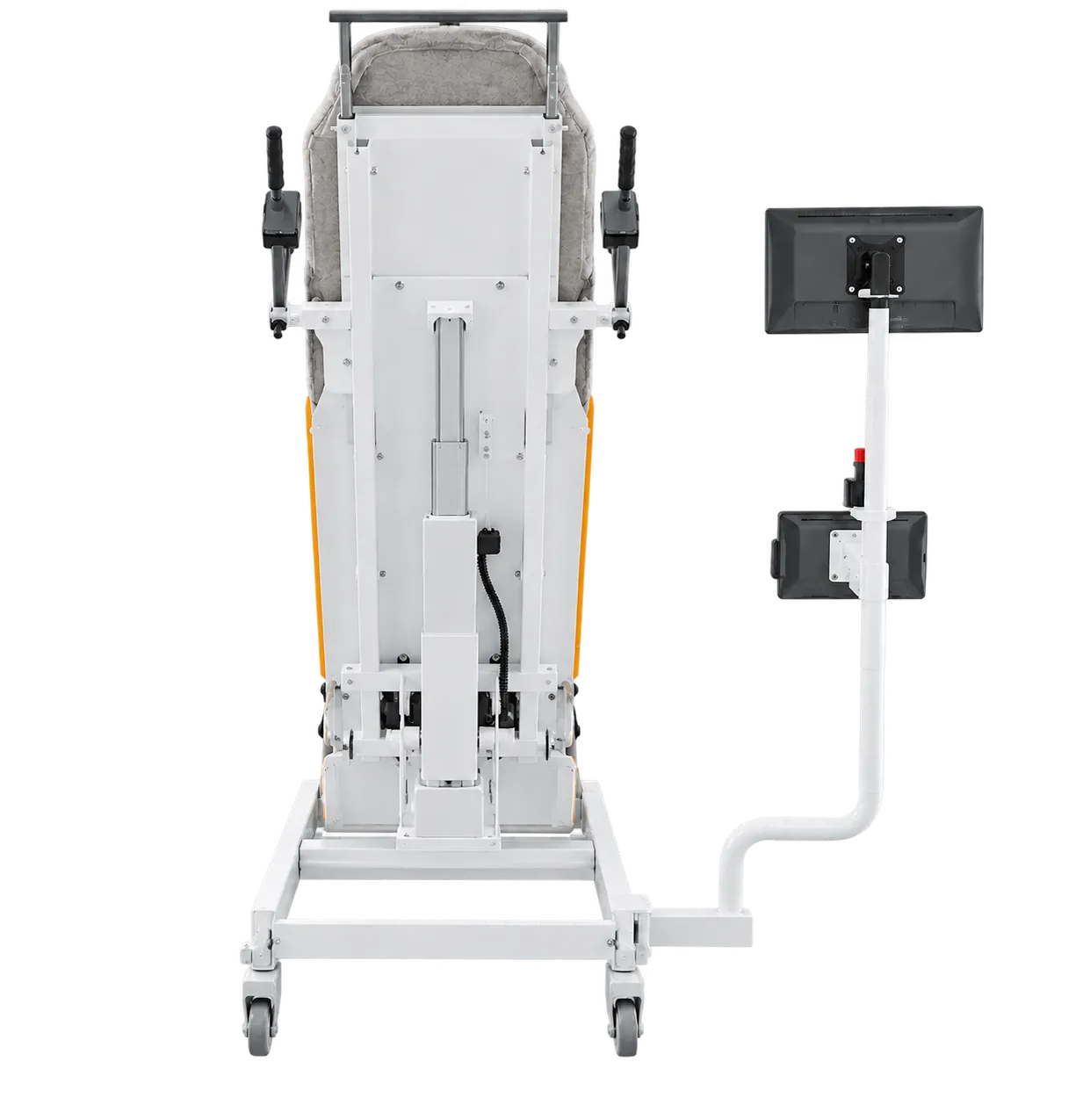
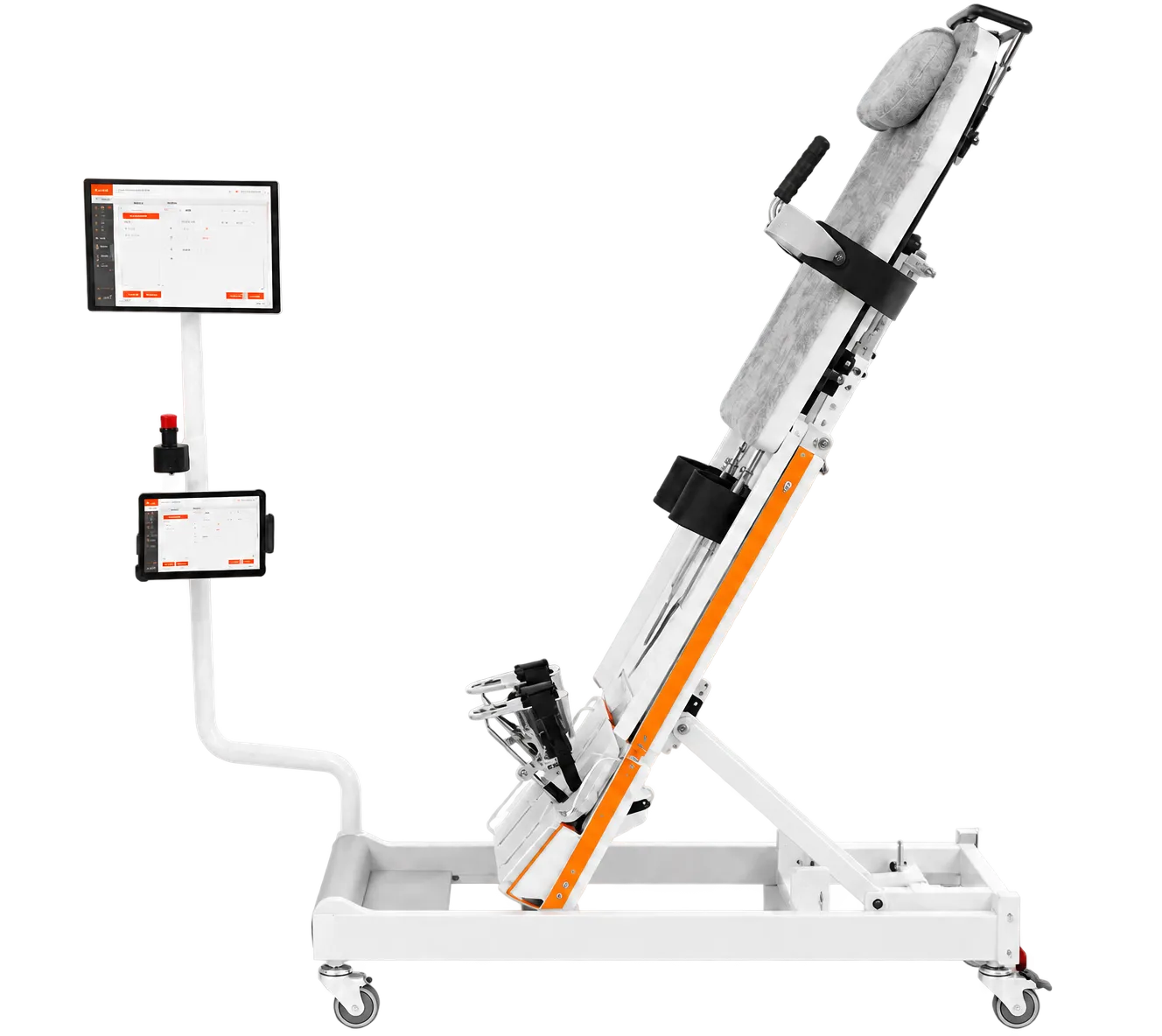
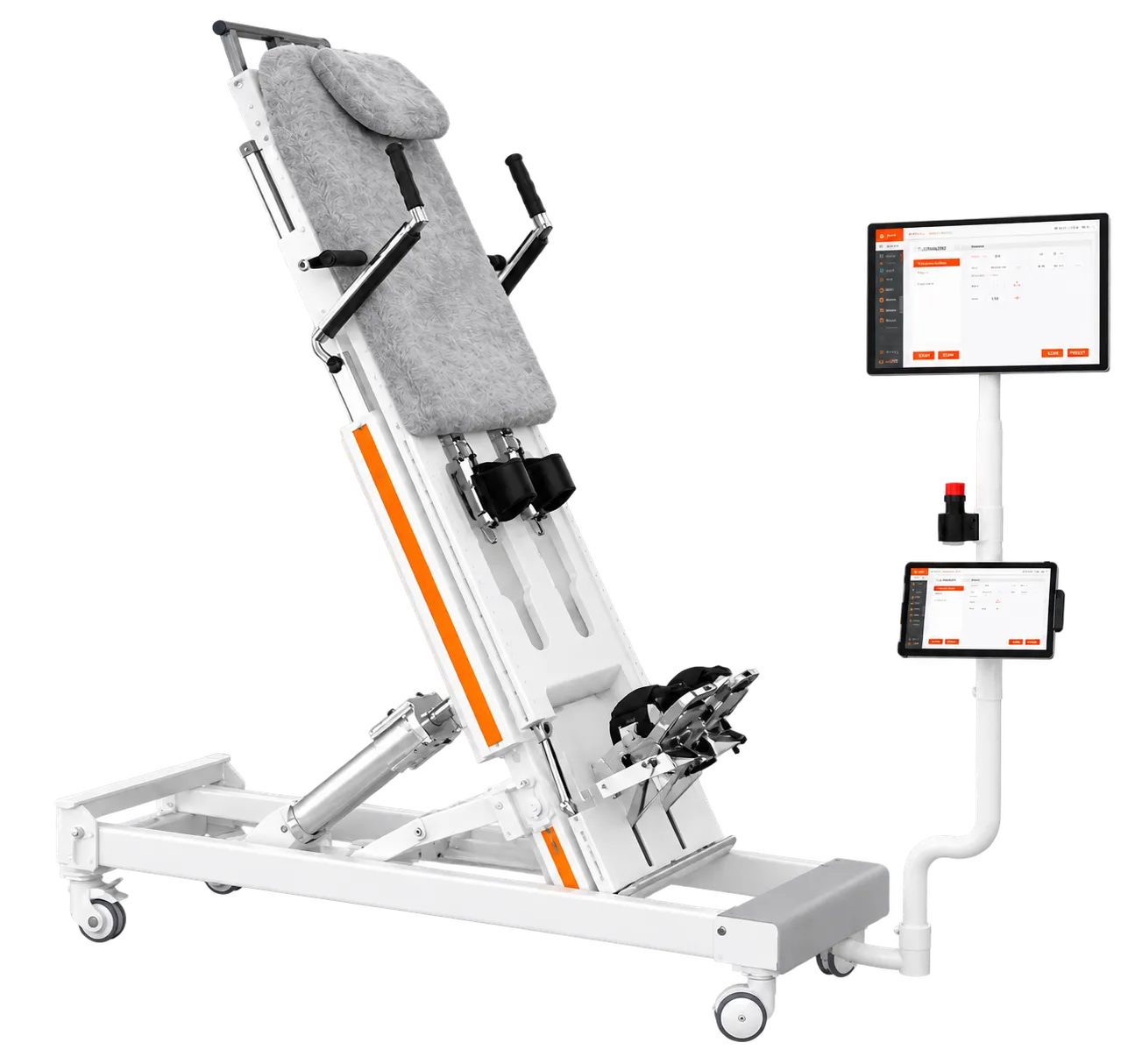
The Yikang A1-2 addresses the stage of neurological rehabilitation where a patient has lost independent standing but retains the potential to regain a walking pattern. In acute and hyperacute stroke units, it supports early upright and stepping work at a point when the patient cannot yet participate in gym-based therapy, aligning departmental practice with the early-mobilisation direction of the National Clinical Guideline for Stroke and NICE guidance on stroke rehabilitation.
Inpatient rehabilitation units and specialist Level 1 and 2 services reporting through UKROC apply platforms of this type to patients with dense hemiplegia, incomplete spinal cord injury, and traumatic brain injury, where session tolerance and postural control are the rate-limiting factors. Spinal injury centres, including the pathways served by units such as Stoke Mandeville and the Robert Jones and Agnes Hunt Hospital, use graduated upright work for orthostatic tolerance, bone density, and spasticity management as part of a wider programme.
Critical care and post-ICU rehabilitation teams use powered movement platforms to counter intensive-care-acquired weakness, where deconditioning runs ahead of a patient's readiness for active exercise. Community and independent neuro-rehabilitation providers, including case-managed placements funded through litigation settlements, apply the same equipment to chronic-phase maintenance where preserving joint range, circulation, and standing tolerance is the therapeutic goal.
Physiotherapists operating the system work within HCPC registration and Chartered Society of Physiotherapy standards, with equipment selection typically reviewed by the clinical lead and, in NHS settings, procured through NHS Supply Chain frameworks or local tendering. CQC-registered providers should record the device in their equipment inventory, maintenance schedule, and staff competency framework. Paediatric application requires separate assessment against cuff and strap adjustment ranges, and should be confirmed with the seller before order.