
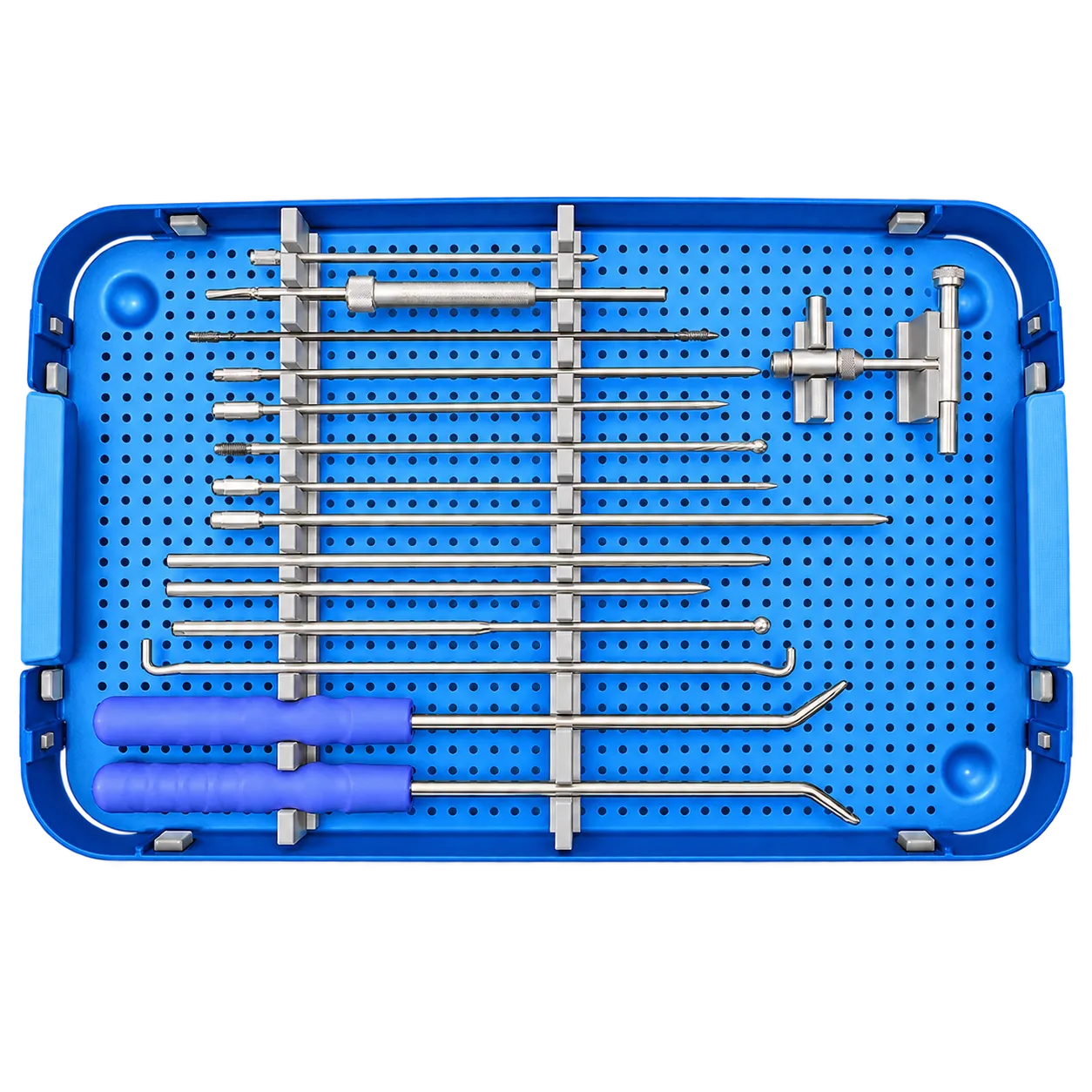
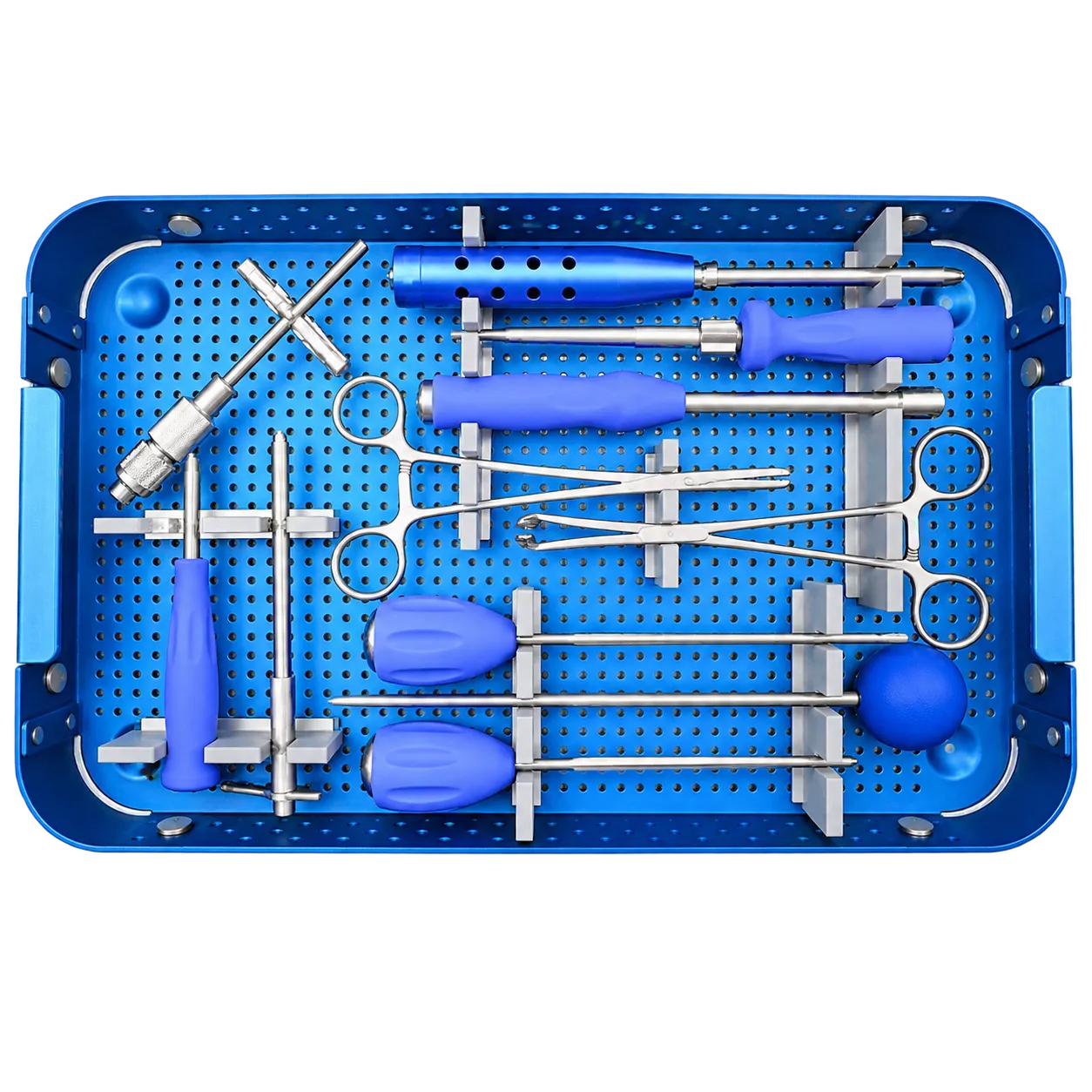
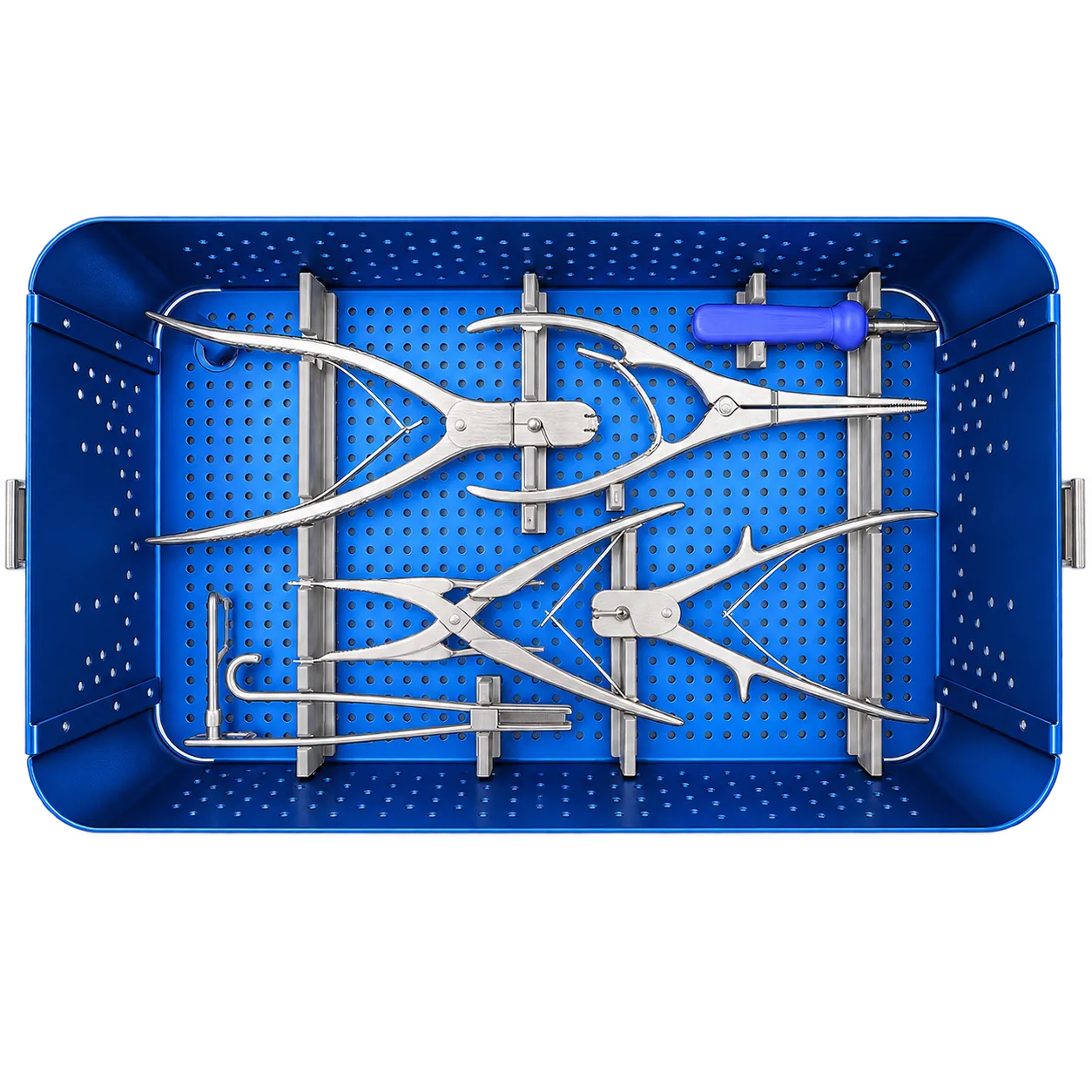
Craniocervical junction instability due to trauma is a primary and significant clinical setting for this instrument set, used wherever a surgeon places XC's Polyaxial Pedicle Screw system during an occipitocervical fixation procedure following a C0 to C2 level injury requiring surgical stabilisation. Procurement governance matters as much as clinical fit: NHS spine units evaluating occipitocervical fixation construct options need this set's complete specification confirmed and reliably stocked, which is why resolving the outstanding item-list gap with Medigear.uk matters before tender submission.
Inflammatory disease causing atlantoaxial or craniocervical instability forms a second important clinical setting, where confirmed screw insertion, rod contouring, and rod-securing instruments support the full occipitocervical construct workflow once instability develops at this junction of the spine and conservative options are exhausted for the patient.
Congenital craniocervical junction malformation represents a third important and clinically significant setting, where structural abnormality of the occiput, atlas, or axis may require occipitocervical fixation, supported by this set's distraction and screw channel preparation instruments during the procedure itself and subsequent recovery.
Tumour involving the craniocervical junction makes up a fourth important and serious clinical setting, where resection of a lesion affecting this region may require reconstruction with an occipitocervical construct, supported by this set's confirmed rod and screw handling instruments throughout the procedure. Medigear.uk supports single or small-quantity ordering of this instrument set alongside the larger bulk distributor accounts it also serves, so a specialist clinic is not required to commit to trust-scale volumes to access it for one planned case.