
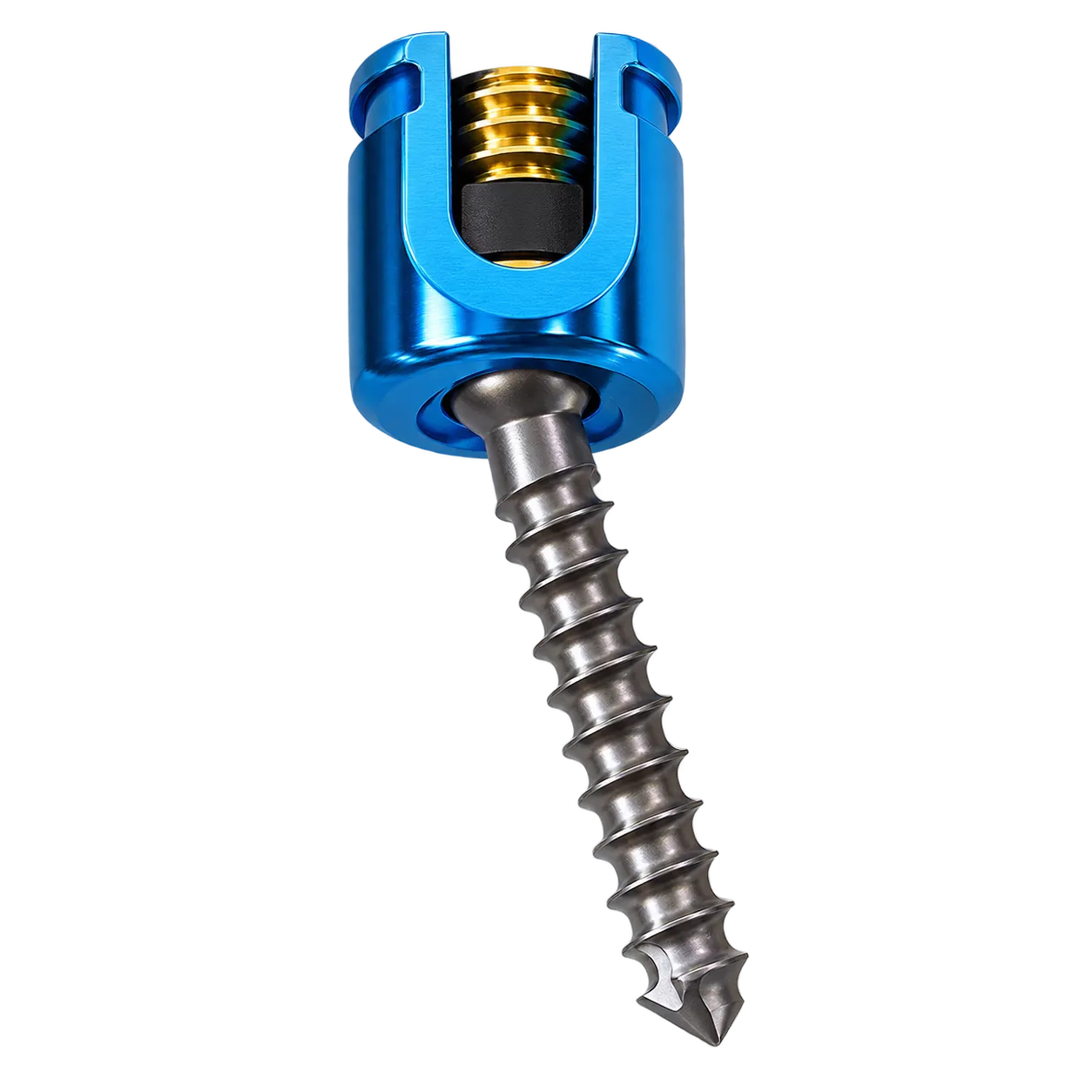
Craniocervical junction instability due to trauma is a primary and significant clinical setting for this screw, used within an occipitocervical construct to stabilise the junction between the skull and cervical spine following a C0 to C2 level injury requiring surgical fixation. Procurement governance matters here as much as clinical fit: NHS spine units evaluating occipitocervical fixation construct options need this screw stocked reliably alongside its matched occipital plate component, which is where Medigear.uk's role as a coordinated supplier matters to tender decisions and theatre list planning.
Inflammatory disease causing atlantoaxial or craniocervical instability forms a second important and increasingly recognised clinical setting, where general clinical literature documents rheumatoid arthritis and related conditions as a recognised indication for occipitocervical fixation once instability develops at this junction of the spine and conservative options are exhausted.
Congenital craniocervical junction malformation represents a third important clinical setting, where structural abnormality of the occiput, atlas, or axis may require occipitocervical fixation to achieve stability that the native anatomy cannot otherwise provide long term, particularly as skeletal maturity progresses.
Tumour involving the craniocervical junction is a fourth important clinical setting, where resection of a lesion affecting this region may compromise structural stability, requiring reconstruction with an occipitocervical construct following the procedure and subsequent recovery. Medigear.uk supports single or small-quantity ordering of this screw alongside the larger bulk distributor accounts it also serves, so a specialist clinic is not required to commit to trust-scale volumes to access it for a single planned procedure.