
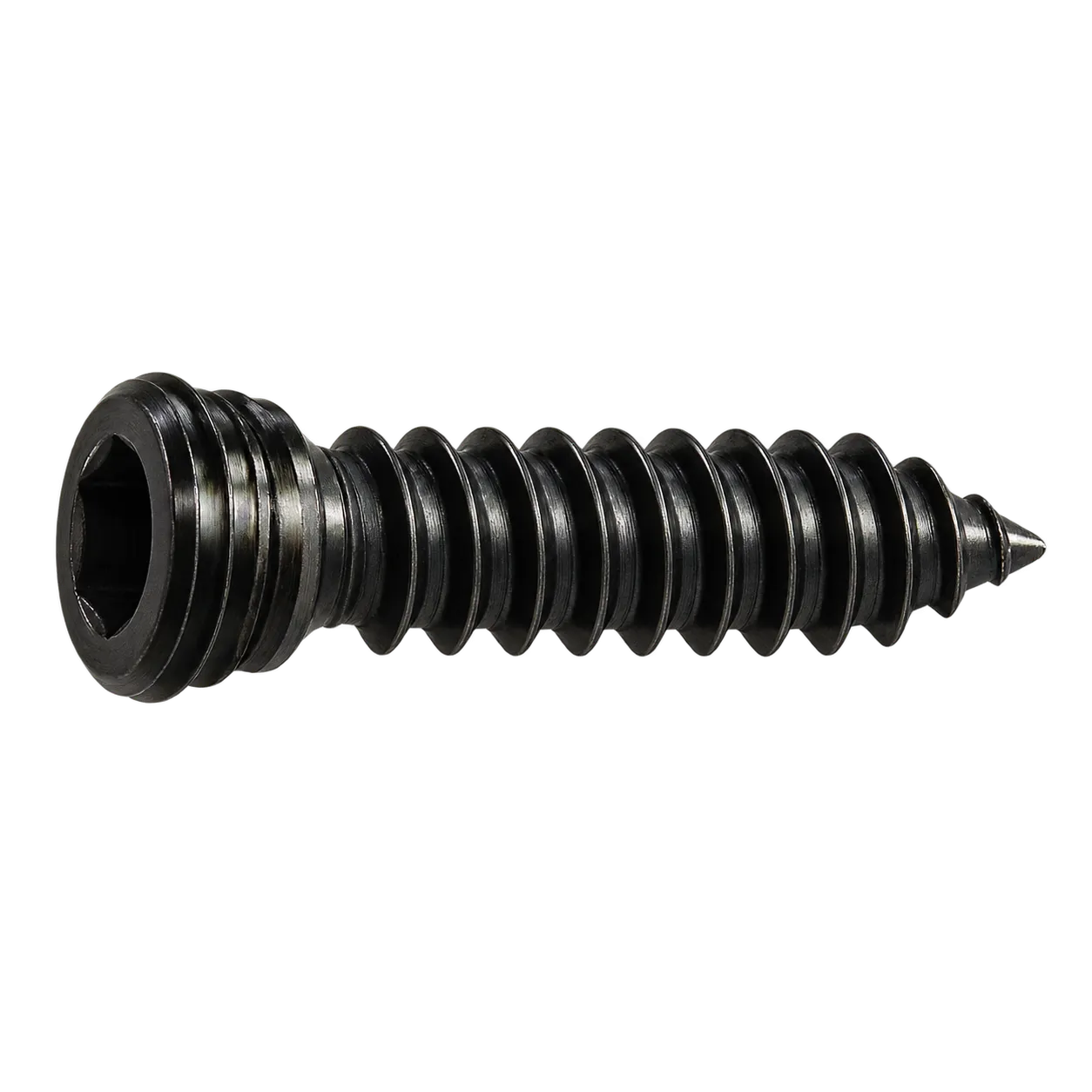
Degenerative cervical spinal disc disease is a primary clinical setting for these screws, used wherever a surgeon places XC's Cervical Titanium Cage-III or Cage-IV and requires integrated screw fixation into the adjacent vertebral bodies during an anterior cervical procedure. Procurement governance matters here as much as clinical fit: NHS spine units evaluating titanium cervical cage fixation options need these screws stocked reliably alongside the matched cage, which is where Medigear.uk's role as a coordinated supplier matters to tender decisions and theatre list planning.
Cases favouring a reduced construct profile form a second clinical setting, where integrated cage screw fixation may reduce or remove the need for a separate anterior cervical plate. However, this specific clinical benefit has not been confirmed for this exact XC reference and should be discussed with the surgical team on a case-by-case basis before use.
Cervical myelopathy and radiculopathy represent a third clinical setting, where the underlying cage restores disc height and decompresses affected neural structures at the treated level, with these screws providing additional fixation stability during the fusion process and subsequent recovery.
Revision anterior cervical surgery makes up a fourth important clinical setting, where a surgeon extending or revising a prior cervical construct may need matched screws for a titanium cage placed as part of the revised construct. Medigear.uk supports single or small-quantity ordering of these screws alongside the larger bulk distributor accounts it also serves, so a specialist clinic is not required to commit to trust-scale volumes to access them for a single case.