
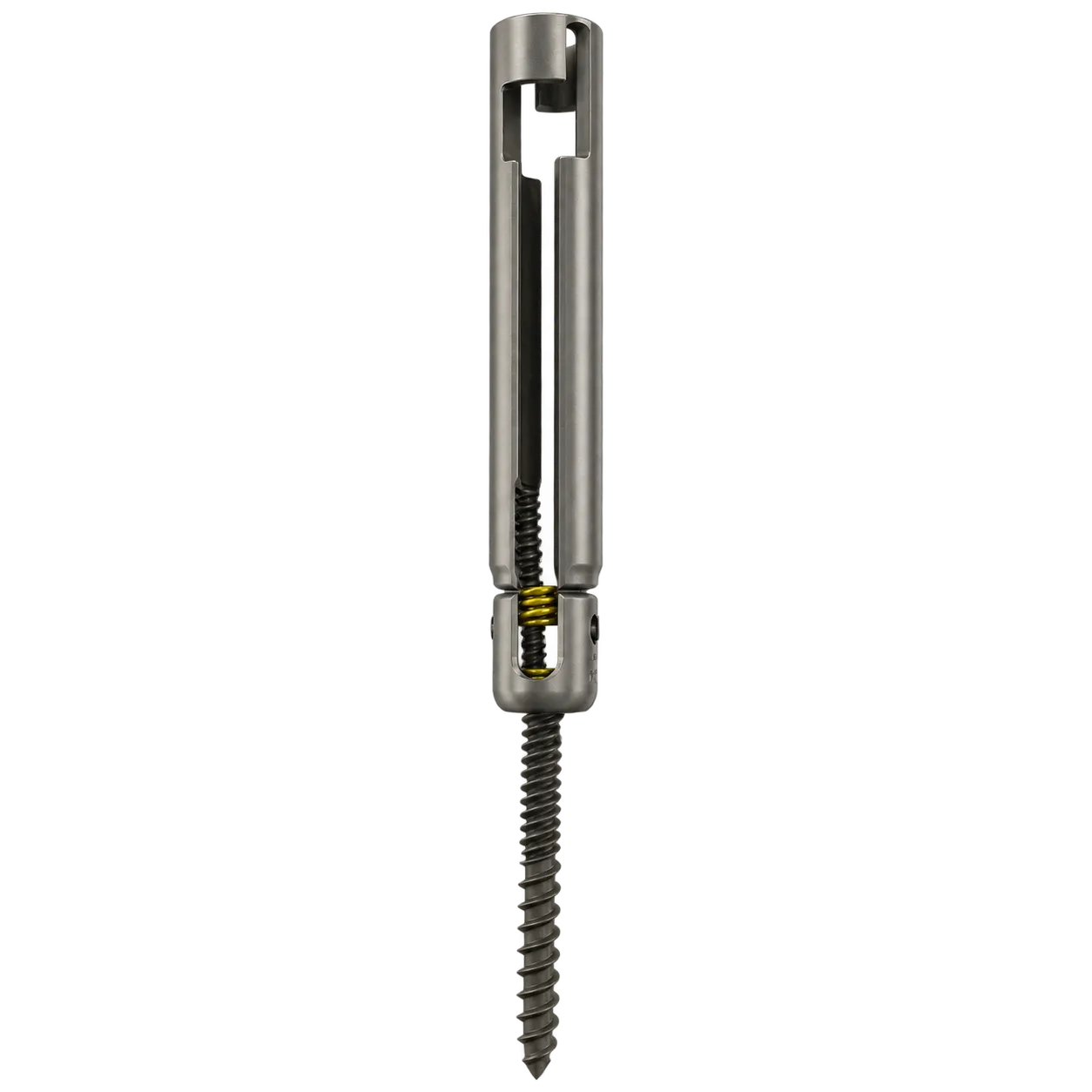
Minimally invasive thoracolumbar degenerative disease forms a primary setting for this screw, used across percutaneous constructs for conditions such as spondylolisthesis, stenosis, and degenerative disc disease where a smaller surgical footprint is preferred. Procurement governance matters here as much as clinical fit: NHS spine units evaluating the wider MIS system need the screw stocked reliably across its full diameter and length range alongside the matched rod, nut, and instrument set components, which is where Medigear.uk's role as a combined component supplier matters to tender decisions.
Thoracolumbar trauma represents a second setting, where percutaneous screw placement under fluoroscopic guidance supports rapid stabilisation with reduced soft tissue disruption compared with open fixation. Medigear.uk stocks all four diameters across the full length range so surgical teams are not constrained to a narrow size selection when treating fracture patterns that vary by level and bone quality.
Revision surgery represents a third setting, where a prior open or percutaneous construct has failed, and a surgeon selects this standard screw for the revised fixation, distinct from choosing the Cement-Augmented Fenestrated Screw where bone quality specifically calls for cement support. Medigear.uk can supply either screw type alongside matched rod and nut stock depending on the surgical plan.
Private and day-case surgical centres make up a fourth setting, as minimally invasive spine procedures are increasingly suited to ambulatory and specialist private settings given their reduced surgical exposure compared with open fixation. These buyers typically order in smaller batches than a trust-wide contract, and Medigear.uk supports single or small-quantity ordering of the screw alongside the bulk distributor accounts it also serves, so a specialist clinic is not required to commit to trust-scale volumes to access the matched component.