
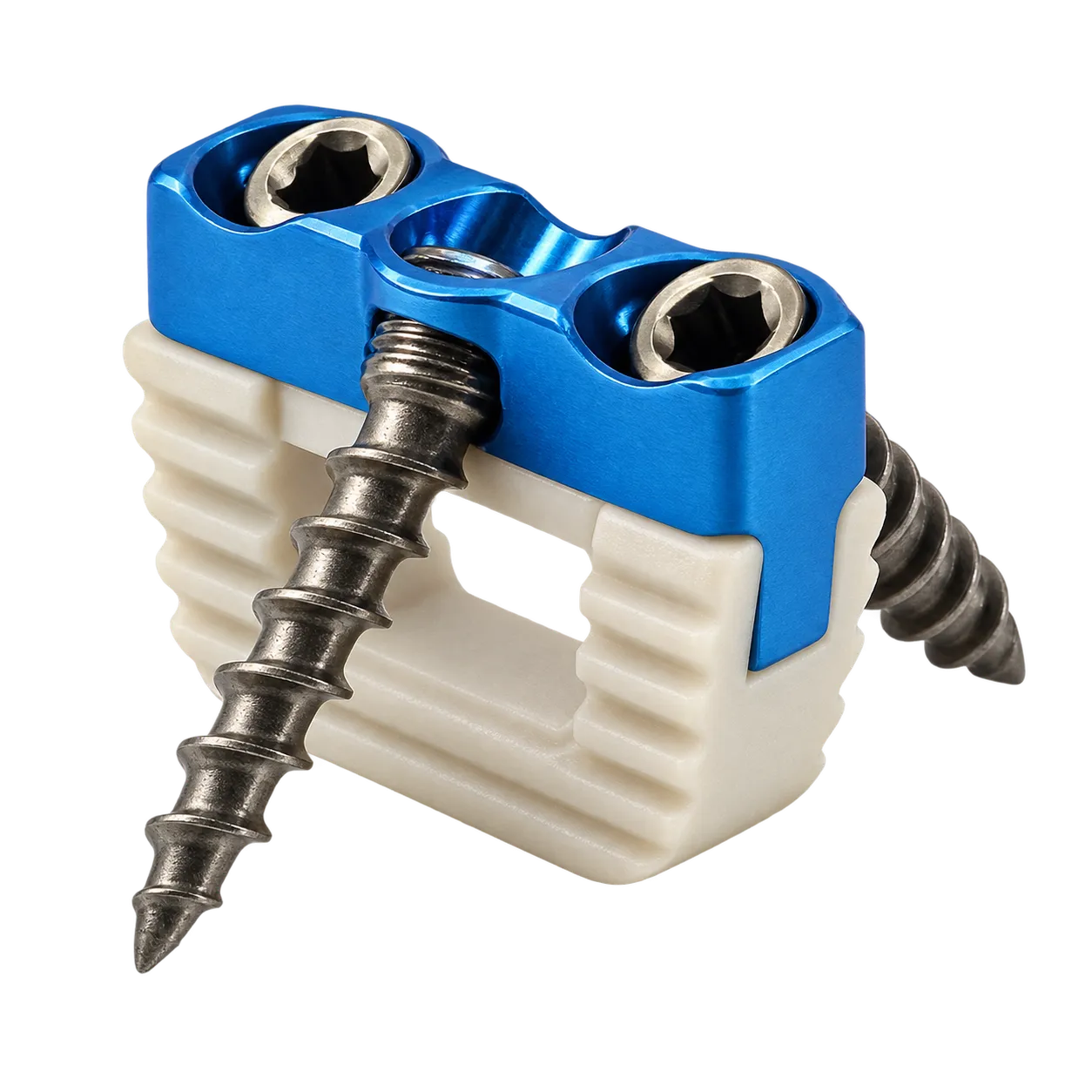
Degenerative cervical disc disease is a primary clinical setting for this cage, used during anterior cervical discectomy and fusion, where a surgeon selects a zero-profile device for its integrated fixation and reduced hardware profile, choosing the footprint suited to the patient's vertebral body dimensions. Procurement governance matters here as much as clinical fit: NHS spine units evaluating zero-profile cervical options need this cage stocked reliably across both footprints and the full height range, which is where Medigear uk's role as a stocking supplier matters to tender decisions and theatre list planning..uk's role as a stocking supplier matters to tender decisions and theatre list planning.
Cases with larger or smaller vertebral body anatomy form a second clinical setting, where the two confirmed footprints let a surgeon match cage dimensions more closely than a single fixed footprint would allow, while retaining the same height range either way across the patient population being treated.
Cases where dysphagia risk is a particular concern represent a third important clinical setting, where general clinical literature associating zero-profile devices with lower postoperative dysphagia rates than traditional cage-and-plate constructs may inform a surgeon's device choice for a specific patient's risk profile and overall health status.
Multilevel cervical procedures make up a fourth important clinical setting, where consistent height options across both footprints may simplify planning when different levels within the same construct call for different footprint sizes to match varying anatomy. Medigear.uk supports single or small-quantity ordering of this cage alongside the larger bulk distributor accounts it also serves, so a specialist clinic doesn't need to commit to trust-scale volumes to access it.