
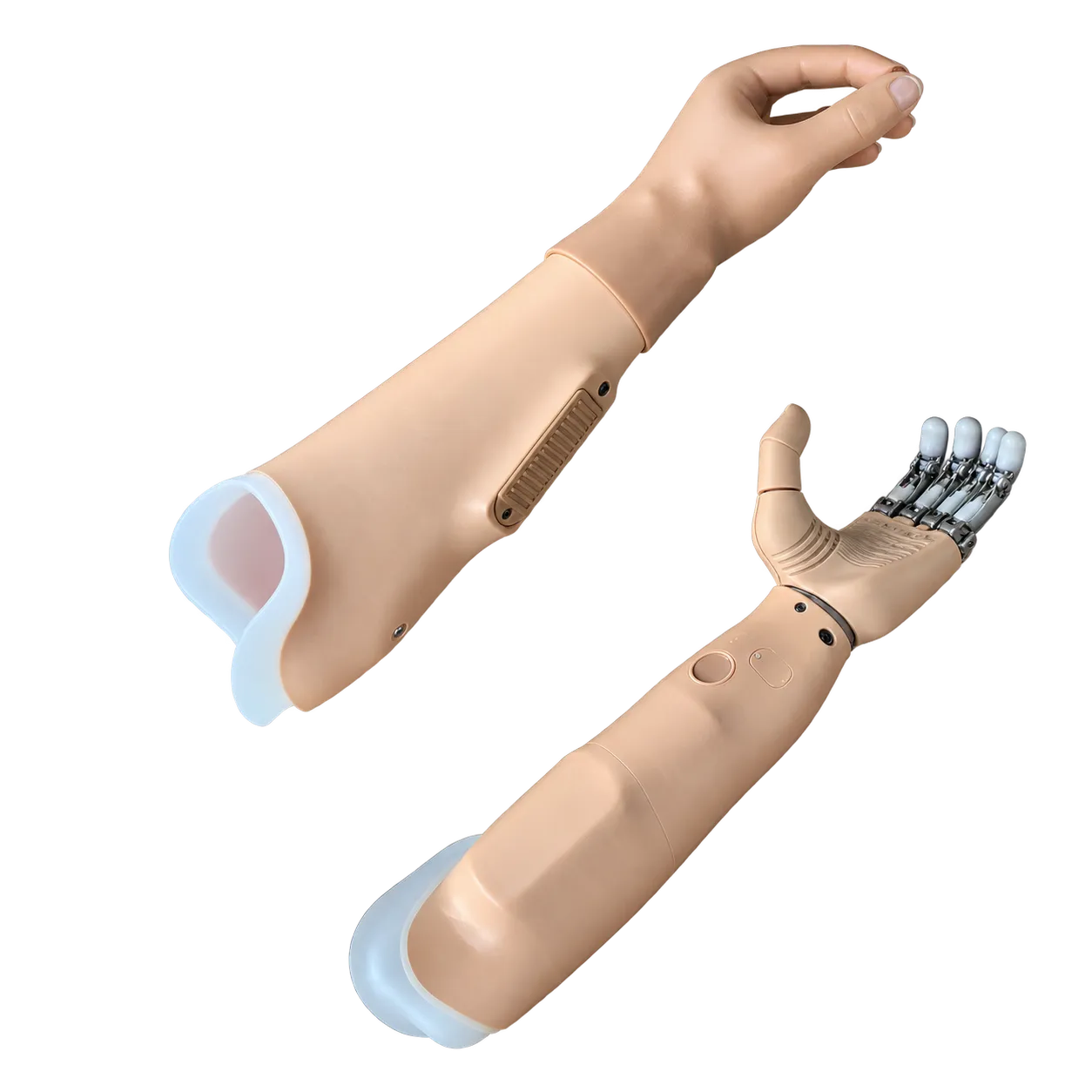
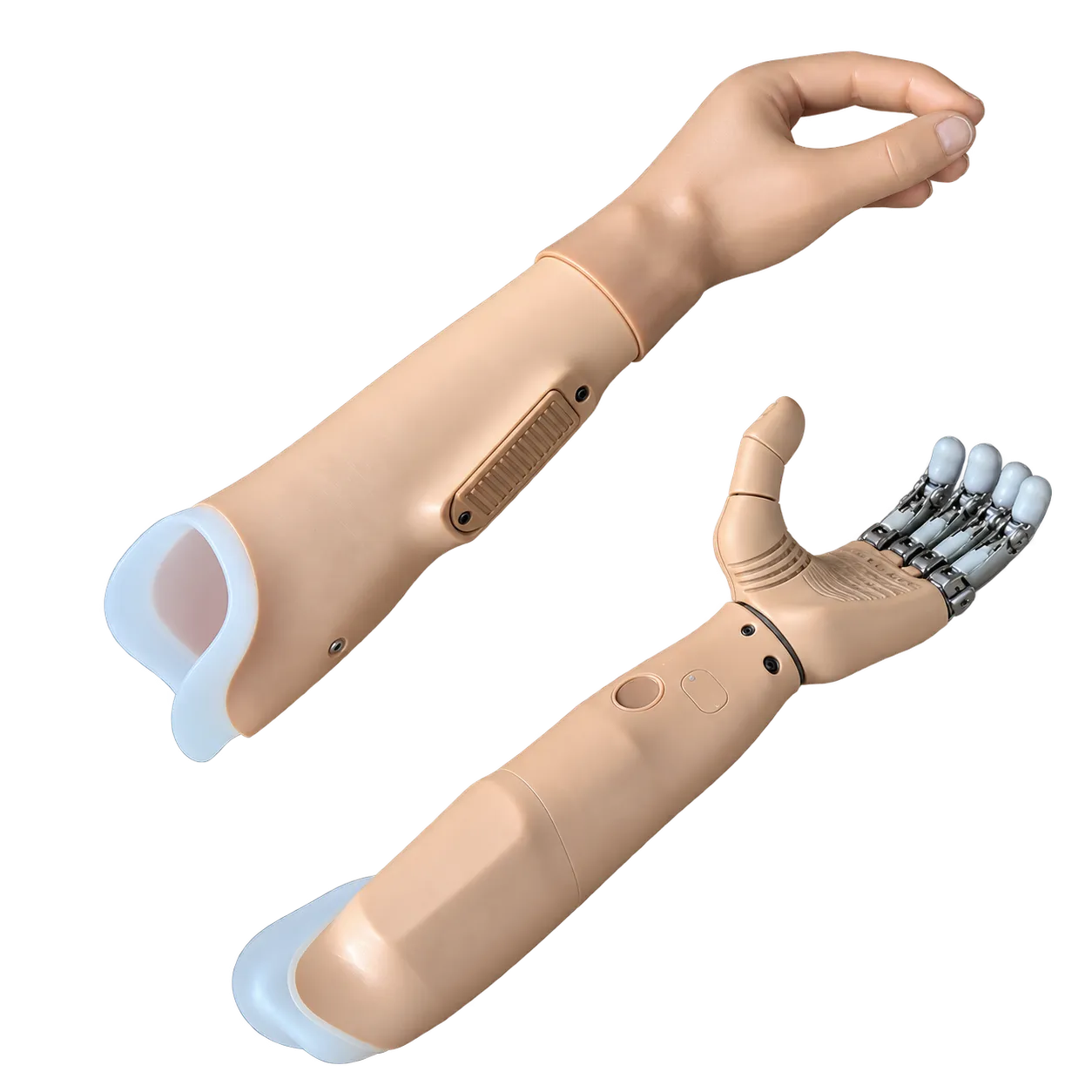
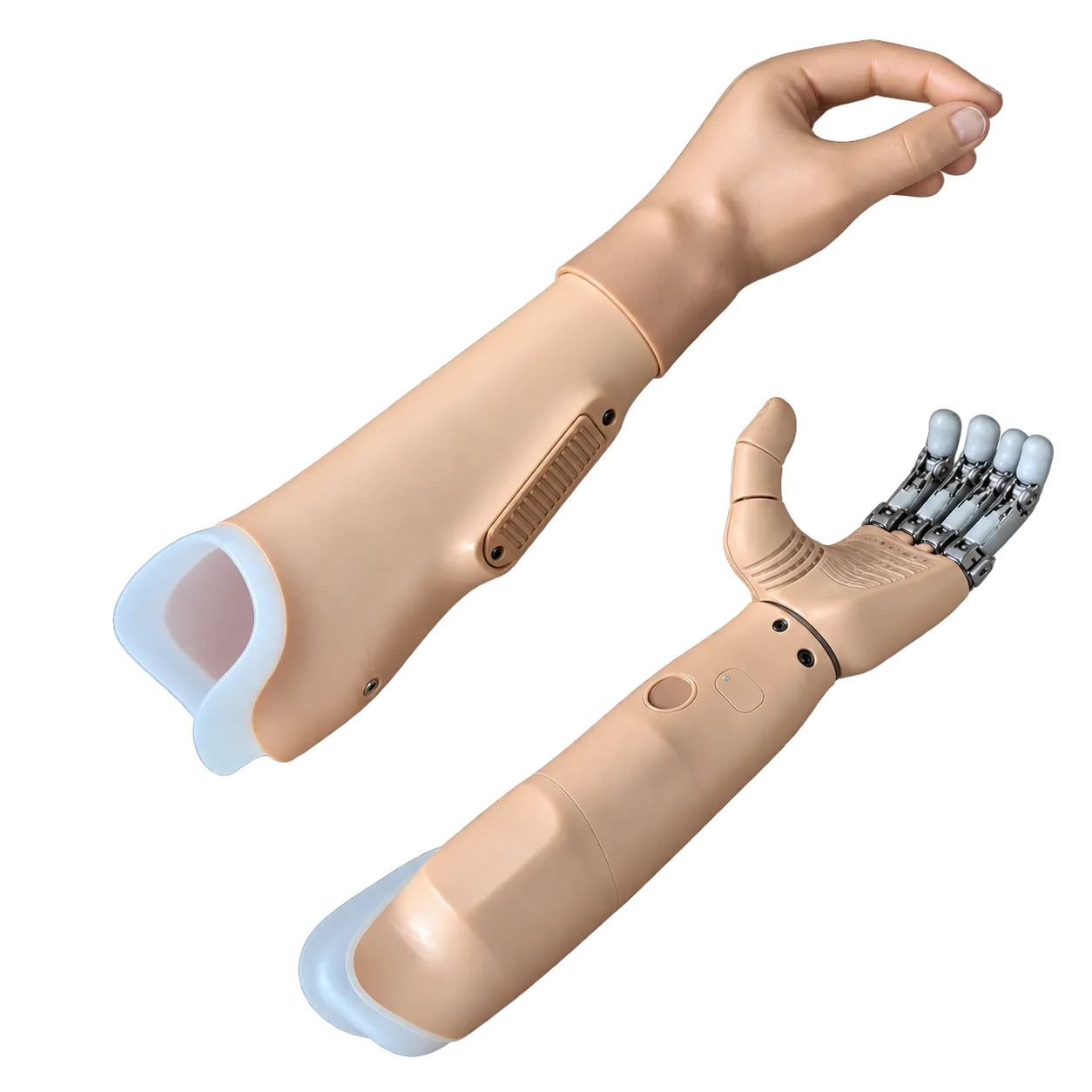
The W-ULSC belongs in prosthetic and orthotic workshops, limb-fitting centres and upper limb rehabilitation services that fit myoelectric and smart hands. Two groups use it: the prosthetists and technicians who make and fit the socket, and the person with upper limb loss who wears it every day.
The fitting workflow begins with the wearer's arm. A prosthetist assesses the residual limb, and the socket is formed in resin and carbon fibre to follow its shape and condition. The build then turns towards the hand: as a myoelectric hand socket it holds a hand driven by muscle signals from the limb, and as a smart hand socket it carries a smart hand. Because every step answers to the same arm, the team moves from assessment to a fitted hand without starting again for the second stage.
Workshops that want to own the whole sequence can take the one-on-one training Wonderful offers in the socket technique. A technician who learns the method in a single-trainer session can repeat it for each new wearer, so the unit keeps socket making alongside its fitting work.
For the wearer, a socket made around their own arm is the point where the prosthesis meets the body. Rehabilitation sessions with an occupational therapist then concentrate on using the hand: reaching for a cup, holding a letter flat, steadying a jar lid during a two-handed task.
Review appointments follow the same logic. When the condition of a residual limb changes over months of wear, a fresh W-ULSC can be made around the arm as it now is. The fitting team repeats the same sequence it learned, starting again from the arm.