
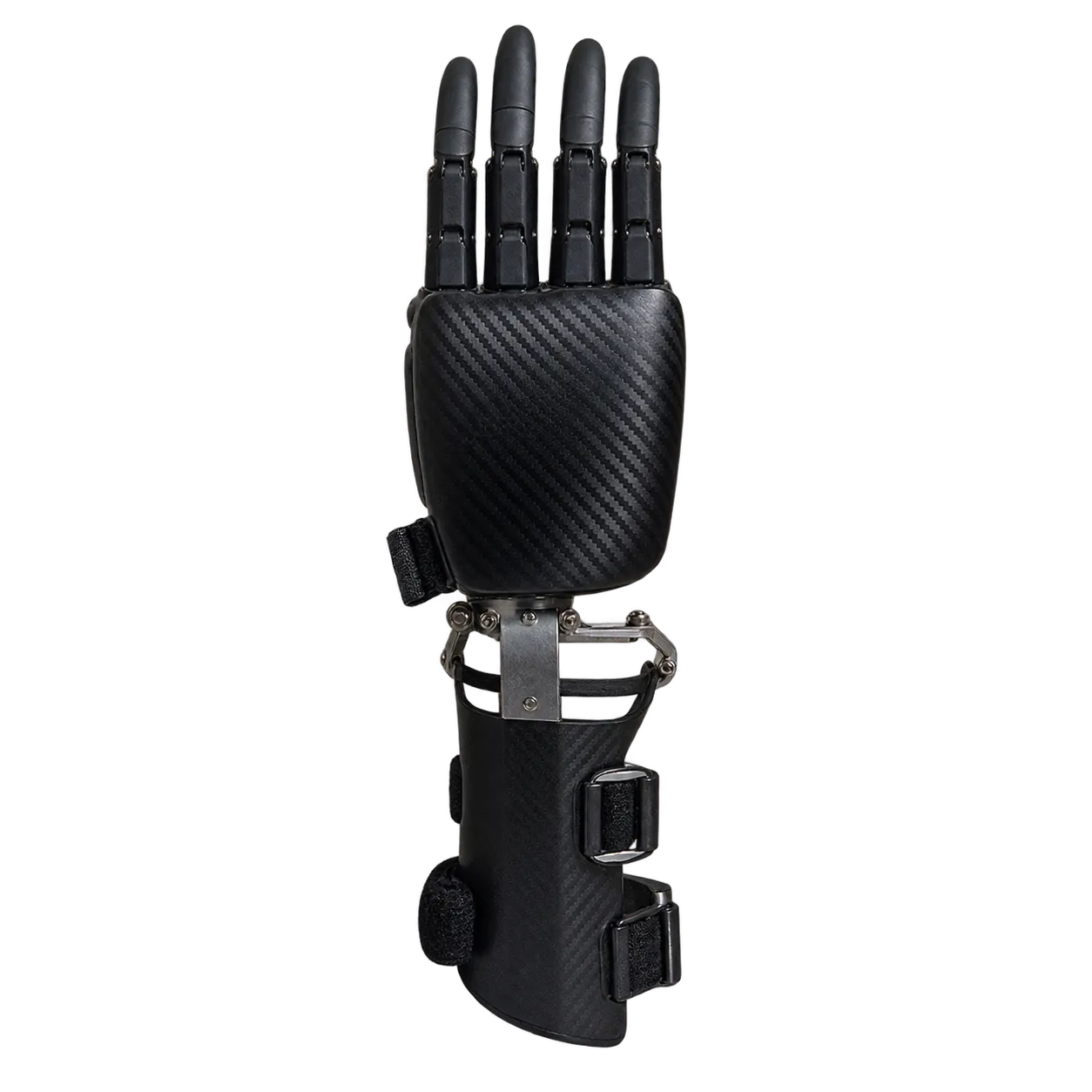
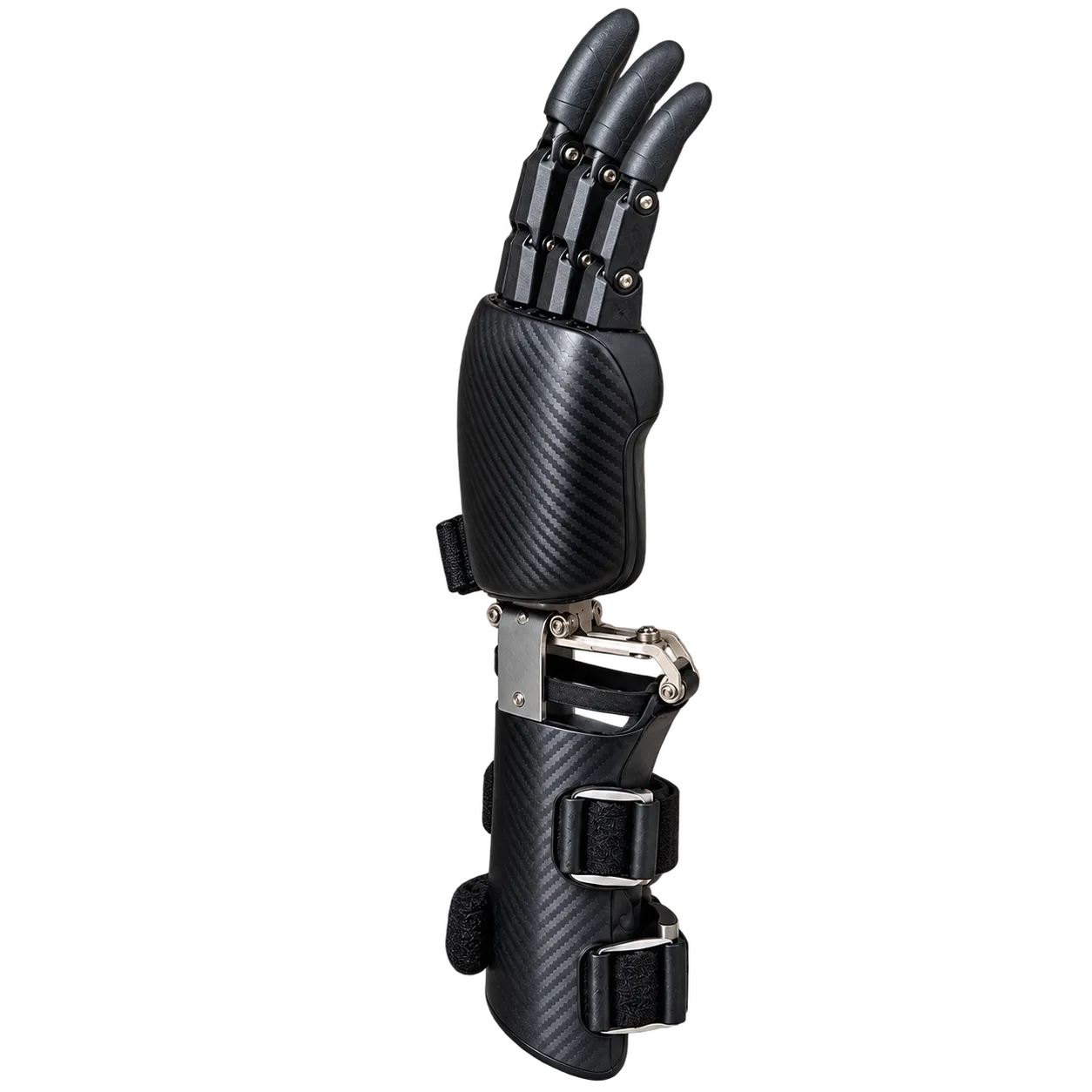
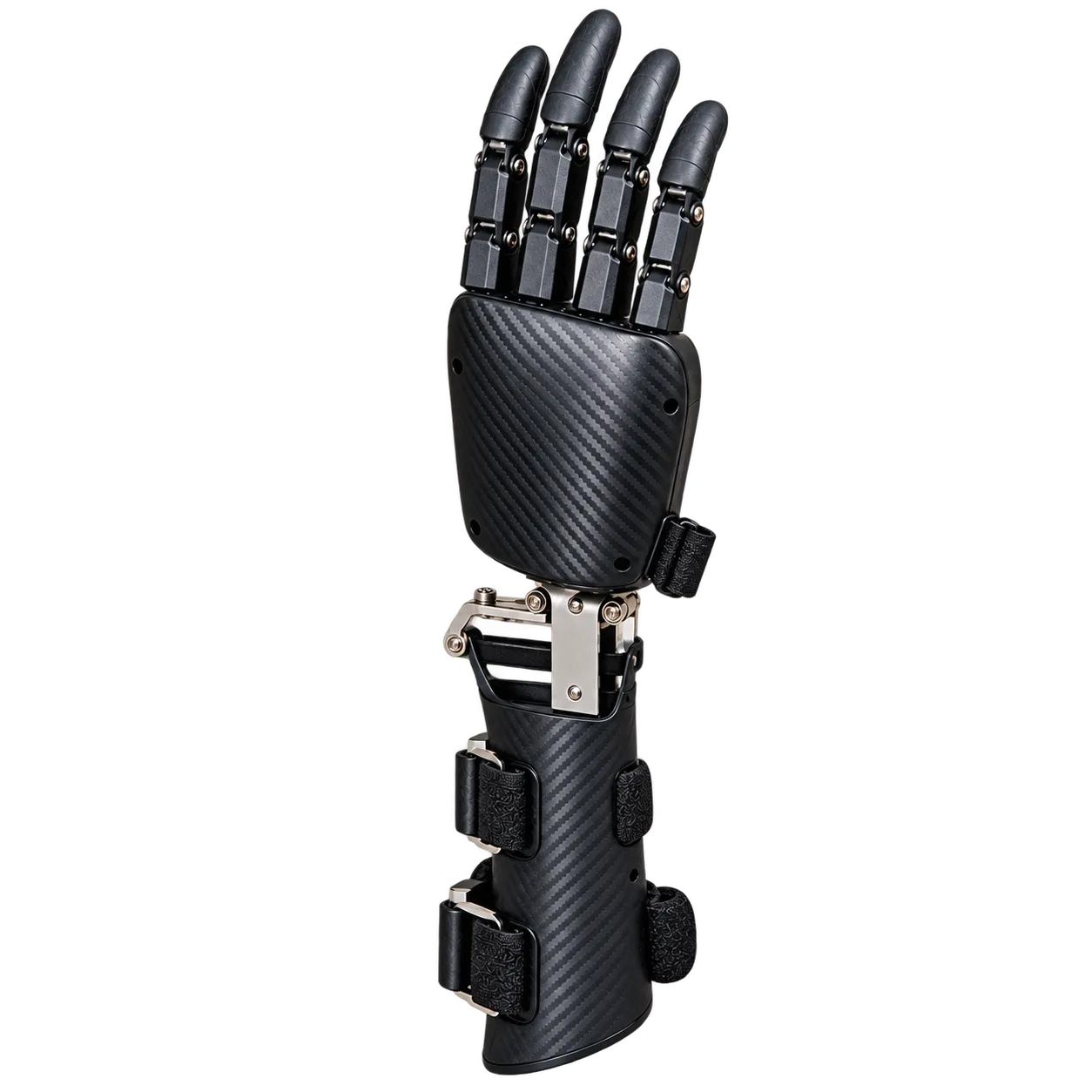
Prosthetic and orthotic clinics, limb-fitting centres and rehabilitation departments that make upper-limb prostheses for individual wearers are the settings for the W-FH. Because the hand is customised according to the residual limb, it suits services where a prosthetist measures each wearer and plans a device around that person. Prosthetists and technicians lead the fitting, and occupational therapists bring the hand into daily routines once it is worn.
The case for this hand rests on its fingers. Every joint on all five of them works, so therapy can concentrate on finger posture as well as on whole-hand placement. A therapist can show a wearer how a finger curves around a cup handle and how the thumb and fingers settle on either side of a bottle. The segments of each digit can follow the edge of a plate or the spine of a book. Each of those positions depends on joints working throughout the finger, which is the defining property of the W-FH.
At home and at work, the same articulation serves ordinary handling. A wearer can carry a bag by its handles with the fingers curved through them, steady a letter flat on a desk, or rest the hand around a mug while the sound hand pours. Tasks of this kind need the fingers to take a shape that suits the object, and the W-FH has the joints to do that on every digit.
The custom build shapes how clinics plan orders. Each hand is made for one named wearer, so a service orders a W-FH for a specific person once that person's residual limb has been measured. For wearers who value a full five-fingered form with working joints, and for teams who already build every prosthesis to the individual, the hand fits the existing pattern of care.