
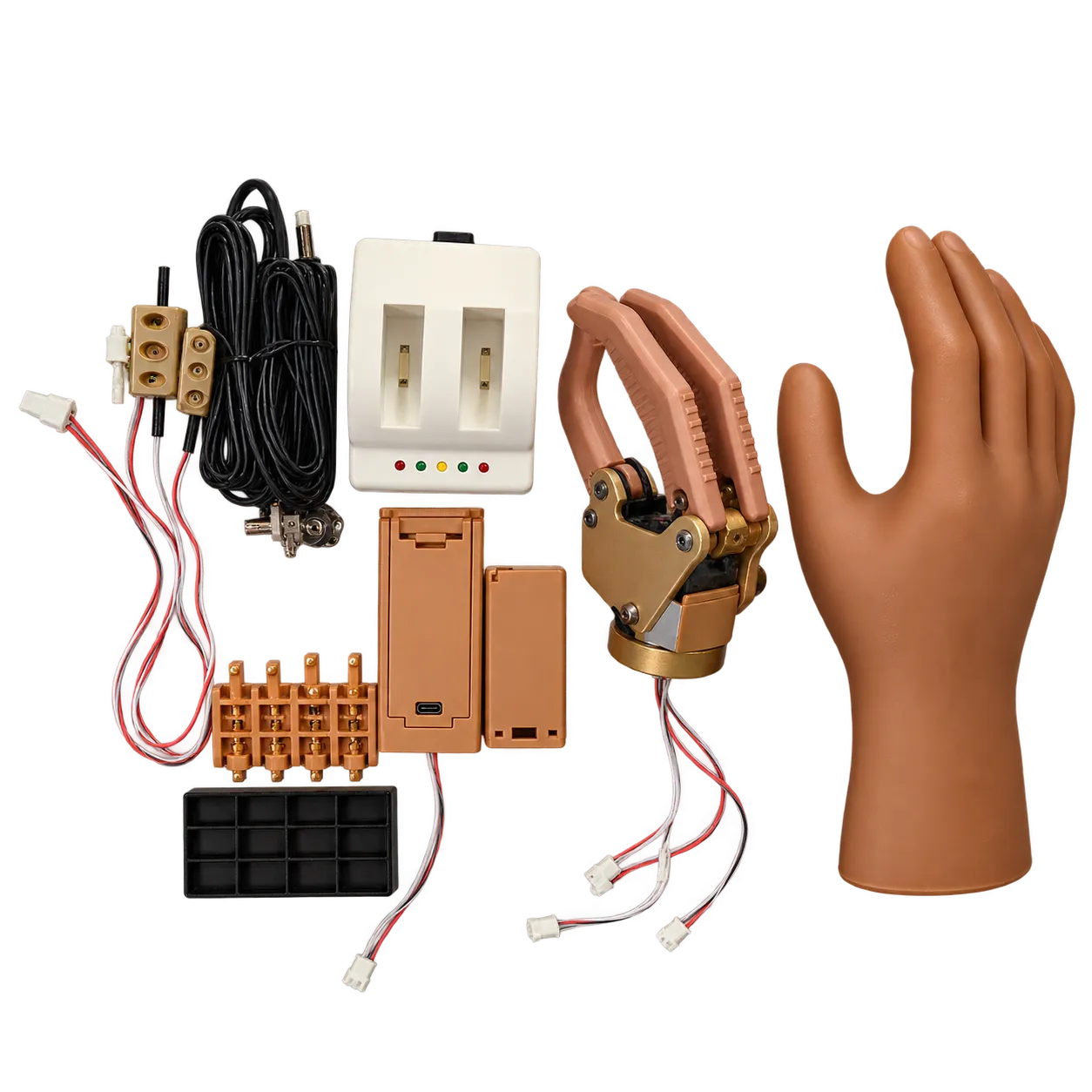
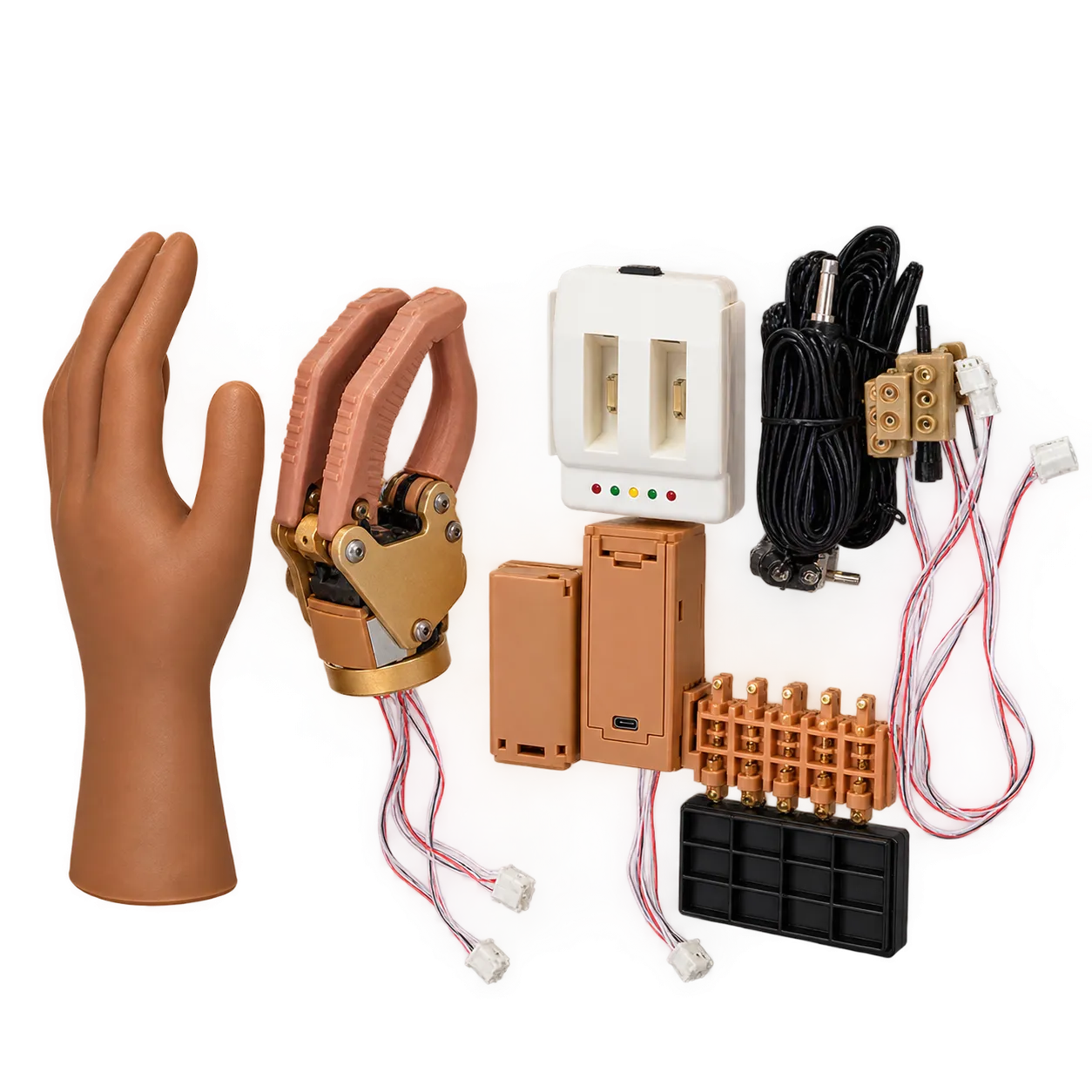
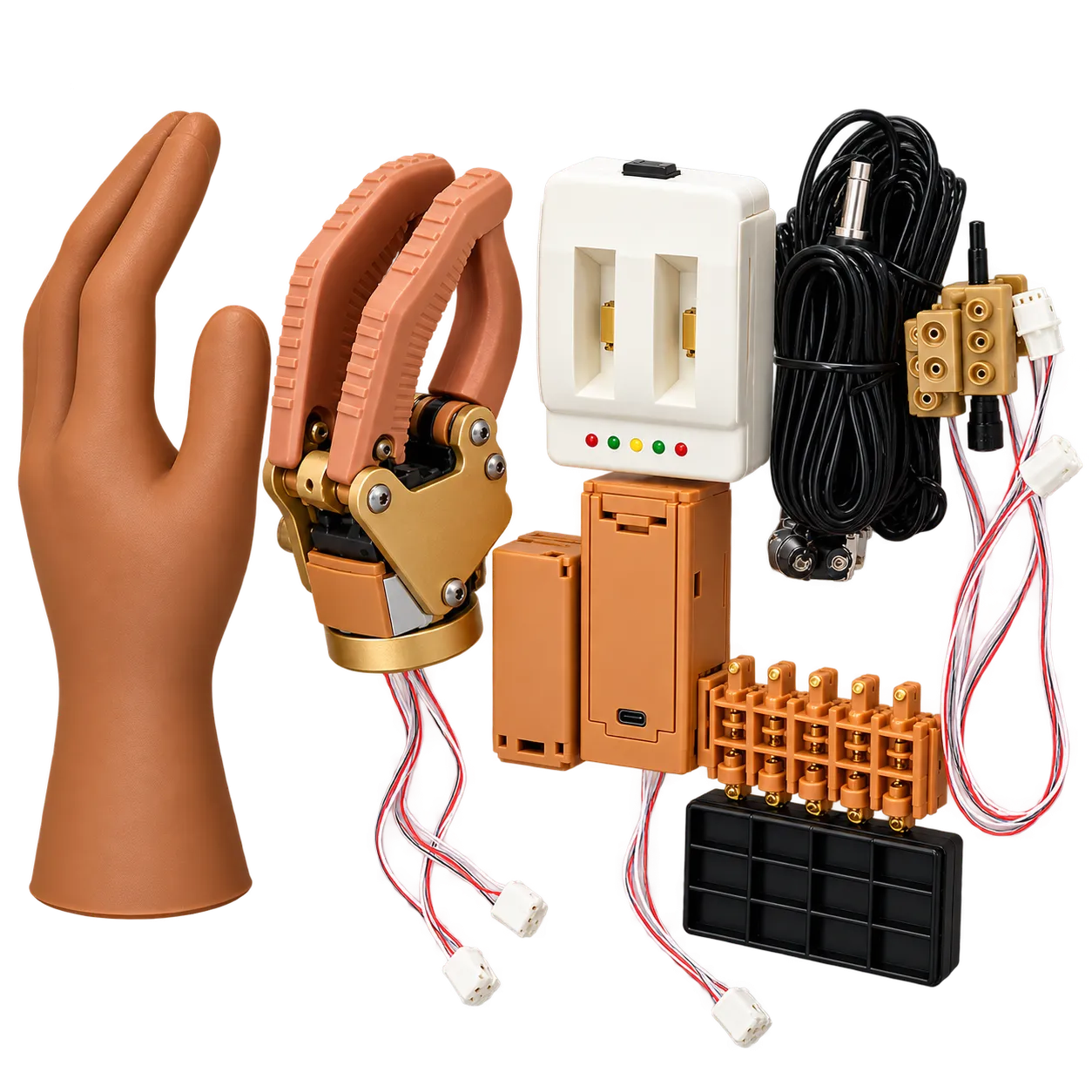
The MHHR belongs in prosthetic and orthotic clinics, limb-fitting centres and the workshops where upper limb prostheses are assembled. Prosthetists and prosthetic technicians fit it as the terminal device of a myoelectric arm, joining it at the oval wrist joint and lotus base to an arm tube built to the wearer's length.
Its main users are people living with upper limb loss who want a hand they open and close by intention. Because the grip follows muscle signals, the hand serves wearers who can produce a usable contraction in the residual limb and who want to move objects by intention alone. Training sessions in occupational therapy and rehabilitation departments work through that control, teaching the wearer to grade contractions until opening and closing feel deliberate.
Rotation at the wrist shapes the daily uses the hand supports. Pouring from a jug, turning a key, setting a plate on a shelf and passing an item across a counter all need the fingers to meet an object at an angle. Turning the wrist provides that angle, so the shoulder does little of the work. Occupational therapists can build rehabilitation tasks around these turns once the basic grip is reliable.
The finger choice lets a clinic match the hand to the wearer. A three finger hand presents a simple grasp, while a five finger hand gives the full outline of a hand at rest. Quiet running suits wearers who use the hand through a long day at work, at school or at home, where a low-noise device keeps attention on the task. Clinics building myoelectric arms for wearers with active daily routines will find the MHHR a straightforward terminal device to plan a fitting around.