
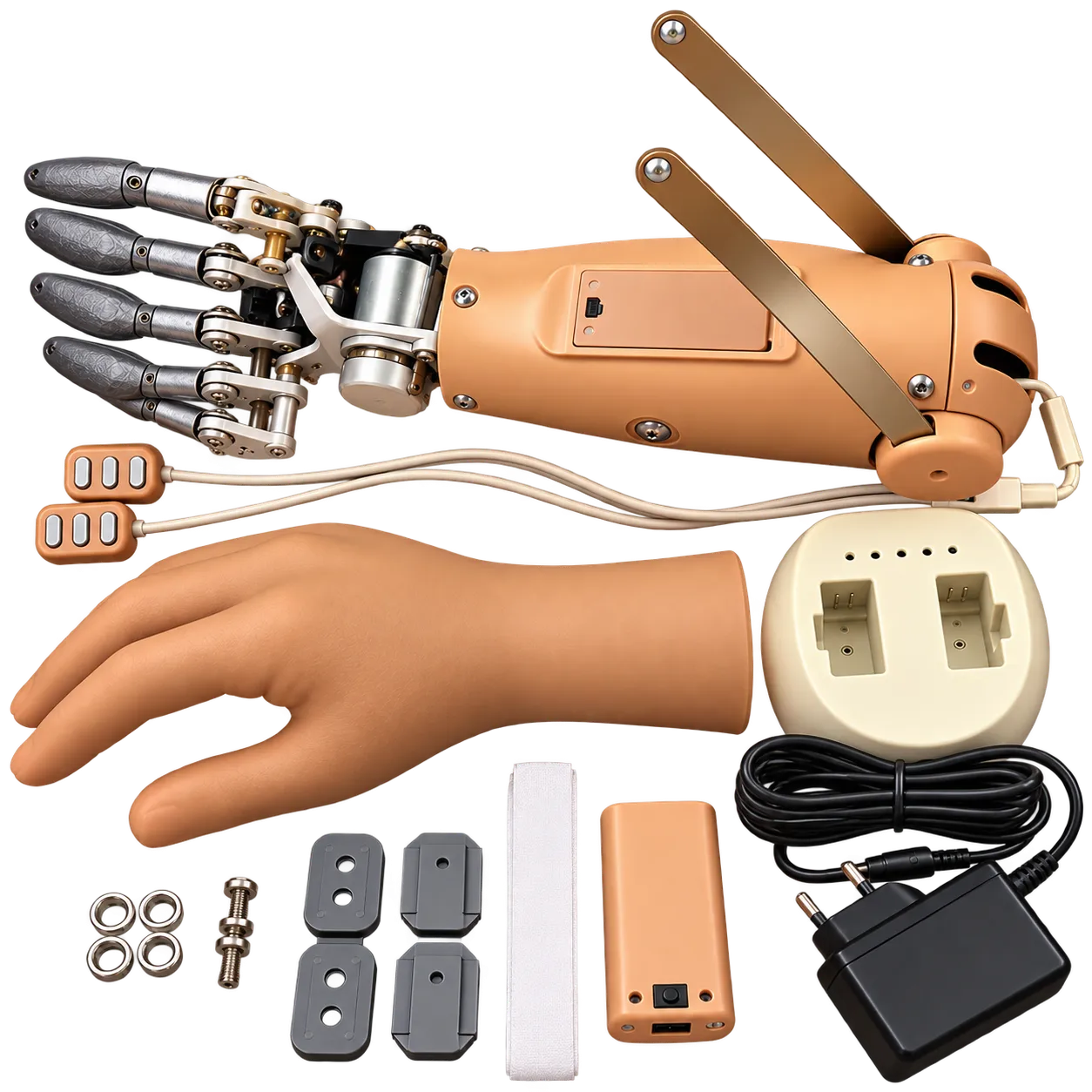
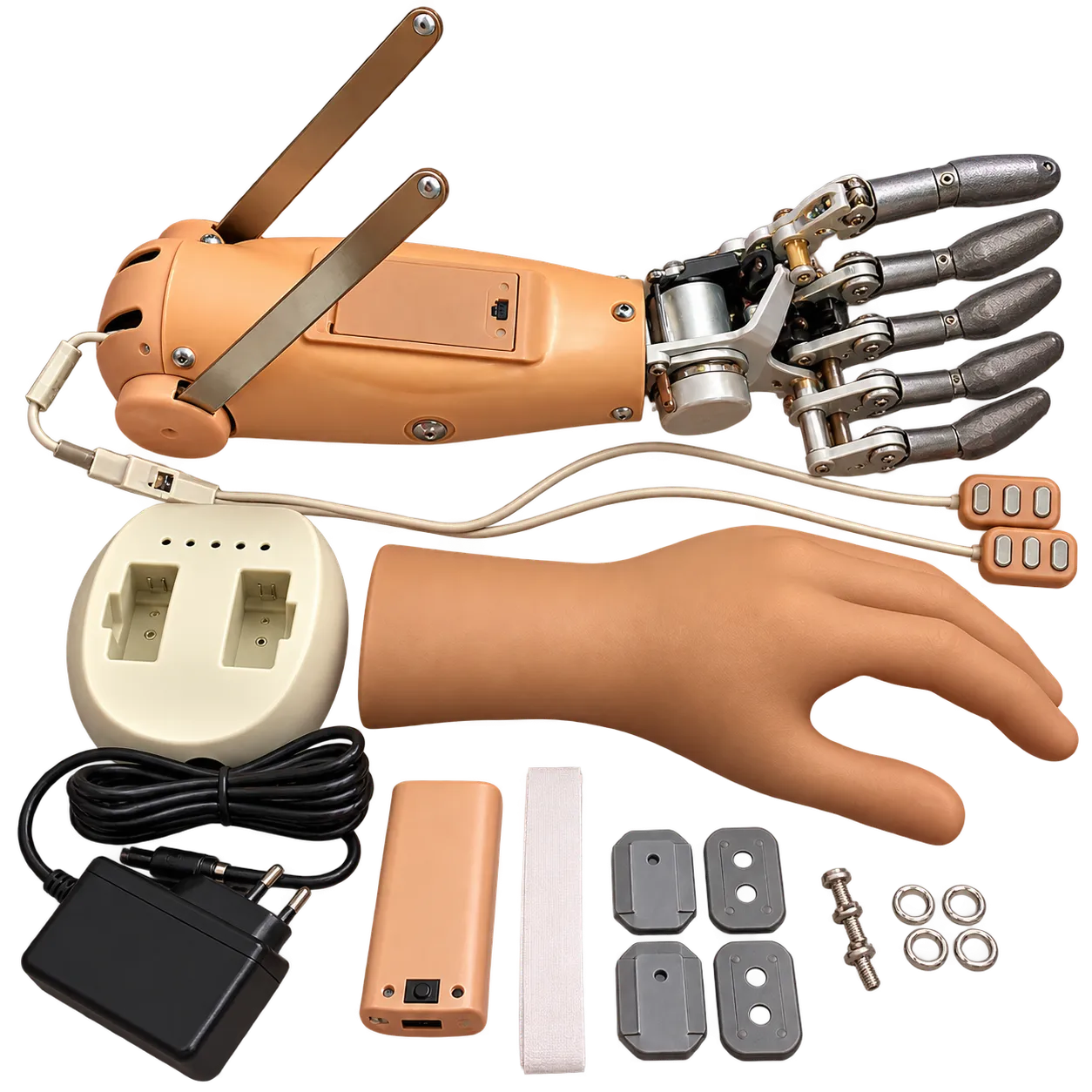
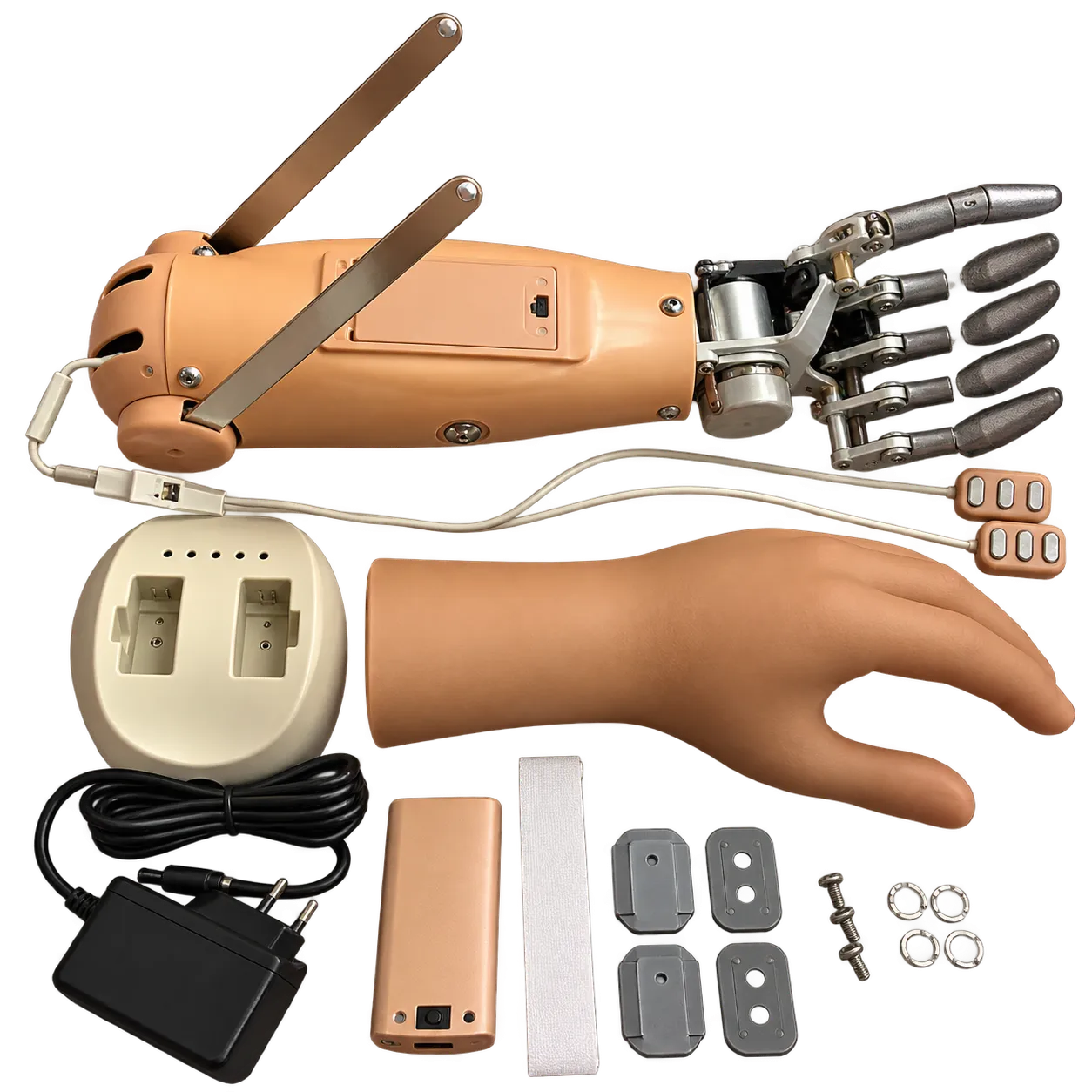
Prosthetic and orthotic clinics fitting upper-limb users at the elbow or above are the home ground for the MEDH. Its population is precise: people with an elbow disarticulation, and people whose amputation leaves a middle or long residual limb of the upper arm. At those levels the wearer needs a powered elbow as much as a powered hand, because forearm position decides where the hand can work. The MEDH answers that by putting the elbow under the same myoelectric control as the hand.
Prosthetists and upper-limb therapists use the arm across the fitting pathway. During initial training, therapists work with the wearer on separating the contractions that drive the elbow from those that drive the hand, building a reach-then-grip sequence that becomes automatic with practice. In definitive fittings, the arm goes onto a socket made for the residual limb, with the wrist angle set and locked for the wearer's most frequent tasks.
Daily use centres on bimanual work. At a desk, the wearer raises the forearm from the waist to the work surface, steadies paper, holds a ruler or anchors a document while the sound hand writes or handles typing. For reaching toward an overhead shelf, the wrist can be turned and locked first so the hand meets the object at a workable angle. Kitchen and household tasks that need one hand to hold while the other acts follow the same pattern.
Rehabilitation centres and prosthetic workshops that supply components to clinicians can stock one arm in two finger counts. Where wearers spend time near water or among phones and other electronics, the waterproof and anti-EMI options widen the settings the MEDH can serve.